
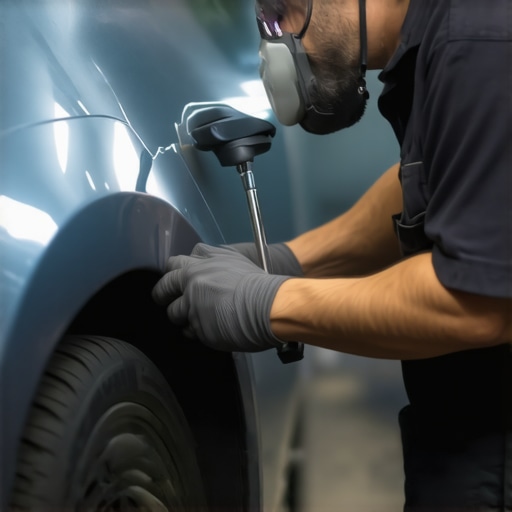
Ever had a minor collision or a dent that just wouldn’t go away? I remember the first time I backed into a low garage door and knew I was in trouble. The dent was small, but the fear of ruining my factory paint kept me from getting it fixed immediately. I thought, ‘Should I risk it with a DIY dent repair kit or wait until I can afford a professional?’ That’s when I stumbled upon Collisionrenew’s innovative dent pulling techniques, and my car’s paint remained pristine.
A Lightbulb Moment in DIY Car Care
During that frustrating wait, I did some digging and realized that traditional dent repairs often involve sanding, filling, or repainting — processes that can strip or damage your original factory finish. Not exactly what I wanted. It wasn’t until I discovered the concept of paintless dent repair (PDR) that I felt hopeful. PDR uses specialized tools to gently massage the dent from behind the panel, avoiding any unnecessary damage. But I wondered: could I do it myself without professional training?
This question led me down a rabbit hole of online tutorials and real-world experiments. Spoiler alert: with the right techniques and tools, I managed to restore my car’s appearance without a paint job, and I was hooked on this approach.
Is Collisionrenew Actually Effective and Worth the Hype?
Early on, I made the mistake of attempting a DIY fix without understanding the proper method — which sometimes made the dent worse. That’s a common mistake, but one worth avoiding. Collisionrenew’s methods emphasize gentle, precise techniques—something I wish I had learned from the start. They provide a comprehensive guide that shows you how to safely pull dents and preserve that factory finish. Learn why your car pulls toward the curb to understand how proper repair aligns with your vehicle’s core functions.
Many folks worry about the damage or the cost of professional repairs. But what if I told you that with Collisionrenew’s tips, you could tackle minor dents yourself, save money, and keep your paint looking flawless? That’s exactly what I aim to share with you today. Keep reading if you’re tired of living with dents and want a realistic, effective solution that actually works—without risking your factory paint.
Preparing Your Workspace and Tools
Start by clearing a clean, flat surface in your garage or driveway. Gather essential tools such as a dent removal kit, a hairdryer or heat gun, rubbing alcohol, and clean microfiber cloths. Think of it like setting up your kitchen before cooking; having everything ready prevents interruptions and mistakes. I once accidentally knocked over a can of paint because I wasn’t organized, so double-check your supplies beforehand.
Assessing the Damage and Planning Your Approach
Inspect the dent carefully under good lighting. Determine its size, depth, and location. For small, shallow dents, simple tugging might suffice; deeper dents may require additional heat or leverage. I remember a time I underestimated a surprisingly stubborn dent on my fender. I hesitated, but then I realized applying gentle heat loosened the metal, making the repair easier. Approaching the dent strategically saves time and reduces the risk of further damage.
Applying Heat to Expand the Metal
Use a hairdryer or heat gun to warm the dented area for about 2-3 minutes. Warm metal becomes more pliable, similar to how warm wax softens. Be cautious not to overheat or hold the heat source too close to avoid damaging paint. I once overheated a corner and caused the paint to bubble—that was a quick lesson in patience. Heating helps the metal ‘relax,’ making it easier to reshape without applying excessive force.
Using Collisionrenew Techniques to Gently Pull the Dent
After heating, attach a dent pulling tab or suction cup to the center of the dent. Use a glue gun or pulling tool to secure it. Once firmly attached, gently pull on the tab to lift the dent. Think of it as removing a stubborn sticker—slow and steady wins the race. I once pulled too hard and caused a slight rip in the paint; careful, controlled force is key. Repeat the process if necessary, always gradually increasing pressure.
Fine-Tuning the Repair for Best Results
If the dent persists, applying a second round of heat and re-seating the pulling tool can help. For stubborn dents, gently massaging the area from behind the panel with a microfiber cloth can encourage metal to revert to its original shape. This is like kneading dough—gentle pressure yields the best flow. Remember, patience is essential; rushing can cause cracks or uneven surfaces.
Preserving the Factory Finish
Once the dent is restored, clean the area with rubbing alcohol to remove any adhesive residue. If any paint damage occurred, touch-up kits can be applied, but always test in an inconspicuous spot first. This step preserves the original look and prevents rust. A lesson I learned early was not to skip cleaning; residual adhesive or dirt can spoil an otherwise perfect repair.
Knowing When to Seek Professional Help
While DIY techniques can handle minor dents, deep or creased damages might require professional tools and expertise. If you’re unsure, consult a collision repair specialist or check out detailed guides. For instance, I once tried to fix a large dent on my door, but the shape was too complex—professional repair was the safer choice. Recognizing limitations saves time, money, and frustration.
Many car owners believe that routine maintenance and repairs are straightforward, but they often overlook nuanced issues that can impact vehicle longevity and safety. For instance, a common myth is that brake pads only need replacement when they squeal, yet underlying problems like warped rotors or damaged calipers can silently compromise braking performance. It’s crucial to understand that premature brake repairs may indicate deeper issues that require expert assessment, as seen in cases where spongy brake pedals after long descents are symptoms of master cylinder wear or air in the lines, not just worn pads.
Another misconception surrounds transmission service. Many assume that transmission fluid doesn’t need changing since it’s marketed as “lifetime” fluid. However, advanced studies highlight that neglecting timely fluid replacement can lead to gear slippage or lurching, especially in models prone to transmission lurching in urban traffic. Recognizing that transmission fluid degrades over time helps avoid costly repairs down the road.
In collision repair, there’s a false belief that minor dents or paint scratches are purely cosmetic. Yet, even small impacts can cause hidden frame misalignments that affect vehicle handling, such as pulling to one side when letting go of the wheel. This subtle issue might escape notice without a professional evaluation, which is why detailed inspections are vital after any collision. For example, car pulling toward the curb often traces back to unseen frame or suspension problems.
Understanding these complexities helps car owners make better decisions about their vehicle maintenance. Having proper knowledge prevents falling into traps like delaying essential service or trusting unverified DIY fixes that might worsen problems. When in doubt, consulting with skilled technicians can save money and extend your car’s lifespan.
One advanced consideration involves the wear patterns on tires. Many neglect to examine the inner edge of the tread, which can reveal alignment issues or worn suspension components. Visit this guide to learn how internal tire wear correlates with vital suspension diagnostics.
In summary, moving beyond the surface-level understanding of car repairs ensures longevity, safety, and cost savings. Do you think you’ve fallen into any of these common traps? Share your experiences below, and let’s keep the conversation going. Remember, awareness is the first step toward better vehicle care.Maintaining your vehicle’s performance over the long term requires more than just routine oil changes; it demands the right tools, techniques, and habits. Having a well-stocked toolkit tailored to auto repair can make all the difference when addressing issues like transmission troubles or brake wear. One tool I personally recommend is a digital multimeter, which allows for precise electrical diagnostics—particularly useful when troubleshooting complex systems like sensors or ignition components. Unlike traditional analog meters, a digital multimeter provides quick readings and alerts, helping you identify issues such as faulty wiring or bad connections early, preventing costly repairs down the line.
For more advanced diagnostics, investing in an OBD-II scanner compatible with your vehicle model is crucial. These devices connect seamlessly to your smartphone or laptop, providing real-time data and error codes. I find that apps like Torque Pro or Car Scanner help me interpret codes swiftly and accurately. For example, diagnosing a sluggish transmission can be simplified by analyzing shift data directly from your device, enabling targeted repairs instead of guesswork.
How do I maintain tools for longevity and accuracy?
Regular calibration and cleaning are essential. A dirty multimeter probe or a worn-out scanner battery can give false readings, leading to misdiagnoses. I recommend cleaning connectors with contact cleaner and storing tools in a dedicated case to avoid damage. Also, keeping manuals or digital guides handy—such as Collisionrenew’s comprehensive repair guides—can greatly enhance your troubleshooting efficiency. Remember, a well-maintained toolkit not only saves money over time but also enhances safety during repairs.
Predicting future trends, the integration of AI diagnostics and cloud-based maintenance records will revolutionize how we approach vehicle care. Imagine your scanner automatically uploading error data to a cloud database, where AI algorithms suggest precise fixes or predict failures before they happen. That’s where the industry is heading, and staying ahead means investing in robust tools now.
When it comes to long-term vehicle health, consistency is key. Make a habit of inspecting and calibrating your tools monthly—especially before major repair projects. For instance, checking your brake system with a digital micrometer on rotor thickness can prevent premature wear. Additionally, staying informed through trusted sources, like Collisionrenew’s articles on brake and transmission care, helps you identify early signs of issues. If you notice your brake pedal feeling softer than usual, don’t delay; explore detailed diagnostic tips and consider professional help if needed.
In essence, the combination of proper tools and proactive maintenance establishes a solid foundation for vehicle longevity. Incorporate these practices and see the difference in your car’s reliability and safety. Ready to give your toolbox a upgrade? Try calibrating your multimeter today and note any irregular readings—they might point to hidden issues lurking in your vehicle. Keeping your car in top shape is a continuous journey, but with the right equipment, it becomes a manageable and rewarding process.
What No One Tells You About Fixing Your Car’s Little Issues
One of the most underestimated aspects of car care is recognizing that every repair — big or small — comes with a lesson. My journey with collision repair and DIY fixes revealed that patience and attention to detail often yield better results than rushing into solutions. For instance, I learned that applying heat gently, waiting for the metal to relax, can prevent more damage than force ever would. Small fixes like fixing a warped bumper or a noisy brake require more finesse than most think, and that realization has been a game changer.
Curious About the Tools That Were Game-Changers for Me
Investing in quality tools such as a digital multimeter and an OBD-II scanner drastically improved my diagnostics. These tools, like the ones I trust, not only save time but also increase confidence in the repairs. They make it possible to spot underlying issues like sensor misalignment or electrical faults that aren’t visible to the naked eye. The right tools turn guessing into informed action, ultimately saving money and frustration.
Learning From Every Misstep, Not Just the Wins
Perhaps the most valuable insight came from mistakes. Rushing a repair or applying too much force resulted in more damage before I understood the importance of gentle, methodical techniques. For example, attempting to fix a stubborn dent without proper preparation made me realize how crucial heat, patience, and proper adhesion are. Those lessons have made me more mindful and methodical, transforming setbacks into stepping stones toward mastery.
Fueling the Drive to Keep Improving
Tackling vehicle issues becomes less daunting when you see every repair as an opportunity to learn and grow. Whether it’s understanding the subtle causes of tire wear or recognizing early signs of transmission trouble, knowledge empowers you. For example, I now proactively inspect my tires for inner-edge wear, which helps prevent costly misalignments, detailed in this resource. Every repair or check becomes a chance to deepen your understanding and extend your car’s lifespan.
Never Underestimate the Power of Patience and Persistence
Ultimately, the most profound lesson I’ve learned is that patience is a virtue in auto repair. Rushing to fix a problem often leads to bigger headaches. Taking time to assess, plan, and execute each step carefully results in better outcomes. Whether you’re fixing a squeaky brake or realigning a misfiring sensor, approach each task with curiosity and calm. Your car will thank you, and so will your wallet. And remember, exploring reliable sources like Collisionrenew’s guides can provide that extra edge in mastering repairs.