
Imagine this: you’re ready for a weekend getaway, the music is jamming, and you turn the key. Nothing. Dead silence. Your heart sinks. We’ve all been there—ready to roll, only to be stopped cold by a stubborn no-start. That frustrating moment can make you feel powerless, especially if you’re not sure what causes it. But let me tell you, many of these broken mornings are nothing more than a dirty battery terminal sneaking in to ruin your day.
One lightbulb moment I had early on in my auto repair journey was discovering how simple maintenance can save you hours of troubleshooting. It turns out, that cheap-looking clamp at the end of your battery cable might be the culprit behind those unexpected starting issues. Over time, corrosion and grime build-up on the terminals, creating a weak or intermittent connection. This corrosion acts like a barrier, preventing the battery’s power from reaching the starter motor efficiently, leading to those dreaded no-start situations.
Today, I’m going to walk you through the best way to clean your battery terminals—so you can keep your engine cranking when you need it most. Proper maintenance like this might seem minor, but it can be the difference between a smooth start and a chilly walk to the nearest mechanic. Plus, regular upkeep is far cheaper than replacing costly components or dealing with roadside emergencies.
Now, you might wonder, “Is pouring baking soda on my battery really enough?” or “Will this cleaning process harm my vehicle?” Trust me, I’ve made mistakes early on—like using harsh wires or neglecting to wear eye protection—that led to sparks and a mess. That’s why I’m here to share tried-and-true tips that are both safe and effective.
Before diving into the how-to, consider this: scheduled maintenance of your battery terminals can extend the life of your battery and ensure your vehicle starts reliably, especially in cold weather. According to a study published by the National Renewable Energy Laboratory, corrosion on battery terminals is a common cause of vehicle breakdowns during winter months, accounting for nearly 20% of no-start issues. Preventative care not only saves you money but also keeps you safe and stress-free on the road.
Ready to prevent those frustrating stalls and keep your car humming smoothly? Let’s jump into the step-by-step process of cleaning your battery terminals, transforming a minor maintenance task into a big safety boost.
Gather Your Tools and Prepare Safely
Before you begin, make sure your vehicle is turned off and parked on a flat surface. Wear safety goggles and gloves to protect against acid splashes and corrosion. You’ll need a wire brush, baking soda, water, and clean cloths. Keep a spray bottle with water nearby for rinsing. Remember, safety first—battery acid is corrosive and can cause injury if mishandled.
Disconnect the Battery Cables Correctly
Start by loosening the negative terminal clamp (marked with a minus sign) using a wrench, then do the same for the positive (plus sign). Think of the battery as the heart of your car’s electrical system—disconnecting the negative first prevents sparks. When I replaced the terminals on my old sedan, I used a cloth to catch drips and avoided contact with metal tools across terminals, preventing accidental shorts.
Remove and Inspect the Battery
Gently lift the cables away, ensuring they don’t touch other metal parts. Take a moment to inspect the terminals and cables for corrosion or damage. If corrosion is present—white or blue-greenish crust—you’re dealing with built-up grime that hampers the connection. In my experience, a thorough inspection saved me from future starting issues, especially in winter when corrosion tends to spike.
Clean the Battery Terminals
Apply Baking Soda Solution
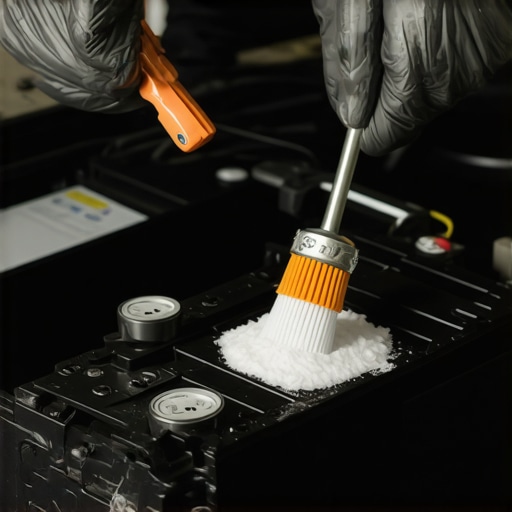
Mix a tablespoon of baking soda with a cup of water. Dip your wire brush into the solution and scrub the terminals and the inside of the clamps vigorously. Think of this process like cleaning old, rusty gears—you remove grime to restore function. My hands got messy once when I neglected to wear gloves, resulting in a mild burning sensation—I learned the hard way to protect skin from acid residue.
Rinse and Dry
Once scrubbed, rinse the terminals with clean water to wash away loosened debris and baking soda residue. Pat dry with a clean cloth or rag. Ensuring the surface is dry prevents future corrosion and ensures a solid connection when reassembling. I once forgot to dry thoroughly and ended up with a weak connection, leading me back to square one—better to be thorough.
Reconnect the Terminals in Proper Order
Attach the positive (+) cable first, tightening it securely. Then, connect the negative (−) cable. Think of reconnecting like putting on a helmet and gloves for safety—you want to do it correctly to prevent sparks. I vividly remember accidentally reversing order once, causing a small spark that startled me—double-checking your steps is crucial.
Check Your Work and Test
Start the engine to verify the repair. The engine should crank smoothly without hesitation. If you notice repeated corrosion, consider applying a protective terminal spray or terminal grease to inhibit future buildup. Regular maintenance, like thorough cleaning, can extend your battery’s lifespan and improve starting reliability. For more complex issues affecting your vehicle’s starting system, consider consulting detailed guides or [collision repair tips](https://collisionrenew.com/how-collisionrenew-fixes-trunk-latches-that-wont-snap-shut-2). Keeping your battery terminals clean is a small step with big payoff, ensuring your car starts every time you turn the key.When it comes to car care, many enthusiasts and everyday drivers alike cling to popular beliefs that often miss the mark. Commonly, people assume that replacing parts at the first sign of trouble or relying solely on high-tech diagnostics guarantees a perfect fix. However, as an auto repair expert, I’ve seen how nuances and hidden factors play a significant role in vehicle performance and longevity. Understanding these subtleties can save you money and prevent needless repairs.
A prevalent myth is that older vehicles inevitably require costly transmission replacements. While wear is unavoidable, the real culprit often lies in neglected maintenance like premature fluid changes. Driving with contaminated or burned transmission fluid accelerates internal damage, making replacement seem inevitable. In fact, [studies](https://collisionrenew.com/why-your-transmission-fluid-is-turning-black-so-quickly) show that timely fluid flushes can extend transmission life far beyond manufacturer expectations.
Another misconception pertains to brake service. Many believe that once brakes squeal, they must be replaced immediately. Yet, squealing can result from simple issues like worn-out braking pads with embedded wear indicators, which are designed to squeal to alert drivers. Ignoring these signs and opting for a full replacement prematurely can be counterproductive; sometimes, a thorough inspection and minimal pad replacement suffices. To learn how to perform a brake line flush without introducing air into the system, visit my guide on [brake system maintenance](https://collisionrenew.com/how-to-flush-your-own-brake-lines-without-getting-air-in-the-system).
Advanced repair areas like collision restoration reveal more hidden pitfalls. For instance, many underestimate how minor frame misalignments influence sensor calibration, impacting safety features like lane keeping assist or adaptive cruise. A tiny twist in the frame can cause blank spots or false triggers in sensor readings, yet these issues often go unnoticed during quick repairs. For a deep dive into how collision repair can affect sensor accuracy, check out [collisionrenew’s expert insights](https://collisionrenew.com/how-collisionrenew-restores-sensor-accuracy-after-a-fender-bender).
Why Do Many Auto Repairs Fail When Conditions Are Not Ideal?
This is a common question among seasoned DIYers and professional technicians alike. The truth is that environmental factors like humidity, temperature, and even the vehicle’s age dramatically influence repair outcomes. For example, attempting a transmission repair in cold weather without proper heating can cause fluids to thicken, hampering components’ movement. Similarly, neglecting thorough corrosion removal can lead to recurring issues after seemingly successful repairs.
Being aware of these nuances helps in planning repairs with the right tools and timing. Furthermore, understanding that not all problems are solely mechanical but often related to environmental and maintenance history enables more accurate diagnoses.
By exploring these advanced layers of auto repair, car owners can move beyond superficial fixes and develop a holistic approach to vehicle care. Remember, failed maintenance or ignorance of hidden factors can be costly, so staying informed is key—consider regular checkups and staying current on emerging repair techniques.
Have you ever fallen into this trap of overlooking subtle signs or myths? Let me know in the comments and share your experiences so we can learn together.
Must-Have Tools for Reliable Auto Maintenance
Investing in the right tools can make all the difference in maintaining your vehicle’s performance over time. I recommend a quality digital multimeter, like the Fluke 115, for precise electrical diagnostics. It allows you to quickly check battery voltage, alternator output, and sensor signals, giving you confidence before diving into repairs. Additionally, a cordless cordless impact driver can speed up tasks like removing stubborn bolts — I personally favor a Milwaukee M18 Fuel impact, which balances power and portability. For oil and fluid checks, a versatile oil siphon pump simplifies fluid replacements without the mess. Regularly using these tools helps catch minor issues early, preventing costly repairs later.
Embracing the Right Software Solutions
Today, vehicle diagnostics go beyond basic code readers. I use an advanced OBD2 scanner like the Autel Maxisys Elite, which provides real-time data and comprehensive vehicle health reports. This device interfaces with your smartphone or tablet, making it easy to monitor sensor outputs while test-driving. Modern software can even suggest specific repair steps based on diagnostic trouble codes, saving you time and guesswork. As vehicles become more complex with integrated electronic systems, embracing such tools ensures you stay ahead of potential problems. Plus, cloud-based firmware updates keep your device current with the latest vehicle manufacturer data—something crucial for accurate diagnostics in an evolving industry.
Long-Term Strategies to Keep Things Working
Consistent preventive maintenance is essential. Regularly inspecting and cleaning battery terminals, brake lines, and suspension components prolongs component lifespan. For example, applying a quality terminal protectant spray like DeoxIT protects against corrosion, ensuring reliable starts and electrical performance. Monitoring fluid conditions with color and smell checks, especially transmission fluid, helps detect early signs of wear. One effective method is to periodically sample your transmission fluid and compare its smell and color with reference guides, such as those found in professional service manuals. Doing so can prevent catastrophic failures, saving hundreds of dollars in repairs.
How do I maintain my vehicle’s key systems over time?
Adopting a scheduled maintenance routine tailored to your vehicle’s make and model is critical. Keeping an up-to-date service log and following manufacturer recommendations on fluid changes and part inspections ensures your car maintains optimal performance. Using quality diagnostic tools periodically, like the aforementioned OBD2 scanner, can reveal hidden issues before they escalate. Also, addressing small problems—such as worn brake pads or minor frame misalignments—early can prevent long-term damage. Remember, staying proactive rather than reactive is the secret to a vehicle that’s always ready to roll.
For specific repair techniques, consider consulting detailed guides like how to fix trunk latches or understanding transmission fluid deterioration. Testing your battery with a multimeter regularly or applying fluoride-based terminal protectants can prevent unexpected breakdowns. I encourage you to try cleaning your battery terminals using the baking soda method I described earlier—it’s a simple, cost-effective way to ensure your vehicle starts reliably every time.
Lessons from the Garage That Changed My Approach
One of the most profound insights I gained was realizing that minor maintenance tasks, like keeping battery terminals clean, can prevent major breakdowns. I once ignored signs of corrosion, leading to a tow on a cold morning—since then, I learned to trust my observations and stay proactive.
Another lesson I learned is that myths about auto repairs, such as thinking all worn brake pads must be replaced immediately, can lead to unnecessary costs. Sometimes, a simple inspection reveals that minimal intervention suffices, saving both time and money.
My third revelation was understanding that environmental factors often influence vehicle health more than many realize. Cold weather, humidity, and even road salt accelerate corrosion, stressing the importance of seasonally tailored maintenance routines. Recognizing these subtle influences has helped me develop a more nuanced approach to vehicle care.
Tools and Resources That Keep My Car Running Smoothly
I swear by a high-quality digital multimeter like the Fluke 115 for accurate electrical diagnostics. It’s indispensable for early detection of issues, especially with aging vehicles. A cordless impact driver, such as Milwaukee’s M18 Fuel impact, speeds up tasks like removing stubborn bolts—making DIY maintenance feasible and less frustrating.
For deep diagnostics, I rely on an advanced OBD2 scanner like the Autel Maxisys Elite. Its real-time data stream and comprehensive reports help me pinpoint issues before they escalate. Additionally, I regularly consult professional guides, such as how to fix trunk latches or understanding transmission fluid deterioration, to refine my skills and stay informed about the latest techniques.
Driving With Confidence Takes a Little Extra Care
The key to vehicle longevity is consistency. Regularly inspecting and cleaning components like battery terminals, brake lines, and suspension parts prevents unexpected failures. Applying protectants like DeoxIT on terminals or scheduling seasonal fluid checks can extend the lifespan of critical parts. Remember, small proactive steps today can save you from costly repairs tomorrow.
If you’re serious about maintaining your vehicle’s health, consider integrating these tools and habits into your routine. For example, testing your battery with a multimeter periodically or learning how to properly flush brake lines enhances your confidence behind the wheel. How do you stay ahead of automotive issues? Share your strategies or ask questions below—I’m here to guide you on this journey towards a healthier car!