

I’ll never forget the moment I first peeked into my car’s engine bay and saw the brake fluid looking ominously dark—like a cup of black coffee left too long. It was a lightbulb moment for me. How could something so vital to safety turn into a murky, almost unrecognizable liquid? That’s when I realized I had been neglecting a simple check that could have saved me from a potential disaster. If your brake fluid resembles dark coffee, you’re not alone—and you’re playing a risky game without even realizing it.
The Hidden Danger of Dark Brake Fluid
Most car owners associate brake maintenance with replacing pads or rotors, but what about the fluid that makes everything work smoothly? Brake fluid is the lifeblood of your braking system, responsible for transmitting the force from your foot to the brake pads. Over time, it absorbs moisture, dirt, and debris, leading to a dark, often contaminated liquid. This isn’t just an aesthetic issue—it’s a serious safety concern that can cause your brakes to fail when you need them most.
Imagine pressing your brake pedal during an emergency and feeling it sink or pulsate—sounds familiar? That’s often a sign that your brake fluid is compromised. When contaminated, the fluid can’t effectively transfer force, increasing stopping distances and risking accidents. Regularly checking and replacing your brake fluid isn’t just recommended; it’s essential to keep you and your loved ones safe on the road.
Is Dark Brake Fluid Actually Worth the Hype?
Admittedly, I once thought waiting a little longer for my next brake fluid change wasn’t a big deal. I made the mistake early on of ignoring the dark 탦colored liquid in the reservoir, assuming it was just a dirty-looking fluid. But the truth is, neglecting it could lead to costly repairs or even dangerous brake failure. You might wonder, “Does my dark brake fluid really make that much difference?” Trust me, it does. Research shows that moisture-laden brake fluid can reduce braking efficiency dramatically, increasing stopping distances by up to 20%, according to expert analysis from the Department of Transportation.
If you’ve ever faced a sluggish brake pedal or felt unsure about your stopping power, you’re not alone—and it’s probably linked to this sneaky issue. I learned this the hard way, and I don’t want you to make the same mistake. The good news? A simple inspection and fluid replacement can restore your brakes’ full potential and peace of mind.
Now, let’s dive into how you can tell if your brake fluid is in trouble, and what steps to take to keep your braking system in top shape.
,
Find a Quiet, Well-Lit Workspace
Start by parking your car on a level surface in a garage or driveway with good lighting. Engage the parking brake and turn off the engine. This ensures safety and clarity during the process, similar to making sure your workspace is clean and organized before starting a complex project like resetting your collision sensors.
Gather Necessary Tools and Supplies
You’ll need a clean container, a wrench set, fresh brake fluid as specified in your vehicle manual, and possibly a friend to assist. Think of it as assembling your toolbox before tackling a tricky transmission repair: preparation is key to success and safety.
Locate the Brake Master Cylinder and Bleed Valves
Open the hood and identify the brake master cylinder—it’s typically at the back of the engine bay with a cap labeled “brake fluid.” Underneath, you’ll find the bleed valves on each wheel’s brake calipers or drums. Knowing exact locations prevents guesswork, much like knowing the hidden causes behind a pulsating steering wheel when braking.
Bleed the Brake System
Prepare the Reservoir
Remove the cap from the master cylinder and fill it with fresh brake fluid. Keep it filled throughout the process to prevent air from entering the system, akin to maintaining the right level of coolant during engine overheating repairs.
Attach the Bleeding End
Connect a transparent hose to the bleed valve on the first wheel, placing the other end into a container partially filled with brake fluid—this prevents air from being drawn back into the system. This setup is similar to a vacuum system in collision repair: creating a sealed pathway to avoid introducing contaminants.
Start Bleeding the Brake Lines
Have your helper slowly presses the brake pedal and holds it down. While holding pressure, open the bleed valve to let out old fluid and air, then close it before the helper releases the pedal. Repeat this until the fluid runs clear and free of bubbles, much like removing air bubbles from a vital transmission line to ensure smooth gear shifts.
Test and Finalize the System
After bleeding all wheels, check the brake pedal for firmness—if it feels soft or spongy, repeat the bleeding process. Once satisfied, perform a gentle test drive in an open area to assess braking performance. This is comparable to test-driving after a sensor realignment in collision repairs, ensuring everything functions perfectly before completing the project.
Regularly performing this maintenance not only keeps your braking system healthy but also prevents costly damage down the line. Think of it as routine collision detection; catching issues early saves you time, money, and safety hazards, just like maintaining your brakes prevents emergency failures on the road.
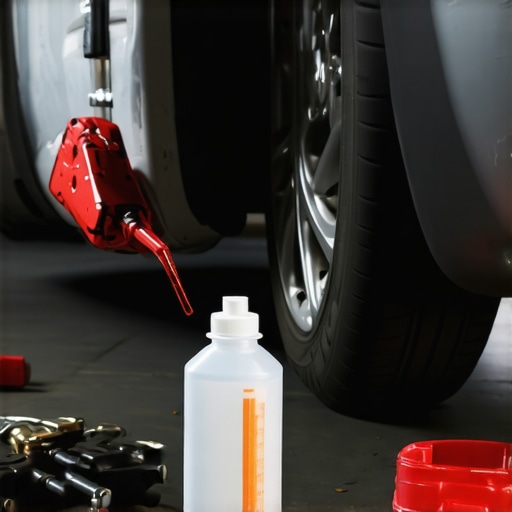 Many car owners believe that paying for routine oil changes and tire rotations suffices for vehicle health, but this oversimplifies the complexities of automotive maintenance. A frequent myth is that new cars don’t require regular service; in reality, neglecting even modern vehicles can lead to costly repairs down the line. For example, some assume that brake fluid doesn’t need replacement unless there’s a noticeable issue, yet dark, contaminated brake fluid can silently compromise safety, as detailed in expert analyses that highlight the importance of timely fluid changes. Moreover, many mistakenly think all auto repair shops are equally honest, but choosing an unqualified mechanic can result in unnecessary repairs or missed underlying problems, especially with critical systems like transmission or suspension. These misconceptions often lead to neglected maintenance, which can cause unexpected failures—for instance, a neglected transmission fluid might bubble and degrade, leading to poor shifting performance. Advanced issues, such as frame twist affecting lane-keep assist or noise in the gearbox, are often overlooked because of a lack of awareness about their subtle signs. Understanding these nuances helps prevent common pitfalls and extends your vehicle’s lifespan. For example, regularly inspecting and maintaining steering systems can prevent the dreaded shuddering when applying brakes, which many dismiss as normal wear. Did you know that a slight frame twist, often invisible to the untrained eye, can significantly impair safety features? Experts recommend periodic professional inspections to catch such issues early, preventing expensive repairs later. Having a deep grasp of these advanced nuances ensures your vehicle remains reliable and safe. If you’re unsure about your car’s condition, consider consulting detailed guides or trusted mechanics rather than relying on hearsay. Remember, a proactive approach can mean the difference between a smooth ride and a roadside emergency. For more insights, check out how to spot a failing wheel bearing early or how to test your fuel pressure without special tools. Have you ever fallen into this trap by ignoring subtle warning signs? Let me know in the comments.
How do I maintain my vehicle’s performance over time?
Consistency is key. Investing in quality tools and adopting proven methods ensures your car remains reliable while saving money on repairs. Personally, I favor a digital inspection mirror for checking hard-to-see areas like the transmission pan or behind the engine. Its compact design and adjustable angle allow me to thoroughly assess components without removing parts unnecessarily, much like how a mechanic might use specialized mirrors in professional shops. Additionally, a high-precision digital multimeter helps me monitor electrical systems accurately, preventing issues before they escalate. I calibrate mine regularly to ensure consistent readings, especially for sensors affecting critical functions like ABS or traction control. An oil extractor pump is invaluable for changing fluids through fill ports—no drain pans needed—and minimizes mess, critical when maintaining tight schedules. For cleaning and detailing, a dual-action polisher with variable speed lets me restore paint without risking damage, especially useful after minor collision repairs. Looking ahead, I predict that increasingly sophisticated diagnostic software will become more affordable, empowering car owners to perform advanced troubleshooting at home—reducing dependence on costly shop visits. To keep your vehicle running smoothly, regularly update your diagnostic tools’ firmware and familiarize yourself with vehicle-specific troubleshooting guides available online.
What methods do I use to ensure sustained results from car maintenance?
Keep detailed logs of all services performed, including fluid changes, part replacements, and inspections. This habit helps identify patterns and schedule preventive measures proactively. I also schedule routine checkups, aligning with the manufacturer’s recommended maintenance intervals, to catch issues early. For example, proactive brake fluid replacement—when dark and contaminated—can prevent costly rotor replacements, as highlighted in this related article. Regularly inspecting components like serpentine belts and coolant hoses with a magnifying glass reveals wear before failure. Some technicians use ultrasound leak detectors to find minor fluid leaks that aren’t visible to the naked eye, ensuring no small problem becomes a major headache. To keep focus sharp over time, I set reminders on my smartphone for upcoming maintenance tasks based on my vehicle’s manual. Moreover, approximately every 30,000 miles, I recommend performing a comprehensive system scan using advanced diagnostic software, like Snap-on’s MODUS or Autel’s Maxisys, which can identify hidden issues early, saving you thousands in repairs. As technology advances, the trend toward cloud-based diagnostics—allowing real-time updates and remote monitoring—seems promising for future vehicle care. Remember to consult professional guides or experienced mechanics when tackling complex tasks, and always prioritize safety. One of my favorite advanced tips is to periodically reset your vehicle’s adaptive systems after major repairs to ensure optimal operation—this simple step can make a significant difference in long-term reliability. Give it a try on your next service and observe the improved responsiveness. Maintaining your car with the right tools and methods isn’t just about fixing problems—it’s about ensuring consistent, long-term performance so your vehicle remains a dependable companion on the road.
Lessons the Road Taught Me That Nobody Often Shares
- Maintaining your brake fluid isn’t just a routine task—it’s a critical safety safeguard that can save lives, yet many overlook this vital step until it’s too late.
- Dark brake fluid often hides subtle warning signs of impending failure, and recognizing these early can prevent dangerous situations on the road.
- Simple checks and timely replacements of brake fluid can redefine your driving confidence, turning a potentially hazardous situation into a smooth, assured ride.
- My biggest breakthrough was realizing that regular maintenance acts as an invisible shield, keeping hidden problems at bay before they escalate into costly repairs or accidents.
Tools and Resources That Reinforce My Confidence
- A quality brake fluid tester has become my trusted companion—it’s affordable, easy to use, and provides instant peace of mind about my vehicle’s safety.
- Automotive diagnostic apps like Torque or OBD Link allow me to monitor my car’s systems proactively, catching issues early before they become emergencies—check out this guide for understanding fluid bubbling.
- Professional workshops and trusted mechanics provide invaluable insights. Finding a mechanic who emphasizes preventive care has transformed how I approach vehicle maintenance.
- Educational blogs and videos from reputable sites help me stay informed about the latest in vehicle care, ensuring I never miss a crucial warning sign or maintenance tip.
Your Next Drive Starts with a Confident Heart
Taking control of your brake fluid health isn’t just about car performance—it’s about embracing a mindset that values safety, knowledge, and proactive care. Every time you check your brake fluid, you’re investing in your safety and peace of mind on the road. Remember, the best drivers are those who stay vigilant, educate themselves, and act before problems arise. So why wait? Your journey toward safer, smoother driving begins now—embrace it fully.