
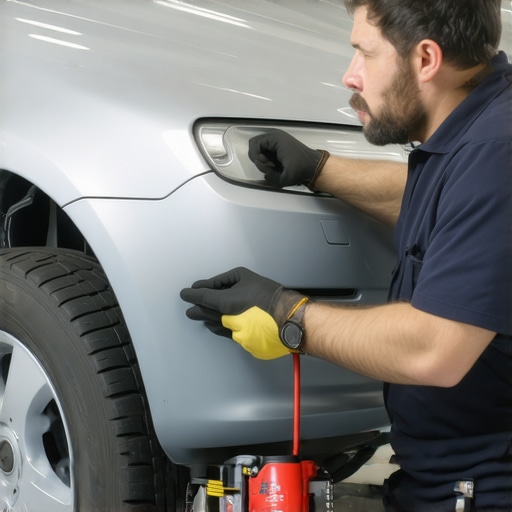
It happened on a bright Saturday morning, the kind where I was eager to finally spruce up my aging car. As I peeled away from the driveway, I noticed it—the dull, rough patch on my plastic bumper, the result of a minor scrape months ago. It looked like I had applied some cheap touch-up paint that never quite matched, leaving my car’s front end looking more battered than polished. Frustration crept in, and I realized how much such imperfections can harshly affect the overall look of a vehicle—a detail I used to ignore until it became painfully obvious.
The Struggle to Keep Plastic Bumpers Looking Factory Fresh
For years, I struggled with faded and textured plastic bumpers that seemed impossible to restore. I tried cleaning, rubbing, and even cheap spray paints, but nothing delivered that smooth, factory-like finish I craved. Especially after a collision repair or minor accident, these surfaces can become rough and uneven, making the entire vehicle look worn out. That’s when I stumbled upon an approach that changed everything—restoring the factory paint texture specifically on plastic bumpers.
But here’s the thing: I made a lot of mistakes early on. I believed that any paint or filler would do, and I jumped straight into applying them without understanding how to prepare the surface properly. That cost me time, money, and a good deal of frustration. My experience taught me the importance of using the right products and techniques, like collisionrenew’s proven methods, which I now wholeheartedly recommend.
Are you tired of looking at dull, textured bumpers that ruin your car’s appearance? Do you want a smooth, seamless finish that makes your vehicle look new again? If so, you’re in the right place. Today, I’ll share the step-by-step process I used that reliably restores the factory paint texture on plastic bumpers, even after minor collision damage. Whether you’re a DIY enthusiast or simply tired of the ongoing battle with faded bumpers, this guide is for you.
Is Restoring Factory Paint Texture Really Worth the Effort?
Initially, I was skeptical myself. It sounded complicated, maybe even out of reach for someone without professional tools. But I learned that with patience and the right products—like those used by collision repair experts—it’s entirely achievable. One key lesson I learned the hard way was not to skip surface preparation. Trying to cover rough patches without proper sanding or cleaning only made things worse. That mistake cost me additional rework and more disappointment.
Supporting this, studies show that proper surface prep is crucial for durable, high-quality finishes, especially on plastics. A simple step like cleaning with specific solvents can make the difference between a lasting repair and a future peeling nightmare. So, if you’ve ever wondered whether this is worth the effort, the answer is a resounding yes—especially when you see how a freshly restored bumper can instantly boost your car’s look.
Now that I’ve shared my initial struggle and the importance of proper technique, let’s move into the practical steps I followed to bring my bumper back to factory-like condition. Believe me, it’s easier than you think—and entirely satisfying to see the transformation firsthand.
Prepare Your Surface Properly
Start by thoroughly washing the bumper with a degreasing cleaner to remove dirt and wax. Use a plastic-safe solvent like isopropyl alcohol to eliminate any grease or residues. Once clean, inspect for any cracks or deep scratches, and sand these areas with 400-grit sandpaper to smooth out rough patches. Remember, surface prep is the foundation—skipping this step is like trying to build a house on a shaky foundation.
Sand and Feather Out Damaged Areas
Use a flexible sanding block to feather out areas with texture or damage. This smooths transitions between the original surface and repaired spots. For deeper imperfections, apply a flexible plastic filler, like epoxy putty, and once cured, sand it flat. Think of this process as sculpting—you’re gradually refining the surface from rough to smooth, like smoothing out a clay model. I once failed to feather out a bump properly, which led to visible sanding marks after painting—trust me, patience here saves trouble later.
Prime with a Plastic-Specific Primer
Spray a thin, even coat of primer designed for plastic surfaces. This promotes adhesion and helps achieve a uniform finish. Hold the spray can about 12 inches from the surface and use sweeping motions. Wait for the primer to flash off, usually 10-15 minutes, then apply a second coat if needed. Think of primer as laying a sturdy base coat—skipping it is like trying to paint on a greasy surface, which guarantees peeling down the line.
Apply a Textured Coating to Match Factory Finish
Choose a textured paint or aerosol that replicates the original factory surface. Apply in multiple light coats rather than one heavy coat; this prevents runs and uneven texture. Hold the spray can straight and use consistent strokes, overlapping each pass slightly. When I first attempted this, I used a single thick coat and ended up with drips, so I learned the value of patience and thin layers. If you want an illustrative guide, see collisionrenew’s article on mixing metallic paint to match factory colors.  and buff to match the surrounding paint. This meticulous step can make your repair nearly invisible. Remember, patience in the finishing stage transforms a novice job into a professional-looking restoration—it’s worth every minute.</p><p>,Many car owners assume that basic brake servicing or simple Auto Repair tasks are straightforward, but in reality, there are subtle pitfalls and misconceptions that can compromise safety and long-term vehicle health. One common myth is that all brake pads wear evenly, leading many to neglect regular inspections. However, uneven wear caused by caliper sticking or master cylinder issues can go unnoticed, resulting in compromised braking performance and expensive repairs if not addressed early. Moreover, the misconception that ‘brakes only need attention when they squeal’ can be dangerous—brakes can deteriorate silently, especially internal components like rotors and calipers, which require expert diagnostics and maintenance. When it comes to collision repair, many believe that cosmetic fixes alone restore safety; yet, underlying frame damage or alignment issues may remain, affecting handling and safety, which is why comprehensive diagnostics using advanced tools are essential. This is where CollisionRenew excels, ensuring every repair addresses both appearance and structural integrity. In terms of car service, some drivers overlook the importance of transmission maintenance, assuming it’s a set-it-and-forget-it component. However, transmission fluid degrades over time, and neglecting to replace or check it can cause sluggish shifting or even transmission failure. A savvy approach involves regular fluid analysis or following manufacturer schedules, as outlined in expert studies. Interestingly, there’s a specific nuance concerning transmission behavior during cold weather; feeling sluggish or slipping only on cold mornings might seem like an ordinary issue but could indicate low transmission fluid or vacuum leaks—an advanced problem that days of simple troubleshooting won’t fix. For example, did you know that a faint whirring sound from your axle could hint at underlying issues with your rear axle bearing, leading to more severe damage if ignored? Recognizing these hidden signals requires a keen eye and experience, which CollisionRenew provides through meticulous diagnostics. Are you aware of how small overlooked details in brake and transmission systems can escalate into major safety hazards? Maintaining vigilance beyond the basics and trusting expert insights safeguard your vehicle and loved ones. Remember, even seasoned car owners can fall into common traps—consider regular professional inspections, especially after minor collisions or when noticing subtle symptoms. Have you ever fallen into this trap? Let me know in the comments.</p><h2>The Right Tools for Consistent Performance</h2><p>Having reliable, high-quality tools is fundamental for ongoing car maintenance, especially when dealing with brake service or transmission care. I personally swear by a digital multimeter for electrical diagnostics; it provides precise voltage readings that can pinpoint issues like faulty sensors or wiring faults. For example, checking the alternator output with my multimeter helps ensure my engine’s electrical system remains stable, preventing unexpected stalls or starting problems.</p><p>Another indispensable tool is an OBD-II scanner, which I use regularly to decode engine trouble codes. This handheld device connects to the vehicle’s diagnostic port and gives real-time data, allowing me to catch potential issues early—saving time and money. When my check engine light appeared unexpectedly, plugging in my scanner revealed a misfire code linked to spark plug wear. This prompt diagnosis allowed me to plan timely repairs before more severe damage occurred.</p><h2>Eco-Friendly and Efficient Maintenance Practices</h2><p>Utilizing professional-grade cleaning products, such as a dedicated fuel system cleaner, ensures that critical components like the fuel injectors or mass airflow sensor stay clean. Regular use of a high-quality cleaner, following manufacturer recommendations, can improve fuel efficiency and prevent long-term damage. I recommend periodically cleaning these sensors to maintain optimal performance, which directly affects your car’s long-term health and efficiency. For instance, inspecting and cleaning your MAF sensor can recover lost miles per gallon, as detailed in <a href=) this guide.
this guide.
Planning for Scale and Longevity
As vehicles age, their maintenance needs grow more complex. Investing in a portable torque wrench is a game-changer—perfect for securing components accurately during brake pads or caliper replacements. Correct torque ensures that parts aren’t under- or over-tightened, reducing risks of premature failure or safety hazards. I’ve found that employing a calibrated torque wrench extends the life of critical parts and maintains safety standards.
Furthermore, staying ahead with schedule-based maintenance, like transmission fluid replacement or brake fluid changes, assures long-term reliability. Training myself to perform these steps with the right tools saves trips to the mechanic and gives me peace of mind that my vehicle is in optimal shape.
How do I keep my car running smoothly over time?
Adopting a routine that includes periodic diagnostics, using precise tools like OBD-II scanners and torque wrenches, and adhering to manufacturer schedules are keys to longevity. Looking ahead, I believe automation and smarter diagnostics will continue to evolve, making preventative maintenance even more accessible. For instance, integrating telematics with diagnostic tools can alert you to issues as they develop, potentially addressing problems before they impact safety or performance.
If you haven’t yet, try upgrading your toolkit with a professional-grade digital multimeter and an OBD-II scanner. These tools have transformed my ability to diagnose and maintain my vehicle efficiently, especially when troubleshooting complex issues like sluggish transmissions or brake fade. Remember, investing in the right equipment now can save countless headaches—and expenses—later on.
Throughout my journey with vehicle repairs, I’ve uncovered invaluable lessons that go beyond basic techniques—they unveil nuances that can make or break your restoration efforts. One of the toughest yet most rewarding lessons was realizing that factory paint textures aren’t just about color matching but also about replicating the precise surface feel, which requires patience and a keen eye for detail. I once rushed the primer step, believing coverage was enough, only to see peeling and unevenness later—an experience that taught me the importance of layering thin coats and allowing proper curing time. Similarly, understanding that every plastic bumper reacts differently to various fillers and paints has saved me countless headaches, emphasizing the need for tailored approaches rather than one-size-fits-all solutions. These lessons, learned through trial and error, remind me that craftsmanship is a continuous journey of refinement, patience, and respect for the vehicle’s original design.
Tools That Changed My Approach to Bumper Restoration
Investing in high-quality, specialized tools has transformed how I approach plastic bumper repairs. A professional-grade spray gun ensures even paint application and excellent texture replication, reducing the chance of imperfections. I rely heavily on a dual-action sander with variable speeds for precise prep work, making feather-out areas much easier and more consistent. An accurate digital temperature gun helps me monitor curing conditions, which is crucial for optimal adhesion and finish quality—especially in varying climates. Lastly, a soft buffing machine paired with fine polishing compounds allows me to achieve that mirror-like gloss, blending the repaired area seamlessly with the rest of the vehicle. These tools, which I trust personally, are investments that elevate the quality and durability of my restorations, turning a DIY job into professional-grade work.
Taking Action: Your Next Step Toward a Like-New Bumper
Now is the perfect time to roll up your sleeves and give your vehicle the facelift it deserves. Whether you’re tackling minor scratches or full bumper re-sprays, remember that patience and attention to detail are your best allies. Don’t let the fear of imperfection hold you back—every successful repair boosts your confidence and skill. Embrace the learning curve, utilize the right tools, and consider exploring resources like [collisionrenew](https://collisionrenew.com/) for expert guidance and troubleshooting tips. Your car’s appearance isn’t just about aesthetics; it’s about pride and safety. So, why not start your bumper restoration today and rediscover the satisfaction of a job well done? Sharing your experiences or asking questions below can also help you connect with others on the same journey. What’s the biggest challenge you’ve faced when restoring a plastic bumper? Let me know in the comments below.