
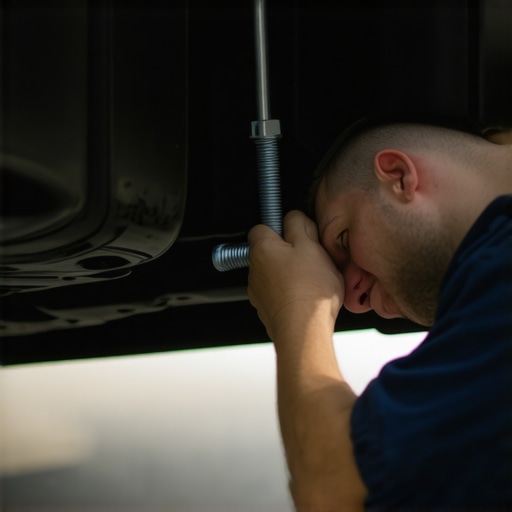
I remember the day I first heard that peculiar clunk from under my car, right after a routine brake check. My heart sank—was it something serious? That unsettling noise made me worry about my vehicle’s safety and whether I was heading toward a costly repair. It was a lightbulb moment that many drivers experience: a mysterious rattle or thud that seems to come from nowhere. Thankfully, I learned a few tricks that helped me distinguish between a minor fix and a sign of something more ominous.
Why That Subframe Clunk May Not Be as Bad as You Think
Let’s face it: when your car makes an unexpected noise, especially from the suspension or frame area, your first instinct is panic. Is the subframe clunk something just a loose bolt? Or is it a sign of significant structural damage? The good news is that, more often than not, it’s a simple fix—like tightening a bolt—and not a catastrophic failure. Recognizing this can save you both money and stress.
Did you know? According to a recent [auto repair study](https://collisionrenew.com/the-ultimate-guide-to-auto-repair-keep-your-car-running-smoothly), many drivers mistake minor suspension noises for major issues, leading to unnecessary repairs. Early detection and proper diagnosis are key.
If you’ve faced this kind of noise, you’re not alone. Many car owners discover that a simple bolt just came loose—something quite common given the vibrations and bumps encountered daily. But what can you do to be sure?
Is the Clunk Actually Worth Worrying About?
I made a mistake early in my car maintenance journey: I ignored small noises, chalking them up to normal wear. That turned out to be a costly error when a loose bolt caused more extensive damage later. So I urge you—don’t dismiss that sound. Instead, investigate it thoroughly. The small screech or thud might just be a bolt that needs tightening or a component that has shifted slightly. To be confident, a visual inspection under the vehicle, checking for loose or missing fasteners, can be a good start. And if you’re unsure, consulting a professional might save you from bigger problems down the line.
In the next section, we’ll walk through some practical steps to identify whether that clunk is just a loose bolt or something more serious. Ready? Let’s get into it and regain your peace of mind with confidence.
Conduct a Visual Inspection for Loose Components
Start your diagnosis by safely lifting the vehicle with a jack and securing it on jack stands. Wear gloves and eye protection. Look for any loose or missing bolts near the suspension, subframe, and other structural parts. Pay close attention to the area where the noise originates—if you find a loose bolt, tighten it to factory torque specifications. Just like tightening a loose screw in furniture can eliminate squeaks, securing loose fasteners on your car can solve unexpected noises.
Check for Worn or Damaged Bushings and Mounts
Inspect rubber bushings, mounts, and isolators for cracks, deterioration, or displacement. These parts absorb vibrations and curb excessive movement; when they wear out, they often cause knocking sounds. If a bushing is cracked or missing, replacing it can restore smooth operation. Think of these components as the shock absorbers of a rocking chair—they prevent harsh movements and rattles.
Test Suspension Components for Wear
Manually move suspension parts like control arms, sway bars, and ball joints. If there’s excessive play or movement, that part may be worn and need replacement. For example, I once found a worn ball joint that caused a noticeable clunk over bumps. Replacing it immediately prevented further damage and improved ride comfort. Remember, damaged suspension parts can cause alignment issues and uneven tire wear, which impacts safety and efficiency.
Examine the Subframe and Frame Connections
Check the subframe and frame mounting points for corrosion, cracks, or corrosion-induced looseness. Use a flashlight to inspect hard-to-see areas and gently shake the frame with a pry bar. If you detect movement or see visible damage, it’s a sign that repair or reinforcement is necessary. Restoring structural integrity is crucial—think of it as fixing the foundation of a house before decorating.
Test Drive with a Focus on the Noise
After the visual inspection and part testing, take the vehicle for a controlled drive. Listen carefully for when the noise occurs—over bumps, during turns, or at specific speeds. Use your ears as a guide to pinpoint the source. For instance, a noise only during turns might point toward worn tie rod ends or outer CV joints. Don’t forget to test braking as well—sometimes, a clunk can be related to brake hardware shifting under load. For more insights on brake-related noises, visit this guide.
Determine Whether to Seek Professional Help
While many minor issues can be fixed yourself, complex damage or uncertain findings warrant professional diagnostics. If tightening bolts or replacing bushings doesn’t resolve the noise, or if you notice frame cracks, it’s time to consult a qualified mechanic. Remember, driving with compromised structural parts risks safety and leads to more expensive repairs later. For a comprehensive vehicle health check, consider visiting this resource.
Many car owners believe that vehicle maintenance is straightforward, but there’s a hidden nuance that often gets overlooked: the tendency to oversimplify complex systems like transmissions and braking mechanisms. A common myth is that replacing a single component, such as a brake rotor or transmission fluid, will solve all associated issues. In reality, these parts are interconnected within a sophisticated network that requires comprehensive diagnosis and holistic repair strategies. For example, focusing solely on replacing brake pads without assessing underlying issues like caliper sticking can lead to premature wear, increasing costs and safety risks. Likewise, some assume that low transmission fluid levels are always the culprit behind slipping gears, but neglecting internal damage or sensor malfunctions can cause ongoing problems despite fluid top-offs. To truly master auto repair, one must understand the intricate interactions and avoid quick fixes that only address symptoms. This requires a detailed inspection and awareness of common pitfalls, such as misdiagnosing a noise as normal wear when it indicates a failing component, which could escalate into costly repairs. Recognizing these nuances allows for more effective servicing and longevity of your vehicle, saving money and ensuring safety. Moreover, be cautious of the trap where urgency leads to rushed repairs—skipping careful diagnostics in pursuit of immediate fixes often results in repeated issues and frustration. For in-depth insights, consult authoritative sources like expert transmission repair tips or modern brake service recommendations. Remember, proper vehicle maintenance is a mastery, not a shortcut. Have you ever fallen into this trap? Let me know in the comments.Maintaining your vehicle’s performance requires not just knowledge, but also the right tools that ensure precision and durability. One essential instrument I rely on is a digital torque wrench. Unlike analog ones, digital torque wrenches provide precise torque settings, significantly reducing the risk of over-tightening bolts in critical areas such as suspension components or transmission mounts. I personally prefer the TEKTON Digital Torque Wrench because it combines accuracy with ease of use and durability, helping me maintain proper fastener tension during repairs. Additionally, a high-quality OBD-II scanner, like the Autel MaxiCOM, is invaluable for diagnosing persistent check engine lights and underlying issues that may not be immediately apparent. This device connects to your car’s diagnostic port and provides real-time data and fault codes, streamlining troubleshooting and preventing small problems from escalating. Using software such as Mitchell 1 or Alldata can also support accurate repair procedures, especially when dealing with complex systems like transmissions or braking assemblies; these provide detailed technical service bulletins and step-by-step guides based on your exact vehicle model. Looking ahead, the future of auto maintenance points toward integrated diagnostic systems that combine hardware with AI-powered diagnostics, enabling even more precise predictions of failures before they occur—saving time and money. To keep your vehicle running smoothly over time, establish a routine where you use your scanner monthly to catch anomalies early, and always verify torque specifications with a reliable digital wrench. Have you tried incorporating these tools into your maintenance routine yet? Start by testing your torque levels on critical fasteners and see the difference it makes in prolonging component lifespan. For more insights into advanced maintenance strategies, visit this comprehensive guide. Practicing meticulous maintenance not only preserves your car’s value but also ensures safety for you and your loved ones.
The Hardest Lesson I Learned About Transmission, Brake Service, and Auto Repair
One of the most valuable insights I’ve gained is that many car issues reveal themselves long before they become emergencies, if only we’re attentive enough. I once ignored a faint clunk during acceleration, assuming it was normal wear. That oversight led to a costly transmission rebuild. Now, I know that small clues—like subtle noises—are your car’s way of whispering, “Help me before I become a problem!” Recognizing these early signs can save you money and extend your vehicle’s lifespan.
3 Myths About Brake Maintenance That Held Me Back
For years, I believed that squeaky brakes always meant urgent replacement. It turned out that sometimes, it’s just a layer of dust or a slight misalignment. Debunking this myth helped me approach brake issues with more confidence, knowing when simple cleaning will do and when genuine repairs are necessary. The key is understanding your vehicle and not jumping to conclusions based on assumptions.
What Experts Won’t Tell You About Transmission Care and Car Servicing
Most professionals agree that regular maintenance is essential, but what often goes unspoken is the importance of personalized diagnostics. Relying solely on generic service schedules can overlook the unique behavior of your vehicle. For instance, using a trusted [comprehensive guide](https://collisionrenew.com/essential-car-service-checks-to-extend-your-vehicles-life) can empower you to perform ongoing self-checks, catching issues early before they escalate into costly repairs.
My Essential Toolkit for Auto Repair Success
Equipping yourself with quality tools like a digital torque wrench (I prefer the TEKTON Digital Torque Wrench) and an OBD-II scanner (such as the Autel MaxiCOM) transforms the repair experience. These tools enable precise work and early fault detection, respectively. They’ve helped me address minor problems myself, saving time and money, and gaining confidence in my vehicle maintenance skills. Consistent use of reliable tools can make all the difference in ensuring your car’s longevity.
Your Turn to Take Action
Understanding that small noises and visible signs are your vehicle’s way of communicating is empowering. By paying close attention and learning basic inspection techniques, you can prevent minor issues from turning into major nightmares. Remember, a well-maintained car isn’t just about safety—it’s about peace of mind every time you drive.