
Why Your Scrap Car Valuation Might Be Lower Than the Metal Weight Suggests
If you have ever looked at a 4,000-pound sedan sitting in your driveway and calculated its worth based on the current price of steel, you likely walked away with a number that didn’t match the offer you received from a local buyer. It is a common source of frustration for vehicle owners in North Carolina. You see two tons of metal; the buyer sees a complex recycling project with significant overhead. Understanding the nuances of scrap car valuation is the first step in moving from frustration to a successful sale.
During my years as a Senior Environmental Specialist for Mecklenburg County Recycling and Solid Waste, I saw firsthand how residents struggled to bridge the gap between “gross weight” and “net value.” A car is not a solid block of steel. It is a highly engineered assembly of diverse materials, many of which are actually liabilities rather than assets in the recycling stream. To get the best deal, you need to look past the scale and into the mechanics of the secondary metal market. If you want to skip the confusion, learning how to sell your junk car in Charlotte for cash without the typical headache starts with understanding these hidden variables.
The Current State of the Scrap Market (2026 Data)
To understand your quote, we must first look at the global and regional commodities market. As of February 2026, the scrap metal industry has seen some stabilization after the volatility of the mid-2020s, though prices are slightly lower than their peak in late 2025. Currently, the national average for shredded scrap steel is hovering around $190 per ton. However, local regional pricing in North Carolina typically ranges between $145 and $195 per ton for “prepared” scrap.
What does this mean for the junk value of car assets in the Charlotte area? For a standard complete passenger vehicle, owners are seeing payouts between $200 and $500. Larger vehicles, such as light-duty trucks and SUVs, often fetch $325 or more due to their higher heavy-melt steel content. It is important to note that these prices are down approximately 8% from the final quarter of 2025. When a buyer gives you a quote, they are hedging against the daily fluctuations of these commodity prices, ensuring they don’t lose money between the time they pick up your car and the time it reaches the shredder.
The “Non-Metal” Weight Problem: Understanding Fluff
One of the biggest misconceptions in cash for cars nc transactions is the belief that the weight on your vehicle’s registration equals the weight of the sellable metal. In the recycling industry, we refer to the non-metallic portion of a vehicle as “auto shredder residue” or “fluff.”
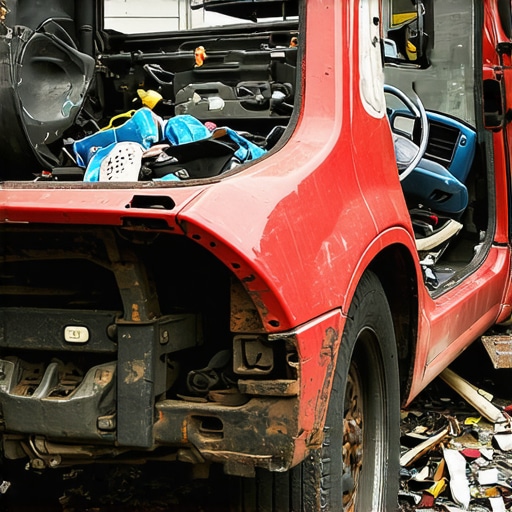
A typical modern vehicle is composed of roughly 65% to 70% steel and iron. The remaining 30% to 35% consists of glass, plastics, foam upholstery, rubber, carpeting, and fluids. While these materials contribute to the 4,000-pound curb weight of your car, they have zero – or in many cases, negative – value. When a car is put through a commercial shredder, this fluff must be separated and hauled to a landfill. As a former environmental specialist, I can tell you that landfill tipping fees for industrial waste are significant. Therefore, a scrap yard must deduct the weight of these materials and the cost of their disposal from your initial quote. Identifying the specific engine components that make your Charlotte junk car worth more than the scrap price can help offset these “fluff” deductions.
The “Big Three” Value Killers: Why Missing Parts Matter
When you call for a quote and mention that the car is “mostly complete,” you might be surprised by how much the offer drops if certain key components are missing. In the world of cash for junk cars charlotte nc, three specific items dictate the lion’s share of the value beyond the raw steel weight.
1. Catalytic Converters
The catalytic converter is often the most valuable single component on a junk car because it contains precious metals: platinum, palladium, and rhodium. If this part has been removed, your scrap car valuation can drop by $100 to $300 instantly. Buyers need to know if the emissions system is intact to provide an accurate estimate. If you’re unsure of your car’s status, it’s worth learning how to tell if your catalytic converter is clogged or just old before you call for a quote.
2. Engines and Transmissions
The engine block and transmission housing represent the densest concentration of “clean” metal in the vehicle. Beyond the weight, these components are often sold as “cores” to rebuilders. A car without a powertrain is essentially just a hollow shell of thin-gauge sheet metal, which is less desirable for high-grade recycling. In fact, why the transmission alone could double the cash value of your junk car is a topic every seller should understand before accepting a low-ball offer.
3. Wheels and Rims
Aluminum alloy rims are worth significantly more than standard steel wheels. If you have replaced your alloys with “donuts” or steel spares, the scrap value decreases. Most how much is junk cars worth calculations assume a standard set of wheels is present to facilitate towing and processing.
Labor, Logistics, and Environmental Overhead in NC
Many sellers overlook the “behind-the-scenes” costs that a reputable buyer must absorb. Operating a we buy junk cars charlotte nc business in Mecklenburg County requires more than just a tow truck; it requires compliance with strict environmental and safety regulations.
Towing and Logistics: In a city like Charlotte, the cost of fuel, insurance, and labor for a flatbed tow truck is substantial. Navigating I-485 or Independence Boulevard traffic to pick up a non-running vehicle can take two hours of a driver’s time. That overhead is built into your quote.
Fluid Remediation: This is where my background in environmental waste comes into play. Before a car can be crushed or shredded, every drop of hazardous fluid must be drained. This includes engine oil, transmission fluid, coolant, brake fluid, and refrigerant (Freon). These fluids cannot be mixed; they must be stored in specialized containers and disposed of through licensed hazardous waste processors. Meeting Mecklenburg County standards for fluid disposal is an expensive but necessary part of the recycling process that individual “driveway” buyers often ignore – at great risk to the local water table.
Dismantling Labor: It takes man-hours to remove batteries (which are lead-acid hazards), deploy or remove un-deployed airbags, and prep the chassis for the shredder. When you ask what is a scrap car worth, you are asking for the value of the metal minus the professional labor required to make that metal “clean” for the mill.
Because of these complexities, why selling your junk car for parts yourself is usually a massive mistake becomes clear. Most individuals lack the equipment to safely drain fluids or the volume to make the labor worthwhile.
Why Local Quotes Beat National “Instant” Offers
When searching for junk cars for cash no title or quick quotes, you will encounter many national “aggregator” websites. These companies don’t actually buy cars; they act as middlemen who sell your lead to local towers. Because they take a cut of the transaction, the offer you receive is often lower than what a local shop would provide.
Furthermore, national buyers are notorious for the “bait and switch.” They offer a high price online, but when the tow driver arrives, they find reasons to deduct value. Local Charlotte buyers understand the local market, the specific towing challenges of our neighborhoods, and the actual demand at regional shredders like those in Gastonia or Concord. There are many reasons why selling your junk car to a local Charlotte shop usually beats a national online buyer, but transparency is the most important one.
Conclusion: Getting an Honest Value for Your Vehicle
Understanding the junk value of car assets requires looking past the gross weight and recognizing the costs of logistics, environmental compliance, and material separation. While it might be tempting to expect a payout that matches the raw price of 4,000 pounds of steel, the reality of the 2026 market involves significant deductions for “fluff” and processing overhead.
To get the most for your vehicle, ensure it is as complete as possible, especially regarding the catalytic converter and drivetrain. Most importantly, work with a local expert who values transparency over “instant” gimmicks. If you are ready to see what your vehicle is truly worth in the current Charlotte market, Contact Us today for a fair, expert-backed quote that respects both the value of your metal and the reality of the recycling industry.