
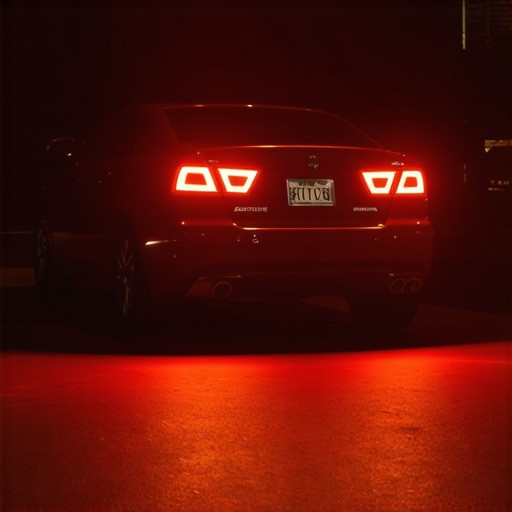
I’ll never forget that chilly Tuesday night when I looked out my window and saw a faint, crimson glow bathing my driveway in light. My stomach did a somersault. I hadn’t touched the car in three hours, yet there were the brake lights, stubbornly burning through my battery. It’s one of those “car person” nightmares that makes you think your electrical system has finally developed a mind of its own. If you’re seeing this right now, don’t panic. You aren’t headed for a total transmission meltdown or a thousand-dollar wiring job.
Stop the Red Glow and Save Your Battery
Most people think they need a master mechanic the second an electrical gremlin appears. I certainly did. Years ago, when I first encountered this, I started pulling fuses like a madman, convinced the computer was fried. I even considered calling for a tow truck because I was sure the car would be dead by morning. The reality is usually much simpler and, thankfully, much cheaper. We are going to walk through the exact steps to identify why your brake lights stay on even when you aren’t touching the pedal so you can get back to sleep. Have you ever faced that moment of panic seeing your car glowing in the dark like a haunted house?
Can a five dollar part really be the culprit?
You might be skeptical that something as vital as your braking system could be held together by a tiny piece of plastic. I was too. But according to data from the National Highway Traffic Safety Administration (NHTSA), maintaining clear and functioning signal lights is the most critical factor in preventing rear-end accidents, yet the mechanism that triggers them is surprisingly low-tech. Often, it’s just a small stopper that has crumbled into bits on your floorboard. If you’ve noticed the real reason your car battery keeps dying every few days involves these lights, you’re in the right place. We’re going to look under the dash and solve this before you have to jump-start your morning.
Look Under the Dash Before You Call for Help
To solve this, you need to get into a bit of a yoga pose. Grab a flashlight and slide your driver’s seat as far back as it goes. You’re looking for the top of the brake pedal arm, way up under the dashboard. This is the heart of the system. I’ve seen people spend hours on the ultimate guide to auto repair only to realize they could have found the problem in thirty seconds with a good light. You are looking for a small electrical switch with a plunger that rests against the brake pedal arm. If that plunger isn’t being pressed in when the pedal is up, your lights will stay on until your battery is a paperweight. Dealing with this early is one of those essential car service checks that prevents you from being stranded in a grocery store parking lot at 9:00 PM.
Find the Crumbs on Your Floor Mat
Before you start unbolting things, look at your floor mat. Do you see tiny, jagged pieces of plastic? Usually, they are white, yellow, or blue. This is the ‘smoking gun.’ Most cars use a small plastic stopper that fits into a hole on the brake pedal arm. The switch plunger is supposed to hit this stopper. Over time, heat and age make that plastic as brittle as a cracker, and it simply disintegrates. When it falls out, the plunger goes right through the empty hole instead of being pushed in. I remember one humid July afternoon when I was convinced my car had a parasitic battery drain that would require a specialist. I was sweating, frustrated, and ready to give up until I noticed a few neon-green plastic shards on my shoe. That 50-cent piece of plastic had cost me three days of jump-starting my car. If you find these crumbs, you’ve found your culprit.
How to Test the Switch with Your Bare Hands
If the stopper is still there but the lights are still on, it’s time to test the switch itself. Think of this switch like a reverse doorbell. In your house, you press the button to make the bell ring. In your car, the pedal holds the button in to keep the lights off. With the car off, reach up and manually press that plunger in with your finger. Have a friend stand behind the car. If the lights go out when you press it, the switch is fine, and you just have an alignment or stopper issue. If the lights stay on even when the plunger is fully depressed, the internal spring or contact has failed. This is a common part of modern brake service that most people overlook because they focus only on the pads and rotors. If the switch is dead, you can usually unplug it and twist it a quarter-turn to remove it. It’s a simple fix that keeps your car from developing more serious issues, like a transmission shift interlock failure, where the car refuses to leave ‘Park’ because it doesn’t think you’re hitting the brakes. Sometimes, you might even notice the reason your interior lights flicker is tied to these faulty grounds in the brake circuit. Identifying the physical break in the circuit is 90% of the battle.Most DIY enthusiasts fall into the ‘parts cannon’ trap where they replace everything but the actual problem. You’ve likely heard the advice that if an electrical component fails, you should immediately check the fuse. However, when your brake lights are stuck on, the fuse is obviously intact. The real nuance that separates a driveway tinkerer from a pro is understanding signal logic. In modern vehicles, that brake switch is often more than a simple on/off toggle; it’s a data point for the ECU. If you install a cheap, off-brand replacement, you might find that while your lights work, your cruise control dies or your car starts acting like it has a haunted gearbox. This is why the truth about aftermarket vs oem body panels and sensors is so critical—tolerances matter.
Don’t Just Throw Parts at the Problem
I’ve seen countless drivers spend a fortune on top transmission repair tips because their car was ‘shuddering’ or ‘hunting for gears,’ only to discover the car thought the brakes were being applied at 70 mph. When the computer receives a ‘brakes on’ signal while the throttle is open, it gets confused. It might cut fuel or force a downshift, leading you to believe you have a mechanical failure when it’s just a 15-dollar electrical glitch. According to studies by the Society of Automotive Engineers (SAE), even a minor 0.5-volt variance in sensor return signals can trigger a ‘limp mode’ in drive-by-wire systems. This is a sophisticated level of the ultimate guide to auto repair that most local shops won’t mention until they’ve already billed you for a diagnostic.
Why does your car think you’re driving with two feet?
This is the ‘hidden’ error. If that brake switch is physically stuck or electrically shorted, the traction control and ABS systems also go haywire. You might notice why your transmission hunts for gears while climbing a hill is actually related to a faulty brake signal override. The car is trying to protect itself from ‘brake dragging,’ a condition that overheats rotors and ruins fuel economy. If you’ve recently had body work done, you must also consider why your cars safety sensors need a reset after any front-end work. A misaligned bumper or a jostled frame can sometimes interfere with the pedal assembly’s calibration.
Avoid the chemical shortcut that ruins sensors
Here is the ‘Oops’ factor that I see far too often: the WD-40 mistake. When a switch gets sticky, the first instinct is to spray a lubricant in there. Stop right there. Most household lubricants are petroleum-based and can actually dissolve the sensitive plastic internals of the switch or, worse, act as an insulator that prevents the electrical contact from closing. If the switch is sticking, use a dedicated electrical contact cleaner or just replace the unit. It’s a precision instrument, not a door hinge. I once spent four hours cleaning out ‘gunk’ from a switch that a neighbor had ‘fixed’ with white lithium grease, only to have it short out and blow the main integration relay. Have you ever fallen into this trap of trying a ‘quick fix’ that ended up making things worse? Let me know in the comments, because we’ve all been there.
The One Tool That Stops the Guesswork
If you’re serious about moving beyond basic fixes, you need a high-quality digital multimeter. I personally swear by the Fluke 115 because it’s fast and incredibly accurate for low-voltage automotive circuits. When you’re dealing with a brake light that won’t turn off, you aren’t just looking for power; you’re looking for resistance. A cheap test light might glow, but it won’t tell you if you have a high-resistance ground that’s tricking the computer into thinking the pedal is depressed. This level of precision is what separates a simple repair from the ultimate guide to auto repair mastery. I’ve seen too many people replace perfectly good switches when the real issue was a corroded pin in the harness that only a multimeter could reveal.
Data Beats the Part Cannon Every Time
Once you’ve confirmed the hardware is sound, the next step in professional-grade troubleshooting is a bidirectional scan tool. Unlike a basic code reader, a bidirectional tool lets you send a command to the car. You can literally tell the car’s computer to ‘turn the brake lights off’ from your tablet. If they turn off, you know the wiring from the computer to the bulbs is perfect, and the fault lies entirely with the switch or the pedal. This is vital when trying to figure out how to tell if your transmission is slipping or if its just a sensor. Often, a faulty brake signal is the culprit behind shift logic errors. As noted in the Bosch Automotive Handbook, modern control units require high-impedance testing tools to prevent ‘ghost voltages’ from providing false readings that can lead to misdiagnosis of complex electronic modules. Following these technical standards ensures your top transmission repair tips actually save you money rather than causing more electrical interference.
How can I keep these electrical gremlins away for the long haul?
Maintenance isn’t just about changing oil; it’s about protecting the nervous system of your vehicle. Every time you perform essential car service checks, you should inspect your main ground straps. These are the thick cables that connect your engine and battery to the frame. If they get crusty or green with corrosion, the electricity tries to find a path back through smaller circuits—like your brake switch or your dashboard lights. This is frequently the trick to finding a parasitic battery drain that seems impossible to pin down. Apply a small amount of dielectric grease to your electrical connectors after cleaning them. It seals out moisture and prevents the oxygen-rich air from eating away at the delicate copper pins.
The Future of the Stop-Light Switch
We are rapidly moving toward a world of ‘brake-by-wire.’ In many new EVs and high-end luxury cars, there is no physical mechanical switch behind the pedal that clicks. Instead, a pressure sensor in the master cylinder tells the computer how hard you are pressing, and the computer decides when to illuminate the LEDs. While this removes the crumbling plastic stopper problem, it introduces a new layer of software complexity. Staying ahead of these changes is part of the evolving landscape of brake service. If you want to keep your car on the road for 300,000 miles, take ten minutes this weekend to look at your battery terminals and ground points. Tightening one loose 10mm bolt today could save you from a major electrical headache next month.
What My Scuffed Knuckles Taught Me About Electrical Gremlins
After years of chasing shadows in engine bays, I’ve realized that the biggest ‘aha’ moments don’t come from a computer screen; they come from the floorboard. The first time I saw those brake lights burning, I assumed the worst—a fried ECU or a total transmission failure. But the lesson was simpler: look for the physical failure before assuming the digital one. I’ve learned that a $5 part can simulate a $500 problem, and if you don’t verify the mechanical switch, you’re just throwing money into the wind. This is why I always preach that patience is your most valuable tool. Before you go hunting for the trick to finding a parasitic battery drain, spend thirty seconds checking for plastic crumbs on your mat. It’s the difference between a quick fix and an expensive week at the shop.
The Gear That Stops the Guesswork
If you’re ready to stop being intimidated by your car’s wiring, there are a few things I never leave home without. First, get a multimeter that won’t lie to you; I trust the Fluke 115 because it catches those tiny resistance drops that cheaper models miss. Second, don’t rely solely on visual checks; while you can learn how to check your brake pads without taking the wheels off, electrical issues require a deeper look. I also keep a stash of high-quality dielectric grease in my toolbox. It’s the secret weapon for any essential car service checks, ensuring that once you fix a connection, moisture and corrosion won’t bring the problem back next winter. These tools turn ‘I think’ into ‘I know.’
You’re Now the Master of the Machine
There’s a unique kind of pride that comes from walking out to your driveway and seeing your car dark, quiet, and ready to start. By understanding the relationship between a simple pedal switch and the complex computer system, you’ve moved beyond being a driver—you’re now an informed caretaker. Whether you are following the ultimate guide to auto repair or just trying to figure out how to tell if your transmission is slipping or if its just a sensor, you have the mindset to solve it. Don’t let the red glow win; grab your flashlight and take control of your vehicle’s health today. Have you ever been surprised by a tiny, cheap part causing a massive headache in your car? Let me know in the comments below!