
Picture this: It is seven in the morning, the windshield is covered in a stubborn layer of frost, and you are shivering in your driver’s seat. You turn the heater dial all the way to red, expecting that comforting blast of warm air. But ten minutes into your commute, the vents are still blowing a tepid, pathetic breeze. I lived this exact nightmare last winter. For weeks, I just assumed my older sedan was tired, or maybe the heater core was giving up. I even bought a heavy winter coat just to wear while driving. The real culprit? A tiny, inexpensive metal valve called the thermostat was stuck wide open, constantly dumping coolant through the radiator and preventing the engine from ever reaching its proper operating temperature.
Why a Cold Cabin is Only the Tip of the Iceberg
When you suffer through a freezing commute, it is easy to assume you are just dealing with a comfort issue. But running an engine that never warms up is a silent killer for your vehicle. Your car’s computer thinks the engine is perpetually cold, so it dumps extra fuel into the cylinders to compensate. This not only destroys your gas mileage but also dilutes your motor oil with unburnt fuel. I learned this the hard way years ago when I ignored a slow-warming engine and ended up washing out my cylinder walls, leading to a massive repair bill that could have been avoided with a simple check. If your heater is acting up, you might actually be experiencing the hidden reason your car heater only blows cold air, which is almost always a thermostat failing to close.
Is diagnosing a thermostat actually as hard as mechanics make it sound?
Many folks worry that diagnosing cooling system issues requires expensive diagnostic tools or hours of tearing apart the engine bay. The truth is, you do not need to be a certified master mechanic to figure this out. According to automotive engineering data from the Car Care Council, operating an engine below its optimal temperature of 195 to 220 degrees Fahrenheit can increase fuel consumption by up to 10%, meaning a bad thermostat actively drains your wallet every single mile. Luckily, there is a incredibly straightforward diagnostic trick you can perform right in your driveway with zero tools. By utilizing the simple test to see if your thermostat is stuck open, you can verify the health of your cooling system in under fifteen minutes. Have you ever spent a miserable winter morning shivering in your car because your heater refused to wake up? Let me know in the comments below, and let’s get that cabin warm again.
How to Run the Hand-on-Hose Temperature Test
To verify if your thermostat is permanently open, you do not need to drain your coolant or pull out a single wrench. Instead, we are going to use our hands as basic temperature sensors. This method is incredibly reliable because it relies on the basic physics of how your engine cycles water. Think of your thermostat as a security guard at a gate. When the engine is cold, the guard should keep the gate locked tight so the coolant stays inside the engine block to warm up quickly. If the gate is wide open from the very start, coolant rushes out to the radiator immediately, staying cold forever.
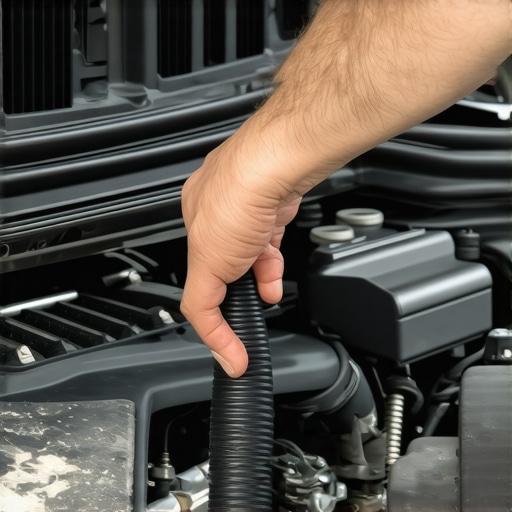
First, make sure your car has been parked long enough for the engine to be completely cool to the touch. Pop the hood and locate your upper radiator hose. This is the thick rubber tube, usually about two inches in diameter, that runs from the top of the radiator back to the engine block. Once you have located it, you are ready to start the engine. I remember trying this on my old sedan on a freezing Saturday morning, holding my breath to see if my suspicions were correct.
Monitoring the Temperature Difference
With the engine idling, gently place your hand on the upper radiator hose. At this stage, the hose should feel completely cold. Keep your hand there for about three to five minutes as the engine runs. If the thermostat is functioning correctly, that hose will stay cold for several minutes, and then suddenly get very hot all at once. This sudden surge of heat means the engine reached its target temperature and the thermostat finally opened up to let the hot coolant circulate.
However, if the hose starts getting gradually warmer from the very second you start the car, your thermostat is stuck wide open. The coolant is slowly creeping through the radiator instead of staying bottled up in the engine block. If you suspect your vehicle has deeper issues beyond simple temperature regulation, keeping up with essential car service checks to extend your vehicles life can save you thousands in premature engine wear. Neglecting these early warning signs is a fast track to more expensive visits to local shops.
What to Do When Your Car Needs More Complex Repairs
While testing a thermostat is easy, sometimes cooling system failures can lead to overheating, which warps cylinder heads or cracks engine blocks. When things go wrong under the hood, you might find yourself facing extensive engine work or needing a reliable team to perform a complete auto repair keep your car running smoothly. If you ever experience a fender bender during a winter slide, you might also need professional help restoring your vehicle’s body panels and plastic trim to pristine condition. In those cases, looking into professional collision renewal strategies restoring your car to perfection is your best path forward to ensure your car remains structurally safe and visually appealing.
When discussing sluggish cabin heating, many DIY enthusiasts jump straight to flushing the heater core or swapping out the dashboard blend door. In my years of working under hoods, I have realized that people routinely overcomplicate this issue. We are conditioned to assume that a lack of heat must be a massive mechanical disaster, when in reality, the simple thermostat is the most common single point of failure in your entire automotive cooling system. Let us dig deeper into the actual physics of why this happens and look at the nuances most vehicle owners completely overlook.
The Great Coolant Myth That Ruins Engines
The single biggest mistake I see people make when diagnosing heating issues is assuming that more coolant equals more heat. I have met countless drivers who kept topping off their overflow reservoir with straight antifreeze, thinking it would act like a thicker blanket for their motor. This is actually a dangerous trap. Pure antifreeze has a much lower heat capacity than water. If you run too high a concentration of antifreeze to water, your cooling system actually becomes less efficient at transferring thermal energy, which can cause hot spots in your engine block while your cabin remains freezing.
Furthermore, people often assume that if their car is not overheating, the cooling system is doing its job. A stuck-open thermostat is just as damaging as one that is stuck shut, albeit over a longer period. According to a study by the National Institute for Automotive Service Excellence (ASE), operating an engine below its designed thermal range causes accelerated wear on piston rings due to fuel washing away the lubricating oil film. If you ignore the slow warmup times, you are actively shorting the lifespan of your powertrain.
Why do new brake pads squeal even when my mechanic swears they are fine?
Just like with cooling systems, there is a lot of misinformation surrounding other basic maintenance tasks like brake jobs. Many drivers panic when they hear a squeal, assuming the shop did a terrible job. However, modern ceramic brake pads require a very specific molecular bedding-in process to transfer a thin layer of friction material onto the rotors. If you want to know what actually goes into a proper system overhaul, checking out a guide on how to choose the best brake service in 2025 can save you from unnecessary panic. Sometimes, a tiny bit of noise is just temporary pad settling, while other times it points to a deeper issue like a warped rotor or a failing caliper slide pin.
Don’t Fall for the Universal Fluid Trap
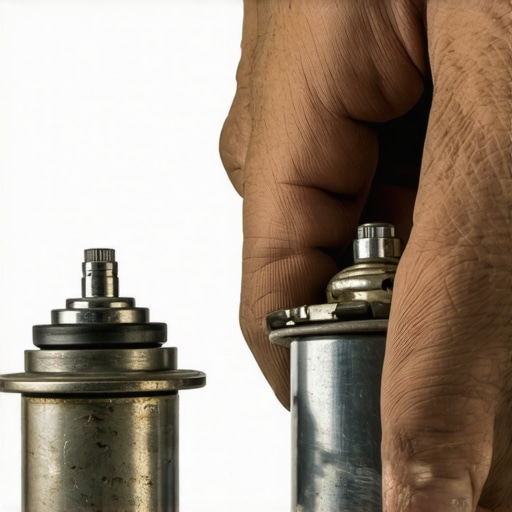
Another common nuance is the danger of using “universal” fluids. Whether you are topping off your coolant, power steering, or transmission fluid, the word “universal” is usually a marketing gimmick. Modern vehicles are engineered with incredibly tight tolerances. For instance, using the wrong formulation of automatic transmission fluid can cause clutch slippage and lead to premature failure. If you are experiencing shifting issues, relying on quick-fix additives is a major gamble. Understanding why relying on transmission leak repair fluid is often a costly mistake will help you avoid destroying a complex gearbox with cheap temporary sealers.
Instead, focus on systematic diagnosis and using OEM-specified fluids. Have you ever fallen into this trap of using a universal fluid or ignoring a slow-warming engine until it was too late? Let me know in the comments. Keeping your vehicle in top shape requires looking past the easy marketing fixes and focusing on real, preventative care.
My Personal Toolkit for Cooling System Diagnostic Success
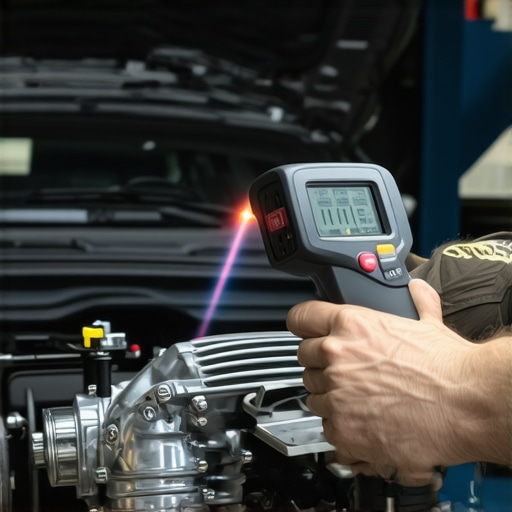
Over the years, I have realized that trying to diagnose cooling system issues without the right gear is a recipe for immense frustration. While the hand-on-hose method is an excellent first step to identify a thermostat that is stuck open, you eventually need hard data. For my personal garage, I refuse to work without an infrared thermometer and a cooling system pressure tester kit. I use a rugged, dual-laser infrared thermometer because it allows me to pinpoint exact surface temperatures at the thermostat housing, radiator core, and heater core inlet tubes without risking a severe burn. By measuring the temperature differential across these specific points, I can tell you if a heater core is clogged long before I ever consider pulling the dashboard apart.
Another tool that has saved me countless hours is an airlift vacuum refilling tool. When you replace a thermostat or a water pump, pocketed air bubbles are your absolute worst enemy. Modern engine cooling systems are notorious for trapping air in high-elevation pockets, which can mimic the symptoms of a failed head gasket. The vacuum refiller pulls a deep vacuum on the entire cooling system, collapses the radiator hoses, and then uses that atmospheric vacuum to draw fresh coolant into every single crevice of the block, completely eliminating the need for tedious manual bleeding. For more complex issues under the hood, maintaining a consistent diagnostic checklist is key to a long-lasting engine, and keeping up with auto repair keep your car running smoothly is how you preserve your vehicle’s resale value.
How do I maintain my cooling system health over time?
Long-term reliability comes down to understanding the chemical breakdown of your fluids. Coolant is not just there to keep the engine from freezing or boiling; it contains vital anti-corrosion inhibitors that coat the delicate aluminum inside your engine block and heater core. Over time, these inhibitors break down due to thermal stress and electrical conductivity. To maintain your cooling system indefinitely, check your coolant’s pH level and freeze-point protection at least once a year using specialized test strips or a refractometer. According to technical documentation from the Automotive Maintenance and Repair Association (AMRA), neglecting coolant pH balance leads directly to localized electrolysis, which can eat through a water pump impeller in under 30,000 miles. If your cooling system has been neglected for too long, checking in with trusted experts who understand essential car service checks to extend your vehicles life is the safest path forward.
The Future of Thermal Management and Smart Valves
Looking ahead, the humble mechanical thermostat is rapidly becoming a relic of the past. In modern and upcoming vehicle architectures, manufacturers are transitioning to electronically controlled rotary valves and active thermal management systems. Instead of relying on a physical wax pellet that melts at a set temperature, these smart valves are controlled directly by the engine control unit (ECU). This allows the vehicle to actively split coolant flow between the battery pack, cabin heater, and engine block based on driving load and ambient temperatures. While this technology yields incredible fuel efficiency gains, it also means DIY diagnostics will require advanced OBD-II scanning equipment rather than a simple hand-on-the-hose check. If you want to keep your engine healthy, I strongly encourage you to try my advanced tip: pick up a set of coolant pH test strips this weekend and test your coolant’s acidity to prevent internal engine erosion before it starts.
When you are shivering in your car waiting for the heater to warm up, it is easy to assume you need a massive overhaul. However, as we have explored, a simple diagnostic routine like the hand-on-hose test often points to a cheap, easily replaceable thermostat. By tackling these issues early, you protect your engine from premature wear and keep your heating system running efficiently through the coldest winter mornings.
The Hardest Lesson I Learned About Neglecting Minor Coolant Leaks
Years ago, I thought a tiny, sweet-smelling drip under my radiator was something I could ignore by simply topping off the reservoir every few weeks. That small oversight eventually led to an air lock in my heater core, leaving me freezing during a major snowstorm. Here is what that painful lesson taught me about real-world vehicle ownership:
- Small leaks always expand: A minor drip under pressure will eventually blow out when you least expect it, usually on a long highway trip.
- Air pockets are silent killers: When coolant drops, air enters the system and settles in the highest point, which is almost always your heater core. This is what that sweet smell coming from your vents really means before your cabin heat dies completely.
- Pressure caps matter: A worn-out radiator cap that cannot hold pressure lowers the boiling point of your coolant, causing localized boiling and cabin heat loss even if your thermostat works perfectly.
My Personal Toolkit for Cooling System Success
I do not believe in guessing when it comes to automotive diagnostics. If you want to stop throwing parts at a cold cabin, these are the exact tools I rely on in my own garage to pinpoint the issue quickly:
- Infrared Laser Thermometer: This is the ultimate tool to verify the hand-on-hose test. You can measure the exact input and output temperatures of your heater core hoses at the firewall to see if coolant is actually flowing through.
- Cooling System Pressure Tester: By pressurizing the system cold, you can easily find hidden hairline cracks in plastic thermostat housings or radiator tanks without burning your fingers.
- Refractometer: Skip the cheap hydrometer float testers. A refractometer gives you an incredibly precise reading of your glycol-to-water ratio, ensuring your mixture can actually transport heat effectively.
The Future of Getting Your Cabin Warm
Modern vehicles are moving fast toward complex, computer-controlled thermal systems, but the fundamental physics of heat transfer remain the exact same. Do not let a cold breeze from your vents ruin your daily commute or compromise your engine’s health. By understanding how your thermostat regulates temperature and keeping your coolant pristine, you can keep your vehicle running reliably for years to come. If you ever find your cooling issues have escalated to major engine trouble, finding a trustworthy shop for a complete auto repair keep your car running smoothly is your next best step.
Have you ever tried the hand-on-hose test to diagnose a stubborn heating issue in your own driveway? Let me know in the comments below!