

I will never forget the sound. It was a crisp Tuesday morning, and I was rushing to work, sipping my lukewarm coffee, when a sudden, violent metal-on-metal clatter erupted from under my hood. Within three seconds, the engine died. Total silence. I coasted to the shoulder, my heart sinking. I had ignored that faint, rhythmic ticking sound for weeks, chalking it up to an old car being old. That was the day I learned—through a very expensive $4,500 repair bill—exactly what happens when a timing belt snaps. It completely ruined my cylinder head and bent my valves.
The Costly Mistake I Made So You Don’t Have To
When I was younger, I thought all car maintenance could be kicked down the road. I routinely checked my oil, but things like belts and pulleys felt like secondary problems. That was a massive error. Your timing belt is the literal heart monitor of your engine, keeping the camshaft and crankshaft spinning in perfect harmony. If it fails, your pistons and valves smash into each other at thousands of revolutions per minute. It is the ultimate engine killer. Today, I want to share the exact warning signs I missed so you can keep your car running safely and avoid the stomach-churning panic of a sudden highway breakdown.
Is a timing belt replacement actually worth the high price tag?
I get it. When a mechanic hands you an estimate for a timing belt job, your jaw drops. It is not cheap because getting to the belt requires stripping down half the front of your engine. You might wonder if you can just squeeze another ten thousand miles out of it. But here is the cold, hard truth: paying for preventive maintenance is always cheaper than buying a whole new engine or dealing with catastrophic failure on the interstate. According to the Car Care Council, neglecting routine belt inspections is one of the leading causes of avoidable, catastrophic engine failure. If you are already experiencing other performance issues, like feeling your brake pedal vibrates when you come to a stop or noticing a strange lag in your acceleration, your car is practically begging for a thorough essential car service check.
Listen Closely to Your Engine Compartment
Your car will almost always try to warn you before a disaster strikes; you just have to know how to listen. The most common early warning sign of a critically worn timing belt is a distinct, high-pitched ticking or squeaking noise coming from the front of the motor. It sounds almost like a spinning bicycle wheel clipping a playing card, or in some cases, a rapid sewing machine. This happens when the rubber teeth on the inside of the belt begin to wear down, crack, or lose their grip on the pulleys. If you hear this, do not wait. Have you ever heard a strange, rhythmic clicking under your hood and just hoped it would go away on its own? Tell me about your experience in the comments below—I promise I won’t judge, because I have been there too!
How to Inspect Your Timing Belt Without Paying a Diagnostic Fee
When I was trying to figure out if my second car’s belt was on its last legs, I was terrified of opening up the engine bay. I assumed I would need a lift and hundreds of dollars of specialty tools. But for most cars, checking the physical condition of the belt only requires a basic socket set and fifteen minutes of your time. You are essentially looking for physical degradation before the rubber snaps like a dried-out rubber band. Think of your timing belt like the tread on your tires; once the rubber loses its structural integrity, a blowout is inevitable.
My messy learning experience happened on a cramped 2004 four-cylinder engine. I forgot to disconnect the negative battery terminal first, dropped a small 10mm bolt directly into the plastic lower engine cover, and spent an hour fishing it out with a magnet. Learn from my frustration: disconnect your battery, work slowly, and keep a magnetic tray nearby. To inspect the belt, locate the plastic timing cover on the side of your engine. Remove the top three or four bolts securing the upper portion of this plastic shield. You do not need to take the entire cover off; you just need to pry it back far enough to shine a bright flashlight onto the belt itself.

Once you have a clear view of the belt, look closely at the rubber. You want to look for fine cracks along the smooth backing, fraying along the structural edges, or a glossy, glazed appearance which indicates excessive heat buildup. If you see any structural fraying, do not drive the car. This level of wear means the belt could jump a tooth on the cam gear at any moment, which ruins your engine timing and causes severe mechanical damage similar to when your why your brake pedal goes all the way to the floor during heavy braking.
Rotate the Crankshaft to Inspect the Entire Belt Length
You cannot just look at the small six-inch section of the belt that is visible when you first open the cover. You need to inspect the entire loop. To do this safely, place your transmission in neutral or park, set the emergency brake, and use a socket wrench on the large bolt in the center of the crankshaft pulley. Gently turn the crankshaft clockwise. As you turn the pulley, the timing belt will rotate slowly. Stop every few inches to inspect the next section for missing rubber teeth or deep cracks. If you notice any fluid pooling on the belt, you have a leaking camshaft or crankshaft seal. Oil quickly degrades the rubber compound of the belt, accelerating its failure.
Why You Must Replace the Water Pump at the Same Time
When you take your vehicle in for a timing belt service, the mechanic will almost certainly recommend replacing the water pump too. I used to think this was a classic dealership upsell technique to pad the bill. It is not. In most modern engines, the timing belt physically drives the water pump. If that pump seizes up two months after your new belt is installed, it will snap the brand-new belt instantly, leaving you with the exact same ruined cylinder head. Because the mechanic has already done the heavy lifting of stripping down the front engine accessories to reach the belt, the labor to swap the water pump is virtually free. Skipping this step is like paying for a premium brake service but refusing to replace heavily warped rotors—it completely compromises the entire repair. The exact same logic applies to your gearbox; ignoring simple preventative steps is why relying on transmission leak repair fluid is often a costly mistake instead of doing a proper fix.
When we look at the broader landscape of maintaining our vehicles, there is a fundamental flaw in how most drivers approach auto repair. Everyone says you should strictly follow the factory service manual down to the exact mile, but in my experience, real-world driving conditions—like stop-and-go traffic, extreme seasonal temperatures, and carrying heavy loads—render those standard intervals obsolete. If you only service your car based on a rigid mileage number printed in a booklet, you are likely either wasting money on premature fluid flushes or, worse, letting critical components fail silently under harsh operating conditions.
The Preventive Maintenance Myth That Ruins Engines
The biggest myth in DIY garages and online forums is that modern cars are essentially self-correcting or that onboard computer sensors will catch everything before a component fails. This is a highly dangerous assumption. A sensor can tell you if there is an active misfire, but it cannot measure the physical dry-rot of a serpentine belt or notice a hairline crack in your radiator plastic. By the time a warning light pops up on your dashboard, the damage is often already done.
For example, waiting for your dashboard to warn you about a low fluid level in your gearbox is an absolute recipe for disaster. This passive approach to maintenance is why relying on transmission leak repair fluid is often a costly mistake instead of investing in proactive physical inspections. You have to physically look, touch, and smell the components to know their true health.
Why do your brake rotors keep warping even after you buy premium parts?
This is an advanced question that frustrates even seasoned backyard mechanics. You spend top dollar on high-end ceramic pads and slotted rotors, only to feel that dreaded steering wheel shimmy return six months later. The hidden nuance here is rarely the quality of the rotor itself; instead, it is almost always hub runout or improper caliper slide pin maintenance. According to a technical study by the National Institute for Automotive Service Excellence (ASE), microscopic rust buildup on the wheel hub face can cause a brand-new rotor to sit slightly off-parallel. Over a few thousand miles, this creates uneven pad wear and extreme heat spots. Simply slapping on new parts during a brake service without cleaning the hub surface down to bare metal is a classic trap that guarantees premature failure. This is exactly why your why your brake rotors keep warping every few months despite your best efforts.
The Overlooked Coolant Acid Trap
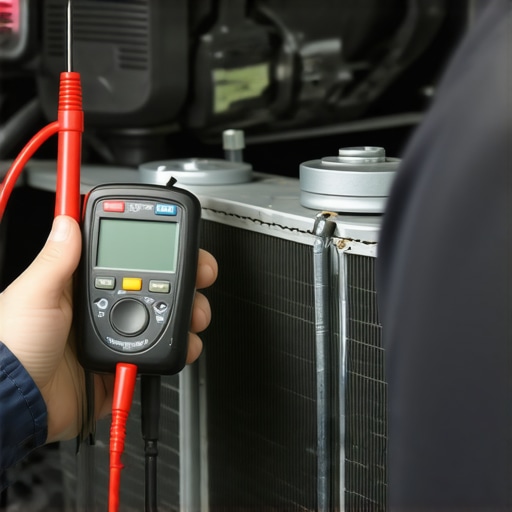
Another common mistake is ignoring the chemical breakdown of your engine coolant. Many drivers believe that as long as the coolant reservoir is full and the fluid looks bright pink or green, everything is fine. However, coolant slowly turns acidic over time due to constant thermal cycling. Acidic coolant behaves like an internal battery, creating an electrochemical reaction that eats away at your aluminum cylinder heads, heater core, and water pump seals from the inside out.
Testing this is incredibly simple with a cheap digital multimeter. Set your meter to DC volts, place the negative probe on the negative battery terminal, and submerge the positive probe directly into the cool radiator fluid. If you read more than 0.3 volts, your coolant has become a destructive electrolyte and needs immediate flushing. Neglecting this hidden chemistry is a major contributor to premature water pump failures and unexpected overheating. Have you ever fallen into this trap of ignoring fluids that looked perfectly clean? Let me know in the comments below, and let us discuss how to keep your vehicle running flawlessly through a proper essential car service check.
Maintaining your vehicle over the long haul is not about luck; it is about having the right diagnostics. Relying on your dashboard lights is a massive mistake. If you want to take back control of your car service routine, you need to transition from passive driving to proactive monitoring. This means looking at your vehicle as a complete system of interconnected parts, where a slight slip in one area will inevitably cascade into another.
How do I maintain critical vehicle systems over time?
The answer is simple: you must inspect your primary components on a strict, self-determined calendar cycle rather than relying solely on mileage. For instance, making sure you schedule an essential car service check every spring and fall will catch minor issues before they leave you stranded on the shoulder. During these personal inspections, you should focus on physical testing rather than visual guesswork. This is why I personally recommend investing in a high-quality OBD2 scanner that reads live sensor data, rather than a cheap ten-dollar code reader. A professional-grade scanner lets you track live fuel trims, transmission fluid temperatures, and individual wheel speed sensors in real-time. According to the technical service manuals published by the Society of Automotive Engineers (SAE), tracking live data streams is the only reliable way to detect minor transmission gear slippage or sensor lag before it triggers a permanent mechanical failure.
If you ignore these subtle live-data warnings, you will eventually face severe driveability issues. You might find that your car won’t shift out of park when you step on the brake, or you might start experiencing sudden gear hunting on steep inclines. Tracking sensor drift early on will save you thousands in rebuilt gearboxes and complex valve-body overhauls.

Looking ahead, the future of auto repair is shifting heavily toward predictive diagnostics. In the coming years, we will see consumer-level vehicles equipped with onboard AI telemetry that monitors vibration harmonics. These systems will analyze subtle vibrations in your chassis and tell you exactly which wheel bearing or suspension bushing is starting to fatigue. Until that technology becomes standard, we have to rely on our own hands-on testing. The next time you work on your car, I highly encourage you to try the multimeter coolant test I mentioned earlier. Pop your hood, grab your digital meter, and measure the electrochemical voltage of your radiator fluid. It takes less than two minutes and can save your engine from a silent, acidic death. If your cooling system is clean, you can focus on other critical areas, like checking for signs of uneven pad wear during your next brake service.
3 Myths About Modern Engine Durability That Cost Me Thousands
When I first started wrenching on my own vehicles, I fell victim to common garage myths that ultimately cost me thousands of dollars. First, I believed that modern engine parts are built to last forever without physical checks. The reality is that rubber components like belts and hoses degrade from environmental heat, regardless of your mileage. Second, I assumed that electronic sensors would warn me before a mechanical part broke. This is a dangerous lie; a snapping rubber belt or a leaking water pump seal will not trigger a dashboard warning light until the engine is already ruined. Finally, I thought keeping fluids topped off was enough, completely overlooking how chemical breakdown can turn clean-looking coolant into a highly corrosive acid. Breaking free from these assumptions is the first major step toward truly masterclass auto repair.
My Essential Diagnostics Toolkit for Every Driveway Mechanic
You do not need a professional garage setup to keep your car in peak health, but you do need a few carefully selected diagnostic tools. Here are the items I personally rely on to prevent catastrophic failures:
- A Digital Multimeter: Crucial for performing the quick coolant acid test, tracking down a parasitic battery drain, or checking alternator health.
- A Quality OBD2 Scanner: Skip the basic code readers and look for one that displays live data streams so you can monitor real-time transmission temperatures and fuel trims.
- A Telescoping Inspection Mirror: This simple tool is a lifesaver for looking at the bottom side of your timing belt or finding hidden fluid leaks behind the engine block.
- A Magnetic Parts Tray: Because dropping a tiny bolt into your engine cover can turn a quick fifteen-minute inspection into a multi-hour headache.
Take Control of Your Car Maintenance Routine Today
Preventive maintenance is not about reacting to problems after they happen; it is about building a proactive habit of physical inspection. Whether you are checking your belt for fine cracks, testing your coolant for acidic voltage, or preparing for an upcoming essential car service check, taking these small steps today will keep your vehicle running smoothly and safely for years to come. Do not wait for a loud rattle or a dashboard warning light to tell you something is wrong. Grab your tools, pop your hood this weekend, and take charge of your vehicle’s mechanical future.
Have you ever been blindsided by an engine part that failed without warning? Let me know in the comments below, and let us discuss how to spot the early warning signs together!