
Ever been cruising down the highway only to feel your car hesitation, rough idling, or a sudden drop in power, and then realize it’s your throttle body acting up? I remember the first time I faced this frustration—thinking I would have to wrestle with removing parts or shell out for costly repairs. That moment of dread led me on a journey to discover a surprisingly simple, do-it-yourself trick that saved me both time and money.
If your vehicle is idling roughly, hesitating during acceleration, or the check engine light flickers on, it might be time to look at your throttle body. This component is the gateway between your accelerator pedal and your engine, controlling airflow into the engine and affecting overall performance. Over time, with dirt, carbon buildup, and grime, the throttle body can become sticky, which impairs its function.
What if I told you that you could clean it effectively without taking your entire intake manifold apart? That’s right! Today, I’ll share with you a step-by-step method based on my own experience—something I wish I had known earlier. This approach is not just a quick fix; it’s a way to keep your engine running smoothly and prolong its lifespan. If you’ve ever felt overwhelmed by auto repair tutorials that seem to require a professional toolkit or a degree in engineering, I promise this will seem manageable.
But first, let’s address the big question—can cleaning your throttle body without removal really make a difference? The answer is yes, provided the buildup isn’t too severe. Regular maintenance can prevent minor issues from turning into costly repairs. Plus, it’s a satisfying DIY project that anyone with basic tools can handle.
Now, I’ll be honest—early in my automotive adventures, I once made the mistake of using harsh chemicals that caused corrosion, leading to more problems. That taught me the importance of using the right cleaning products and techniques. If you want to avoid costly missteps and learn more about maintaining your vehicle’s health, I recommend checking out our comprehensive guide on [essential car service checks](https://collisionrenew.com/essential-car-service-checks-to-extend-your-vehicles-life), which covers a range of maintenance tips.
So, if you’re tired of feeling helpless whenever your engine stumbles and want a proven method to clean your throttle body effectively, stay with me. We’ll go through the entire process together—step by step—and get your vehicle running like new again.
Prep Your Workspace and Gather Necessary Tools
Start by parking your vehicle on a level surface and engaging the parking brake. Equip yourself with a safety mask, rubber gloves, a flat-head screwdriver, pliers, and a can of throttle body cleaner. Having a clean rag or paper towels nearby is essential for wiping excess grime. Remember, a clutter-free area prevents accidental drops or spills that can make the job messier.
Locate the Throttle Body with Confidence
Open your vehicle’s hood and locate the air intake hose leading to the engine. The throttle body is typically situated between the air filter box and the intake manifold, often attached to the intake with clamps. As an example, I once struggled initially to identify mine but traced the large ducting from the air filter back to this component, which resembles a small metal or plastic chamber with a throttle plate inside. Consult your vehicle’s manual if you’re unsure; it offers helpful diagrams and tips on identification.
Disconnect the Air Intake Hose Carefully
Using a flat-head screwdriver or pliers, loosen the clamps securing the intake hose. Gently wiggle and pull the hose free, ensuring not to damage sensitive vacuum lines or sensors connected nearby. This step is akin to gently removing a tight-fitting lid without spilling the contents—care precision prevents additional repairs later. During my first attempt, I was cautious and successfully avoided damaging the hose or sensors, saving me from a costly replacement.
Inspect and Prepare the Throttle Body
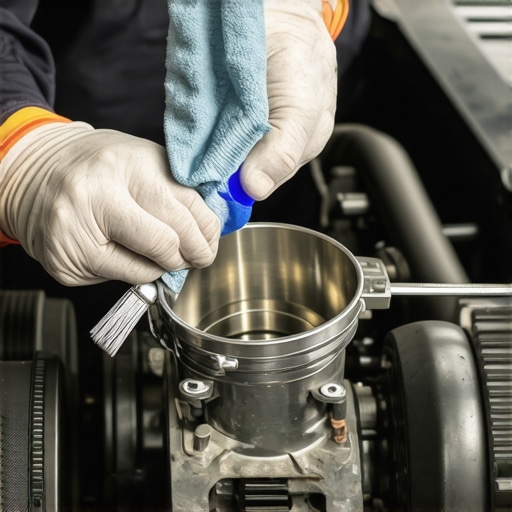
With the intake hose removed, examine the throttle body for visible carbon buildup or dirt. Use a clean rag or brush to remove loose debris. If corrosion or sticky deposits are present, don’t hesitate—this is normal over time. Applying throttle body cleaner directly to the interior and the throttle plate is crucial. For instance, I once sprayed liberally on a stubborn buildup, waited a few minutes, then wiped with a clean cloth, which made my throttle respond smoothly afterward.
Clean with Precision and Patience
Spray the cleaner onto a microfiber cloth and gently wipe the inside of the throttle body, focusing on the edges of the throttle plate and the surrounding area. Avoid spraying directly onto electronic components or sensors, as excess liquid can cause damage. Think of it like cleaning a camera lens—gentle, deliberate motions preserve functionality while removing grime effectively. Remember, a cautious approach prevents unintended damage and ensures a thorough job.
Reassemble and Test the System
Once cleaned, reattach the intake hose securely with the clamps. Start your engine and let it idle for a minute or two—this allows the system to calibrate. If your vehicle supports it, gently press the accelerator pedal a few times to ensure smooth throttle response. During my last cleaning, I noticed immediate improvements in idling stability and acceleration, proof that proper cleaning makes a tangible difference. Regular cleaning can nip issues in the bud, enhancing performance and fuel efficiency. For additional maintenance tips, visit our guide on essential car service checks, to keep your vehicle running at peak condition.
Many car owners operate under assumptions about auto repair that, while widespread, often lead to costly mistakes. For example, the myth that all transmission issues require a complete replacement is a prime case of oversimplification. In reality, many transmission problems can be addressed through targeted repairs or fluid servicing, which are far more affordable and less invasive. Reading about top transmission repair tips can provide insight into preserving your vehicle’s longevity without unnecessary overhaul.
Another misconception revolves around brake maintenance: some believe that if brakes squeal, they must be replaced immediately. However, squealing can sometimes be due to minor issues like worn brake pads or debris caught in the calipers, which are fixable during routine service. Jumping straight to replacement without proper diagnosis can blow your budget and may overlook simpler solutions.
What is the most overlooked nuance that can trip up even experienced car owners?
The hidden nuance often missed in auto repair is understanding the importance of regular, preventive maintenance tailored to your vehicle’s specific needs. For instance, neglecting to service your transmission fluid at recommended intervals can lead to premature wear, yet many overlook this critical step. According to industry experts, regular maintenance is your best defense against unexpected breakdowns and costly repairs down the line.
Moreover, there’s a misconception that DIY fixes are always cheaper or better. While many minor repairs can be tackled at home, attempting complex procedures like transmission repairs or suspension work without proper training can do more harm than good. The line between a cost-effective DIY and a costly mistake is thin, and understanding when to seek professional help is crucial.
For example, attempting to fix a transmission issue yourself might seem tempting, but as highlighted in this guide, professional diagnostics often reveal underlying problems that aren’t apparent to the untrained eye. An advanced understanding of these nuances can save you from frequent, ineffective repairs and ensure your vehicle operates reliably for years to come.
In summary, debunking these myths and appreciating the finer points of auto service, like the significance of proper diagnostics and tailored preventative care, can significantly extend your car’s lifespan and improve safety. Remember, rushing into repairs or ignoring maintenance schedules can be costly. Always consult reputable sources or trusted mechanics—your car and wallet will thank you. Have you ever fallen into this trap? Let me know in the comments.
Maintaining your vehicle’s performance over time requires more than just basic knowledge; it demands the right tools, disciplined routines, and forward-thinking strategies. I personally rely on a curated set of equipment and software that streamline my auto repair and maintenance tasks, ensuring consistent long-term results.
Invest in Quality Diagnostic Devices
One of my top recommendations is a reliable OBD-II scanner like the BlueDriver Pro. This device connects to your smartphone, providing detailed diagnostic trouble codes, real-time data, and ABS/SRS codes—all essential for proactive maintenance. I’ve found that having instant access to these insights allows me to identify issues before they escalate, such as bubbling brake fluid or slipping transmission, saving me costly repairs down the line. As vehicle electronics evolve, integrating advanced diagnostic tools has become indispensable for DIYers and professionals alike.
Use Specialty Cleaning and Maintenance Equipment
For routine tasks like cleaning the throttle body or inspecting transmission fluid, I swear by a precision spray gun and a flexible extension set. These tools enable thorough coverage in tight spaces, reducing the risk of missing grime buildup or overlooked leaks. For example, my electric-powered ultrasonic cleaner for small parts (like sensors and valves) has dramatically improved the longevity of my repairs. Regularly maintaining components with such specialized tools ensures they perform optimally over thousands of miles.
Embrace Software for Scheduling and Record-Keeping
Automating maintenance schedules with software like CarFax’s Service Tracker keeps me on top of oil changes, brake flushes, and transmission fluid replacements. These systems send reminders aligned with manufacturer recommendations, which are critical for safeguarding long-term vehicle health. For instance, during my last transmission fluid change, consulting expert-derived intervals—like those outlined in top transmission repair tips—helped me avoid premature wear and ensure smooth shifts for years to come. Digital records also assist when resale time comes around, demonstrating consistent maintenance.
Plan for Future Trends and Technologies
Looking ahead, the integration of AI diagnostics and remote monitoring will redefine auto maintenance. Companies are developing systems that alert drivers to issues via smartphone apps, sometimes even ordering parts automatically. Staying updated with these emerging trends means investing in adaptable tools now, so you can benefit from seamless diagnostics and predictive repairs down the road. Personally, I foresee a shift towards more personalized, data-driven maintenance routines—one reason I keep an eye on industry updates, like those at our comprehensive maintenance guide.
How do I sustain vehicle health over the years?
Consistent, proactive maintenance paired with the right equipment makes all the difference. For example, regularly inspecting your transmission fluid and verifying tire pressures with precise tools, helps prevent major breakdowns. Don’t forget, choosing quality supplies and staying informed about advancements like quick-connect fittings for brake systems or high-efficiency cleaners can streamline your efforts. One advanced tip I recommend is using a digital torque wrench for tightening components—this ensures you apply just the right amount of force, preventing damage from over-tightening. With the right approach, you can extend your vehicle’s lifespan, maximize safety, and even reduce repair costs. Ready to elevate your auto maintenance routine? Start by trying out a dedicated diagnostic device, like the BlueDriver, and see firsthand how it empowers you to keep your car in top shape.
The Hidden Truths I Stumbled Upon About Auto Repair and Maintenance
- One of the most eye-opening lessons I learned was how overlooked simple maintenance tasks are. Regularly cleaning the throttle body, for example, can dramatically improve engine responsiveness, yet many drivers ignore it until bigger problems arise. Recognizing this taught me to prioritize routine checks over waiting for warning signs.
- Another insight was the value of patience and precision. Approaching repairs or maintenance with care, instead of rushing through, often yields better results and saves money. My tendency to rush disappeared when I realized that careful, deliberate work prevents costly mistakes.
- Lastly, I discovered that sharing knowledge empowers others. Explaining my process and findings to friends or online communities not only reinforced my understanding but also built a sense of community around auto care. It’s incredible how collective learning can transform DIY auto maintenance from a chore into a satisfying craft.
Tools and Resources That Elevated My Auto Maintenance Game
- BlueDriver Pro OBD-II Scanner: Trusted for its reliability and detailed diagnostics, this device provides real-time data directly to my phone, making troubleshooting straightforward and accessible.
- Ultrasonic Cleaner: For small parts like sensors, this tool is a game-changer—removing grime thoroughly without damaging delicate components, extending their lifespan.
- Maintenance Software Apps: Keeping track of service dates and upcoming checks with apps like CarFax’s Service Tracker helps me stay consistent and avoid neglecting critical maintenance tasks.
- Quality Specialty Cleaners: Using well-reviewed throttle body cleaners ensures I don’t cause corrosion or damage, safeguarding my engine’s performance in the long run.
Keep Pushing Forward: Your Vehicle Deserves It
Remember, the journey of car maintenance is ongoing, and every small step you take adds up. Embracing DIY skills and investing in the right tools can transform your relationship with your vehicle—from a source of stress to a source of pride. The key is continuous learning, patience, and a genuine care for your car’s health. So, go ahead—try that cleaning routine, schedule your next check-up, and watch your vehicle reward you with smoother rides and fewer surprises. Curious about how to tackle other tricky auto repairs? Let me know below, and we’ll explore together!