

Picture this. It is 6:45 AM on a freezing Tuesday morning. You are already running late, your coffee is lukewarm, and your breath is fogging up in the chill. You hop into the driver’s seat, turn the key, and… nothing. Just a pathetic, hollow click. Your car battery is dead. Again. Even though you just jumped it yesterday and drove it for an hour. There is a silent thief lurking in your electrical system, slowly sipping away your power while you sleep. I know this frustration intimately. A few years ago, I spent three weeks jump-starting my sedan every single morning, convinced I just had a run of bad luck, before realizing I was dealing with a classic parasitic drain. It is incredibly frustrating, but I promise you that we can track down this hidden electrical vampire together using simple tools you probably already have in your garage.
The Cold Morning Shock and My Costly Mistake
When my car first started dying, I did what most desperate folks do: I ran to the local auto parts store and bought a brand-new battery. It set me back over a hundred and fifty bucks. For two days, everything was perfect. On the third morning, that familiar, dreaded silence returned. I had just ruined a brand-new battery because I treated the symptom instead of the disease. In my early days of DIY auto repair, I did not realize that a deep parasitic drain can permanently damage even a fresh battery if it is drained to empty multiple times. If you are experiencing this, do not panic and start throwing parts at it. Instead, we are going to use a systematic approach to isolate the circuit that is drawing power when the car is completely shut off.
Is finding an electrical leak actually worth the DIY hassle?
A lot of people tell me they are terrified of car electronics. They think they need an advanced engineering degree to touch a wiring harness. But here is the secret: you do not need to understand the entire car’s computer network; you just need to know how to use a basic digital multimeter. According to electrical engineering principles, a normal modern vehicle should only draw between 20 to 50 milliamperes of current when it is asleep to keep things like your radio presets and clock running. Anything over 100 milliamps will easily leave you stranded after a cold night. Finding the culprit is simply a process of elimination. We will connect our meter and pull fuses one by one until the excessive power draw drops. Have you ever walked out to your driveway only to find your vehicle completely lifeless without any warning? Let me know in the comments below, because you are definitely not alone in this struggle. Now, let us grab our safety glasses and get down to the actual step-by-step testing process.
Setting Up Your Multimeter for the Ultimate Drain Test
Think of your car’s electrical system like a giant water network under pressure. The battery is the reservoir, the wires are the pipes, and the accessories are the faucets. When you shut off the ignition, some faucets stay slightly open, like a slow drip. To find out exactly how much water is leaking, we have to place a meter directly in the path of the water flow. In electrical terms, this means we must connect our digital multimeter in series with the battery circuit, not in parallel. If you connect it incorrectly, you will instantly blow the tiny fuse inside your meter, turning your diagnostic tool into a useless plastic brick.
First, make sure your ignition is completely off, the keys are out of the ignition, and every single door is shut. If your car has an under-hood light, disconnect it or clamp the door switch shut so the car thinks it is closed. Now, put on your safety glasses. Loosen the negative battery terminal cable clamp and wiggle it off the post. Do not touch the positive side; we always work with the negative side to avoid accidental sparks against the car frame. Take your multimeter and plug the black probe into the common port. Plug the red probe into the high-amperage port, which is usually labeled as 10A or 20A. Set the dial on your meter to the DC Amps setting. Now, touch one probe to the negative battery terminal clamp and the other probe to the bare metal negative battery post itself. All the vehicle’s electrical current is now flowing through your meter.
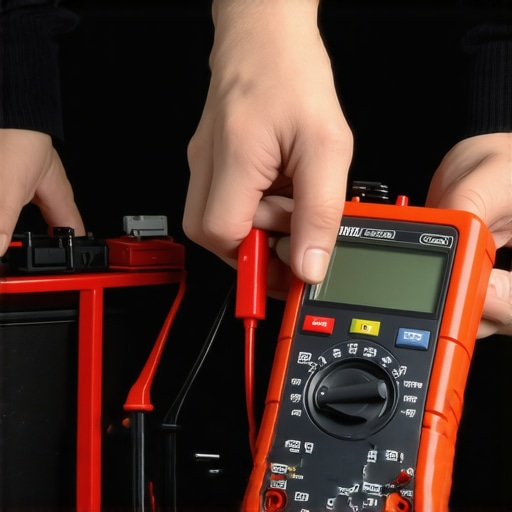
Waiting for the electrical system to fall asleep
When you first connect the meter, you will probably see a reading of 1 to 3 amps. Do not panic. This is just the car’s body control computers waking up because they suddenly sensed power. You need to wait. On some modern vehicles, it takes up to thirty minutes for every single onboard computer module to go to sleep. During my first real diagnostic attempt on an old hatchback, I got impatient after three minutes and started pulling fuses, only to realize later that the high reading was just the security system performing its standard self-check. Sit back, check your phone, and watch that number drop. Once it settles, if the reading remains above 0.05 amps (50 milliamps), you officially have a parasitic drain. If your battery has been struggling for other reasons, you might also want to review the real reason your car battery keeps dying every few days to rule out a chemically dead battery before you dissect the wiring harness.
The Systematic Fuse Pull Method to Isolate the Bad Circuit
Now that your meter is showing a steady, high parasitic draw, it is time to play detective. Pop open your car’s main fuse box, which is usually located under the hood or under the dashboard. You are going to use a pair of plastic fuse pullers to pull the fuses out one by one, watching the multimeter screen after each pull. If the reading on your meter does not budge when you pull a fuse, plug it back into its exact slot and move to the next one. This is pure process of elimination. It is like turning off individual water valves in your house to find which pipe is leaking.
What to do when the numbers finally drop
When you pull a fuse and suddenly see that multimeter reading plummet down to a healthy 0.02 or 0.03 amps, you have found your thief. Look at the diagram on the inside of the fuse box cover or check your owner’s manual to see what that specific fuse powers. Often, it will be labeled with something innocent like ‘dome light’, ‘radio’, or ‘instrument cluster’. I remember working on an SUV where pulling the ‘radio’ fuse dropped the draw from 650 milliamps to zero. It turned out an internal CD changer mechanism was jammed and was constantly trying to eject a non-existent disc all night long. If your search leads you toward complex dashboard systems, make sure you know how to fix a dashboard that rattles over every bump so you do not create new noises when putting the panels back together. If the fuse is tied to your braking system, you might need to inspect the physical switches, which is a common culprit explained in our guide on the reason your brake lights stay on even when the car is off. Once the circuit is isolated, you can inspect the individual components on that line to repair or replace the failing accessory.
While isolating a bad circuit with a fuse puller is a massive win, most backyard mechanics stop too early and fall into a dangerous trap. There is a widespread belief in the DIY community that once you find the fuse causing the draw, your job is practically done—you just need to replace the component on that circuit. In my experience, however, this hasty assumption often leads to wasted money. Modern automotive electronics do not always operate in isolation. A single fuse often powers multiple modules that communicate over a Controller Area Network (CAN bus). If one module refuses to go to sleep because it is waiting for a signal from a completely different, un-fused sensor, pulling the fuse will indeed stop the drain, but replacing the expensive module associated with that fuse will not fix the root cause. You might change a perfectly good radio module when a faulty door latch sensor was actually the culprit keeping the network awake.
The Costly Mistake of Blindly Pulling Fuses
Here is the absolute ‘oops’ factor you must avoid: pulling fuses on a modern, computer-controlled vehicle can actually mask the true problem or create new ones. When you pull and reinsert a fuse, you temporarily cut power to that control module. When power is restored, the module resets. This sudden reboot can temporarily cure a software hang-up, making you think you fixed the issue, only for the drain to return three days later. Furthermore, unplugging certain fuses can wake up other computers on the CAN bus network, spiking the electrical current and potentially blowing the fuse inside your digital multimeter. To prevent these headaches, many advanced technicians now prefer performing a voltage drop test across the fuses rather than pulling them, which keeps the circuits entirely intact and active during testing.
Why do some electrical drains only happen when it rains?
I often hear from drivers who are baffled because their battery only dies on wet, humid nights. This is a highly sophisticated issue that points directly to water intrusion. When seals around your windshield, sunroof, or taillights degrade, water can seep into your electrical distribution blocks or wiring harnesses. Moisture creates a conductive bridge between a constant hot wire and a ground path, bypasses the switch entirely, and creates a physical short-to-ground that siphons power. If you are dealing with dampness alongside your electrical mysteries, check out our guide on the reason your car interior feels damp every morning to pinpoint where the water is getting in. A study by the National Institute for Automotive Service Excellence (ASE) highlights that over thirty percent of intermittent electrical failures in modern vehicles are directly linked to environmental moisture corroding connection pins inside multi-plugs. Have you ever fallen into this trap or chased a ghost in your wiring? Let me know in the comments because sharing these weird diagnostic battles helps us all become better mechanics.
Before you dismantle your dashboard looking for a short circuit, make sure you have ruled out other common mechanical failures that mimic electrical drains. Sometimes, a battery dies not because of a parasitic draw, but because the charging system is failing to replenish it during your daily drive, or because the starter motor is drawing excessive current. Understanding the fundamentals of essential car service checks to extend your vehicles life can save you hours of unnecessary troubleshooting. If you suspect your electrical system is fine but your vehicle behaves strangely during gear shifts on cold mornings, you might want to look into the reason your transmission slips during a cold morning start. Taking a holistic approach to your vehicle’s maintenance ensures you solve the actual problem on the first try, saving your sanity and keeping your hard-earned cash in your wallet.
When you are trying to solve an ongoing battery leak, having the correct toolset makes all the difference between a successful fix and weeks of sheer frustration. While a standard cheap multimeter can get you started, I personally rely on a digital multimeter with a dedicated min/max recording function. When you are tracking intermittent draws that only occur every few hours, you cannot sit in the driver’s seat forever. A meter that captures the peak spike while you walk away is invaluable. I also highly recommend using a dedicated fuse adapter lead. This brilliant little diagnostic wire plugs directly into the fuse socket and lets you measure current without ever breaking the circuit or risking a spark that wakes up the vehicle’s sleeping computers.
How do I maintain my car’s electrical health over time?
Preventative care is the absolute secret to avoiding future electrical gremlins. First, get into the habit of cleaning your battery terminals with a mixture of baking soda and water at least twice a year. Corrosion acts like a tiny resistor, creating heat and forcing your alternator to work harder, which can shorten the lifespan of your entire charging system. Secondly, never splice accessories like dashcams or aftermarket stereos directly into random wires. Always use an ‘add-a-fuse’ tap in the cabin fuse box on an ignition-switched circuit. If you are already performing your own essential car service checks to extend your vehicles life, adding a quick terminal inspection takes less than two minutes but saves your alternator from early retirement.
As vehicle technology evolves, the way we diagnose these issues is shifting rapidly. I predict that within the next five years, traditional physical fuse-pulling will become entirely obsolete. Modern automotive architectures are moving toward solid-state ‘smart’ junction boxes that use software-controlled field-effect transistors (FETs) instead of physical fuses. These systems will automatically detect a parasitic leak, shut down the offending circuit, and send a push notification directly to your smartphone. Until those futuristic systems are in everyone’s garage, mastering classic diagnostic techniques remains a vital part of your overall auto repair skills.
According to the official Bosch Automotive Electrics Handbook, even a micro-corroded grounding strap can increase circuit resistance enough to prevent onboard computers from entering their low-power sleep modes. If you have been struggling with a battery that dies every few days, do not just keep jump-starting it. Grab your multimeter this weekend and perform a voltage drop test across your fuses. Isolating that single sleeping module yourself will save you hundreds of dollars in dealer diagnostic fees and give you the ultimate DIY bragging rights.
Picture this. It is 6:45 AM on a freezing Tuesday morning. You are already running late, your coffee is lukewarm, and your breath is fogging up in the chill. You hop into the driver’s seat, turn the key, and… nothing. Just a pathetic, hollow click. Your car battery is dead. Again. Even though you just jumped it yesterday and drove it for an hour. There is a silent thief lurking in your electrical system, slowly sipping away your power while you sleep. I know this frustration intimately. A few years ago, I spent three weeks jump-starting my sedan every single morning, convinced I just had a run of bad luck, before realizing I was dealing with a classic parasitic drain. It is incredibly frustrating, but I promise you that we can track down this hidden electrical vampire together using simple tools you probably already have in your garage.
The Cold Morning Shock and My Costly Mistake
When my car first started dying, I did what most desperate folks do: I ran to the local auto parts store and bought a brand-new battery. It set me back over a hundred and fifty bucks. For two days, everything was perfect. On the third morning, that familiar, dreaded silence returned. I had just ruined a brand-new battery because I treated the symptom instead of the disease. In my early days of DIY auto repair, I did not realize that a deep parasitic drain can permanently damage even a fresh battery if it is drained to empty multiple times. If you are experiencing this, do not panic and start throwing parts at it. Instead, we are going to use a systematic approach to isolate the circuit that is drawing power when the car is completely shut off.
Is finding an electrical leak actually worth the DIY hassle?
A lot of people tell me they are terrified of car electronics. They think they need an advanced engineering degree to touch a wiring harness. But here is the secret: you do not need to understand the entire car’s computer network; you just need to know how to use a basic digital multimeter. According to electrical engineering principles, a normal modern vehicle should only draw between 20 to 50 milliamperes of current when it is asleep to keep things like your radio presets and clock running. Anything over 100 milliamps will easily leave you stranded after a cold night. Finding the culprit is simply a process of elimination. We will connect our meter and pull fuses one by one until the excessive power draw drops. Have you ever walked out to your driveway only to find your vehicle completely lifeless without any warning? Let me know in the comments below, because you are definitely not alone in this struggle. Now, let us grab our safety glasses and get down to the actual step-by-step testing process.
Setting Up Your Multimeter for the Ultimate Drain Test
Think of your car’s electrical system like a giant water network under pressure. The battery is the reservoir, the wires are the pipes, and the accessories are the faucets. When you shut off the ignition, some faucets stay slightly open, like a slow drip. To find out exactly how much water is leaking, we have to place a meter directly in the path of the water flow. In electrical terms, this means we must connect our digital multimeter in series with the battery circuit, not in parallel. If you connect it incorrectly, you will instantly blow the tiny fuse inside your meter, turning your diagnostic tool into a useless plastic brick.
First, make sure your ignition is completely off, the keys are out of the ignition, and every single door is shut. If your car has an under-hood light, disconnect it or clamp the door switch shut so the car thinks it is closed. Now, put on your safety glasses. Loosen the negative battery terminal cable clamp and wiggle it off the post. Do not touch the positive side; we always work with the negative side to avoid accidental sparks against the car frame. Take your multimeter and plug the black probe into the common port. Plug the red probe into the high-amperage port, which is usually labeled as 10A or 20A. Set the dial on your meter to the DC Amps setting. Now, touch one probe to the negative battery terminal clamp and the other probe to the bare metal negative battery post itself. All the vehicle’s electrical current is now flowing through your meter.
Waiting for the electrical system to fall asleep
When you first connect the meter, you will probably see a reading of 1 to 3 amps. Do not panic. This is just the car’s body control computers waking up because they suddenly sensed power. You need to wait. On some modern vehicles, it takes up to thirty minutes for every single onboard computer module to go to sleep. During my first real diagnostic attempt on an old hatchback, I got impatient after three minutes and started pulling fuses, only to realize later that the high reading was just the security system performing its standard self-check. Sit back, check your phone, and watch that number drop. Once it settles, if the reading remains above 0.05 amps (50 milliamps), you officially have a parasitic drain. If your battery has been struggling for other reasons, you might also want to review the real reason your car battery keeps dying every few days to rule out a chemically dead battery before you dissect the wiring harness.
The Systematic Fuse Pull Method to Isolate the Bad Circuit
Now that your meter is showing a steady, high parasitic draw, it is time to play detective. Pop open your car’s main fuse box, which is usually located under the hood or under the dashboard. You are going to use a pair of plastic fuse pullers to pull the fuses out one by one, watching the multimeter screen after each pull. If the reading on your meter does not budge when you pull a fuse, plug it back into its exact slot and move to the next one. This is pure process of elimination. It is like turning off individual water valves in your house to find which pipe is leaking.
What to do when the numbers finally drop
When you pull a fuse and suddenly see that multimeter reading plummet down to a healthy 0.02 or 0.03 amps, you have found your thief. Look at the diagram on the inside of the fuse box cover or check your owner’s manual to see what that specific fuse powers. Often, it will be labeled with something innocent like ‘dome light’, ‘radio’, or ‘instrument cluster’. I remember working on an SUV where pulling the ‘radio’ fuse dropped the draw from 650 milliamps to zero. It turned out an internal CD changer mechanism was jammed and was constantly trying to eject a non-existent disc all night long. If your search leads you toward complex dashboard systems, make sure you know how to fix a dashboard that rattles over every bump so you do not create new noises when putting the panels back together. If the fuse is tied to your braking system, you might need to inspect the physical switches, which is a common culprit explained in our guide on the reason your brake lights stay on even when the car is off. Once the circuit is isolated, you can inspect the individual components on that line to repair or replace the failing accessory.
While isolating a bad circuit with a fuse puller is a massive win, most backyard mechanics stop too early and fall into a dangerous trap. There is a widespread belief in the DIY community that once you find the fuse causing the draw, your job is practically done—you just need to replace the component on that circuit. In my experience, however, this hasty assumption often leads to wasted money. Modern automotive electronics do not always operate in isolation. A single fuse often powers multiple modules that communicate over a Controller Area Network (CAN bus). If one module refuses to go to sleep because it is waiting for a signal from a completely different, un-fused sensor, pulling the fuse will indeed stop the drain, but replacing the expensive module associated with that fuse will not fix the root cause. You might change a perfectly good radio module when a faulty door latch sensor was actually the culprit keeping the network awake.
The Costly Mistake of Blindly Pulling Fuses
Here is the absolute ‘oops’ factor you must avoid: pulling fuses on a modern, computer-controlled vehicle can actually mask the true problem or create new ones. When you pull and reinsert a fuse, you temporarily cut power to that control module. When power is restored, the module resets. This sudden reboot can temporarily cure a software hang-up, making you think you fixed the issue, only for the drain to return three days later. Furthermore, unplugging certain fuses can wake up other computers on the CAN bus network, spiking the electrical current and potentially blowing the fuse inside your digital multimeter. To prevent these headaches, many advanced technicians now prefer performing a voltage drop test across the fuses rather than pulling them, which keeps the circuits entirely intact and active during testing.
Why do some electrical drains only happen when it rains?
I often hear from drivers who are baffled because their battery only dies on wet, humid nights. This is a highly sophisticated issue that points directly to water intrusion. When seals around your windshield, sunroof, or taillights degrade, water can seep into your electrical distribution blocks or wiring harnesses. Moisture creates a conductive bridge between a constant hot wire and a ground path, bypasses the switch entirely, and creates a physical short-to-ground that siphons power. If you are dealing with dampness alongside your electrical mysteries, check out our guide on the reason your car interior feels damp every morning to pinpoint where the water is getting in. A study by the National Institute for Automotive Service Excellence (ASE) highlights that over thirty percent of intermittent electrical failures in modern vehicles are directly linked to environmental moisture corroding connection pins inside multi-plugs. Have you ever fallen into this trap or chased a ghost in your wiring? Let me know in the comments because sharing these weird diagnostic battles helps us all become better mechanics.
Before you dismantle your dashboard looking for a short circuit, make sure you have ruled out other common mechanical failures that mimic electrical drains. Sometimes, a battery dies not because of a parasitic draw, but because the charging system is failing to replenish it during your daily drive, or because the starter motor is drawing excessive current. Understanding the fundamentals of essential car service checks to extend your vehicles life can save you hours of unnecessary troubleshooting. If you suspect your electrical system is fine but your vehicle behaves strangely during gear shifts on cold mornings, you might want to look into the reason your transmission slips during a cold morning start. Taking a holistic approach to your vehicle’s maintenance ensures you solve the actual problem on the first try, saving your sanity and keeping your hard-earned cash in your wallet.
When you are trying to solve an ongoing battery leak, having the correct toolset makes all the difference between a successful fix and weeks of sheer frustration. While a standard cheap multimeter can get you started, I personally rely on a digital multimeter with a dedicated min/max recording function. When you are tracking intermittent draws that only occur every few hours, you cannot sit in the driver’s seat forever. A meter that captures the peak spike while you walk away is invaluable. I also highly recommend using a dedicated fuse adapter lead. This brilliant little diagnostic wire plugs directly into the fuse socket and lets you measure current without ever breaking the circuit or risking a spark that wakes up the vehicle’s sleeping computers.
How do I maintain my car’s electrical health over time?
Preventative care is the absolute secret to avoiding future electrical gremlins. First, get into the habit of cleaning your battery terminals with a mixture of baking soda and water at least twice a year. Corrosion acts like a tiny resistor, creating heat and forcing your alternator to work harder, which can shorten the lifespan of your entire charging system. Secondly, never splice accessories like dashcams or aftermarket stereos directly into random wires. Always use an ‘add-a-fuse’ tap in the cabin fuse box on an ignition-switched circuit. If you are already performing your own essential car service checks to extend your vehicles life, adding a quick terminal inspection takes less than two minutes but saves your alternator from early retirement.
As vehicle technology evolves, the way we diagnose these issues is shifting rapidly. I predict that within the next five years, traditional physical fuse-pulling will become entirely obsolete. Modern automotive architectures are moving toward solid-state ‘smart’ junction boxes that use software-controlled field-effect transistors (FETs) instead of physical fuses. These systems will automatically detect a parasitic leak, shut down the offending circuit, and send a push notification directly to your smartphone. Until those futuristic systems are in everyone’s garage, mastering classic diagnostic techniques remains a vital part of your overall auto repair skills.
According to the official Bosch Automotive Electrics Handbook, even a micro-corroded grounding strap can increase circuit resistance enough to prevent onboard computers from entering their low-power sleep modes. If you have been struggling with a battery that dies every few days, do not just keep jump-starting it. Grab your multimeter this weekend and perform a voltage drop test across your fuses. Isolating that single sleeping module yourself will save you hundreds of dollars in dealer diagnostic fees and give you the ultimate DIY bragging rights.
Three Electrical Myths That Keep Your Battery Screaming
Over my years working under the hood, I have heard plenty of backyard mechanics repeat the same bad advice when diagnosing power drains. Let us clear up the three biggest misconceptions so you do not waste time or burn out your wiring:
- Myth 1: Unplugging the alternator is a safe, quick shortcut. Some people will tell you to disconnect the heavy alternator wire while the car is running to see if it dies. Never do this. It can trigger massive voltage spikes that instantly fry your engine control module (ECM) and destroy your sensitive dash electronics.
- Myth 2: A battery is fine just because it shows 12.6 volts. Voltage is only half the story. A surface charge can read perfectly on a static voltmeter, but the moment you put a real starter load on it, the plates collapse. Always get a proper load test done.
- Myth 3: Brand-new parts cannot be defective out of the box. I have bought faulty relays and low-quality switches that stayed closed internally right from the factory. If you suspect a circuit, trust your meter measurements, not the age of the part.
The Diagnostic Gear I Trust in My Own Garage
You do not need professional-grade workshop tools to get accurate readings, but investing in a few reliable pieces of equipment will save you massive headaches. These are the items I personally recommend for electrical troubleshooting:
First, skip the ultra-cheap meters and grab a digital multimeter with a milliamp setting that can handle up to 10 or 20 amps fused protection. Brands like Fluke or Klein Tools offer excellent entry-level meters that hold calibration and do not blow their internal safety fuses at the slightest hiccup. Second, purchase a decent set of crocodile clip test leads. Trying to hold two metal probes against shifting battery terminals for thirty minutes while waiting for the vehicle computers to fall asleep is an exercise in frustration. Clip them on, step back, and watch the screen hands-free. Finally, a non-contact infrared thermometer can sometimes help you spot a warm relay inside a fuse box without even touching it, showing you exactly where the thermal energy of a parasitic draw is escaping.
Take Control of Your Car’s Wiring Harness
Electrical diagnostics can feel incredibly intimidating, but tracking down a persistent battery drain is ultimately just a logical game of elimination. By slowing down, letting your vehicle’s computers fully fall asleep, and methodically testing each circuit, you are stripping away the mystery and taking complete control of your vehicle’s maintenance. There is no better feeling than turning the key on a freezing winter morning and hearing your engine roar to life instantly, knowing you conquered the problem with your own two hands. Do not let complex schematics scare you off; grab your multimeter and start testing this weekend to keep your ultimate DIY auto repair skills sharp.
Have you ever spent days chasing down a mysterious battery drain only to find it was a tiny, overlooked lightbulb in your glovebox or trunk? Let me know what you found in the comments below!