
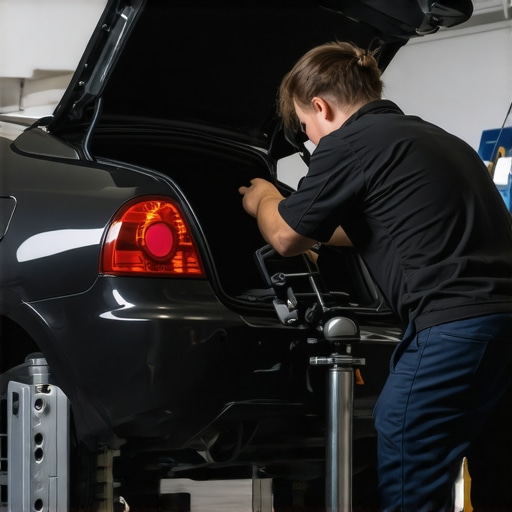
Ever been cruising down the highway, only to be jolted by a loud pop from your trunk that sends your heart racing? I remember the first time it happened to me—suddenly, my car jolted, and I felt a mix of panic and frustration. It was like a scene from a bad action movie, but unfortunately, it was my reality. That moment made me realize just how disruptive and potentially dangerous a faulty trunk latch can be, especially when you’re in the middle of a busy road.
If you’ve experienced that startling pop, you know exactly what I mean. It’s an annoying problem that often sneaks up on you, seemingly out of nowhere. And let’s be honest—who wants their trunk unexpectedly popping open while they’re driving? Not only does it compromise your safety, but it also leaves you scrambling to find a solution at the worst possible moment.
Today, I want to share my personal journey and the proven methods I’ve used to fix this frustrating issue. We’ll dive into practical, step-by-step tips to help you prevent your trunk from popping open unexpectedly. Trust me, once you understand the common causes and simple fixes, you’ll be able to handle this problem confidently and safely.
Why Your Trunk Might Be Popping Open During Your Drive
Before we get into the fixes, it’s important to understand *why* this happens. In my experience, the root causes often boil down to worn or faulty latch mechanisms, loose trunk hinges, or issues with the electronic release system. Sometimes, it’s a combination of these factors that leads to unexpected trunk pops.
One mistake I made early on was assuming it was a simple lock adjustment. Turns out, the entire latch mechanism can wear out over time, especially in cars exposed to harsh weather conditions. For example, rust or debris can prevent the latch from securing properly, leading to accidental releases as you drive.
A trick I learned from a trusted auto expert was to regularly check the latch’s condition and lubricate it with a suitable spray. This simple maintenance can work wonders. Also, if your trunk uses an electronic release, faulty wiring or a weak actuator might be the culprits. Sometimes, a quick inspection and a replacement part can save you from a roadside panic.
If you’re curious about how to identify other common issues that might be causing safety concerns in your vehicle, I recommend exploring this guide on collisionrenew.com about fixing hidden damage post-collision. It offers insights into maintaining your car’s safety features.
Now that we understand the why, let’s move on to the practical fixes—so you won’t have to worry about your trunk betraying you again during a drive. Ready? Let’s get started!
Inspect the Latch Mechanism
Start by opening your trunk fully and examining the latch, which is the small metal catch securing your trunk lid. Use a flashlight to check for rust, debris, or bent components. Remember, a dirty or rusty latch is like a clogged valve in an engine—performance drops and problems arise. During my own fix, I discovered grime buildup that prevented proper engagement. Cleaning it with a wire brush and applying spray lubricant restored its grip.
Clean and Lubricate the Latch
Spray a silicone or WD-40 type lubricant onto the latch mechanism, then work it with a small brush or cloth to remove dirt. Afterward, manually move the latch to distribute the lubricant evenly. This simple step often solves issues caused by dirt or lack of lubrication.
Adjust the Latch Alignment
If the latch is clean but your trunk still pops open, you might need to realign it. Loosen the mounting bolts holding the latch slightly, and gently move it until the trunk lid closes firmly without excessive force. Tighten the bolts back while ensuring proper engagement. Think of it as tuning a musical instrument—small adjustments lead to harmonious operation. I once had to realign my trunk latch, and it took only a few minutes, saving me from frequent pops on the road.
Check and Tighten Related Hinges and Struts
Loose hinges or worn struts can cause uneven pressure on the latch. Tighten hinge bolts or replace worn struts if they can’t hold the trunk lid securely. For example, a worn strut was causing my trunk to droop slightly, preventing the latch from catching properly. Replacing the strut was straightforward and restored confidence in my trunk’s security.
Test the Electronic Release System
If your vehicle uses an electronic trunk release, inspect the wiring for corrosion or loose connections. Use a multimeter to check voltage at the actuator. Sometimes, a faulty sensor or wiring can send incorrect signals, causing the trunk to pop open unexpectedly. My own experience with a faulty sensor was resolved by replacing the actuator after verifying the electrical connections, similar to how collisionrenew.com restores sensor accuracy.
Perform a Road Test and Fine-Tune
After completing adjustments, close the trunk firmly and take it for a short drive. Observe if it stays shut when driving over bumps or turns. If issues persist, revisit your adjustments or consider replacing the latch entirely. Think of it as calibrating a camera—small tweaks lead to clear, reliable results.
Seek Professional Help If Needed
If you’ve tried all these steps and the trunk still pops open, it might be time to visit an auto repair shop. A professional can diagnose hidden issues, such as damaged lock mechanisms or complex electronic faults, ensuring your vehicle’s safety and security.
When it comes to car service, many drivers rely on popular myths that can cost them time, money, and even safety. For example, a widespread misconception is that sending your vehicle for routine maintenance isn’t crucial unless there’s a clear problem. However, experts stress the importance of regular checkups to prevent minor issues from escalating into major repairs, such as transmission failure, which can be costly. Additionally, some believe that using cheap replacement parts is always sufficient, but opting for quality components ensures longevity and safety, especially with critical systems like brakes. One advanced mistake I’ve seen is underestimating the impact of neglecting fluid conditions; for instance, old or contaminated brake fluid can lead to spongy pedals or reduced braking efficiency. Regularly inspecting and replacing it can prevent dangerous scenarios on the road. Furthermore, a common trap is assuming all auto repair shops provide the same level of expertise. This can be risky, particularly when dealing with complex systems like automatic transmissions, which require specialized knowledge to diagnose and fix properly. For instance, if you’re experiencing transmission hunting for gears, it might seem minor but ignoring it can lead to complete failure later, as explained in this detailed guide on [transmission issues](https://collisionrenew.com/why-your-transmission-hunts-for-gears-while-using-cruise-control). There’s also a myth that engine diagnostics are straightforward, but modern vehicles have sophisticated electronic systems that necessitate advanced tools and know-how. Misdiagnosing an issue, such as a faulty sensor, could lead to unnecessary parts replacement or ineffective repairs, wasting your resources. Be wary of superficial fixes that don’t address underlying problems—that’s where most people go wrong. For example, simply adding fluid to a bubbling transmission case without understanding the root cause might mask the issue temporarily but won’t resolve it in the long run. To truly understand your vehicle’s health, consider learning about systems like your ABS or how to spot early signs of alternator failure, which can prevent sudden breakdowns. For a deeper dive into advanced diagnostics, visit this comprehensive article on [collisionrenew.com](https://collisionrenew.com/how-to-spot-a-failing-alternator-before-your-battery-dies). As you navigate your vehicle maintenance, remember: superficial fixes are just that—superficial. Prioritize understanding your car’s nuances and address issues at their core. Have you ever fallen into this trap? Let me know in the comments.Maintaining your vehicle’s performance over the long term hinges on having the right tools and understanding proper maintenance routines. I personally rely on a combination of digital diagnostics and quality manual tools to keep my car running smoothly. For instance, an OBD-II scanner is indispensable; I use the Autel MaxiCOM MX808 because it offers comprehensive diagnostics, including live data streams, which help me pinpoint issues like [diagnostics for failing sensors](https://collisionrenew.com/how-collisionrenew-restores-sensor-accuracy-after-a-fender-bender). Regularly checking and resetting error codes prevents minor problems from escalating into costly repairs.
When it comes to routine maintenance, oil changes, brake inspections, and fluid replacements are foundational. I schedule these every 5,000 to 7,500 miles and use high-quality synthetic oils and non-metallic brake fluids. To ensure long-term performance, I also invest in a good set of hand tools—ratchets, torque wrenches, and specialty screwdrivers. I personally prefer the GearWrench sets because their ratchet mechanisms provide precise control, which is crucial during delicate tasks like tightening suspension bolts.
A critical aspect of maintenance is monitoring fluid health. I regularly inspect transmission fluid for signs of burning or contamination, which can be detected by a sudden burnt smell or dark color. If I notice issues, I drain and replace the fluid promptly, following procedures from automotive experts. The importance of correct fluid levels and quality cannot be overstated, especially for systems like transmissions and power steering.
Looking ahead, vehicle technology is trending towards smarter, more integrated diagnostic systems. I foresee a future where AI-driven diagnostics will make the repair process faster and more accurate, potentially guiding DIY enthusiasts through complex repairs with augmented reality overlays. Staying updated on the latest tools and techniques will be vital for maintaining your vehicle effectively.
### How do I maintain my tools and ensure longevity?
Keeping your maintenance tools in top shape is just as important as the repairs themselves. Store tools in a clean, dry environment, and regularly inspect them for wear or damage. For precision tools like torque wrenches, I calibrate them annually using a calibration device to ensure they apply correct torque, preventing over-tightening or loosening. Proper care extends the lifespan of your tools and maintains repair accuracy.
To streamline diagnostics and repairs, I recommend investing in software like the Mitchell 1 or AutoEnginuity, which integrate with your scanner to provide advanced troubleshooting insights. Using these tools, I caught a failing alternator *before* it left me stranded—an example of how proactive maintenance can save you time and money. For comprehensive maintenance strategies, visit [collisionrenew](https://collisionrenew.com/how-to-spot-a-failing-alternator-before-your-battery-dies) for expert advice.
If you want to take your auto care to the next level, try regularly performing visual inspections of belts and hoses, checking for cracks or leaks. Using a mirror and flashlight, or even a borescope if you have one, can reveal hidden issues early. Consistent vigilance and utilizing the right diagnostic software will ensure your vehicle remains reliable for the long haul. Don’t forget—staying proactive now can prevent expensive repairs down the line.
Lessons That Turn Frustration Into Confidence
One of the most valuable insights I gained from my experience is that a comprehensive approach beats quick fixes. Relying solely on replacing parts without understanding the underlying cause often leads to repeated problems. I learned to trust my inspection process—checking every component from the latch to the wiring—and this mindset saved me both time and money.
Another lightbulb moment was realizing the importance of patience during adjustments. Small tweaks in latch alignment or hinge tightening can make a significant difference. Rushing these steps can lead to misalignment or incomplete fixes, so taking the time to get it right proved crucial in ensuring my trunk stayed secure during drives.
Finally, I discovered that sometimes, the root issue isn’t what it appears to be. For example, a seemingly faulty latch might be a symptom of worn hinges or misaligned struts. Embracing a holistic view of the trunk assembly allowed me to troubleshoot more effectively—and it’s a lesson I wish I had embraced from the start.
Tools and Resources That Kept Me Ahead
- OBD-II Scanner (like Autel MaxiCOM MX808): For diagnosing electronic release issues, this tool provided real-time data and error codes, confirming whether the problem was mechanical or electrical. It’s been indispensable in my toolkit for proactive maintenance.
- Lubricants (Silicone Spray, WD-40): Quality lubricants are essentials for ensuring smooth latch operation and preventing rust. Regular application keeps the latch functioning flawlessly and extends component life.
- Adjustable Wrenches and Screwdrivers: Precise adjustments require good tools. Investing in ergonomic, durable tools like the GearWrench sets has made my repairs more accurate and less frustrating.
- Online Guides and Community Forums: Platforms like collisionrenew.com offer detailed tutorials and shared experiences, helping me troubleshoot tricky issues with confidence. Learning from others’ success stories cut down my repair time significantly.
Your Turn to Build Confidence with Car Repairs
Fixing a trunk that stubbornly pops open isn’t just about repairing a part—it’s about gaining understanding and confidence in your vehicle. The more hands-on experience you get, the better you’ll become at recognizing issues early and avoiding roadside surprises. Remember, the key isn’t just the fix itself but the knowledge you build along the way. So, don’t shy away from tackling minor repairs; each one adds to your skill set and peace of mind.
What small repair have you gained confidence in lately? Share your experience below—I’d love to hear how you’re taking charge of your car maintenance journey!