
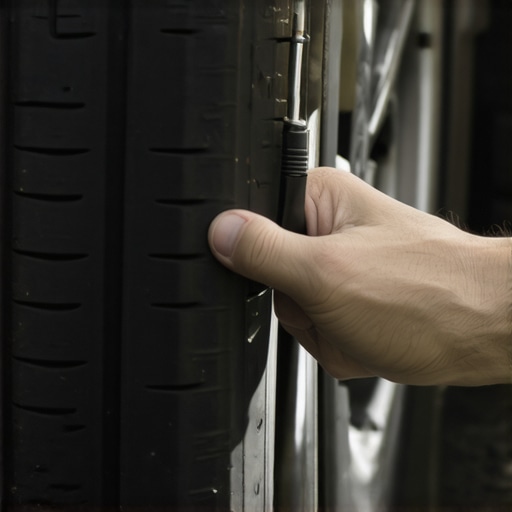
I remember driving my old 2005 sedan down the interstate, music off, just listening to this low, rhythmic whir-whir-whir. It sounded like I was constantly driving on a cheese grater or a very rough patch of asphalt. I convinced myself it was just the budget tires I’d picked up a month prior. I even bragged to my wife about how much money I saved, ignoring the fact that the vibration was slowly creeping up into my steering wheel. Two weeks later, my front left wheel nearly seized while I was pulling into a grocery store parking lot. That mistake cost me a four-mile tow and a repair bill three times higher than if I’d just listened to the car’s warning signs. If you’ve ever felt a strange jitter or wondered why your car vibrates specifically when you hit 65 mph, you know that sinking feeling in your stomach. Today, I’m going to help you settle the debate between harmless road noise and a failing bearing so you can keep your family safe and your wallet full.
Catching the Warning Signs Before the Grind Starts
The tricky part about wheel bearings is that they are master impersonators. They don’t usually fail with a loud bang; instead, they start with a subtle, low-frequency drone that mimics the sound of air moving over knobby tire treads. I learned the hard way that knowing how to identify a bad wheel bearing before your hub grinds is a vital skill. It’s a core part of those essential car service checks to extend your vehicles life that we often push to the back burner. When a bearing begins to degrade, the internal rollers create immense friction and heat. In fact, the National Highway Traffic Safety Administration (NHTSA) notes that while tire-related issues are common, mechanical failures in the wheel assembly can lead to catastrophic loss of control if the bearing seizes at highway speeds. It isn’t just about a ‘noise’—it’s about the structural integrity of your ride.
Is this just another way for shops to overcharge me?
I get it. Every time you hear a peep from your car, you envision dollar signs flying out of your exhaust pipe. You might think it’s just a whistling noise at high speeds caused by the wind, and maybe you’re right. But here is the specific mistake I made early on: I assumed that if the car still drove straight, the ‘hardware’ was fine. Bearings support the entire weight of your vehicle while allowing the wheel to rotate millions of times. This isn’t like a squeaky hinge; it’s a critical safety component. Following a ultimate guide to auto repair helps you realize that catching a bearing early usually means a simple hub replacement rather than replacing an entire axle or spindle. Have you ever turned up the radio just to ‘fix’ a weird sound coming from your wheels? Don’t be shy—we’ve all been there, but let’s talk about why that’s a dangerous game to play. By the end of this, you’ll know how to use the ‘pitch test’ to prove exactly what’s going on under your fenders.To start, you need to perform what I call the ‘sway test.’ On a safe, open stretch of road, gently oscillate your steering wheel back and forth—think of it like a very slow slalom. If the growling noise gets louder when you veer right (loading the left side) and goes silent when you veer left, you’ve basically cornered the culprit. This is exactly why your car feels like it is swaying on the highway when a bearing loses its structural integrity. I remember doing this on my old truck and being convinced it was a tire issue until the silence during a right-hand curve gave the game away.
Stop Blaming the Gearbox for Wheel Noise
It’s easy to confuse a failing hub with a drivetrain problem. I once spent an entire Saturday morning obsessing over top transmission repair tips for long-term vehicle reliability because my car felt like it was dragging. I even thought I had a case where the transmission hunts for gears on slight inclines, but the ‘hunt’ was actually the wheel bearing resisting rotation and confusing the sensors. A bearing’s hum stays consistent with wheel speed, not engine RPM. If you shift into neutral while coasting and that low-pitched growl persists, your transmission is likely off the hook.
Jack It Up and Feel the Play
Once you suspect a specific corner, you have to get hands-on. Don’t just rely on your ears; physics doesn’t lie. Jack up the suspected wheel and grab the tire at the 12 o’clock and 6 o’clock positions. Give it a firm shake. There should be zero wiggle. If it clicks or rocks, that bearing is toast. While you’re down there, it’s the perfect time to check your brake pads without taking the wheels off, as a seized caliper can sometimes mimic bearing heat.
Differentiate Between Shocks and Hubs
Sometimes people confuse a ‘loose’ feeling with suspension wear. If you’ve been wondering how to tell if your shocks are bouncing too much, remember that shocks affect the vertical bounce, while a bearing affects the rotational smoothness. When I finally swapped that bearing on my 2005 sedan, the ‘cheese grater’ noise vanished instantly. I realized then that skipping essential car service checks to extend your vehicles life is the fastest way to turn a $150 DIY job into a $1,200 shop disaster involving new rotors and calipers. If you’re also dealing with stopping issues, check out this braking news on how to choose the best brake service in 2025 to ensure your entire wheel assembly is up to par.
One of the most persistent myths in the DIY community is that wheel bearings must always be replaced in pairs. We’re so used to this rule for essential car service checks to extend your vehicles life—like when we swap brake pads or shocks—that we assume it applies to everything under the wheel well. But here is the truth: wheel bearings aren’t wear items in the same way. A bearing on the passenger side might hit a massive pothole and fail at 60,000 miles, while the driver’s side remains pristine for another 100,000. Unless you’ve got money to burn, focus on the corner that’s actually screaming for help. However, you should still keep an eye out for why your car makes a grinding sound when you turn the steering wheel, as that could indicate multiple issues brewing at once.
Why Tightening the Nut by Feel Kills Your New Hub
The biggest ‘trap’ I see people fall into is what I call the ‘Impact Wrench Ego.’ You’ve got the old hub off, the new one is seated, and you decide to just ‘ugga-dugga’ the axle nut until it feels tight. This is a fatal mistake. Modern hub assemblies are engineered with incredibly tight tolerances regarding ‘preload.’ If you over-torque that nut, you are literally crushing the internal races together. This creates excessive heat, and that brand-new bearing will start whining again before your next oil change. According to the Bearing Specialists Association, nearly 16% of all premature bearing failures are caused by improper installation and handling, specifically regarding torque specs. If you don’t use a calibrated torque wrench, you’re just gambling with your safety.
Another nuance involves the parts themselves. Many folks opt for the cheapest white-box part they can find online. In my experience, this is where the truth about aftermarket vs OEM body panels and mechanical parts becomes painfully obvious. Low-grade bearings often use inferior steel and low-quality grease that liquefies under high-speed friction. You might save $50 today, but you’ll be doing the job again in six months. It’s much like trying to figure out the hidden suspension issues that a standard wheel alignment wont fix; if the foundational component is junk, no amount of adjustment will make the car drive smoothly.
Does a Bad Bearing Cause the ABS Light to Scream?
Yes, and this is a sophisticated diagnostic shortcut many people miss. Most modern hubs have an integrated tone ring for the Anti-lock Braking System (ABS). When a bearing develops even a tiny amount of ‘play’—that wiggle I mentioned earlier—the sensor can no longer read the ring correctly. If your dashboard looks like a Christmas tree and you’ve noticed a faint hum, don’t just start replacing sensors. The bearing’s physical instability is often the culprit. Ignoring this can lead to even weirder symptoms, like why your car makes a loud pop when you shift into reverse, as the shifting geometry of the wheel assembly puts stress on the CV axle. Have you ever fallen into this trap of replacing the sensor instead of the mechanical part? Let me know in the comments. Before you dive into your next repair, make sure you’re following the ultimate guide to auto repair to avoid these common, expensive pitfalls.
I’ve spent too many Saturdays covered in grease to settle for mediocre tools. If you’re serious about DIY, skip the cheap $20 torque wrench from the discount bin. For hub work, I swear by a 1/2-inch drive digital torque wrench that measures both foot-pounds and degrees of rotation. Many modern axle nuts are ‘torque-to-yield,’ meaning you tighten them to a specific value and then turn them an additional 90 degrees. Without the right tool, you’re just guessing, and guessing leads to a $300 mistake. This level of precision is one of those essential car service checks to extend your vehicles life that separates the driveway mechanics from the experts. I also recommend a high-quality hub puller; hammering on an axle to get it free is a great way to ruin your CV joints.
How Can I Keep My Wheels Spinning Smoothly for Years?
Maintaining your wheel assembly is mostly about keeping the elements at bay. If you live in a climate where they salt the roads, that brine is the mortal enemy of your seals. I make it a point to learn the best way to clean salt off your cars undercarriage every spring to prevent that corrosive grit from eating into the bearing races. Beyond cleaning, listen to your car. If you notice why your car makes a grinding sound when you turn the steering wheel, don’t wait for the weekend—inspect it immediately. Long-term reliability isn’t just about the wheels, though. You should also be applying top transmission repair tips for long-term vehicle reliability to ensure the rest of your powertrain can handle the smooth rotation your new hubs provide. According to technical documentation from the Timken Bearing Company TechSeries, even a microscopic contaminant in the grease can reduce a bearing’s lifespan by 50% or more. This is why I always use a lint-free cloth when cleaning the spindle before installation. Looking ahead, I suspect we will see more ‘intelligent’ hubs with integrated temperature sensors that alert your dashboard long before a noise starts. For now, we rely on our ears and a solid ultimate guide to auto repair. If you’re currently hearing a faint hum, I challenge you to go out today, jack up that wheel, and perform the 12-and-6 shake test. You might just save yourself from needing an emergency brake service in 2025 when a seized bearing takes out your rotors too.
Three Harsh Realities of Ignoring the Wheel Hub Growl
After years of wrenching, I’ve realized that a failing wheel bearing is more than just an annoyance; it’s a lesson in mechanical precision. First, realize that ‘good enough’ is never enough when it comes to torque specs. I’ve seen too many DIYers ignore the ultimate guide to auto repair only to have their new hub fail within a month because they didn’t use a calibrated torque wrench. Second, the noise isn’t just sound—it is a byproduct of friction and heat. If you can feel the heat radiating off your rim after a short drive, your bearing has moved past the ‘warning’ phase and into ‘imminent danger’ territory. Finally, don’t let the simplicity of the part fool you. A wheel bearing is the silent hero of your suspension, and when it fails, it can take your CV axle and brakes down with it. It’s a core reason why I never skip essential car service checks to extend your vehicles life.
My Must-Have Gear for a Professional Hub Swap
If you’re going to tackle this yourself, you need the right arsenal. I never start a hub job without a 1/2-inch drive breaker bar and a high-quality digital torque wrench. Accuracy is the difference between a repair that lasts 100,000 miles and one that lasts 1,000. I also highly recommend using a dedicated hub removal tool rather than a sledgehammer; your suspension components and knuckle will thank you for the lack of blunt force trauma. For long-term maintenance, especially if you drive in winter conditions, I swear by the best way to clean salt off your cars undercarriage to keep those seals from getting eaten away by road brine. Using these tools and following top transmission repair tips for long-term vehicle reliability ensures you aren’t just fixing problems, but proactively preventing them.
Reclaiming Your Confidence on the Open Road
There is nothing quite like the feeling of a perfectly silent highway cruise after you’ve finally silenced a persistent, rhythmic hub growl. It’s more than just a repair; it’s about the peace of mind that comes from knowing your vehicle is structurally sound. By staying proactive and keeping up with your brake service in 2025, you’re building a car that is safe for your family and easy on your wallet. Don’t wait for the vibration to become a seizure. Take control of your car’s health today and enjoy the smooth, quiet ride you deserve. Have you ever had a mystery noise turn out to be something much simpler—or much scarier—than you originally expected? Let me know in the comments below!