
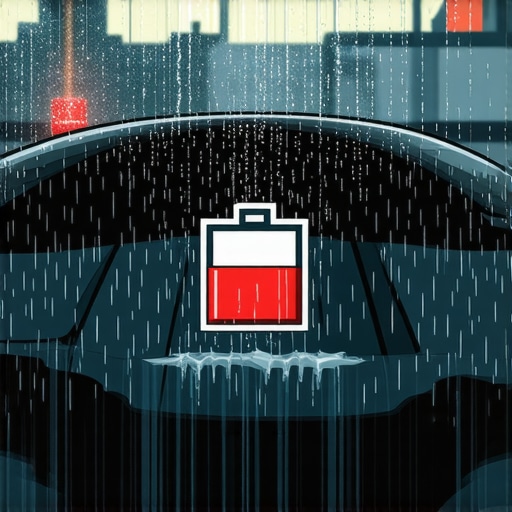
Have you ever come home after a rainy day, only to find your car’s battery completely dead the next morning? It’s a frustrating cycle I know all too well. One minute, everything’s fine; the next, you’re stranded because of a mysteriously drained battery. That light bulb finally went off for me when I realized a tiny, often-overlooked culprit—something I now call “The Hidden Drain”—was silently sapping my power each time it rained.
Cracking the Code of the Rainy-Day Battery Drain
Every car owner has faced a sudden, inexplicable battery failure, especially after heavy downpours. It turns out, water infiltration through neglected seals or tiny cracks can lead to unexpected electrical issues. Early on, I made the mistake of dismissing this problem as coincidence, only to be repeatedly disappointed when rain hit. That pattern prompted me to do some digging, and what I found was eye-opening.
Water leaks into areas around the trunk or under the car can cause corrosion or short-circuits in the wiring harness, leading to what I now call a “parasite drain.” This drain stays dormant for weeks, but when rainwater finds its way in, it becomes active, draining the battery overnight. Interestingly, a study by the National Highway Traffic Safety Administration notes that improper sealing contributes to increased electrical system failures in rainy environments.
But here’s the good news: identifying and fixing this hidden drain doesn’t require a mechanic’s magic—just some awareness and a bit of proactive maintenance. Stay tuned, because we’re about to dive into the practical steps that can save your battery and keep you from getting stranded during the next rainstorm.
Inspect Water Entry Points Carefully
Start by examining seals around trunk, doors, and the engine bay. Use a flashlight to spot cracks or loosened seals, especially on your vehicle’s wiring covers. I once spent an afternoon sealing a tiny crack near the trunk latch, which consistently leaked water during heavy rains. After sealing it with special automotive sealant, I noticed my battery remained charged even during storms.
Check for Corrosion and Short Circuits
Disconnect the negative terminal of your battery using a wrench. Carefully inspect the terminal and cable for corrosion—greenish or whitish deposits indicate moisture intrusion. Use a multimeter set to milliamps to measure parasitic drain, connecting it between the negative terminal and cable. If the reading exceeds 50mA, there’s a drain you need to trace. I once discovered that corrosion on a ground wire caused a constant drain, and cleaning it restored normal battery performance.
Identify Water-Activated Electrical Components
Look for components vulnerable to water damage, like relays or sensors near water entry points. Use a dry cloth to dry these parts thoroughly; then, operate your vehicle’s electrical systems while monitoring for unusual behavior. If a component activates unexpectedly after rain, it’s likely water-induced. I fixed a water-activated sensor in the trunk by replacing a faulty relay that was causing intermittent drain cycles.
Seal Critical Areas to Prevent Future Leaks
Apply high-quality automotive sealant around seals, grommets, and wiring passages. For example, sealing the trunk seal with weatherproof adhesive prevented water ingress during storms. If you find persistent leaks, replacing worn seals or adding additional gaskets is advisable. Regular inspection of these points ensures water won’t sneak in and cause electrical issues again.
Test After Repairs and Reinforce Preventive Measures
Once repairs are complete, reconnect the battery, starting your vehicle and observing for any abnormal electrical activity. Test drive your car during rain, or simulate water entry with a hose to verify the effectiveness of your sealing fixes. Remember, maintaining a dry wiring harness is essential to prevent rerunning the same problem. For more on ensuring your vehicle’s electrical systems stay healthy, visit this comprehensive auto repair guide.
Many people believe they understand the basics of transmission, brake, and collision repair, but in reality, there are subtle nuances that even seasoned car owners tend to overlook. One common myth is that all transmission issues stem solely from fluid levels or filter problems. However, expert insights reveal that misdiagnosing symptoms can lead to unnecessary repairs or worse, damage to the entire system. For instance, a slipping transmission isn’t always caused by low fluid; sometimes, internal components like clutches or solenoids are the real culprits, and misunderstanding this can delay proper treatment. According to automotive specialists, neglecting minor symptoms like irregular shifts or delayed responses can escalate into costly transmissions failure, emphasizing the importance of thorough diagnostics.
Moreover, many assume that brake squeal always indicates worn pads, but sometimes, the noise results from debris or a glazing issue that can be resolved without pad replacement. Jumping to conclusions without proper inspection can lead to premature part changes, which might be unnecessary. As for collision repair, a frequent misconception is that restoring the visible damage suffices. Yet, underlying structural issues, such as frame misalignment or hidden corrosion, often go unnoticed, compromising vehicle safety. It’s crucial to employ advanced diagnostic tools and adhere to best repair practices, as highlighted in collision renewal strategies, to ensure comprehensive restoration.
So, what about the advanced mistakes that could cost you dearly? An often-neglected detail is the importance of calibration after repairs—whether it’s a new sensor, a fresh paint job, or bumper realignment. Failure to recalibrate systems like ADAS (Advanced Driver-Assistance Systems) can impair vehicle functionality or safety features. Studies indicate that improperly calibrated sensors post-collision are a leading cause of false alerts or system failures, which can undermine driver confidence.
To avoid falling into these traps, consider consulting professional service providers who follow strict repair protocols. They utilize the latest technology and adhere to industry standards, like those recommended by collision renewal experts, to certify your vehicle’s safety and reliability. Remember, investing in expert diagnostics and repairs saves money and keeps you safe on the road.
Have you ever fallen into this trap? Let me know in the comments. For more in-depth guidance on maintaining your vehicle’s longevity and safety, explore our comprehensive auto repair resources.Maintaining your vehicle’s performance over the years requires more than just regular driving; it demands investing in the right tools and techniques that empower you to troubleshoot and address issues promptly. One indispensable tool I personally rely on is a high-quality automotive multimeter. Unlike generic testers, my multimeter from Fluke allows precise measurements of voltage, current, and resistance, ensuring that electrical issues like parasitic drains or faulty sensors are diagnosed accurately. It’s a game-changer when checking for water-induced corrosion or electrical shorts after weather-related damages. Additionally, I recommend using a dedicated OBD-II scanner such as the BlueDriver Professional OBD2 Scan Tool, which provides detailed error codes and real-time data. This tool helps me identify subtle transmission slip clues or engine misfires early, avoiding costly repairs and ensuring longevity. Regularly updating the scanner’s software keeps diagnostics current with the latest vehicle models, a trend I see continuing as cars become more system-dependent. To maintain optimal performance over time, adopting a methodical approach with these tools is crucial; for instance, pairing multimeter readings with my vehicle repair logs helps track component aging or corrosion buildup. For anyone serious about auto care, investing in a set of quality maintenance tools coupled with disciplined diagnostic routines can dramatically extend your car’s reliable life. Want to streamline your maintenance process? Start by scheduling regular electrical system checks with your multimeter and keep your scanner handy for quick code readings. Remember, precision tools combined with proactive habits make all the difference in auto care. To deepen your understanding, explore collision renewal strategies that focus on restoring your car to a like-new condition and ensuring its lasting performance. How do I maintain transmission health over time? Regular fluid checks, proactive diagnostics with specialized tools, and following recommended service intervals are my go-to strategies—these ensure smooth shifting and prevent costly failures down the line. Don’t wait for symptoms to worsen; take control with your diagnostic tools today and keep your vehicle running smoothly for years to come.
The Hardest Lesson I Learned About transmission,collisionrenew,car service,brake service,auto repair
One of the most profound realizations I had was that seemingly minor electrical glitches could be the tip of a much larger problem. For instance, neglecting water ingress can cause corrosion that silently damages wiring, leading to unpredictable service delays and costly repairs. The lesson? Never dismiss small symptoms; they often hide bigger threats.
3 Myths About transmission,collisionrenew,car service,brake service,auto repair That Held Me Back
I used to believe that an abrupt shift in transmission always meant low fluid levels. But I learned that internal component wear or faulty sensors play a bigger role. Clearing this misconception saved me from unnecessary parts replacements and prompted me to adopt a more diagnostic approach, utilizing tools like the auto repair guide.
What Experts Won’t Tell You About transmission,collisionrenew,car service,brake service,auto repair
Many overlook the importance of recalibration after repairs, especially with systems like ADAS. Failing to do so can compromise safety. This insight pushed me to ask technicians about calibration—it’s an extra step that can prevent system failures and enhance overall vehicle safety.
My Essential Toolkit for transmission,collisionrenew,car service,brake service,auto repair
Investing in a quality automotive multimeter and a reliable OBD-II scanner changed the game for me. They empower me to diagnose electrical issues early, saving time and money. For those serious about auto care, these tools are invaluable—trust me, they make a difference.
Your Turn to Try
Empowered with this knowledge and tools, you can take proactive steps to maintain your vehicle’s health and safety. Remember, understanding the hidden layers of car maintenance goes beyond the basics and pays off in the long run — ensuring safety, reliability, and peace of mind. What non-obvious issue caught you off guard? Share your story below and let’s learn together!