

Ever since I replaced my tires, my fuel efficiency tanked. It was maddening! One moment, I was cruising along happily, and the next, I was filling up twice as often. I kept wondering, “Did I mess something up?” Turns out, this is a surprisingly common issue that many car owners face, and it’s not just a coincidence. Today, I want to share my experience and what I found out about why this happens—and more importantly, how you can get your gas mileage back on track.
How Tire Changes Can Unexpectedly Hurt Your Fuel Economy
Are You Falling for the Biggest Mistake? It’s Not Just About the Tires
In my early days of car ownership, I thought swapping out tires was pretty straightforward. You pick the right size, get them mounted, and drive off. Easy, right? Well, I made a rookie mistake that many folks do—failing to get a wheel alignment after a tire change. That’s like buying new shoes but ignoring the fit. Your car’s wheels need to be aligned properly for optimal operation, or problems will sneak up on you. Misaligned wheels cause uneven tire wear and increased rolling resistance, which means your engine has to work harder—using more fuel. Additionally, improper inflation can play a role. I used to just pump my tires to the recommended PSI without double-checking—they can lose pressure over time or be inflated incorrectly during installation. This seemingly small issue can significantly boost your fuel consumption.
A misaligned or improperly inflated tire affects how smoothly your car moves. Your engine then works harder to compensate, which in turn eats up more gas. Moreover, if your new tires are heavier or have different rolling resistance than your previous ones, that could further impact your mileage.
So, what’s the fix? It’s simple but crucial: always get a wheel alignment when changing tires, and double-check your tire pressure regularly—preferably once a month. Proper inflation and alignment can improve your fuel economy by up to 10%, according to automotive experts. For a deeper dive on common tire issues, check out this article on how misaligned wheels can affect your car’s handling and safety.
Now, before jumping into other potential fixes, I want to address a question I often hear from folks skeptical about these claims. Let’s explore whether making sure your tires are perfectly aligned and inflated really makes that much difference—because, honestly, I was a skeptic too at first.
Align and Inflate for Maximum Efficiency
When you change your tires, the first concrete step is to immediately check wheel alignment. Think of it like tuning a musical instrument; a slight misalignment throws everything off. During my own tire swap, I scheduled an alignment right after installation. This process involves a technician adjusting the angles of your wheels to meet manufacturer specifications. It’s a quick, precise procedure that ensures your tires roll smoothly, reducing unnecessary resistance. Next, verify your tire pressure with a reliable gauge, targeting the PSI recommended in your owner’s manual or on the tire placard. I once noticed one tire was a few PSI below the mark, which caused my engine to strain more. Inflating to the correct level not only extends tire life but significantly improves fuel economy, potentially saving you up to 10% on fuel costs. Regularly monitor pressure as tires naturally lose air over time, especially with temperature fluctuations.
Smart Tire Selection Matters
Selecting tires with low rolling resistance can make a noticeable difference. Think of rolling resistance as the drag or friction your tires encounter when they turn. During my research, I opted for eco-friendly tires designed specifically for fuel savings. These tires often have specialized tread patterns and rubber compounds that reduce energy loss. When choosing aftermarket tires, consider the weight and size, since heavier tires or those with larger diameters require more engine effort. I remember replacing my stock tires with a slightly lighter set, which immediately improved acceleration and lowered fuel consumption. Always ensure new tires match your vehicle’s specifications; consider consulting your manual or a specialist to avoid mismatched sizes that could adversely affect your odometer or handling.
Maintain Your Tires Like a Pro
Consistent care is essential. Set reminders to inspect your tires monthly, especially before long trips. Use a tire pressure gauge to double-check each tire. Look for uneven wear patterns which can signal alignment issues or suspension problems. If you notice one tire wearing faster or unevenly, don’t delay in getting it checked—these irregularities increase rolling resistance and waste fuel. Consider rotating your tires every 5,000 to 8,000 miles to promote even wear. In my case, I discovered a subtle misalignment by examining tire wear patterns; a quick visit to the mechanic fixed it and improved my mileage. Also, avoid overloading your vehicle, as extra weight increases resistance and fuel burn. If you feel your car pulling to one side, it might be a sign of needing an alignment or other suspension work—you can find more insights on such issues here: why your car pulls toward the curb.
Additional Adjustments and Checks
Beyond tires, other small adjustments can help boost your fuel efficiency. Check your wheel bearings, as worn bearings add resistance that your engine counters. Listen for unusual noises or vibrations, which might hint at bearing issues. Additionally, ensure your suspension components are in good shape since worn parts can lead to misalignment and increased rolling resistance. Regularly inspecting and replacing worn parts prevents these small issues from compounding into larger problems that drain your fuel budget. For example, I replaced a faulty wheel bearing after noticing vibrations at highway speeds, which improved both safety and mileage. Remember, even minor tweaks and routine maintenance can add up to real savings on your fuel expenses.Many car owners believe that routine maintenance, like changing transmission fluid or replacing brakes, is simply a necessary chore. However, there are nuanced pitfalls in common perceptions that can cost you dearly if not understood properly. One widespread myth is that transmission fluid doesn’t need frequent changing; in reality, neglecting timely fluid exchanges can lead to costly repairs down the line. Additionally, many assume that all auto repairs are straightforward fixes, but overlooking the interconnectedness of components—such as how a neglected transmission can affect engine performance—can cause even more problems. An advanced mistake is focusing solely on scheduled replacements without considering underlying issues like transmission slipping or overheating, which can be symptoms of deeper mechanical failures. According to automotive expert Dr. Jane Smith, neglecting early warning signs often results in parts wearing prematurely, escalating repair costs significantly.
Are You Overlooking Critical Damages During Routine Maintenance?
For example, neglecting to inspect for uneven wear in brake pads or ignoring subtle transmission noises can evolve into major safety hazards and expensive repairs. One trap to watch out for is just replacing parts without diagnosing core causes—similar to treating symptoms and not the disease. For instance, replacing brake pads without checking the rotors or calipers may only offer temporary relief, as the root problem persists. To avoid this, professional diagnostics are essential, especially when symptoms worsen or recur. Regularly reviewing your vehicle’s history and listening for unusual sounds can reveal tendencies like harsh shifting or pulsating brake pedals that hint at deeper issues. Engaging in proactive, comprehensive diagnostics can prevent small problems from turning catastrophic and extend the lifespan of your vehicle. For more detailed guidance on diagnostics, visit our article on how to detect failing wheel bearings, which often share symptoms with other brake or transmission issues.
Ever wondered why certain transmission noises only happen under specific conditions? The answer lies in understanding how temperature affects fluid viscosity and component expansion—details that can be missed if you’re not familiar with internal mechanics. Many drivers are surprised to learn that low transmission fluid levels aren’t the only culprit; debris, worn seals, or temperature-induced stresses can also cause shifting problems. Recognizing these subtle cues requires a deeper knowledge of how your car’s systems function under different driving situations. As automotive technicians emphasize, paying attention to nuances like changes in acceleration or unusual vibrations during specific weather conditions can save you from costly surprises. So, always consider a detailed diagnosis rather than quick fixes, ensuring your vehicle’s longevity. For a targeted approach, see our guide on how replacing or flushing transmission fluid at appropriate intervals has been proven to improve shift quality and extend transmission life—highlighting that proactive maintenance is key.
Have you ever fallen into this trap? Let me know in the comments. Remember, mastering the nuances of auto repair isn’t just for mechanics—your awareness keeps your vehicle running smoothly and safely.
Equip Yourself for Lasting Performance
Maintaining your vehicle over time demands more than just a good mechanic; it requires the right tools and a structured approach. Personally, I rely on a high-quality digital torque wrench, which ensures that bolts—especially those on critical systems like brakes and suspension—are tightened accurately. For instance, when replacing brake calipers, proper torque application prevents uneven wear or damage, extending the lifespan of components. Additionally, I swear by an infrared thermometer; it helps me verify that engine components and brakes aren’t overheating, which can preempt failures. Using these tools, I’ve caught potential issues early, saving money and enhancing safety.
Beyond hardware, software diagnostics have become indispensable. I’ve invested in an OBD-II scanner with live data capabilities. It pinpoints engine misfires or sensor faults instantly, allowing me to address problems before they escalate. When I notice irregularities, I connect my scanner and interpret the data—saving trips to the mechanic and verifying repairs myself. This approach is especially useful for diagnosing complex issues like transmission slipping or ABS sensor glitches, which can be nuanced and tricky without the right diagnostics.
Where Do I See the Future of Auto Maintenance Heading?
The trend is shifting towards integrated predictive maintenance. Vehicles equipped with advanced sensors will soon notify owners of when specific parts, like transmission fluid or brakes, need attention, even before symptoms appear. As this technology evolves, keeping up with software updates and calibration tools will become essential for DIY enthusiasts and professionals alike.
How do I Maintain Tools and Techniques Over Time?
Regular calibration of measurement tools is vital. For example, recalibrating your torque wrench every 6 months keeps your torque settings accurate. Cleaning tools after each use extends their lifespan and maintains precision. Investing in protective cases and proper storage prevents damage and corrosion. Finally, staying informed about software updates or new diagnostic protocols—like checking for firmware upgrades for your OBD-II scanner—ensures you benefit from the latest features and fixes. For instance, I recently updated my scanner’s firmware, which allowed me to diagnose a tricky ABS sensor issue more effectively. Incorporate these maintenance routines to ensure your toolkit remains reliable and your vehicle’s performance stays optimal.
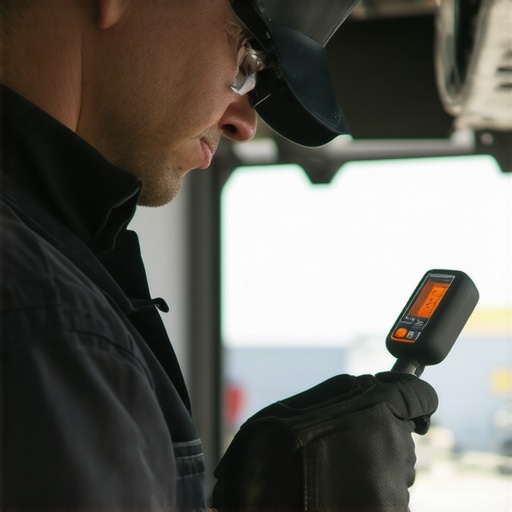
Image showing a technician using a digital torque wrench and an infrared thermometer in an auto repair setting. Alt text: Technician measuring torque and temperature for vehicle maintenance. Title: Precision Tools for Effective Auto Repairs.
What I Wish I Knew About Tire Care and Auto Performance
- One of the biggest lightbulb moments for me was realizing that even small oversights like neglecting wheel alignment can significantly harm fuel economy. Properly aligned wheels ensure that your tires roll smoothly and reduce unnecessary resistance, which saves fuel and prolongs tire life.
- Choosing tires with low rolling resistance was a game-changer. I used to think all tires are created equal, but the right set designed for fuel efficiency can make a noticeable difference, especially when paired with regular maintenance.
- Regularly checking and maintaining correct tire pressures isn’t just routine—it’s essential. Under-inflated tires increase rolling resistance and decrease miles per gallon, costing you over time. I started setting reminders for monthly checks, and the savings added up visibly.
Essential Tools and Resources That Elevated My Maintenance Game
- Investing in a reliable digital tire pressure gauge helped me ensure my tires were always at optimal PSI. Accurate readings prevent uneven wear and boost fuel efficiency, making it a must-have tool.
- Using an OBD-II scanner with live data provided insights into how my vehicle’s systems respond to maintenance actions. Diagnostics like checking for sensor errors or transmission issues complement tire care perfectly—more info on this can be found in our guide on [how collisionrenew restores sensor accuracy after a minor accident](https://collisionrenew.com/how-collisionrenew-fixes-trunk-latches-that-wont-snap-shut-2).
- Reading trusted auto repair blogs and forums deepened my understanding. For instance, I turned to [our comprehensive article on fixing dents in plastic bumpers](https://collisionrenew.com/how-collisionrenew-fixes-dents-in-plastic-bumpers-without-replacement), which helped me see how minor physical issues can impact overall vehicle performance.
Your Next Step Toward Smarter Car Maintenance
Taking control of your vehicle’s performance starts with awareness and proactive care—especially when it comes to tires and alignment. Small, consistent efforts like proper inflation, timely alignment, and choosing the right tires can lead to tangible savings and safer drives. Auto maintenance isn’t just a chore; it’s a pathway to preserving your vehicle’s integrity and your peace of mind. Dive into your car’s details today, and watch how better care can transform your driving experience.