
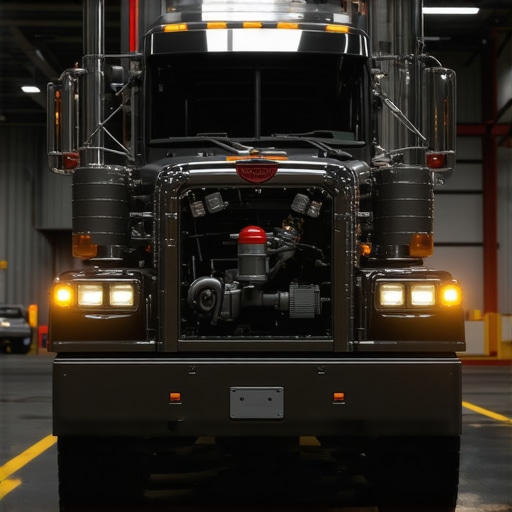
The Simple Check for a Diesel Truck That Stumbles Only After It Warms Up
There is a specific kind of headache that only a diesel owner truly understands. It starts with a perfect morning: you turn the key, the glow plugs cycle, and the engine roars to life with that satisfying, rhythmic clatter. For the first fifteen minutes, everything is fine. You’re hauling a load or heading to the job site, and the power is right where it should be. Then, it happens. As the needle on the temperature gauge reaches its midpoint, the engine begins to hesitate. It stumbles at stoplights, develops a rhythmic miss, or loses that “snap” when you step on the pedal. If you shut it off, it might even refuse to start again until it has sat for an hour.
As a mechanic who has spent years under the hoods of everything from Class 8 heavy-duty rigs to light-duty pickups, I’ve seen this “warm stumble” drive owners to the brink of insanity. They start throwing parts at the problem – new fuel filters, expensive injectors, maybe even a new PCM – only to find the issue persists. This scenario is a classic symptom in engines like the Ford 7.3L or 6.0L Powerstroke, but the underlying physics can affect Cummins and Duramax platforms as well. When your truck acts up only after reaching operating temperature, it’s telling you a very specific story about its internal health. Before you spend thousands, you need to look for auto repair near me to get a professional scan, but there is one simple check you can do yourself that might save you a fortune.
While some issues are simple, others might require a deeper dive into maintenance schedules. If you’re looking to get ahead of these problems, check out The Ultimate Guide to Auto Repair: Keep Your Car Running Smoothly. But for today, let’s focus on that frustrating heat-related stumble and the one sensor that is usually the culprit.
The Science of Heat: Why Does Temperature Change Performance?
To understand why a truck runs great cold but poorly hot, we have to look at how heat interacts with two fundamental elements of a diesel engine: Oil Viscosity and Electrical Resistance. In a modern diesel, especially those using HEUI (Hydraulic Electronic Unit Injection) systems like the Powerstroke 7.3L and 6.0L, engine oil isn’t just for lubrication; it’s a hydraulic fluid used to fire the injectors.
The High-Pressure Oil Pump (HPOP) pressurizes engine oil to anywhere between 500 and 3,000+ PSI to force the fuel injectors open. When the oil is cold, it is thick (high viscosity). This thickness acts as a natural sealant. If you have a slightly worn O-ring or a tiny leak in the high-pressure oil rail, the thick, cold oil can’t escape easily, and the system maintains enough pressure to keep the engine running smoothly. However, as the engine reaches operating temperature, the oil thins out. This thinner oil can now easily bypass those worn seals, leading to a drop in injection pressure. The result? A stumble, a loss of power, or a “hot no-start” condition.
Simultaneously, heat affects electrical components. Copper wire and sensor internals increase in resistance as they get hot. A sensor that works perfectly at 70°F might start sending “garbage” data to the computer once it’s heat-soaked at 200°F. If you’re experiencing these symptoms, searching for a diesel mechanic near me is your best bet to get a high-pressure oil standpipe test, but first, let’s try the “Simple Check.”
The “Simple Check”: The ICP Sensor Unplug Test
The Injection Control Pressure (ICP) sensor is the “eyes” of the engine’s computer (PCM). It monitors the pressure of the oil being delivered to the injectors. If the ICP sensor sends incorrect data, the PCM will adjust the Injection Pressure Regulator (IPR) incorrectly, leading to a rough idle or a stumble. When these sensors fail, they often fail “biased,” meaning they don’t stop working entirely, but they start reporting pressures that aren’t real – especially when they get hot.
The “Simple Check” is this: **Unplug the ICP sensor while the truck is stumbling.**
On a 7.3L Powerstroke, the ICP sensor is typically located on the front of the driver-side cylinder head. On a 6.0L, it’s either on the rear of the engine under the turbo (early models) or on the passenger-side valve cover (later models). When you unplug this sensor, the PCM realizes it has lost its “eyes.” To keep the engine running, it reverts to a “default” or “limp” strategy, using a pre-programmed set of values instead of the sensor’s data.
If you unplug the sensor and the truck’s idle suddenly smooths out and the stumble disappears, you have found your problem. It means the sensor was sending faulty data that was confusing the computer. Often, you’ll even find oil inside the electrical connector of the sensor; this is a dead giveaway that the internal seal has failed and oil is “wicking” through the sensor, ruining the signal. If you find yourself in this position, looking for Car repair shops near me to get a high-quality OEM replacement sensor is the next step. Don’t go for the cheap parts-store knockoffs here; diesel sensors are notoriously finicky.
It’s important to remember that electrical issues can be deceptive. Sometimes what looks like a sensor failure is actually a wiring harness problem. For more on how electricity can fool you, read about How a Bad Ground Wire Can Mimic a Transmission Failure.
Beyond the Sensor: The IPR Valve and the “Ice Water” Trick
If you unplug the ICP sensor and the truck still stumbles, the problem likely lies with the Injection Pressure Regulator (IPR) valve. While the ICP is the “eyes,” the IPR is the “hands.” It is an electromagnetic actuator that physically opens and closes to control oil pressure. Inside the IPR is a delicate electromagnetic solenoid and a small plunger.
Over time, the O-rings on the IPR can tear, or the internal solenoid can begin to fail when it gets hot. A common “mechanic’s secret” for diagnosing a heat-soaked IPR valve is the **Ice Water Trick**. When the truck is hot and acting up, or if it won’t restart after being driven, take a bottle of room-temperature or slightly cool water and slowly pour it over the IPR valve solenoid.
The goal is to rapidly cool the electromagnetic coil inside the valve. If the truck suddenly starts or the stumble vanishes after cooling the IPR, you know the solenoid is failing internally due to heat soak. This is a common issue that diagnostic scanners don’t always catch because the valve is still “electrically” functional, just mechanically or magnetically weak when hot. If this trick works, it’s time to head to a diesel repair shop to have the IPR valve replaced and the high-pressure system inspected for debris.
Fuel System Culprits: Clogged Screens and Lift Pumps
While oil pressure is the most common cause of a warm stumble in Powerstrokes, we can’t ignore the fuel side – especially on Cummins and Duramax engines. A common issue cited by researchers and enthusiasts on platforms like Powerstroke.org involves the fuel sending unit and the pre-filter screens inside the tank.
Many diesel trucks, particularly the 2003 E350 and various cab-and-chassis models, featured steel fuel tanks with an internal lining. Over time, this lining can flake off (delamination), or rust can develop. When the fuel is cold and thick, these flakes might sit at the bottom of the tank. But as the fuel warms up (fuel is constantly recirculated from the hot engine back to the tank), it becomes thinner and flows at a higher rate. This can cause debris to be sucked up against the pre-filter screens in the tank, effectively “choking” the engine.
Symptoms of fuel starvation include a “clattery” sounding idle, white smoke (which indicates incomplete combustion due to low fuel pressure), and a stumble that gets worse under load. If you suspect a fuel issue, searching for truck repair near me is essential, as testing fuel pressure requires specialized gauges. You might also want to investigate How a Dirty Fuel Injector Causes a Rough Idle to see if your injectors have been compromised by poor fuel quality.
Regional Spotlight: Diesel Care in The Valley
For those of us operating in the San Fernando Valley, these heat-related issues are amplified. When the ambient temperature in “The Valley” hits 100°F or higher, your engine’s cooling system and oiling system are working overtime. Heat soak happens much faster in stop-and-go traffic on the 405 or the 101 than it does in cooler climates.
In these extreme conditions, oil thins out even more rapidly, and electronic sensors reach their failure thresholds much sooner. If you live in this area, finding auto repair the valley residents trust is vital. Heavy-duty diesel maintenance isn’t just about changing the oil; it’s about ensuring your cooling system is efficient enough to keep those oil temperatures within a range where your HPOP can still function. A reliable Mechanic Shop Near Me will check your EOT (Engine Oil Temperature) versus your ECT (Engine Coolant Temperature) to ensure your oil cooler isn’t clogged, which is a leading cause of IPR and ICP failure.
Conclusion & Call to Action
A diesel truck that stumbles only after it warms up is trying to tell you that something is changing with the temperature. Usually, that “something” is either the thinning of your engine oil – revealing a leak in the high-pressure system – or a sensor like the ICP or IPR that is failing under the stress of heat soak.
By performing the simple ICP unplug test or the IPR ice water trick, you can narrow down the culprit before you spend a dime on a tow truck. However, these are diagnostic shortcuts, not permanent fixes. Diesel engines are high-precision machines that require expert care to stay on the road for the long haul. To keep your rig in top shape, consider following these Essential Car Service Checks to Extend Your Vehicle’s Life.
If your truck is still stumbling or if you’re uncomfortable poking around under the hood, don’t wait until you’re stranded on the side of the highway. Visit a professional diesel shop today. A quick diagnostic scan and a pressure test can save you from a much more expensive engine repair down the road. Keep your oil clean, your sensors fresh, and your diesel will return the favor with hundreds of thousands of miles of service.