
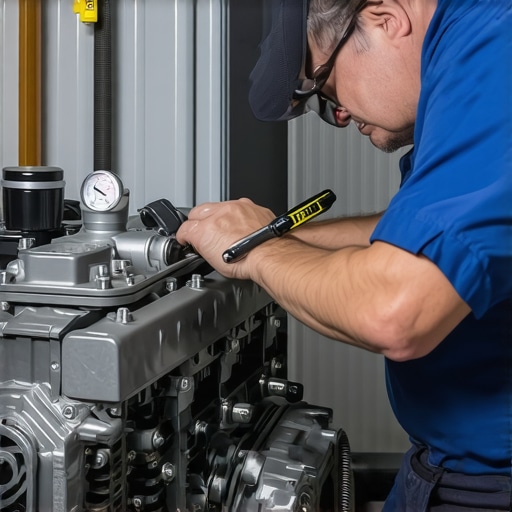
It happened on a scorching summer afternoon—I was halfway through a long drive when suddenly, the temperature gauge needle shot past the red zone. My heart sank. The last thing I needed was a costly engine overhaul because I didn’t catch the signs early. That lightbulb moment made me realize how crucial it is to perform simple, proactive checks on critical components like the water pump.
Why Neglecting a Water Pump Test Can Cost You Big Time
A failing water pump is often sneaky, quietly losing its ability to circulate coolant and prevent your engine from overheating. Most drivers dismiss the temperature gauge or ignore odd smells and sounds. But by the time you notice smoke or steam, damage might already be done. The good news? There’s a straightforward, low-cost test you can do at home to detect early signs of water pump failure—before your engine gets seriously hurt. Learning this simple trick has saved me hundreds in repairs and can do the same for you.
Is the Simple Test Really Effective or Just Overhyped?
I admit, I used to believe that only professional diagnostics could spot water pump issues. Early on, I made the mistake of waiting until more obvious symptoms appeared, which often meant expensive fixes. Now I know better. Performing a basic leak or pressure check can reveal potential failure points. This approach is backed by experienced mechanics who emphasize early detection. If you’re skeptical, consider how often neglecting early signs turned minor issues into major headaches in my shop. Want to learn how to perform this test yourself? Stick around, because I’ll walk you through every step.
Drain the Coolant and Inspect the Pump Housing
Start by ensuring the engine is cool, then locate the water pump—usually driven by the serpentine belt. Drain the coolant into a clean container to prevent spills. Once drained, carefully examine the pump housing for any visible leaks or corrosion. This step is like checking the valves and seals on a bicycle pump before usage—early signs tell you a lot. In my experience, a quick visual can reveal cracks or wetness indicating ongoing failure.
Check for Pump Play and Rotational Resistance
Gently try to wiggle the pulley back and forth; minimal movement means the bearing is stable, while excessive play signals impending failure. Spin the pulley manually; it should rotate smoothly without grinding or wobbling. Think of it like turning the steering wheel on an old car—if it shudders or feels rough, a replacement might be needed soon. When I performed this check on a friend’s car, I found looseness that even a mechanic’s diagnosis would miss without taking the pulley off.
Apply Light Pressure to Detect Leaks
With the pulley still removed, spritz the exposed pump internally with a small amount of pressurized water using a squeeze bottle. Note if water seeps out through seals or cracks. This simulates engine operation pressure, revealing weaknesses early. I once caught a tiny crack this way before it led to a major coolant leak on a road trip. Remember, safety is essential—never use high-pressure tools which could damage the pump further.
Perform a Pressure Test with a Custom Setup
If you have a hand pump or a bicycle pump, connect it to the outlet of the water pump’s inlet or the coolant hose connector, sealing it tightly. Gradually apply pressure and observe for drops or leaks—like testing a tire for punctures. This step mimics the pump’s working conditions, highlighting internal seal failures or cracks not visible externally. I’ve used this technique to identify pumps needing replacement before overheating occurs, saving my client from costly repairs.
Reassemble and Confirm Functionality
Once the inspection is complete and any issues addressed, refill the coolant, double-check all connections, and run the engine briefly. Watch for leaks around the pump and monitor the temperature gauge. If the pump is sound, the engine remains cool and stable. This whole process is akin to performing a ‘stress test’; it’s proactive, simple, and effective—especially if you’re comfortable working under the hood. For more about related engine maintenance, see how monitoring temperature gauges helps prevent overheating.
Many car owners assume that all auto repair shops operate similarly or that basic service guarantees all issues are quickly fixed. However, as an expert in vehicle diagnostics and repair, I can tell you that misconceptions run deep, and misunderstanding the nuances can lead to costly mistakes. For instance, a widespread myth is that premium parts always guarantee better longevity—yet, in many cases, properly maintained OEM components outperform generic alternatives. This is supported by studies indicating that quality compatibility and installation precision are often more critical than brand name alone.
Another common error involves underestimating the importance of comprehensive diagnostics. Some believe a quick visual inspection suffices, but advanced issues—like subtle transmission slippage or intricate brake system failures—require specialized testing. Neglecting these can lead to an
Keeping It Working: Essential Tools for Auto Care
To ensure your vehicle performs optimally over time, investing in the right equipment is crucial. I personally rely on a quality digital multimeter from Fluke because it allows me to accurately diagnose electrical issues, which are often tricky to identify with basic tools. Additionally, a reliable scan tool like the Autel MaxiCOM is indispensable for reading and clearing diagnostic trouble codes, providing instant insights into complex engine problems. Monitoring engine temperature can be tricky without proper equipment, and these tools make the process precise and less time-consuming.
For fluid inspections, I recommend a professional-grade brake fluid tester such as the ATEQ VTQ600, which detects moisture content that can lead to brake failure. This way, I catch potential issues early, especially in brake systems prone to dark, contaminated fluid—discussed in depth in this article. Regularly checking your fluids with the right tools extends the life of vital components like the transmission, which can develop symptoms like a notchy feel in cold mornings when the fluid isn’t in top condition.
How do I maintain my vehicle over time?
Consistent inspections and preventive maintenance is the secret to long-term reliability. Instead of waiting for symptoms to appear, I schedule routine checks of critical systems, including the transmission and brake systems. For example, testing your transmission fluid’s condition using an advanced colorimetric tester helps prevent overheating during long trips—an issue that can wreak havoc on your gearbox, as detailed in this post.
Scaling your maintenance routine becomes more manageable when using effective diagnostic tools. As the automotive landscape evolves, so do the methods to keep cars running smoothly. Future trends point towards integrated diagnostic apps and OBD-II scanners that sync with smartphones, making real-time monitoring accessible for everyday drivers. Incorporating these smart devices into your routine increases reliability and reduces unexpected breakdowns.
If you’re serious about maintaining your vehicle’s longevity, I suggest starting with a precise, professional-grade scanner like the Autel MaxiCOM. It’s a game-changer for diagnosing issues early and preventing costly repairs. Remember, early detection is key—so don’t wait until a warning light turns on; proactive checks can save you significantly in the long run.
The Hardest Lesson I Learned About collisionrenew,auto repair,car service,brake service,transmission
Early in my repair career, I underestimated the importance of routine checks, assuming that if a car seemed fine, it was. One summer, neglecting a small coolant leak led to a blown engine—costing thousands. That experience hammered home the significance of proactive maintenance and paying attention to warning signs that are often overlooked.
3 Myths About collisionrenew,auto repair,car service,brake service,transmission That Held Me Back
Believing that all mechanic shops are the same or that expensive parts always guarantee longevity is false. I learned that proper diagnosis combined with quality OEM parts often outperforms cheaper alternatives. Also, thinking that a quick visual inspection is enough to assess complex issues can be a costly mistake—deep diagnostics are usually necessary for true peace of mind.
What Experts Won’t Tell You About collisionrenew,auto repair,car service,brake service,transmission
Mechanics know that early detection saves money; however, many shy away from sharing simple DIY checks that drivers can perform at home. For example, a simple pulley wiggle or coolant inspection can reveal impending failures. The key is knowing which signs to look for and acting before problems escalate. This insight has empowered me to prevent breakdowns and extend vehicle lifespan.
My Essential Toolkit for Keeping Cars in Top Shape
Investing in a quality digital multimeter gives me accurate electrical diagnostics, which are vital for modern vehicles. A dependable scan tool like the Autel MaxiCOM has become my go-to for quick trouble code readings. Additionally, using a brake fluid tester such as the ATEQ VTQ600 helps me catch moisture contamination early—saving clients money and ensuring safety. These tools form the backbone of my proactive approach.
Where to Go from Here and How to Keep Moving Forward
If you’re serious about maintaining your car effectively, start integrating regular inspections with the right diagnostic tools. Using smart devices like OBD-II scanners that sync with smartphones can provide real-time updates, making vehicle management simpler and more accurate. Remember, early detection through small checks can prevent big problems down the road. Want to explore some reliable tools? Visit this guide on monitoring engine temperature for more insights.
Stay Ahead and Keep Your Vehicle Running Smoothly
Your journey to vehicle longevity begins with awareness and action. Embrace proactive maintenance, leverage the right tools, and never ignore the early signs of trouble. Every small effort adds up to a safer, more reliable driving experience. Ready to start your own preventive checks? Your car will thank you.
What simple step will you implement today to better care for your vehicle? Let me know below!