
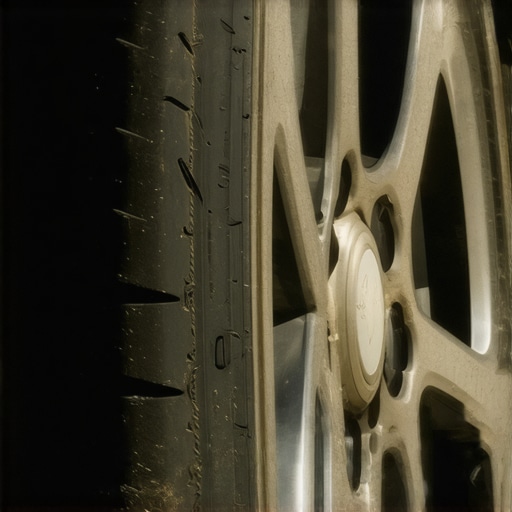
I still remember the sinking feeling in my chest last spring. I was knelt on my damp driveway, reaching behind my front left tire to retrieve a dropped plastic clip, when my hand brushed against something incredibly rough. I looked closer. The outer tread looked perfectly deep and healthy, but the absolute inside edge of the tire was worn down to the shiny, dangerous metal steel belts. I had been driving my family around on what was essentially a ticking time bomb, completely oblivious because the visible side of the tire looked brand new. It was a terrifying realization that cost me a hefty chunk of change at the local shop, but it taught me a lesson I will never forget about vehicle maintenance.
Today, we are going to get to the bottom of why your tires are wearing unevenly on the inside edge, so you do not have to experience that same gut-wrenching moment. This is not just about saving money on premature replacements; it is a critical safety issue that directly affects how your car grips the road when you need it most.
The Costly Ignorance of Inner Tire Wear
I used to think that if my steering wheel did not shake and the car drove straight, my alignment was perfectly fine. That was a massive, expensive mistake. I ignored a very slight drift to the right, thinking it was just the slope of the road. In reality, my front suspension was slowly grinding my expensive rubber into dust. When tires wear on the inside, it is almost always a silent symptom of steering geometry or suspension components bowing under pressure. According to safety data from the National Highway Traffic Safety Administration, tire issues are a contributing factor in roughly 9% of all motor vehicle crashes, highlighting just how vital even tread wear is to your stopping distance. If you want to keep your family safe, keeping your eyes on that hidden inner edge is non-negotiable.
Is this going to cost me a fortune to fix?
This is the first question everyone asks when they notice uneven tread, and it is a completely valid fear. The honest answer is: it depends on how long you wait. If you catch it early, a simple wheel alignment at an honest shop will get you back on track. But if you ignore it, that dragging tire will eventually destroy your wheel bearings and ball joints. If you are already feeling some strange feedback through your hands while driving, it is worth learning how to tell if your wheel bearing is failing or if its just road noise to see if the damage has already spread. Have you ever looked at your tires from underneath, or do you only check them from the side? Drop a comment below and let me know if you have ever been surprised by hidden inner tread wear like I was! Let’s dive into the actual mechanical culprits causing this issue so you can speak confidently to your mechanic.
Locating the Suspension Slop Destroying Your Tread
To stop this wear in its tracks, you have to find out exactly which joint or bushing has given up. Think of your front suspension like a human shoulder; if the socket is loose, the whole arm hangs at an unnatural angle. When control arm bushings or ball joints wear out, they allow the bottom of the tire to kick outward. This creates negative camber, forcing the inner shoulder of your tire to bear the entire weight of the vehicle as it rolls down the highway.
I remember trying to diagnose this on my own sedan a few winters ago. I had jacked up the front end, grabbed the wheel at the nine-o’clock and three-o’clock positions, and gave it a violent shake. There was a tiny, metallic clicking sound. That small play in the steering linkage was all it took to destroy a brand-new set of tires in under six thousand miles. If you notice your car drifting, you should also look closely at the real reason your car pulls to the right when you let go of the wheel to pin down the root cause before buying replacement rubber.
Check for Failed Struts and Bad Springs
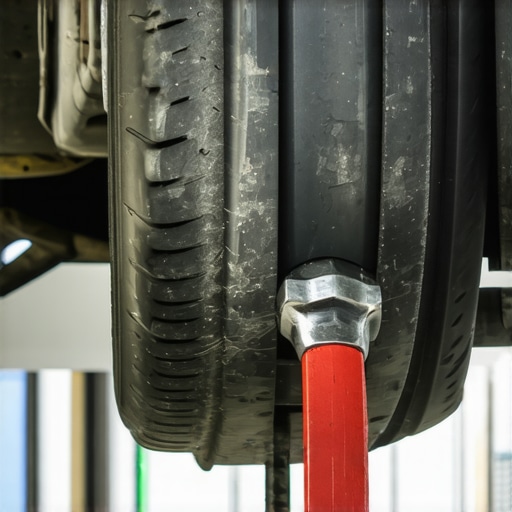
Your vehicle’s springs and struts hold the chassis at the correct ride height. When struts wear out, the vehicle sags closer to the ground, which naturally pushes the tires into a negative camber angle. You can easily diagnose this yourself. Take a look at your tread blocks; if you see diagonal bald spots or cupping along with the inner edge wear, your dampening system is shot. For a deeper dive into diagnosing this specific component, check out our guide on how to tell if your struts are dead by looking at your tires.
The Quick Wiggly-Wheel Test to Find Loose Parts
To safely execute this test, raise your vehicle with a floor jack and secure it on heavy-duty jack stands. Grab the front tire at the top and bottom (twelve and six-o’clock) and try to rock it back and forth. Any wiggle or play here points directly to a failing ball joint or a bad wheel bearing. Next, place your hands at the sides (nine and three-o’clock) and shake. If you feel slack, your tie rod ends are worn out, which ruins your alignment toe settings. If you notice a loose sensation while hitting bumps, it is highly recommended to read about why your car feels loose when driving over bumps to keep your steering precise and responsive.
Why Standard Alignments Miss Hidden Failures
Many drivers assume a quick trip to the alignment rack will solve everything. However, if your technician adjusts the toe without inspecting the control arm bushings, the alignment will slip the moment you hit your first pothole. This is one of the hidden suspension issues that a standard wheel alignment wont fix. Always demand a thorough physical inspection of the rubber boots and bushings before allowing a shop to adjust your alignment angles.
When most drivers spot that terrifying inner-edge tread wear, they immediately assume they just need a quick alignment tweak or perhaps a brand new set of tires. But as someone who has spent years troubleshooting stubborn suspension geometries, I can tell you that the conventional wisdom on this topic is often completely backwards. We are told that alignment machines never lie, but in reality, static alignment measurements on a stationary rack do not represent the dynamic forces your car experiences at highway speeds. This mismatch is where many expensive mistakes begin.
The Dynamic Alignment Illusion That Ruins New Rubber
Everyone says that if the laser alignment machine prints out a sheet full of green values, your car is perfectly set up. In my experience, this is a dangerous assumption. Static alignment is performed while your vehicle is completely stationary on a level metal rack. However, the moment your tires hit asphalt and you accelerate, aerodynamic drag and rolling resistance pull the wheels outward. If you have soft, aging control arm bushings, that static green alignment instantly morphs into severe dynamic negative camber and toe-out on the highway. Your tires are essentially splaying outward like a skier trying to stop, grinding the inner edge down in a matter of weeks. The alignment machine was happy, but your suspension was too weak to hold those angles under load.
Why Do Shops Keep Replacing Parts Instead of Fixing the Real Angle?
This is a sophisticated trap that catches even seasoned car enthusiasts. A shop might notice your inner wear, perform a standard physical check, and tell you that everything is tight. They might even recommend expensive, unnecessary component swaps without diagnosing the root geometry. The real culprit is often the lack of an adjustable camber kit on modern multi-link suspensions. Many factory vehicles do not allow for camber adjustments from the factory; they only allow toe adjustments. If your car is slightly lowered or the springs have settled just a fraction of an inch, the technician cannot fix the camber without aftermarket adjustable control arms. If you want to keep your steering precise and prevent this endless cycle of replacing tires, understanding the ultimate guide to auto repair keep your car running smoothly is your best defense against half-measure shop recommendations.
This brings us to a major mistake people make during broader maintenance: ignoring the relationship between braking, steering, and tread wear. When you press the brake pedal, weight transfers heavily to the front wheels, temporarily increasing negative camber. If your braking system is unevenly distributed or grabbing, it magnifies this force on one side. Yet, when people seek out the best brake service in 2025, they rarely think to check how their stopping system is directly impacting their tire wear. Every system on your vehicle is interconnected, and treating them as isolated issues is the quickest way to empty your wallet.
A study by the Car Care Council highlights that over 70% of vehicles on the road have at least one unaddressed maintenance issue, with suspension and alignment discrepancies leading the pack for premature tire failures. Have you ever fallen into this trap of getting a green alignment printout only to have your tires wear out anyway? Let me know in the comments below! If you want to prevent these compounding issues, make sure you are regularly performing essential car service checks to extend your vehicles life so you can catch weak bushings before they eat your next set of expensive tires.
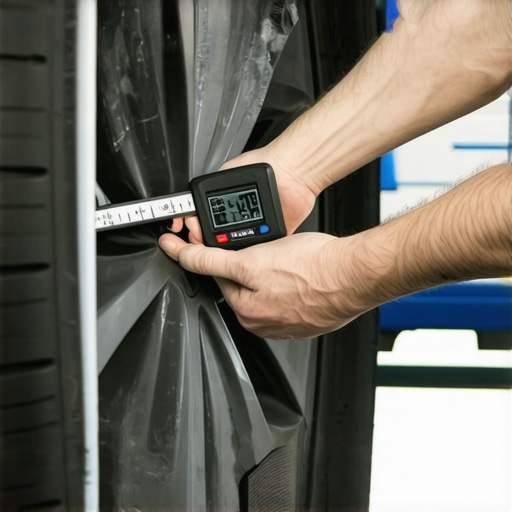
To truly break free from the cycle of destroying expensive rubber, you have to look beyond standard alignment racks and start inspecting your suspension like a professional. The key to long-term success lies in diagnosing your car’s geometry while it is under actual driving loads. When I am working in my home garage, my absolute favorite tool is a digital camber/caster gauge that magnetic-mounts directly to the wheel hub. Unlike a static shop reading, I can use this tool alongside a couple of inexpensive slip plates to measure how my tire angle shifts when I simulate real-world steering inputs. It is the only way to catch a bushing that seems perfectly tight under no load but deflects wildly when the car is actually moving.
How do I maintain my tire alignment over time?
Keeping your vehicle tracking perfectly straight requires a proactive, multi-system approach rather than waiting for your steering wheel to shake. First, I recommend doing a quick visual check of your inner tread every single time you change your engine oil. Second, establish a strict rotation schedule every 5,000 to 7,500 miles to distribute the wear evenly. Most importantly, you must treat your vehicle as a single, unified machine. For example, neglecting your transmission can lead to harsh, jerky shifts that put sudden, violent loads on your front drive axles, which eventually degrades your suspension bushings. Keeping up with basic upkeep, like checking out the top transmission repair tips for long-term vehicle reliability, will indirectly save your front-end alignment from taking an absolute beating. According to the engineering standards published by the Society of Automotive Engineers (SAE), dynamic suspension deflection is often exacerbated by drivetrain vibrations, meaning a smooth transmission and balanced axles are critical to keeping your steering geometry stable.
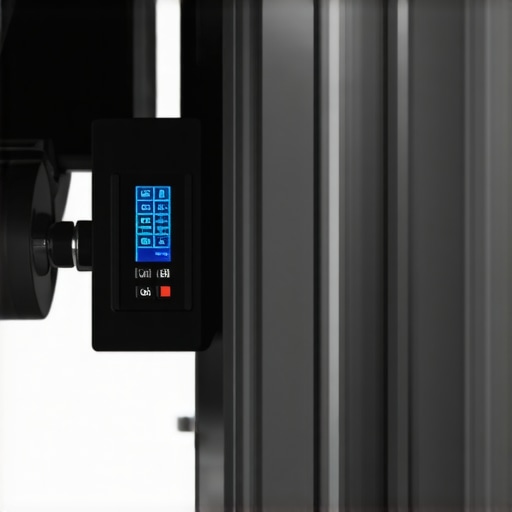
Looking ahead, I predict that the next generation of passenger vehicles will completely eliminate this guesswork with active alignment systems. We are already seeing high-end electric vehicles utilize active suspension dampers that adjust ride height on the fly to counter aerodynamic downforce. Within the next decade, entry-level cars will likely feature electronic control arms that automatically adjust camber and toe in real-time as you drive, compensating for worn bushings and preventing inner tire wear before it ever starts. Until then, we must rely on smart diagnostic habits. If you want to keep your car performing at its peak and avoid costly shop visits, make sure to read the ultimate guide to auto repair keep your car running smoothly. My challenge to you this weekend is to perform the quick twelve-and-six-o’clock wheel wiggle test on your own car—you might just catch a failing part before it ruins your next road trip!
When most drivers spot that terrifying inner-edge tread wear, they immediately assume they just need a quick alignment tweak or perhaps a brand new set of tires. But as someone who has spent years troubleshooting stubborn suspension geometries, I can tell you that the conventional wisdom on this topic is often completely backwards.
3 Critical Alignment Myths That Cost Me Thousands
Over my years working with suspension geometry, I have debunked several costly myths the hard way. Understanding these shifts will change how you approach your vehicle’s maintenance:
- Myth 1: If the steering wheel is straight, the alignment is fine. This is the most dangerous assumption. Your front tires can be severely ‘toed-out’ (pointing away from each other), dragging their inner edges flat along the highway, while your steering wheel remains perfectly centered.
- Myth 2: New parts automatically fix geometry issues. Simply throwing new control arms or struts at a vehicle won’t correct ride-height variations. If your ride height is altered even slightly, it can permanently distort your camber angle.
- Myth 3: All alignment machines measure real-world driving. No static machine can replicate the massive, dynamic wind resistance and road force that pushes back on your suspension bushings at 70 mph.
My Essential Toolkit for DIY Suspension Diagnosis
You do not need a multi-million dollar shop to find the root cause of why your tires are wearing out on the inner edge. These are the highly effective, low-tech tools I rely on in my own garage:
- Digital Camber/Caster Gauge: A magnetic hub-mounted gauge allows you to measure your exact camber angle right on your driveway.
- Heavy-Duty Slip Plates: Placing these under your front tires allows the steering to move freely under load, letting you see exactly how the wheels behave when the vehicle’s full weight is on them.
- Mechanic’s Stethoscope: By touching the probe to the steering knuckles while an assistant wiggles the steering wheel, you can isolate tiny, internal clicks from ball joints or tie rods before they become catastrophic failures.
Take Control of Your Steering Before the Next Road Trip
It is incredibly easy to feel overwhelmed by the complexity of modern automotive suspension networks. But remember, every major steering disaster starts as a tiny, quiet squeak or a slow, uneven wear pattern on the inside of your tires. By learning the physical signs of suspension failure, checking your components under dynamic loads, and keeping up with essential car service checks to extend your vehicles life, you can drive with absolute confidence that your rubber is gripping the road perfectly. Do not wait for a dangerous highway blowout to force your hand. Get under your car, run the tests, and take control of your vehicle’s safety today.
Have you ever peeked under your car only to find your inner tire tread worn down to the metal cords? Let me know in the comments below what you found!