
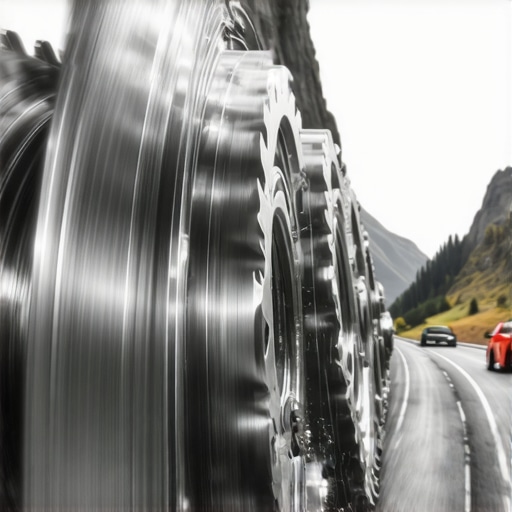
I’ll never forget the first time my old SUV started acting like it had a mind of its own on the climb up to the ridge. Every time the road tilted just a few degrees, the tachometer needle would dance like crazy. Downshift, scream, upshift, bog down—rinse and repeat. I did what most people do: I got annoyed, turned up the radio, and pushed the pedal harder. That was a massive mistake. I wasn’t just ‘climbing a hill’; I was essentially sandpapering my transmission internals into a fine metallic soup. If your car is doing that rhythmic, annoying ‘hunting’ dance right now, I’m here to tell you that your gearbox isn’t just being indecisive—it’s crying for help.
Stop the Constant Shifting Before You Fry Your Clutches
Early in my DIY days, I thought gear hunting was just a quirk of older cars. I figured if the engine was running, everything was fine. I was wrong. That constant back-and-forth generates an incredible amount of heat. Heat is the absolute enemy of your transmission fluid. When your car struggles like this, it’s often because it’s caught between the “economy” setting and the “power” requirement of the grade. We’re going to fix that logic today. If you’ve ever noticed that your transmission hunts for gears on slight inclines, you know how jarring it can be for your passengers and your peace of mind.
Is This Gear Hunting Actually Going to Kill My Car?
It’s a fair question. You might think, “It’s just shifting, isn’t that what it’s supposed to do?” Well, yes and no. According to the Car Care Council, nearly 90% of all automatic transmission failures are caused by heat, and nothing builds heat faster than a transmission that can’t decide where to stay. Each shift involves clutches engaging and disengaging; when that happens five times in ten seconds, the temperature inside that casing skyrockets. I learned this the hard way when I ignored the signs and ended up needing top transmission repair tips for long-term vehicle reliability just to get back on the road.
The Real Reason Your Engine and Gearbox Are Having an Argument
The root of the problem usually lies in a communication breakdown. Your car’s computer is looking at your throttle position, your speed, and the engine load. When you hit a hill, the load increases. The computer thinks, “I need more torque,” so it downshifts. But then, because your foot stayed in the same spot, the speed increases slightly and the computer thinks, “Okay, we’re good, let’s go back to a higher gear for fuel economy.” Then the cycle repeats. Sometimes, the issue is even more specific, like why your transmission won’t shift when you are pointed uphill because of fluid level issues or failing solenoids. Have you ever felt that sinking feeling in your stomach when your car just won’t pick a gear on a steep grade? Drop a comment below or reach out if you’ve been there, because identifying the ‘why’ is half the battle. Now, let’s look at the specific mechanical gremlins that cause this indecision.
Inspect the Lifeblood of Your Gearbox First
Before you start ordering expensive sensors or searching for a rebuild shop, you have to look at the fluid. Think of your transmission fluid like the blood in your veins; if it’s thick, dirty, or low, nothing functions quite right. I once spent three days chasing a ghost in a mid-2000s sedan that would lurch and hunt on every small grade, only to realize the level was just slightly low. If your car doesn’t have a traditional tube under the hood, you need to learn the easy way to check your transmission fluid without a dipstick. It’s a bit messier, but it’s the only way to be sure you aren’t starving the pump of the pressure it needs to hold a gear.
While you’re at it, give it the sniff test. If you find that your transmission fluid smells like burnt toast, you’ve already crossed the line into overheating territory. That smell means the friction material on your clutches is literally cooking. If the fluid is dark and smells like a campfire, a simple top-off won’t save you; you’re looking at a full flush and potentially a filter change to get that ‘logic’ back in line.
Wipe Away the Grime That Confuses Your Computer
Your transmission doesn’t just guess when to shift; it listens to the engine. One of the most common causes of gear hunting is a dirty Throttle Position Sensor (TPS) or a gunked-up throttle body. If the sensor is sending ‘jittery’ data to the computer, the transmission thinks you’re pumping the gas pedal when you’re actually holding it steady. You can often solve this by learning how to clean a sticky throttle body without removing it. By clearing out the carbon buildup, you allow the engine to breathe smoothly, which stabilizes the load signal being sent to the gearbox.
One Tiny Hose Can Save Your Clutch Packs
On slightly older vehicles, the transmission relies on a vacuum modulator to sense how hard the engine is working. I remember a specific old truck I owned that drove me absolutely insane. It would shift into overdrive and then immediately drop back down to third, over and over again, until the cab smelled like hot oil. I was convinced the transmission was toast. It turned out to be a $5 vacuum line that had dry-rotted and cracked. That tiny leak was enough to drop the pressure inside the transmission, making it ‘think’ I was flooring it when I was just cruising. This is why essential car service checks to extend your vehicle’s life must always include an inspection of your rubber lines and hoses.
Manual Shifting to Save Your Solenoids
If you’re currently stuck in a situation where the hunting is happening and you can’t pull over to fix it, use your gear selector. Most automatics allow you to manually select ‘3’ or ‘L’ or move into a ‘Sport’ gate. By manually locking out the higher gear, you stop the hunting instantly. You’ll run at a slightly higher RPM, but you’ll stop the ‘sandpaper’ effect of the clutches slipping in and out. This keeps the heat down until you can get the car to a shop to see if a shift solenoid is failing or if the software needs a simple re-flash.
You’ve checked the dipstick and scrubbed the throttle body, but there is a deeper layer of mechanical nuance that even some seasoned mechanics argue about. One of the most persistent myths in the car world is that you should never change the fluid on a high-mileage transmission if it hasn’t been done regularly. The logic usually goes: ‘The old fluid is the only thing holding the clutches together.’ In my experience, that’s a dangerous oversimplification. While it’s true that suspended friction material in old fluid can help worn clutches grab, the acidic, oxidized state of that fluid is actively eating your seals. According to a study by the Society of Automotive Engineers (SAE), oxidative thickening of ATF significantly increases internal friction and heat, which is the primary driver of the gear hunting we’ve been discussing. Challenging the ‘don’t touch it’ rule often saves a gearbox, provided you do a drain-and-fill rather than a high-pressure power flush.
The Additive Trap That Actually Melts Your Seals
If you are tempted by those ‘transmission fix’ bottles at the auto parts store, walk away. I’ve seen more DIYers destroy a perfectly salvageable unit with these than I care to count. These products often contain high concentrations of solvents designed to swell old seals to stop leaks. The problem? They don’t know when to stop swelling. Eventually, those seals become mushy and fail entirely, leading to a total loss of pressure. This is why relying on transmission leak repair fluid is often a costly mistake that turns a minor fix into a $4,000 rebuild. If you have a leak, find the gasket or the front seal and replace it properly. There is no ‘mechanic in a can’ for a structural pressure loss.
The same logic applies to your engine. While we often focus on the gearbox, the truth about high mileage oil and leaking seals is that chemical shortcuts rarely provide a permanent fix. Have you ever fallen into the ‘just add some stop-leak’ trap only to have the component quit a week later? Let me know in the comments; I’ve definitely been there in my younger, more impatient days.
Does My Modern Adaptive Transmission Need a Software Relearn?
If your car is newer than 2010, the gear hunting might not be mechanical at all. Modern Control Modules (TCMs) ‘learn’ your driving habits and adjust shift pressures as clutches wear. When you replace a sensor or change the fluid, the computer might still be using the old ‘wear’ parameters, causing erratic shifting. Sometimes, the solution isn’t a wrench—it’s a scan tool. A ‘Transmission Adaptive Rescan’ can reset these values to factory defaults, allowing the computer to relearn the new fluid’s viscosity. This is one of those essential car service checks to extend your vehicle’s life that often gets overlooked by general shops.
Don’t Ignore the Rest of the Chassis While You’re Under There
Finally, remember that the sensation of gear hunting can sometimes be masked or mimicked by other failures. A surging sensation during a climb could actually be a braking system issue or a warped rotor dragging under load. Taking the time for braking news: how to choose the best brake service in 2025 ensures that your ‘transmission’ problem isn’t actually a seized caliper fighting your engine’s power. Diagnosing a car requires a holistic view; if you only look at the gearbox, you’ll miss the forest for the trees.
I used to think a twenty-dollar code reader from the local parts store was enough. Then I ran into a modern 6L80 transmission that refused to shift out of second gear. My cheap tool said everything was fine, but a proper bidirectional scanner revealed a pressure control solenoid stuck at zero psi. If you are serious about auto repair, you need a tool that can actually talk back to the car. I personally swear by mid-range units like the Autel MaxiCheck because they allow you to perform ‘Service Bay Tests.’ This is absolutely vital when you are trying to figure out why your transmission shifts early and makes the engine bog down. Without seeing the real-time data from the Turbine Speed Sensor, you are essentially throwing parts at a ghost.
Skip the Guesswork with a Pro-Grade Scanner
Investment in a scanner that reads live transmission data stream is the single best move I ever made. It allows you to see clutch apply times in milliseconds. If you notice a delay, you can catch a failure before it leaves you stranded. This level of detail is a core part of the ultimate guide to auto repair for anyone looking to go beyond basic oil changes. Expert documentation from ZF Friedrichshafen AG, one of the world’s leading gearbox manufacturers, notes that fluid shear and additive depletion happen significantly faster in vehicles used for towing or mountain driving. They recommend ignoring the ‘filled for life’ factory labels and sticking to a strict service interval to prevent catastrophic wear.
How do I keep my gearbox healthy for 200,000 miles?
The secret isn’t a magic chemical; it is consistency and cooling. Heat is the number one killer of automatic gearboxes. If you frequently drive in hilly terrain or heavy traffic, installing an auxiliary transmission cooler is a game-changer. Following top transmission repair tips for long-term vehicle reliability means checking that cooler for debris every time you do a brake service or tire rotation. Additionally, always use the exact fluid specification listed in your owner’s manual. Mixing ‘universal’ fluids can alter the friction coefficient enough to cause the very gear hunting we are trying to avoid.
The Future of Shifting is Software and Electricity
As we look ahead, the trend is moving toward ‘Software-Defined Vehicles.’ We are already seeing cars that use GPS data to predict an upcoming hill and downshift before the engine even feels the load. While this reduces mechanical strain, it makes electronic health even more important. These systems rely on clear signals, which is why essential car service checks to extend your vehicle’s life must now include checking for battery voltage drops and ground wire corrosion. If the computer doesn’t have steady power, the smartest gearbox in the world will still struggle to find the right gear. My advice? Next time your car acts up, don’t just clear the code. Look at the ‘freeze frame data’ to see exactly what the temperature and load were at the moment of the fault. It is the difference between a guessing game and a surgical fix.
What Decades of Wrenching Taught Me About Gearbox Indecision
After spending years under hoods, I’ve realized that gear hunting is rarely an isolated failure. It’s usually a symptom of a car that’s trying to compensate for a lack of maintenance or a misunderstanding between the driver and the machine. I’ve learned that ignoring the ‘hunting’ doesn’t just wear out clutches; it fundamentally alters the way your car handles torque. One lightbulb moment for me was realizing that many transmission issues start as engine load problems. If your engine is breathless because of a clogged filter, the gearbox has no choice but to downshift. Following top transmission repair tips for long-term vehicle reliability means treating the whole drivetrain as one unit. Also, never underestimate the power of a fresh battery; low voltage can scramble the brains of even the most sophisticated TCM.
My Personal Arsenal for Transmission Health
If you want to move beyond being a passive driver, I recommend building a small library of resources. First, a bidirectional scan tool is my go-to for reading live data; it’s worth its weight in gold when you need to see what’s happening in real-time. For a broader perspective, the ultimate guide to auto repair is a fantastic foundation for understanding the ‘why’ behind common failures. I also highly suggest checking out technical bulletins from manufacturers like ZF or Aisin—they often publish the real fix months before it hits the forums. Finally, remember to integrate essential car service checks to extend your vehicle’s life into your seasonal routine so you aren’t surprised by a failure on a remote mountain pass.
#IMAGE_PLACEHOLDER_E#
Take Control of Your Drive Before It Takes Control of You
Don’t be afraid to listen to what your car is telling you. That rhythmic shifting on an incline isn’t just a quirk; it’s an invitation to dig deeper and understand your machine better. Whether you are performing a simple fluid check or preparing for a brake service, taking ownership of your car’s health is the only way to ensure it lasts for hundreds of thousands of miles. If you’re ever in doubt about a major repair, you can always contact us for professional guidance. Keeping your transmission from hunting for gears is about more than just comfort—it’s about protecting one of your biggest investments. Have you ever ignored a weird shift only to regret it later when you saw the repair bill? Let me know about your gear hunting experiences in the comments below!