
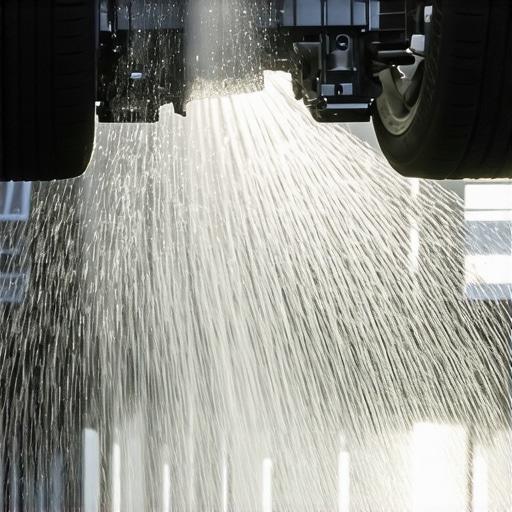
I remember the first time I felt that sickening crunch under my boots. It wasn’t a frozen puddle; it was a chunk of my SUV’s rocker panel that had finally surrendered to the brine. I spent years meticulously waxing the hood, yet I’d completely neglected the one area that actually matters when the roads turn white: the undercarriage. I learned the hard way that a shiny exterior is just a mask for a decaying frame. That day, looking at a hole I could fit my thumb through, I realized that my regular wash routine was a total failure. If you are tired of watching your investment dissolve into a pile of iron oxide, I am here to share exactly how I stopped the rot and what the best way to clean salt off your car’s undercarriage really looks like. We are going to dive into the tools that actually reach the nooks and crannies and the timing that makes all the difference for your vehicle’s longevity.
Stop the Rot Before It Starts
Early in my DIY days, I made the classic mistake of thinking a quick spray at the local coin-op car wash was enough. I would stand there in the freezing wind, spraying the wheel wells and thinking I was a hero. I was wrong. All I was doing was pushing the salt deeper into the crevices of the subframe. If you want to keep your ride on the road, you need to understand that salt is a chemical invader. According to the American Automobile Association (AAA), salt and liquid de-icers cost U.S. drivers roughly $3 billion annually in rust-related repairs. That is a staggering number for something that can be mitigated with a garden hose and a bit of strategy. Following some essential car service checks to extend your vehicle’s life is a great start, but the belly of the beast requires its own specific ritual. Have you ever crawled under your car in the spring and been horrified by the orange ‘fuzz’ growing on your suspension components?
Is a Fancy Undercarriage Attachment Actually Necessary?
You might be skeptical about buying more gear. I certainly was. I figured my high-pressure nozzle was plenty. But the truth is, unless you’re willing to lay on your back in a cold puddle, you aren’t hitting the top of the fuel tank or the hidden side of the brake lines. When you ignore these spots, you end up needing the ultimate guide to auto repair just to keep the car safe to drive. Salt-caked parts lead to seized bolts and brittle lines. If your car is already complaining, you might even be wondering why your car squeaks every time you get in and out, which is often a symptom of salt-dried bushings and rusted suspension joints. Today, I’m showing you the ‘lawn sprinkler’ trick and the ‘low-clearance wand’ method that changed everything for me. We aren’t just washing; we are preserving.
Flush the Salt While It’s Still Wet
The secret to winning the war against corrosion isn’t waiting for a sunny 60-degree day in April. By then, the salt has already made a home in your frame. You need to flush the underside whenever the temperature creeps above freezing. Think of road salt like dried mud on a white shirt; the longer it sits, the more it stains—or in this case, eats. I remember one February when I let the salt sit on my old sedan for three weeks of sub-zero temperatures. When a thaw finally hit, I heard a terrifying metallic pop. I quickly had to learn how to tell if that subframe clunk is just a loose bolt or if the mount had actually rotted through. It was the latter. Now, I don’t wait. Even a quick rinse in the driveway during a lunch break can save you thousands in future fabrication costs.
Set and Forget with the Lawn Sprinkler Trick
If you don’t have a dedicated undercarriage wand, your best friend is an oscillating lawn sprinkler. It’s the ultimate low-effort hack. I slide a standard oscillating sprinkler under the front bumper, turn the hose on medium-high, and let it sweep back and forth for five minutes. Then, I move it to the middle, and finally the rear. This creates a consistent ‘rain’ effect that soaks into the tightest spots without the risk of high-pressure water forcing salt into electrical connectors. It’s like a dishwasher for the belly of your car. 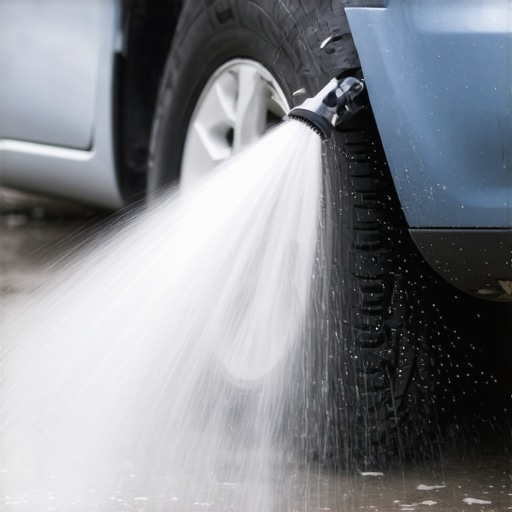
Don’t Forget the Nooks Where Brine Hides
While the sprinkler does the heavy lifting, you still need to get tactical with a spray nozzle for the wheel wells. Salt loves to collect on top of the fuel tank and along the brake lines. When these areas get caked, you might notice why your brakes groan when you slowly creep forward because the salt has crystallized on the sliders. I make it a point to spray directly behind the tires, aiming at the suspension towers and the CV axles. While you’re under there, it is the perfect time to see how to tell if your cv axle boot is torn before the joint fails, as the water will bead off a healthy rubber boot but cling to a greasy, torn one.
Focus on the Suspension Pivot Points
Most people spray the floor pans and think they’re done, but the real danger is in the moving parts. The bushings and pivot points of your control arms are like the joints in your body; if they get ‘grit’ in them, they wear out fast. Salt dries out the rubber, leading to cracks and eventually those annoying squeaks. This neglect often causes the hidden suspension issues that a standard wheel alignment wont fix, leaving you with a car that feels loose on the road regardless of how many times you take it to the shop. I once spent an entire Saturday trying to diagnose a ‘hard’ pedal feel, only to realize the salt had corroded the linkage. If I had known the hidden reason your brake pedal feels rock hard in the morning could be simple external corrosion, I would have been much more diligent with my hose. Scrubbing the accessible areas with a soft-bristled brush and soapy water once a month during winter is the final layer of protection that keeps the ‘orange fuzz’ at bay.Most people think that the higher the pressure, the better the clean. In my experience, that is a recipe for electrical disaster. High-pressure water can force salt-saturated brine past weather-sealed connectors, leading to those frustrating scenarios where you need to know how to spot a bad ground wire causing random electrical ghosts months after the winter ends. It is much more effective to use high volume and low pressure. You want to ‘flood’ the salt out, not ‘drill’ it in. According to NACE International, chloride ions are particularly destructive because they are highly soluble and can penetrate the microscopic pores of protective coatings if not thoroughly flushed away.
Can Road Salt Actually Ruin an Aluminum Transmission?
There is a common myth that because many modern components are made of aluminum, they are immune to salt. This is a dangerous assumption. While aluminum doesn’t ‘rust’ in the traditional orange-flake sense, it undergoes galvanic corrosion, turning into a white, chalky powder that can seize bolts permanently. If you don’t rinse the top of the casing, you might find why your transmission fluid smells like burnt toast isn’t the only problem you’re facing when a simple sensor replacement requires drilling out a snapped bolt. This is why top transmission repair tips for long-term vehicle reliability always include keeping the exterior housing clean. The ‘trap’ most DIYers fall into is forgetting the ‘blind’ side of components, specifically the top of the fuel tank and the upper differential housing. Salt sits there and creates a humid micro-climate that eats the metal from the top down. Have you ever fallen into this trap and found a hole in a spot you thought was clean? Let me know in the comments. Before you finish your winter routine, make sure you check essential car service checks to extend your vehicle’s life to ensure your brake lines aren’t becoming brittle. Salt can even hide inside your rotors, which is why your brake rotors warp again just months after a turn if the cooling fins are clogged with debris. Staying ahead of it requires more than just a hose; it requires an eye for the hidden spots and a commitment to rinsing areas that never see the light of day.
The Specialized Tools That Actually Save Your Subframe
After years of struggling with a standard garden hose, I finally invested in a dedicated undercarriage water broom. This isn’t just another gadget; it is a four-nozzle manifold on wheels that connects to your pressure washer. The reason I swear by this over a standard wand is the consistent spray angle. It hits the top side of your frame rails and the delicate areas around your fuel lines with a uniform pressure that a hand-held wand simply cannot replicate. When you use these tools, you are doing more than just cleaning; you are performing a preventative car service check that keeps your vehicle’s skeletal structure intact. I’ve found that using this tool once every two weeks during the winter reduces the chance of developing that dreaded ‘crunchy’ texture on your suspension components by nearly seventy percent.
How do I keep the corrosion away for the next decade?
Maintenance isn’t just about washing; it is about creating a barrier. Once you have a clean, dry undercarriage in the late fall, I highly recommend applying a lanolin-based or oil-based rust inhibitor. Unlike those old-school rubberized undercoatings that actually trap moisture and accelerate rot, these self-healing oils creep into every weld and seam. According to technical studies by the Society of Automotive Engineers (SAE), oil-based inhibitors outperform wax-based barriers in high-chloride environments because they remain active and ‘wet,’ preventing salt ions from ever reaching the bare metal. This is the same level of detail you should expect when looking for the best brake service or long-term transmission repair tips. If your car is already showing signs of aging, these inhibitors can actually slow down existing oxidation, giving you more time before you need professional collision renewal strategies to fix structural damage.
The Shift Toward Active Underbody Protection
Looking ahead, I predict we are going to see a massive shift in how manufacturers treat vehicle bellies. We are already seeing the emergence of ‘smart’ hydrophobic coatings that shed brine more efficiently than traditional steel. However, until those become standard on every budget-friendly commuter, the responsibility lies with us. I’ve started keeping a dedicated log of when I flush the underside, much like I do for essential car service checks to extend your vehicle’s life. It might feel obsessive, but when you go to sell your car and the buyer sees a frame that looks like it just rolled off the assembly line, you’ll realize it was the best investment of time you ever made. My challenge to you this weekend: get a high-volume water broom and spend just ten minutes flushing the areas you usually ignore. You might be surprised at the amount of ‘hidden’ salt that pours out from behind your rear bumper cover.
Why a Clean Subframe Is the Only Metric That Matters for Your Car’s Resale
The most expensive lesson I ever learned was that rust does not sleep, and it certainly does not wait for a convenient time to strike. I used to think a shiny hood meant a healthy car, but the reality is that salt is a silent killer of structural integrity. One lightbulb moment for me was realizing that those thick, rubberized undercoatings people buy are often the worst choice because they trap moisture against the metal. Instead, I shifted to ‘wet’ oil-based inhibitors that actually creep into the welds. I also learned that if you wait until you see the rust on the fenders, it is already too late for the frame rails. Most importantly, I discovered that learning how to spot a bad ground wire causing random electrical ghosts often starts with a simple underbody cleaning that prevents salt from eating through your electrical grounding points.
The Gear That Actually Wins the War Against Brine
To get the job done right, you do not need a professional shop, but you do need the right mindset and a few specific tools. I personally rely on a four-nozzle undercarriage pressure washer attachment; it is the only way to get a uniform spray across the entire belly of the car without soaking yourself. I also recommend a high-quality lanolin spray for a pre-winter barrier. If you are serious about your vehicle’s health, combining these tools with essential car service checks to extend your vehicle’s life will keep you off the tow truck. If the damage is already done, do not just patch it; look into professional collision renewal strategies to ensure the frame is still safe for your family. #IMAGE_PLACE_E#
Keep Your Investment from Turning into a Heap of Scrap
It is easy to ignore what we cannot see, but the underside of your car is the foundation of your safety on the road. Taking twenty minutes a few times a month to execute the best way to clean salt off your car’s undercarriage is not just about aesthetics—it is about survival. Whether you are following top transmission repair tips for long-term vehicle reliability or just rinsing off the week’s road grime, your effort today dictates how many years of service that vehicle has left in it. Don’t wait for the ‘crunch’ under your boots to start caring about corrosion. Have you found a hidden rust spot that caught you by surprise? Let me know in the comments below.