
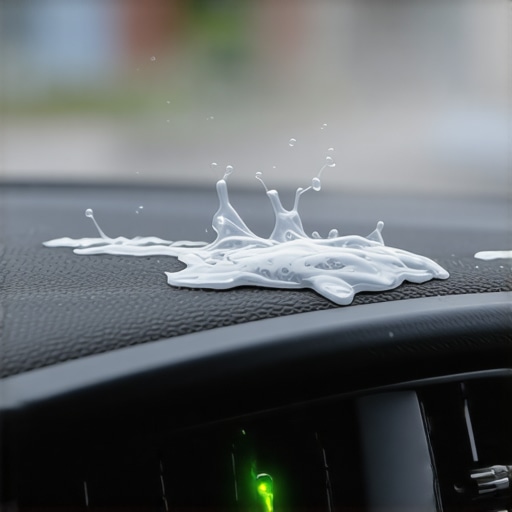
It was a Tuesday morning, and I was running late for a meeting in Charlotte. I cranked the heat in my old sedan to clear the morning chill. Suddenly, the cabin filled with the thick, sugary aroma of maple syrup. For a second, I actually thought I’d left a box of donuts in the backseat. I hadn’t. That sweet scent was actually the first sign of a mess that would eventually cost me a week of commuting on the bus. I made the classic mistake of thinking, “Hey, at least it doesn’t smell like rotten eggs,” and kept driving. Big mistake. By the time I reached the office, my floorboards were damp and my windows were coated in a greasy film I couldn’t wipe away. I learned the hard way that ignoring the early signs of a failing cooling system is a one-way ticket to an expensive repair shop visit. Whether you are dealing with a mysterious odor or need the ultimate guide to auto repair to stay ahead of maintenance, catching it early is everything. [IMAGE_PLACEHOLDER]
That Sugary Aroma is a Warning Sign You Can’t Ignore
If you are sitting there right now wondering why your vents are pumping out a candy-shop vibe, let’s get real: your car is leaking coolant. Specifically, it’s likely your heater core, which acts like a mini-radiator under your dashboard. This isn’t just a quirky car personality trait; it’s a mechanical cry for help. Today, I’m going to help you identify exactly where that leak is coming from and how to stop it before you end up stranded or, worse, breathing in toxic fumes for weeks. It’s part of those essential car service checks we all tend to skip until it’s too late. Trust me, I’ve been there, and I’ve got the stained carpets to prove it. When I was younger, I thought adding a bottle of “stop leak” would fix it. It didn’t. It just clogged my radiator and made the problem twice as expensive. Have you ever noticed a weird mist coming out of your vents along with that smell? If so, you are likely dealing with the specific smell of a failing heater core which indicates the unit has developed a pinhole leak.
Could This Sweet Problem Actually Total Your Engine?
Skeptics might think I’m overreacting. It’s just a smell, right? Wrong. The “sweetness” comes from ethylene glycol, the main ingredient in most antifreeze. According to the Agency for Toxic Substances and Disease Registry, breathing in high levels of ethylene glycol vapors can cause throat irritation and even affect your central nervous system. Beyond your health, the mechanical reality is worse. If your coolant levels drop because of this leak, your engine will eventually lose its ability to regulate temperature. That leads to warped heads and blown gaskets—the kind of stuff that makes people decide to look for how to sell a junk car in Charlotte rather than invest in more repairs. You need to keep an eye on your reservoir because fluid levels dropping without a visible puddle on the ground often points straight back to interior cooling system components. If you find your car heater only blows cold air while the smell persists, you’ve likely reached the point where air is trapped in the lines, which is a recipe for disaster. Let’s look at how to diagnose this before your morning commute turns into a roadside emergency.
Pressure Test Your Way to Certainty
To stop the guessing game, you need to simulate the environment where the leak actually happens: under pressure. A cooling system pressure tester is basically a heavy-duty pump for your radiator. I remember the first time I used one; I was convinced the leak was a blown head gasket until the pressure tester showed a tiny, needle-thin spray coming from a bypass hose I had completely overlooked. You attach the adapter to the radiator neck or the expansion tank, pump it up to the pressure rating stamped on your cap—usually 14 to 16 PSI—and watch the needle. If the pressure drops, the fluid is going somewhere. If you hear a faint gurgling or hissing behind your dashboard while the gauge falls, you have confirmed the heater core is the culprit. This is a vital part of essential car service checks that many DIYers skip because the tool seems specialized, but it saves you hundreds in misdiagnosed repairs. 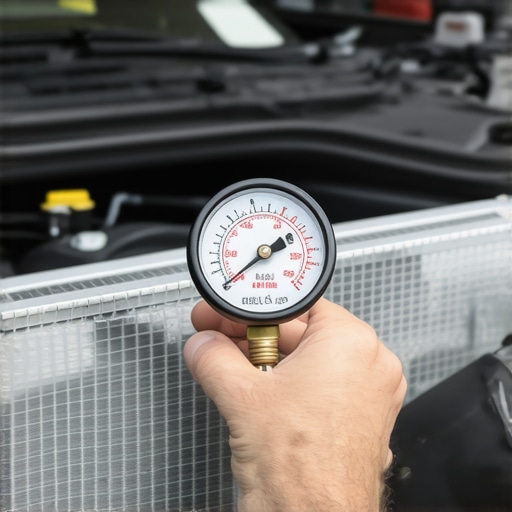
Spot the Leak with the Paper Towel Trick
Sometimes the pressure holds relatively well, but the smell persists. This is when you have to get physical and check the cabin. Pull back the carpet on the passenger side of your vehicle. I once ignored a damp spot for two weeks in my old SUV, only to find that the coolant had actually started to rot the wiring harness underneath the floorboards, leading to a much larger electrical nightmare. To be sure it is not just rain water or condensation, press a clean white paper towel into the padding. If it comes back with a neon tint—green, orange, or blue—you are definitely looking at a coolant leak. Unlike water, coolant feels slightly oily or greasy between your fingers. While you are down there, it is worth checking for other issues like brake fluid level drops without a visible leak, as these systems often run lines near each other in the firewall area. If you have reached the point where you are seeing puddles, you are past the point of simple fixes and might need collision renewal strategies for the interior components.
Loop the Hoses to Save Your Engine
If you are stranded and your heater core is gushing, you can perform an emergency ‘heater bypass.’ I had to do this in a supermarket parking lot once using nothing but a multi-tool and a short piece of copper pipe I found at a nearby hardware store. You simply disconnect the two hoses going into the firewall and join them together with a coupler. This keeps the coolant circulating through the engine block without entering the cabin. It is a temporary fix that prevents your engine from overheating while you decide on a permanent repair. Be careful, though; while your engine stays cool, you will not have a defroster, which can be dangerous in rain. This is just one of those the ultimate guide to auto repair secrets that keeps you on the road when things go south. Just like you might learn how to check your own wheel alignment using a piece of string, knowing how to loop a cooling line can be the difference between an expensive tow truck bill and driving home safely.Let’s dig deeper into the mechanics of why some ‘common sense’ fixes actually accelerate your car’s trip to the graveyard. Most people think that if a seal is leaking, they should just thicken the fluid. I used to believe that too. But here’s the contrarian truth: adding ‘stop-leak’ chemicals to your radiator or transmission is like trying to fix a burst pipe with bubble gum. It might hold for a day, but it eventually clogs the narrow passages in your heater core and transmission cooler. In fact, why relying on transmission leak repair fluid is often a costly mistake comes down to chemistry; these additives can cause seals to swell and then catastrophically shrink once the chemicals wear off. There is also a massive trap involving ‘high-mileage’ additives. While we all want to save an older engine, the truth about high mileage oil and leaking seals is that they can sometimes mask a mechanical failure that needs a real wrench, not a chemical band-aid. According to a technical report by SAE International, the chemical incompatibility between different coolant types—like mixing IAT (green) with OAT (orange)—can create a silicate-gel precipitate. This ‘sludge’ doesn’t just stop leaks; it stops your engine’s ability to cool itself entirely.
Why Relying on the Magic Bottle Usually Backfires
If your transmission hunts for gears while climbing a hill, don’t just assume you need a new unit. Often, it’s a simple sensor or a fluid pressure issue that a ‘magic fix’ bottle would only make worse by gunking up the valve body. I’ve seen DIYers spend hundreds on additives only to end up needing a full rebuild because those chemicals destroyed the friction plates. Expertise means knowing when the ‘simple’ fix is actually a trap. This applies to your bodywork too. Many budget shops will push for aftermarket panels to save money, but collisionrenew: the truth about aftermarket vs oem body panels reveals that fitment and safety crumple zones are rarely identical to factory standards. If your car has been in even a minor nudge, don’t ignore a slightly off-center hood or bumper. It could mean your safety sensors are misaligned, which is why your car’s safety sensors need a reset after any front-end work to ensure your airbags and collision avoidance systems actually fire when they should.
Is Your New Engine Noise Actually a Transmission Cry for Help?
Sometimes the nuance isn’t in what you see, but what you hear. I’ve seen countless owners replace perfectly good water pumps because they heard a whining noise, only to realize the sound was actually coming from a strained transmission pump. This is why top transmission repair tips for long-term vehicle reliability always start with a proper diagnostic check rather than ‘parts-cannon’ repairs. The same logic applies to your stopping power. You might think a squeak is just a pad, but braking news: how to choose the best brake service in 2025 involves looking at the rotors and calipers for heat-spotting and hydraulic fatigue that a basic pad swap won’t fix. Have you ever fallen into this trap of fixing the symptom instead of the disease? Let me know in the comments below. Whether it’s a sweet smell in the cabin or a weird shift on an incline, the real solution rarely comes out of a plastic bottle.Stop throwing parts at a problem and hoping something sticks. I spent years replacing sensors and gaskets based on a ‘hunch’ until I finally invested in a bidirectional scan tool. If you want to move past the amateur level of car care, you need a tool that doesn’t just read codes but actually talks to the car’s computer to command components. For example, when checking if your cooling fans are actually failing or if it is just a bad relay, a proper scanner allows you to trigger the fan manually. It’s a core part of essential car service checks that separates the driveway mechanics from the pros. When you follow the ultimate guide to auto repair, you realize that data is your best friend. I personally swear by the Autel MaxiCOM series because it allows me to bleed ABS brakes and reset steering angle sensors—tasks that used to require a trip to the dealership.
How do I keep my cooling system alive for the long haul?
Maintenance isn’t a one-time event; it is a discipline. To prevent the heater core disaster I mentioned earlier, you need to perform a complete system flush every two to three years, regardless of mileage. Over time, the corrosion inhibitors in your coolant break down, leading to the electrolysis that eats through aluminum components. I recommend using a refractometer instead of those cheap floating-ball testers to check your coolant’s freeze point and concentration. It is about precision. If you are worried about the structural integrity of your vehicle after a scrape, looking into collision renewal strategies will help you maintain that factory finish and safety. Similarly, staying on top of top transmission repair tips for long-term vehicle reliability means checking for fluid oxidation before it starts to smell like burnt toast. According to technical documentation from the Gates Corporation, even a belt that looks ‘okay’ can have micro-cracks that lead to catastrophic failure under the high-torque loads of modern alternators and AC compressors. I have seen it happen: a $30 belt snaps and takes out a $400 radiator in seconds. Looking ahead, the future of maintenance is shifting toward predictive analytics. Soon, your car won’t just tell you something *is* broken; it will use AI to predict that a bearing will fail in 500 miles based on vibration frequencies. This trend is already starting with advanced telematics, and it makes things like braking news: how to choose the best brake service in 2025 even more relevant as systems become more integrated. My advice? Go grab a pressure tester this weekend and check your system. It is a small investment that prevents a massive headache. If you find yourself in over your head, you can always contact us for professional guidance before a small leak becomes a total loss.
The Day My Car Smelled Like Syrup and Taught Me a $1,200 Lesson
Looking back on my years under the hood, I realized that my car was always trying to talk to me; I just wasn’t fluent in ‘mechanical’ yet. Here are the hard-won lessons I picked up from that sugary-sweet disaster:
- The Gauge is a Liar: I once thought that as long as the temperature needle was in the middle, I was safe. In reality, by the time that needle moves toward the red, the internal damage is often already occurring.
- Verification Trumps Guesswork: Always verify a leak with a pressure tester before you start ripping the dashboard apart to find the specific smell of a failing heater core. It could just be a $10 hose clamp.
- Avoid the ‘Quick-Fix’ Chemicals: I learned that why relying on transmission leak repair fluid is often a costly mistake applies to cooling systems too; those additives are a ‘get home’ fix, not a permanent solution.
- The Floorboard Test: If you ever find your passenger-side carpet damp, don’t assume it was a window left cracked. It’s almost always a sign that your heater core has given up the ghost.
My Toolkit Secrets for Finding Leaks Before They Find Your Wallet
If you want to stop guessing and start fixing, there are three resources I rely on every single weekend to keep my fleet running. First, get an Autel MaxiCOM Scanner. It allows you to perform essential car service checks that basic readers can’t touch, like monitoring real-time coolant sensor data. Second, a Coolant Refractometer is non-negotiable; those cheap floating-ball testers are notoriously inaccurate for modern OAT and HOAT fluids. Finally, I always keep a copy of the Haynes Manual for my specific vehicle year. While YouTube is great, having a physical torque spec chart saves you from stripping bolts in the middle of a job. These tools are the foundation of the ultimate guide to auto repair because they replace ‘hunches’ with hard data.
Stepping Into the Role of Your Own Best Mechanic
You don’t need to be a certified technician to keep your ride in top shape; you just need to be observant and proactive. By staying ahead of minor maintenance, you are ensuring that your car remains a reliable companion rather than a financial liability. Whether you are improving your stopping power after reading braking news: how to choose the best brake service in 2025 or implementing long-term collision renewal strategies, you are taking control of your vehicle’s destiny. If you ever hit a wall or find a leak that seems too big to handle, do not hesitate to contact us for professional guidance. Have you ever ignored a weird smell in your car only to regret it later? Let me know in the comments below.