
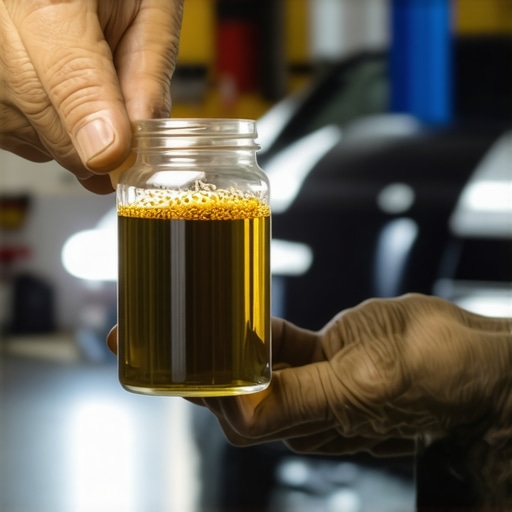
I still remember the sinking feeling in my stomach three years ago. I had just poured fresh, golden synthetic oil into my sedan, feeling like the king of DIY car maintenance. Fast forward exactly 1,024 miles. I pulled the dipstick just to admire my handiwork, expecting to see that beautiful, honey-like amber translucent glow. Instead, it looked like liquid charcoal. Dark, murky, and sinister. My heart raced. Did my engine have a hidden death sentence? Was my expensive filter failing? I almost panicked and drove straight to an expensive garage for an emergency car service check.
The Heart-Stopping Sight of Black Oil on a Clean Dipstick
It is a classic driveway panic moment that almost every car enthusiast goes through. We are told that synthetic oil is the holy grail of lubrication, lasting up to 10,000 miles or more. So, when it turns pitch black before you even finish your first road trip of the season, it feels like a personal failure. You start wondering if you need to learn how to remove a stripped oil drain plug because you are about to do another premature oil change. But here is the truth I learned after hours of research and talking to seasoned mechanics: that dark color does not mean your oil is ruined. In fact, it often means the oil is doing its job perfectly.
Is dark oil actually destroying your engine from the inside out?
Many drivers fear that dark oil is a sign of extreme thermal breakdown or severe engine wear. Early in my DIY journey, I mistakenly assumed that dark oil was synonymous with “dirty, abrasive oil” and wasted hundreds of dollars dumping perfectly good fluid after just a thousand miles. This is a common misconception. According to the lubrication experts at Blackstone Laboratories, the color of your motor oil is not a reliable indicator of its remaining lifespan or its lubricating quality. Synthetic oil contains active detergents and dispersants designed to suspend soot, carbon deposits, and microscopic debris. If the oil stays perfectly clear, those contaminants are settling inside your engine block instead of being carried to the filter.
Today, we are going to demystify exactly why this rapid color shift happens, how to distinguish normal discoloration from actual engine trouble, and how to tell if your oil is genuinely spent. Have you ever pulled your dipstick after a fresh oil change only to find it looking like old coffee? Let me know in the comments below! If you are also dealing with strange noises or transmission issues, check out our guide on why your car hesitates to shift from second to third gear as we dive deeper into keeping your vehicle running flawlessly.
How to Read the True Condition of Your Engine Oil
To accurately judge what is happening inside your engine, you need to look beyond the color. Think of your motor oil as the housekeeper of your engine block. Just because a broom gets dirty does not mean it is broken; it means it is sweeping up the mess. However, there is a fine line between dirty oil doing its job and degraded fluid that threatens to destroy your engine bearings. To determine where your oil stands, you need to perform a simple sensory check right on your driveway.
The Blotter Test is Your Best Diagnostic Tool
I learned this trick the hard way during a freezing winter weekend after noticing my sedan’s dipstick looked like pure tar. Worried that I had a blown head gasket or severe fuel dilution, I took a single drop of warm oil from the dipstick and dripped it onto a clean white paper towel. I let it sit for two hours. Instead of a uniform dark blob, the oil spread into distinct rings. The center was a soft grey, surrounded by a wider, clearer amber halo. This halo proved the dispersants were still active and holding the soot in suspension. If your blotter test reveals a gritty, thick black center circle that refuses to spread out, your oil is fully saturated and requires an immediate oil change. This quick test can prevent unnecessary anxiety, much like learning how to check your brake pads without taking the wheels off keeps you ahead of scheduled brake maintenance.

Smell and Feel for Fuel Dilution and Grittiness
Another crucial step is to physically inspect the texture and smell of the fluid. Take a small smear of the dark oil between your thumb and index finger and rub them together. It should feel completely smooth and slick. If you detect even the slightest hint of abrasive grit or roughness, you have a failing oil filter or severe carbon buildup, and you must drain the oil immediately. Next, take a sniff of the dipstick. Healthy synthetic oil has a mild, sweet, or slightly chemical smell. If it smells strongly of gasoline, you are dealing with fuel dilution, which thins out the oil and robs it of its lubricating properties. This is a serious issue that can lead to rapid engine wear, similar to how neglecting to check why your brake fluid is low but you dont see a leak can suddenly compromise your stopping power on the highway.
Watch Out for the Milky Mayo Texture
If you pull your dipstick and see a creamy, frothy, light-brown substance that looks like mayonnaise, you have a real emergency. This milky appearance is a classic sign of moisture mixing with your oil. While a tiny bit of condensation can build up on the dipstick if you only take short drives in cold weather, a consistently milky reservoir usually points to a failing head gasket allowing coolant to enter the lubrication system. Running your engine with coolant-contaminated oil will quickly destroy your internal components. In these critical situations, you should skip the DIY fixes and look into professional car service options to diagnose the leak before catastrophic engine failure occurs. Knowing how to spot these warning signs early is just as vital as understanding how to tell if your transmission fluid is actually burnt when monitoring your entire drivetrain health.
When it comes to maintaining a modern vehicle, many drivers are held hostage by outdated rules of thumb. The most persistent myth in the automotive world is that clean oil is the only indicator of a healthy engine, while dark oil is a ticking time bomb. This black-and-white thinking leads to thousands of dollars wasted on premature maintenance. If you want to keep your car running like new, you have to look past the surface and understand the deep mechanics of modern lubrication and filtration.
The Additive Chemistry That Most Drivers Completely Misunderstand
Everyone tells you that synthetic oil lasts longer because it resists thermal breakdown, which is true. However, the real magic of premium synthetic oil lies in its additive package, specifically the highly engineered dispersants. A study by the Society of Automotive Engineers (SAE) demonstrates that modern dispersant additives are formulated to bond with microscopic carbonaceous particles on a molecular level. These particles are so incredibly small (often less than one micron) that they easily pass right through your oil filter without causing any mechanical wear.
The contrarian truth is this: if your synthetic oil remains clean and amber after 3,000 miles of driving, your oil is actually failing to protect your engine. It means those microscopic soot particles are not being suspended. Instead, they are baking onto your cylinder walls and oil galleries, forming a thick, stubborn varnish. The rapid color shift to black is proof that the oil is actively keeping your engine spotless. It is a sign of operational success, not mechanical failure.
Why does my oil turn black immediately after a professional flush?
This is the ultimate trap that catches even seasoned DIY mechanics. You buy the premium oil, spend an hour working on your driveway, and yet the dipstick looks dirty within fifty miles. This happens because a standard gravity-drained oil change only removes about 85% to 90% of the old oil. The remaining fluid stays trapped inside the oil cooler, the oil pump, and pooled in the cylinder head recesses. The moment your engine starts, the high-detergency fresh synthetic fluid immediately mixes with this residual dark oil and suspends the leftover carbon. It does not mean your new oil is ruined; it just means the fresh detergents are doing some housekeeping.
However, you must avoid the dangerous temptation to use cheap chemical engine flushes to get rid of this residual dark fluid. Many of these aggressive solvent flushes strip the critical zinc and phosphorus anti-wear barriers from your engine bearings, causing severe metal-on-metal wear during the next cold start. If you suspect genuine sludging, the only safe route is to schedule a professional auto repair service rather than pouring harsh universal solvents down your oil fill cap.
Beyond the Dipstick: The Broader Health of Your Drivetrain
Focusing entirely on your oil color while ignoring the rest of your vehicle’s fluids is like sweeping your living room while your kitchen is on fire. Your engine oil works in tandem with your transmission fluid and braking system to keep your driving experience seamless. For example, while engine oil darkens naturally through soot suspension, your transmission fluid behaves very differently. Knowing how to tell if your transmission fluid is actually burnt is vital, because unlike engine oil, dark brown or black transmission fluid almost always indicates severe slippage or friction material degradation. If you notice a dark color paired with shifting issues, you must check out these top transmission repair tips to prevent a catastrophic mechanical failure.
The same level of vigilance applies to your stopping power. Many drivers wait for their brakes to squeal before looking at their calipers, completely ignoring the hydraulic fluid. Over time, brake fluid absorbs moisture from the air, which lowers its boiling point and turns it a dark, murky color. If your pedal feels soft, understanding why your brakes feel spongy even after bleeding the lines will help you realize that old, contaminated fluid must be completely flushed. To keep your vehicle stopping safely, you need to know how to select a premium brake service that replaces the fluid rather than just slapping on cheap new pads. Have you ever panicked over dark oil or fallen into the trap of changing it way too early? Let me know in the comments below!
That persistent worry about oil color is exactly why I transitioned from a casual driveway tinkerer to a rigorous, data-driven home mechanic. Over the years, I have stopped guessing and started measuring. If you want to keep your vehicle running smoothly for hundreds of thousands of miles, you need to upgrade your diagnostic arsenal beyond just wiping a dirty dipstick on an old rag. I am a big believer in getting highly specific with the gear we use to maintain our machines.
How do I maintain my engine lubrication system over time?
To truly stay on top of your engine’s health, I recommend implementing a structured testing routine using a fluid extraction syringe and sending samples to a professional laboratory. While the blotter test is a fantastic quick check on your driveway, it cannot tell you the exact parts-per-million of wear metals like copper, iron, and lead floating in your oil. I personally use a simple pump extractor to pull a tiny two-ounce sample of warm oil directly through the dipstick tube every winter. Sending this sample to specialized analysis labs gives you a definitive blueprint of your engine’s internal wear. This preventive, data-driven approach is the ultimate way to establish long-term vehicle reliability and will save you thousands of dollars by preventing major component failures before they start.
Beyond sampling, investing in a high-quality oil filter cutter is a game-changer. Whenever I perform a full oil change, I use an anodized aluminum filter cutter to slice open the metal canister of the spent oil filter. I physically unfold the paper pleats to inspect them for metallic flakes under a bright LED work light. Finding tiny specs of non-magnetic aluminum or shiny brass early on gives you a massive head start on planning an engine refresh before you end up stranded on the highway.
As we look to the future, the way we monitor engine oil is going to change dramatically. I predict that within the next five to ten years, physical dipsticks will be completely phased out in favor of real-time digital spectroscopic oil sensors built directly into the engine block. These smart sensors will continuously analyze the chemical composition, fuel dilution, and particulate load of your synthetic oil, feeding real-time health updates directly to your smartphone. Until those advanced systems become standard on every vehicle, we must rely on our own diagnostics and established professional help. When you encounter severe mechanical symptoms or physical metal shavings in your filter, it is time to seek out a certified professional car service immediately. I highly encourage you to try the blotter test on your own vehicle this weekend—you might be surprised by how much life is actually left in that dark, hardworking fluid!
I still remember the sinking feeling in my stomach three years ago. I had just poured fresh, golden synthetic oil into my sedan, feeling like the king of DIY car maintenance. Fast forward exactly 1,024 miles. I pulled the dipstick just to admire my handiwork, expecting to see that beautiful, honey-like amber translucent glow. Instead, it looked like liquid charcoal. Dark, murky, and sinister. My heart raced. Did my engine have a hidden death sentence? Was my expensive filter failing? I almost panicked and drove straight to an expensive garage for an emergency car service check.
The Heart-Stopping Sight of Black Oil on a Clean Dipstick
It is a classic driveway panic moment that almost every car enthusiast goes through. We are told that synthetic oil is the holy grail of lubrication, lasting up to 10,000 miles or more. So, when it turns pitch black before you even finish your first road trip of the season, it feels like a personal failure. You start wondering if you need to learn how to remove a stripped oil drain plug because you are about to do another premature oil change. But here is the truth I learned after hours of research and talking to seasoned mechanics: that dark color does not mean your oil is ruined. In fact, it often means the oil is doing its job perfectly.
Is dark oil actually destroying your engine from the inside out?
Many drivers fear that dark oil is a sign of extreme thermal breakdown or severe engine wear. Early in my DIY journey, I mistakenly assumed that dark oil was synonymous with “dirty, abrasive oil” and wasted hundreds of dollars dumping perfectly good fluid after just a thousand miles. This is a common misconception. According to the lubrication experts at Blackstone Laboratories, the color of your motor oil is not a reliable indicator of its remaining lifespan or its lubricating quality. Synthetic oil contains active detergents and dispersants designed to suspend soot, carbon deposits, and microscopic debris. If the oil stays perfectly clear, those contaminants are settling inside your engine block instead of being carried to the filter.
Today, we are going to demystify exactly why this rapid color shift happens, how to distinguish normal discoloration from actual engine trouble, and how to tell if your oil is genuinely spent. Have you ever pulled your dipstick after a fresh oil change only to find it looking like old coffee? Let me know in the comments below! If you are also dealing with strange noises or transmission issues, check out our guide on why your car hesitates to shift from second to third gear as we dive deeper into keeping your vehicle running flawlessly.
How to Read the True Condition of Your Engine Oil
To accurately judge what is happening inside your engine, you need to look beyond the color. Think of your motor oil as the housekeeper of your engine block. Just because a broom gets dirty does not mean it is broken; it means it is sweeping up the mess. However, there is a fine line between dirty oil doing its job and degraded fluid that threatens to destroy your engine bearings. To determine where your oil stands, you need to perform a simple sensory check right on your driveway.
The Blotter Test is Your Best Diagnostic Tool
I learned this trick the hard way during a freezing winter weekend after noticing my sedan’s dipstick looked like pure tar. Worried that I had a blown head gasket or severe fuel dilution, I took a single drop of warm oil from the dipstick and dripped it onto a clean white paper towel. I let it sit for two hours. Instead of a uniform dark blob, the oil spread into distinct rings. The center was a soft grey, surrounded by a wider, clearer amber halo. This halo proved the dispersants were still active and holding the soot in suspension. If your blotter test reveals a gritty, thick black center circle that refuses to spread out, your oil is fully saturated and requires an immediate oil change. This quick test can prevent unnecessary anxiety, much like learning how to check your brake pads without taking the wheels off keeps you ahead of scheduled brake maintenance.
Smell and Feel for Fuel Dilution and Grittiness
Another crucial step is to physically inspect the texture and smell of the fluid. Take a small smear of the dark oil between your thumb and index finger and rub them together. It should feel completely smooth and slick. If you detect even the slightest hint of abrasive grit or roughness, you have a failing oil filter or severe carbon buildup, and you must drain the oil immediately. Next, take a sniff of the dipstick. Healthy synthetic oil has a mild, sweet, or slightly chemical smell. If it smells strongly of gasoline, you are dealing with fuel dilution, which thins out the oil and robs it of its lubricating properties. This is a serious issue that can lead to rapid engine wear, similar to how neglecting to check why your brake fluid is low but you dont see a leak can suddenly compromise your stopping power on the highway.
Watch Out for the Milky Mayo Texture
If you pull your dipstick and see a creamy, frothy, light-brown substance that looks like mayonnaise, you have a real emergency. This milky appearance is a classic sign of moisture mixing with your oil. While a tiny bit of condensation can build up on the dipstick if you only take short drives in cold weather, a consistently milky reservoir usually points to a failing head gasket allowing coolant to enter the lubrication system. Running your engine with coolant-contaminated oil will quickly destroy your internal components. In these critical situations, you should skip the DIY fixes and look into professional car service options to diagnose the leak before catastrophic engine failure occurs. Knowing how to spot these warning signs early is just as vital as understanding how to tell if your transmission fluid is actually burnt when monitoring your entire drivetrain health.
When it comes to maintaining a modern vehicle, many drivers are held hostage by outdated rules of thumb. The most persistent myth in the automotive world is that clean oil is the only indicator of a healthy engine, while dark oil is a ticking time bomb. This black-and-white thinking leads to thousands of dollars wasted on premature maintenance. If you want to keep your car running like new, you have to look past the surface and understand the deep mechanics of modern lubrication and filtration.
The Additive Chemistry That Most Drivers Completely Misunderstand
Everyone tells you that synthetic oil lasts longer because it resists thermal breakdown, which is true. However, the real magic of premium synthetic oil lies in its additive package, specifically the highly engineered dispersants. A study by the Society of Automotive Engineers (SAE) demonstrates that modern dispersant additives are formulated to bond with microscopic carbonaceous particles on a molecular level. These particles are so incredibly small (often less than one micron) that they easily pass right through your oil filter without causing any mechanical wear.
The contrarian truth is this: if your synthetic oil remains clean and amber after 3,000 miles of driving, your oil is actually failing to protect your engine. It means those microscopic soot particles are not being suspended. Instead, they are baking onto your cylinder walls and oil galleries, forming a thick, stubborn varnish. The rapid color shift to black is proof that the oil is actively keeping your engine spotless. It is a sign of operational success, not mechanical failure.
Why does my oil turn black immediately after a professional flush?
This is the ultimate trap that catches even seasoned DIY mechanics. You buy the premium oil, spend an hour working on your driveway, and yet the dipstick looks dirty within fifty miles. This happens because a standard gravity-drained oil change only removes about 85% to 90% of the old oil. The remaining fluid stays trapped inside the oil cooler, the oil pump, and pooled in the cylinder head recesses. The moment your engine starts, the high-detergency fresh synthetic fluid immediately mixes with this residual dark oil and suspends the leftover carbon. It does not mean your new oil is ruined; it just means the fresh detergents are doing some housekeeping.
However, you must avoid the dangerous temptation to use cheap chemical engine flushes to get rid of this residual dark fluid. Many of these aggressive solvent flushes strip the critical zinc and phosphorus anti-wear barriers from your engine bearings, causing severe metal-on-metal wear during the next cold start. If you suspect genuine sludging, the only safe route is to schedule a professional auto repair service rather than pouring harsh universal solvents down your oil fill cap.
Beyond the Dipstick: The Broader Health of Your Drivetrain
Focusing entirely on your oil color while ignoring the rest of your vehicle’s fluids is like sweeping your living room while your kitchen is on fire. Your engine oil works in tandem with your transmission fluid and braking system to keep your driving experience seamless. For example, while engine oil darkens naturally through soot suspension, your transmission fluid behaves very differently. Knowing how to tell if your transmission fluid is actually burnt is vital, because unlike engine oil, dark brown or black transmission fluid almost always indicates severe slippage or friction material degradation. If you notice a dark color paired with shifting issues, you must check out these top transmission repair tips to prevent a catastrophic mechanical failure.
The same level of vigilance applies to your stopping power. Many drivers wait for their brakes to squeal before looking at their calipers, completely ignoring the hydraulic fluid. Over time, brake fluid absorbs moisture from the air, which lowers its boiling point and turns it a dark, murky color. If your pedal feels soft, understanding why your brakes feel spongy even after bleeding the lines will help you realize that old, contaminated fluid must be completely flushed. To keep your vehicle stopping safely, you need to know how to select a premium brake service that replaces the fluid rather than just slapping on cheap new pads. Have you ever panicked over dark oil or fallen into the trap of changing it way too early? Let me know in the comments below!
That persistent worry about oil color is exactly why I transitioned from a casual driveway tinkerer to a rigorous, data-driven home mechanic. Over the years, I have stopped guessing and started measuring. If you want to keep your vehicle running smoothly for hundreds of thousands of miles, you need to upgrade your diagnostic arsenal beyond just wiping a dirty dipstick on an old rag. I am a big believer in getting highly specific with the gear we use to maintain our machines.
How do I maintain my engine lubrication system over time?
To truly stay on top of your engine’s health, I recommend implementing a structured testing routine using a fluid extraction syringe and sending samples to a professional laboratory. While the blotter test is a fantastic quick check on your driveway, it cannot tell you the exact parts-per-million of wear metals like copper, iron, and lead floating in your oil. I personally use a simple pump extractor to pull a tiny two-ounce sample of warm oil directly through the dipstick tube every winter. Sending this sample to specialized analysis labs gives you a definitive blueprint of your engine’s internal wear. This preventive, data-driven approach is the ultimate way to establish long-term vehicle reliability and will save you thousands of dollars by preventing major component failures before they start.
Beyond sampling, investing in a high-quality oil filter cutter is a game-changer. Whenever I perform a full oil change, I use an anodized aluminum filter cutter to slice open the metal canister of the spent oil filter. I physically unfold the paper pleats to inspect them for metallic flakes under a bright LED work light. Finding tiny specs of non-magnetic aluminum or shiny brass early on gives you a massive head start on planning an engine refresh before you end up stranded on the highway.
As we look to the future, the way we monitor engine oil is going to change dramatically. I predict that within the next five to ten years, physical dipsticks will be completely phased out in favor of real-time digital spectroscopic oil sensors built directly into the engine block. These smart sensors will continuously analyze the chemical composition, fuel dilution, and particulate load of your synthetic oil, feeding real-time health updates directly to your smartphone. Until those advanced systems become standard on every vehicle, we must rely on our own diagnostics and established professional help. When you encounter severe mechanical symptoms or physical metal shavings in your filter, it is time to seek out a certified professional car service immediately. I highly encourage you to try the blotter test on your own vehicle this weekend—you might be surprised by how much life is actually left in that dark, hardworking fluid!
What I Discovered After Years of Overthinking My Engine Health
Stepping away from the color obsession completely changed how I approach garage time. Here are the three most important lightbulb moments from my own transition from an anxious vehicle owner to a confident DIYer:
- Detergents are the unsung heroes of your engine: Modern synthetic fluids are chemically designed to scrub the internal components of your block. Darkening is proof that combustion byproducts are safely suspended in the liquid instead of hardening into a destructive engine sludge.
- The dipstick color is purely cosmetic: You cannot accurately diagnose the lubricating quality, viscosity index, or active additive levels of synthetic fluid just by looking at it. Wiping a dark dipstick on a paper towel and throwing away good oil early is just throwing money down the drain.
- A comprehensive view keeps you on the road longer: Focusing solely on motor oil while ignoring the health of your cooling system, transmission, or brakes leaves you completely vulnerable to sudden breakdowns.
The Diagnostic Tools I Keep on My Workbench
If you want to transition from anxious guessing to precision tracking, you need the right gear. These are the tools that completely changed the game for my garage routine:
- Blackstone Laboratories Mail-In Kits: I keep a couple of these plastic sample bottles on my shelf. For around thirty dollars, you get a full spectroscopic analysis of your used oil that reveals the exact health of your internal bearings.
- Motivx Tools Oil Filter Wrench & Cutter: These heavy-duty aluminum tools allow you to disassemble your spent filters cleanly. Slicing open a filter canister is the single best way to inspect the paper pleats for hidden metallic debris before catastrophic damage occurs.
- Whatman No. 1 Chromatography Paper: While a standard kitchen paper towel works well enough in a pinch, using professional grade filter paper for your driveway blotter test gives you incredibly clear, high-contrast rings to evaluate dispersant performance.
Don’t Be Afraid to Put Trust in Your Chemistry
At the end of the day, modern automotive engineering is incredibly resilient. The brilliant chemical engineers who formulated your synthetic motor oil designed it to take a beating, turn dark, and still keep protecting your cylinder walls for thousands of miles. By combining basic driveway checks like the blotter test with professional laboratory analysis, you can confidently maximize your service intervals without risking your engine’s safety. When the symptoms become too complex or you spot physical metal debris in your filters, don’t hesitate to reach out to a trusted mechanic for an advanced auto repair check. Trust the science, get to know your machine, and keep your vehicle rolling smoothly.
Have you ever panicked over dark engine oil and changed it thousands of miles too early? Let me know your driveway stories in the comments below!