
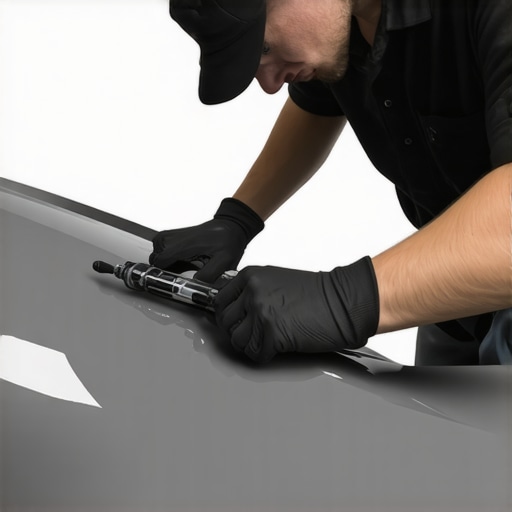
Ever scuffed your bumper in a parking lot and watched that nasty dent form right along a critical body line? I remember the gut punch I felt when my own car took a hit and I thought I’d have to settle for a costly body shop fix. But then I stumbled on a method that changed everything—restoring those delicate contours without sacrificing the original shape. This was my lightbulb moment.
Why Fixing Dents in Body Lines Matters More Than You Think
Body lines aren’t just aesthetic—they define your car’s character and aerodynamics. When a dent disrupts these lines, it can lead to increased drag and even impact resale value later on. Plus, a poorly repaired dent can develop rust or weak spots down the line, costing you more in the long run. As I learned early in my auto repair adventures, rushing repairs or using the wrong techniques can lead to warped panels or visible paint mismatches. Honestly, I once tried a quick glue puller method on a stubborn dent in a body line, and the result was more damage—an experience I definitely don’t recommend. For those who want to fix dents without losing the Original shape, a specialized method like Collisionrenew offers a way to avoid these pitfalls. Curious how? Let’s dive into how this innovative approach can help keep your car looking pristine.
Is It Really Worth the Hype for Body Line Repairs?
Early on, I made the mistake of assuming all dent repair techniques are equal. I believed that any method would do—until I saw the difference a professional, shape-preserving approach made. It became clear that attempting DIY fixes without understanding the nuances can compromise the integrity of your vehicle’s panels. Did you know that improper repairs can diminish your car’s structural strength? According to automotive experts, restoring the original contour is crucial for maintaining both safety and value. So, if you’ve ever hesitated because of skepticism or fear of damaging your car further, you’re not alone. Rest assured, with the right techniques—like Collisionrenew’s process—you can confidently repair dents along body lines, preserving the shape and integrity. Now, let’s explore how this method works and how it can become your go-to solution for body line fixing.
Preparing Your Workspace and Tools
Start by choosing a clean, well-lit area with enough space to maneuver your tools freely. Gather essential supplies like a heat gun, pulling tabs, glue sticks, a plastic spreader, and protective gloves. I remember setting up my garage with a portable work light and a sturdy workbench, ensuring I had a safe zone to work on my vehicle without distractions. Proper preparation ensures efficient and damage-free repairs.
Assessing the Damage Carefully
Examine the dent along the body line meticulously. Use a marker to outline the affected area, noting the depth and size. This step is like diagnosing a health issue before treatment—knowing exactly what you’re dealing with helps you choose the right method. I once overlooked a subtle crease, which resulted in a patchy repair; now I always take my time to inspect thoroughly.
Heating the Dent for Flexibility
Gradually apply heat with a heat gun to the dented area, moving in circular motions to avoid overheating. Heating softens the metal, making it more pliable and easier to manipulate without cracking the paint. Imagine warming a piece of plastic before bending—it avoids stress cracks. During my first attempt, I kept the heat consistent and noticed the dent beginning to loosen, paving the way for effective pulling.
Applying the Appropriate Pull Technique
Use a glue-based dent plugin or pull tab attached with a glue stick to the softened area. Carefully pull to raise the dent, aiming to restore the original contour. Think of this process as gently pulling a stubborn drawer—steadiness and patience are key. I recall attaching a pull tab to a challenging dent, cautiously applying pressure, and gradually seeing the original shape return. Avoid overpulling, as it can cause warping.
Fine-Tuning the Shape
Once the major dent is minimized, utilize a plastic spreader or tapping tools to smooth out irregularities along the body line. Lightly tap around the edges to blend the repair seamlessly. It’s like fine-tuning a musical instrument—small adjustments make a big difference. My initial corrections involved gentle taps, which resulted in a near-perfect contour, proving the importance of patience here.
Cooling and Inspecting the Repair
Allow the heated area to cool naturally or use compressed air to accelerate cooling. Inspect the repaired area from different angles to ensure the shape aligns with adjacent panels. This step is crucial to confirm a uniform finish. I once missed a subtle dip after cooling, but re-inspecting and adjusting resolved the issue. Remember, patience during cooling ensures the metal retains the restored shape.
Cleaning and Final Touch-Ups
Remove any residual glue and clean the area with a gentle solvent. If the paint is intact, you can polish the surface to restore shine. For painted surfaces, consider blending the repair with touch-up paint for perfection. Avoid rushing, as rushing can leave visible marks. I learned this lesson when polishing too vigorously, which resulted in uneven gloss—attention to detail makes all the difference.
Additional Tips to Preserve Your Repair
Always use appropriate safety gear and work in ventilated areas when heating or gluing. Regularly check your tools for wear and calibration to ensure consistent results. Remember, practice improves skill—don’t be discouraged by initial imperfections. For more detailed procedures on restoring your vehicle’s body to perfection, visit Collisionrenew’s strategies for perfect restoration.
When it comes to vehicle maintenance, many car owners operate under misconceptions that can lead to costly mistakes. A common myth is that all transmission issues are purely mechanical or that drastic repairs are always necessary when symptoms appear. In reality, understanding the subtle signs and routine check-ups can save you from unnecessary replacements. Similarly, brake service is often oversimplified to just brake pad replacement, but the true challenge lies in diagnosing underlying problems like caliper sticking or brake fluid contamination, which can compromise safety if overlooked. Dive deeper, and you’ll find that many auto repair errors stem from neglecting these nuances, which might seem minor but have significant long-term impacts.
One of the most persistent misconceptions is that collision repairs are solely about repainting and replacing parts. True restoration demands meticulous attention to structural integrity and alignment. For example, misaligned body panels or undetected frame damage can cause uneven tire wear or compromised safety during a collision. This is where advanced techniques like those used by Collisionrenew shine—they restore your vehicle’s original shape and strength, preventing future issues. Learn more about how specialized repair approaches uphold safety and value by visiting Collisionrenew’s restoration strategies.
Primer to perfect! Many believe that auto repairs are straightforward tasks that can be DIYed with a few tutorials. But the truth is, even experienced technicians can fall prey to common pitfalls, especially when diagnosing complex symptoms. For instance, ignoring the importance of proper diagnostics can lead to replacing parts unnecessarily—like changing a transmission fluid or a sensor when the root cause lies elsewhere, such as wiring issues or software glitches. That’s why leveraging advanced diagnostic tools and understanding the intricacies of vehicle systems is crucial.
**Why do some repairs seem to fail shortly after a professional fix?** This subtle trap often results from overlooking calibration and fine-tuning processes. For instance, after collision repairs or brake service, re-aligning sensors, recalibrating cameras, and verifying system functions are critical steps for ensuring longevity and performance. Cutting corners here not only wastes money but also jeopardizes safety. Be sure you’re aware of these essential post-repair checks by exploring essential vehicle maintenance tips.
Remember, effective auto repair isn’t just about fixing today’s problem but about understanding the subtle signs and applying the right techniques at every step. Avoid the trap of superficial fixes that mask underlying issues; instead, invest in comprehensive, expert solutions. This approach applies whether you’re dealing with transmission, brakes, or collision damage, ultimately extending your vehicle’s lifespan and ensuring safety. Want to master these nuances? Check out top transmission repair tips and stay ahead in your maintenance game.
Have you ever fallen into this trap? Let me know in the comments.
Investing in the Right Equipment for Reliable Auto Repairs
When it comes to maintaining your car’s performance over time, having the correct tools is essential. Personally, I swear by a high-quality digital inspection mirror, which allows me to access tight spaces beneath the vehicle without crawling under it. This tool helps me identify leaks, corrosion, or damage early, preventing costly repairs down the line. Additionally, a reliable automotive multimeter is indispensable for diagnosing electrical issues—whether testing battery voltage or checking sensor signals. I’ve found that investing in a multimeter with auto-ranging capabilities saves me time and reduces errors, ensuring safety and efficiency during repairs.
For the more delicate tasks, a set of precision screwdrivers can prevent stripped fasteners and damaged components. I prefer insulated screwdrivers, especially when working around electrical systems, to prevent accidental shorts. Using the right-sized bits minimizes damage and ensures proper torque application, which is crucial for long-term reliability.
How do I maintain my tools over time?
Proper maintenance of your tools involves regular cleaning, especially after use in grimy engine bays. Store them in a dry, organized container to prevent rust and deterioration. Calibrate electrical testing devices periodically to maintain accuracy. Also, replace any tools showing signs of wear before they cause damage during repairs. Remember, well-maintained tools are the backbone of effective auto maintenance and help extend their usability for years.
In the future, I predict that advances in diagnostic software will make repair processes even more precise. Cloud-connected tools capable of uploading circuit diagrams and diagnostic trouble codes will streamline troubleshooting and save shop time.
For those interested in long-term reliability, integrating a vehicle maintenance schedule focused on the key systems—transmission, brakes, and suspension—can be as simple as adopting digital reminder apps. These apps can sync with your vehicle’s onboard diagnostics (OBD-II) port to alert you when service is due. More detailed strategies for sustaining your car’s health are available in the article on essential car service checks.
Before you dive into DIY repairs, I recommend trying out an advanced diagnostic technique like performing a parasitic drain test with a multimeter. It’s a game-changer for identifying unexpected battery power loss, which often sneaks up and catches drivers unprepared. Mastering this simple yet powerful method can save you from roadside emergencies and prolong your vehicle’s lifespan. Ready to give it a shot? Grab your multimeter and follow a trusted tutorial to see how this technique works in practice. Your future self will thank you for taking proactive steps to keep your vehicle running smoothly.
Lessons That Shift My Repair Game
- Trying quick fixes without understanding the metal’s behavior often led to warped panels. I learned that patience and correct heating techniques are non-negotiable for preserving original contours.
- Overlooking proper surface assessment turned minor dents into costly repaint jobs. Now, I always meticulously outline and inspect before starting any repair.
- Skimping on cooling time after heating caused paint cracks. Giving the metal ample time to cool down ensures a seamless finish, saving me rework later.
- Assuming all dent removal tools are equal resulted in inconsistent results. Investing in specialized tools like Collisionrenew’s kits made a significant difference in outcomes.
- Ignoring the importance of final inspection meant overlooking subtle imperfections. I now review from multiple angles, catching issues before they become noticeable.