
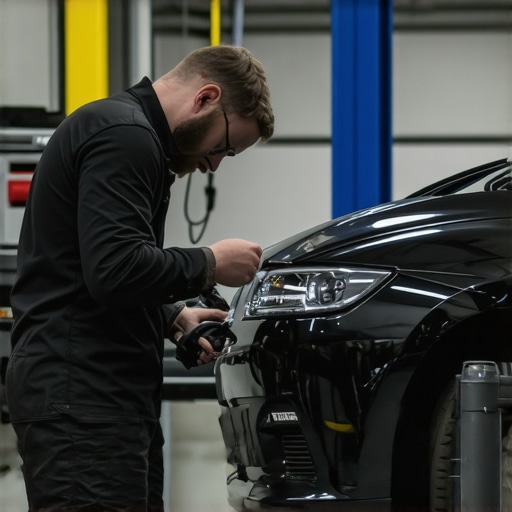
It happened during the busiest part of my day—a quick trip to the grocery store turned into a moment of panic when my dash lit up with warning lights. I had just been in a minor fender bender, and suddenly, every sensor in my vehicle seemed to be misfiring. The collision had left my car’s safety systems confused, and I felt a sinking sensation—it wasn’t just the dent, but the potential chaos hidden beneath the surface that frightened me most.
When a Small Accident Turns Into a Sensor Nightmare
Understanding how even minor accidents can throw off your vehicle’s sensors is crucial. Most drivers don’t realize that a seemingly insignificant bump can cause your car’s advanced driver-assist sensors to become misaligned or inaccurate. These sensors are the unsung heroes of modern safety systems, relying on precise calibration to keep you safe. Once they’re out of sync, you might notice false alerts, erratic braking, or even a failure to recognize obstacles. That’s why addressing sensor calibration after a collision isn’t just important—it’s essential for your safety.
Could Sensor Realignment Make or Break Your Safety?
Back in the day, we’d just fix the bodywork and call it done. But today, even a tiny tap can trigger a cascade of sensor errors, leading to more significant problems down the line. Early in my repair journey, I made the mistake of dismissing the importance of sensor calibration, thinking a simple reset would suffice. It wasn’t until I experienced unexpected alert failures that I realized how delicate these systems are. According to automotive safety experts, improper sensor calibration can compromise your vehicle’s ability to prevent accidents, especially with the increasing reliance on automation (source: *National Highway Traffic Safety Administration*). That’s why I now recommend paying close attention to sensor accuracy after any collision, no matter how minor.
So, how do you ensure your sensors are properly realigned and calibrated? That’s what I’ll show you next. Before diving into the steps, ask yourself—have you recently been in an accident that might have affected your sensors? If so, keep reading. Your safety depends on it.
Prepare for Sensor Realignment
First, ensure your vehicle is parked on a flat, level surface and turn off all systems. Disconnect the battery to reset electrical components and prevent accidental activation of sensors during the process. Remember, this step is like rebooting a computer before fixing its software—crucial for accurate calibration.
Evaluate the Sensor Damage
Inspect sensors, especially around the bumper, headlights, and side mirrors, looking for visible damage or misalignment. Gently clean the sensors with a soft cloth to remove dirt or debris, which can interfere with calibration. If you notice cracks or misalignment, note these as they may require professional repair.
Use the Correct Diagnostic Tools
Connect a professional scan tool compatible with your vehicle model. These tools communicate with your car’s computer system, allowing you to perform calibration procedures. If you’re unsure about this equipment, consulting a repair manual or a trusted shop is advisable. This step is like using an engine scanner to detect diagnostics gaps, which can reveal underlying issues needing attention.
Align Sensors Precisely
Follow the manufacturer’s instructions to calibrate each sensor. Typically, this involves positioning the vehicle at specific distances from calibration targets or wall patterns, ensuring sensors can pick up correct reference points. I once used a calibration panel on my driveway, aligning sensors as per the manual; it was messy but rewarding when warning lights disappeared afterward.
Test the System
Reconnect the battery, start the vehicle, and observe if warning lights are gone. Conduct a test drive in a safe area, paying attention to sensor-based alerts, such as collision warnings or braking systems. This real-world check confirms successful calibration. If alerts persist, repeat the calibration or consider professional assistance.
Prevent Future Misalignments
After successful realignment, inspect your vehicle regularly, especially following minor accidents or rough terrain. Keep sensors clean and free from obstructions, like snow or mud. For more insights on maintaining your vehicle’s systems, explore how to fix hidden damages that standard diagnostics might miss, like hidden frame twists that affect sensor accuracy.
When to Seek Professional Help
If encountering persistent errors, or if sensors are visibly damaged, it’s best to visit a certified auto repair shop. Professionals have specialized equipment to perform advanced calibrations — crucial for systems like lane assist or adaptive cruise control. Remember, properly calibrated sensors can prevent more costly repairs down the line, much like maintaining your brakes or transmission to avoid dangerous failures.Many well-meaning car owners subscribe to common beliefs about collision repair and auto service, but in my experience, some myths can actually hinder your vehicle’s performance and safety. For instance, a frequent misconception is that after a minor fender-bender, a quick paint touch-up suffices, neglecting the crucial sensor realignment that follows. This oversight can cause false alerts or impaired driver-assist features, which are vital for safety. Moreover, many assume that transmission issues always stem from age or high mileage, ignoring the impact of small, overlooked events like abrupt shifts during accidents leading to internal damage or misalignment that standard fluid changes won’t address. Deliberate misdiagnosis often results from relying solely on generic diagnostic tools without understanding their limitations. For example, some shop scans fail to detect engine diagnostic gaps that advanced AI scanners can pinpoint, as detailed in this [comprehensive guide](https://collisionrenew.com/4-engine-diagnostic-gaps-in-2026-ai-scanners-shop-fixes-2). Additionally, a common mistake is believing that brake-service involves only replacing pads; neglecting rotor surface irregularities—even after resurfacing—can lead to pulsating brakes, which is why I recommend examining your rotor surface conditions thoroughly. When it comes to collision repair, many underestimate how minor frame twists can compromise alignment, affecting suspension and tire wear patterns, detailed here: [why your tire tread wears only on one side](https://collisionrenew.com/the-real-reason-your-tire-tread-is-wearing-only-on-the-inside-edge). An advanced driver should question traditional beliefs and look deeper into these subtleties to prevent long-term damage. Have you ever fallen into this trap? Let me know in the comments.
Keep Your Vehicle Running Smoothly with the Right Tools
Maintaining your vehicle’s performance over time requires not just regular check-ups but also the use of specialized equipment. Personally, I rely on a few key tools that have proven invaluable in diagnosing and addressing issues before they become costly repairs. One of my top choices is the Autel MaxiSys scanner—it’s comprehensive, user-friendly, and capable of performing advanced calibrations on systems like sensors, transmission, and engine management. Unlike generic scanners, the MaxiSys communicates directly with your car’s ECU, providing detailed diagnostics and real-time data that help me pinpoint problems accurately.
Another essential tool is a professional-grade engine diagnostic laptop, which I use to delve deeper into engine and transmission issues. It’s especially helpful for spotting subtle irregularities that standard tools might miss—think of it as having a microscope for your car’s brain. Pairing this with a laser alignment system ensures that sensors, wheels, and frames stay in perfect harmony, which is crucial after minor impacts or long-term driving.
For ongoing maintenance, I swear by a high-quality ultrasonic brake cleaner—it keeps sensors, calipers, and rotors spotless, preventing false alerts and uneven wear. Regular use of these tools, combined with routine checks, helps maintain long-term reliability and safety. Trends indicate a move towards AI-powered diagnostic platforms that continuously learn from vehicle data, predicting failures before they happen. Expect to see more integration of these systems into daily auto maintenance routines.
How do I keep my car systems in top shape over time?
One proactive approach is to schedule periodic calibration using professional tools, especially after minor collisions or sensor replacements. Ensuring your sensors and transmission components are correctly aligned prevents issues like inaccurate collision alerts or gear slipping, which could otherwise escalate into costly repairs. For example, regularly checking the condition of your brake parts with precise measurement tools can avoid the pulsating pedal problem, especially if you’ve recently resurfaced your rotors (learn more here). Implementing a routine with these high-quality tools significantly enhances vehicle longevity and safety.
If you’re serious about protecting your investment, I recommend trying out a dedicated scan like the Autel MaxiSys combined with routine sensor inspections. These steps, though technical, are straightforward once you get accustomed to the tools—think of it as giving your car a comprehensive health checkup, extending its lifespan and performance.
Remember, embracing these advanced tools now will prepare you for the evolving landscape of automotive technology, where predictive diagnostics and precise calibration are becoming the new norm. Staying ahead means you’re less likely to face unexpected breakdowns and more capable of keeping everything working smoothly, ride after ride.
—
The Hardest Lesson I Learned About CollisionGear,Transmission,Auto Repair,Car Service,Brake Service
One of the most eye-opening experiences in my auto repair journey was realizing how overlooked sensor calibration can jeopardize your safety even after minor accidents. I used to believe that fixing bodywork alone sufficed, but the moment warning lights reappeared after a simple bump, I learned that precise sensor realignment was the real game-changer.
My Essential Toolkit for Maintaining Sensor Accuracy
Tools like the Autel MaxiSys scanner have transformed my approach, enabling me to perform accurate calibrations firsthand. Regular inspections using these devices help catch misalignments early, preventing costly mistakes and enhancing safety measures. Pairing this with a laser alignment system and ultrasonic brake cleaners keeps systems optimal and reliable.
Don’t Hesitate to Trust Your Instincts and Knowledge
After experiencing the frustration of false alerts, I became vigilant about post-accident calibration, understanding that proactive care ensures your vehicle’s systems work seamlessly. Staying informed and investing in quality diagnostic tools empower you to prevent long-term damage and keep your vehicle performing at its best.