

It was a Tuesday afternoon, and the forecast called for a simple “light drizzle.” By the time I hit the highway, that drizzle had morphed into a full-blown monsoon. I wasn’t particularly worried until I felt a cold, rhythmic drip-drip-drip landing directly on my right knee. My sunroof, the very feature I had bragged about all summer, had officially turned against me. I tried the old trick of stuffing a fast-food napkin into the seal, but that just created a soggy, dripping mess. By the time I pulled into my driveway, my passenger seat looked like a drowned sponge and my floor mats were literally floating. It is a helpless feeling, watching water invade your cabin while you’re stuck in traffic, knowing that mold and electrical gremlins are just one puddle away. If you are reading this, you’ve likely felt that same damp panic. Maybe you noticed a strange stain on your headliner, or perhaps you’ve realized the real reason your car battery keeps dying every few days might actually be a short circuit caused by a hidden cabin leak. Today, I am going to show you how to find the source of that water and stop it in its tracks before the next storm clouds roll in.
Stop the Drip Before Your Interior is Ruined
I’ll be the first to admit that I made a classic rookie mistake years ago. I assumed that a leak meant the thick rubber seal around the glass was toast. I spent eighty bucks on a new gasket, spent three hours fighting with the installation, and felt like a genius—until the next rainstorm proved me wrong. The water was still coming in. It turns out, sunroofs aren’t actually designed to be 100% waterproof; they are designed to manage the water that inevitably gets past the seal. Most of the time, the issue is much simpler than a broken part. If you haven’t been keeping up with essential car service checks to extend your vehicles life, you probably missed the tiny drainage holes that live in the corners of your sunroof frame. When these get clogged with pine needles, dust, or road grime, the water has nowhere to go but down your pillars and onto your carpet. Much like the simple way to find a water leak in your trunk, identifying a sunroof leak usually involves a little detective work with a garden hose and a lot of patience.
Is This Something You Can Actually Fix Yourself?
You might be tempted to just throw a piece of duct tape over the seam and call it a day, but please, for the sake of your paint job, don’t do that. Not only does it look terrible, but it also traps moisture against the metal, which is a recipe for rust. Many drivers worry that they’ll need to tear the whole roof apart, but most of the time, a bit of weed-whacker line or a blast of compressed air is all you really need. According to data from Carfax, interior water damage and subsequent mold growth can begin in as little as 24 to 48 hours, significantly tanking your vehicle’s resale value if left untreated. This is a task that pays for itself in avoided headaches. Whether you are building a routine around the ultimate guide to auto repair keep your car running smoothly or just trying to keep your socks dry for your morning commute, clearing those drains is the first and most vital step. Have you ever stepped into your car after a storm only to find a literal puddle waiting for you on the floorboards? It is a soul-crushing sight, but we are going to fix it.
Find the Holes Before They Find Your Floorboards
The first step in any sunroof rescue mission is simply seeing what you are up against. Open your sunroof all the way and grab a sturdy ladder so you can look down into the assembly from above. In the forward corners of the sunroof trough, you will see two small holes. These are the entry points for the drainage system. If you see a pool of standing water sitting there even though it hasn’t rained in an hour, you’ve found the culprit. This is a common part of essential car service checks to extend your vehicles life that most people ignore until their shoes are squelching on the carpet. If the area is packed with muck, use a vacuum or a damp cloth to clear the debris away before you try to push anything through the tubes. You don’t want to push a solid plug of mud deeper into the pillar where it becomes impossible to reach.
Why a Weed-Whacker Line is Your Best Friend
Forget the metal coat hangers and the screwdrivers. I learned this the hard way during my first DIY attempt on an old hatchback. I was impatient and used a piece of stiff wire to poke at a clog. I felt a pop, and suddenly water wasn’t just leaking—it was gushing into the dashboard. I had punctured the soft rubber drain tube inside the A-pillar. That simple mistake is often the reason your interior lights flicker when you use the turn signal because water is now dripping directly onto your wiring harness. Instead, use about six feet of heavy-duty weed-whacker line. It is stiff enough to break through a clog of pine needles but flexible enough to navigate the bends in the tubing without causing a puncture. Gently feed the line into the drain hole and wiggle it as you go. You’ll know you’ve hit the bottom when the line emerges near the wheel well or the rocker panel.
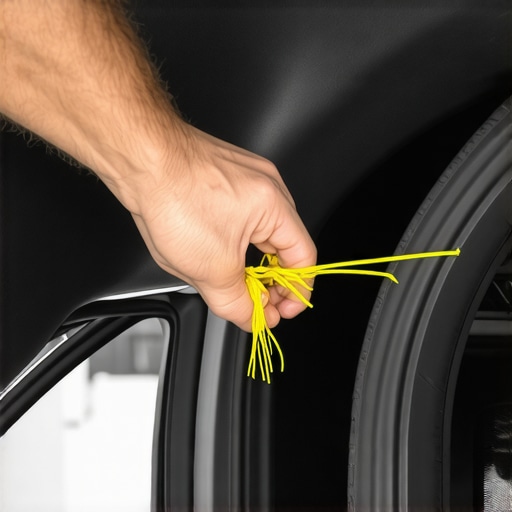
Don’t Blow Out the Plumbing with High Pressure
If the weed-whacker line doesn’t do the trick, you might be tempted to hit it with a blast of 100-PSI shop air. Be extremely careful. If the clog is stubborn, the pressure can actually pop the rubber drain tube right off the plastic nipple on the sunroof frame. If that happens, you’ll have to drop the entire headliner to reconnect it, which is a nightmare scenario. Instead, use a can of electronic duster or a very low-pressure setting on your compressor. This is a delicate part of the ultimate guide to auto repair keep your car running smoothly that requires finesse rather than brute force. If you hear a clear whoosh and see dust fly out from behind the front tire, you’ve won the battle. If you still hear a whistling sound or feel resistance, you may have a secondary clog or a kinked line, which is sometimes why your car makes a whistling noise at high speeds as air escapes through the loose seal.
The Final Test to Ensure a Dry Cabin
Once you think the lines are clear, it is time for the moment of truth. Grab a small water bottle and slowly pour it into the sunroof trough—not directly into the hole, but near it. Watch how the water behaves. It should disappear almost instantly, like a sink drain. Then, walk around to the side of the car and look at the ground just behind the front wheel. You should see a steady stream of water exiting onto the pavement. If it’s still trickling or backing up, you need to repeat the process. This attention to detail is what separates a quick fix from collision renewal strategies restoring your car to perfection. Remember, most cars also have rear drains that exit near the rear bumper. These are harder to see and often require feeding the line from the bottom up. If your headliner is wet in the back, those rear exits are likely the issue. Keeping these pathways clear is the only way to ensure that the next ‘light drizzle’ doesn’t turn your commute into a swimming lesson.
Most people think that once the water stops coming in, the job is done. I used to be one of those people until I found myself wondering why my dash was lighting up like a Christmas tree three months after a storm. Everyone tells you to dry the carpet with a hair dryer, but in my experience, that’s like putting a band-aid on a broken leg. The real danger isn’t the water you see; it’s the moisture trapped in the two-inch-thick foam padding beneath your carpet. This padding acts like a reservoir, holding onto gallons of water that never evaporates on its own. If you don’t address this deep-seated dampness, you’re setting yourself up for a nightmare of electrical gremlins that could eventually make you search for top transmission repair tips for long-term vehicle reliability because of a short-circuited control module hidden under the seat. One major ‘trap’ I see DIYers fall into is assuming that ‘clean’ rainwater doesn’t cause corrosion. Rainwater picking up dust and salts from your roof becomes a powerful electrolyte, which accelerates the degradation of every copper wire it touches. According to the Institute of Inspection Cleaning and Restoration Certification (IICRC), mold spores can colonize in porous materials like car insulation in under 48 hours. If you wait until you smell it, you’ve already lost the first battle. This is why essential car service checks to extend your vehicles life must include a deep-dive into the cabin’s humidity levels after any water intrusion. 
Why does the interior smell like a locker room even after the leak stops?
The smell isn’t coming from the carpet fibers; it’s coming from the microbial feast happening in the under-padding. If you ignore this, the ambient humidity inside the car can rise so high that it affects parts of the car you’d never suspect. For instance, you might find the hidden reason your car heater only blows cold air is actually a seized blend door motor caused by high-moisture air corroding the small internal gears. I always recommend pulling the plastic door sill trim and propping the carpet up with a piece of lumber for at least 24 hours while running a commercial-grade dehumidifier inside the cabin. Don’t be fooled by the ‘it looks fine’ fallacy. I’ve seen cars where a minor sunroof leak eventually forced the owner to study the ultimate guide to auto repair keep your car running smoothly just to understand why their entire infotainment system fried. Have you ever fallen into this trap of thinking a dry surface meant a healthy car? Let me know in the comments below! If you’re struggling with a stubborn odor or a damp floor, it might be time to check out collision renewal strategies restoring your car to perfection to ensure your chassis and electronics are truly safe from the hidden effects of that last monsoon.
Gear Up Before the Next Big Storm
If you’re serious about never dealing with a wet knee again, you need to move beyond the weed-whacker line and start thinking like a pro. One tool I absolutely swear by is a 12V digital endoscope or borescope. I used to guess where a leak was by pouring water and hoping for the best, but now I can snake a tiny camera into the A-pillar to see if a tube has actually disconnected or if there’s a persistent blockage. This level of detail is a cornerstone of the ultimate guide to auto repair keep your car running smoothly because it eliminates the guesswork that leads to broken plastic clips and wasted time. I also keep a tube of specialized Krytox grease in my shop kit. Unlike regular petroleum-based lubes that can actually degrade your rubber seals over time, this stuff keeps the gaskets supple and prevents the ‘stick-slip’ motion that eventually tears the sunroof motor’s gears.
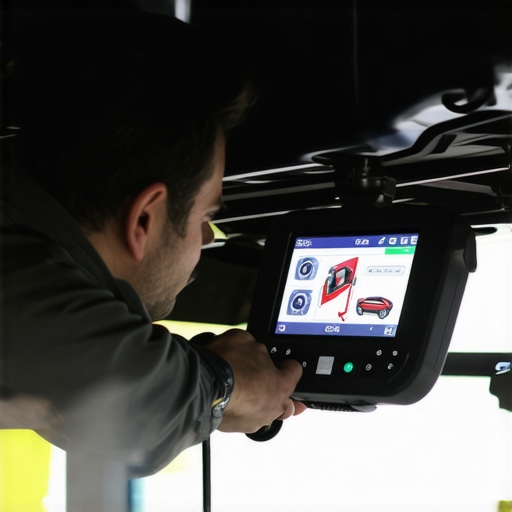
The future of this tech is already showing up in high-end luxury EVs. We are starting to see ‘smart seals’ that use capacitive sensors to detect moisture intrusion before it ever hits the carpet. Until we’re all driving cars that can text us when they’re feeling damp, we have to stay proactive. According to SAE International Standard J2030, heavy-duty electrical connectors are designed to be moisture-resistant, but they aren’t ‘waterproof’ against sustained immersion or high-humidity environments. This is why keeping your cabin dry isn’t just about comfort—it’s about the literal survival of your car’s brain. If you’ve been neglecting your essential car service checks to extend your vehicles life, your sunroof drains should be at the top of your list every spring and fall.
How do I maintain my car’s drainage system long-term?
It’s all about the environment you park in. If you park under oak or pine trees, you’re on the high-maintenance plan. I make it a habit to wipe down the inner tracks of my sunroof every time I wash the car. A simple damp microfiber cloth removes the grit that eventually turns into the ‘mud’ that clogs the drains. Once a year, I’ll perform a ‘pressure test’ with a simple turkey baster and warm water to ensure everything is flowing freely. If you notice your car starting to feel ‘floaty’ or unstable during these checks, it might be time to look into the real reason your car pulls to the right when you let go of the wheel, as water weight trapped in the chassis can actually affect balance and alignment over time.
Keep Your Sunroof Moving Without the Squeak
Don’t forget that a dry seal is a dying seal. Every six months, apply a thin layer of silicone-based lubricant to the rubber edges. This ensures a tighter fit when the glass closes and reduces the wind noise that often mimics a mechanical failure. If you’re also hearing strange noises from your wheels while driving to the shop, check out braking news how to choose the best brake service in 2025 to make sure your entire vehicle is as quiet as it was on the showroom floor. Mastering these small maintenance tasks is the essence of collision renewal strategies restoring your car to perfection. This isn’t just about luxury; it’s about top transmission repair tips for long-term vehicle reliability because a dry car is a car with fewer electrical shorts. My challenge to you: go out to your car tomorrow, open the sunroof, and find those two drain holes. Use a turkey baster to test them—if the water sits there for more than two seconds, you have work to do before the next storm rolls in.
Hard Truths I Learned While Mopping My Front Seat
After years of chasing drips, I’ve realized that most people look at sunroofs the wrong way. They see a sealed window, but you should see it as a complex plumbing system. The most expensive lesson I ever learned was that a sunroof seal is not meant to be airtight; it is merely the first line of defense. If you rely on the rubber alone without performing essential car service checks to extend your vehicles life, you’re just waiting for a flood. I’ve also seen how a simple ‘damp smell’ can evolve into a full-blown electronic failure. If you don’t pull up that carpet and dry the foam padding, you might eventually find that the trick to finding a parasitic battery drain that kills your car overnight leads right back to a corroded connector hidden under your seat.
The Tiny Toolkit That Saves My Interior Every Year
You don’t need a professional shop to keep your cabin dry, but you do need the right supplies. My ‘dry cabin kit’ consists of four things I never go without. First is a six-foot length of 0.095 inch weed-whacker line—it is the gold standard for clearing clogs without causing damage. Second, I highly recommend a tube of Krytox grease; it is pricey, but it keeps seals from cracking better than anything else on the market. Third, if you are serious about the ultimate guide to auto repair keep your car running smoothly, invest in a cheap USB endoscope. Being able to actually see the clog in the pillar saves hours of frustration. Finally, keep a large bag of silica gel desiccant under your seat during the rainy season to catch any residual moisture.
#IMAGE_PLACEHOLDER_E#
Take Control Before the Next Storm Hits
There is a unique kind of peace that comes from sitting in your car during a heavy downpour and knowing—not hoping, but knowing—that every drop of water is flowing exactly where it should. By taking these small steps now, you are engaging in the kind of collision renewal strategies restoring your car to perfection that keeps a vehicle on the road for decades. Don’t let a tiny piece of debris turn your pride and joy into a moldy headache. You have the tools and the knowledge to keep your interior pristine and your electronics safe. Whether you are prepping for a cross-country trip or just the daily commute, these essential car service checks to extend your vehicles life are your best defense against the elements. Have you ever found a mystery puddle that turned out to be a clogged drain? Let me know your worst ‘aquarium car’ story in the comments below!