
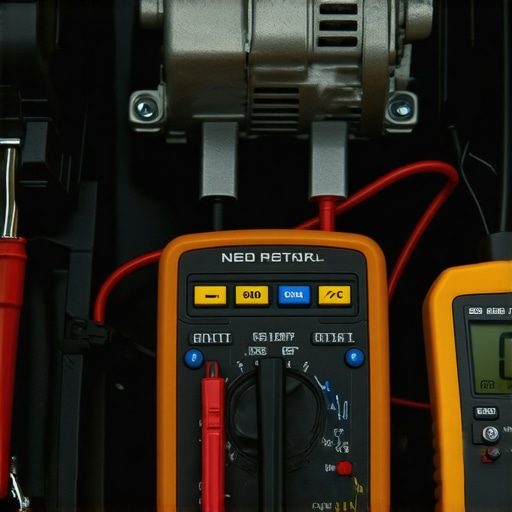
I remember standing in my driveway, staring at a battery that looked like it was trying to impersonate a balloon. It was bulging at the sides, hissing like a stepped-on snake, and the smell of rotten eggs was so strong I thought a sewer pipe had burst under my driveway. I’d just replaced that battery three months ago. I was furious. I blamed the brand, the store, and even the humidity. It wasn’t until I finally hooked up a multimeter that I realized the real culprit: my alternator was essentially force-feeding my battery until it literally started to cook. I’d made the classic amateur mistake of assuming a ‘charging problem’ always meant a dead alternator, but as I learned the hard way, too much power is just as destructive as too little. Today, I want to help you avoid that expensive, sulfurous mess by showing you exactly how to catch an overcharging alternator before it fries your car’s brain.
Stop the Silent Battery Killer Before It Starts
Most of us are used to the dreaded click-click-click of a battery that won’t start, but overcharging is a different, more aggressive beast. It’s a runaway train of voltage. When the internal voltage regulator in your alternator fails, it stops capping the output. Suddenly, instead of a steady 14 volts, your car is screaming at 16, 17, or even 18 volts. This doesn’t just boil the electrolyte in your battery; it puts every sensitive sensor in your vehicle at risk. If you’ve noticed your interior lights flicker when you use the turn signal or if your headlights seem unnaturally bright for a few minutes before burning out, you aren’t just seeing things—your car is literally being overwhelmed by electricity. This is why essential car service checks to extend your vehicles life are so important; catching a spike early can save you from a four-figure repair bill later.
Why a ‘Strong’ Alternator Can Be Your Worst Enemy
You might be thinking, isn’t more power better for my electronics? It’s a fair question, but car batteries are delicate chemistry sets. According to technical data from Battery University, charging a lead-acid battery beyond 14.7V at room temperature can lead to excessive gassing and permanent plate damage. When the regulator fails, the heat generated can lead to a ‘thermal runaway’ where the battery gets hotter, accepts more current, and gets even hotter until it melts. I once ignored a faint smell that I thought was just the real cause of your car smelling like hot oil, only to find out my battery was literally boiling off its acid. Before you go out and spend money on a new battery, you need to verify the charging system. Have you ever noticed a weird, sulfur-like smell coming from under your hood after a long drive? Let me know in the comments, because that’s the first red flag. Part of the ultimate guide to auto repair involves knowing when to stop driving before a small component failure turns into a total electrical meltdown. Even if you know how to clean battery corrosion without shorting your electronics, no amount of cleaning will fix a battery that has been physically warped by overvoltage.To get an accurate read, you need a basic digital multimeter—nothing fancy, just something that can read DC voltage. Think of your battery like a bucket and your alternator like a high-pressure fire hose. If the hose never turns off, that bucket is going to overflow and eventually burst. This is the core of the ultimate guide to auto repair: verifying the source before you replace the victim. I once worked on an old sedan where the owner complained of a weird ‘whistling’ noise. I thought maybe it was why your car makes a whistling noise at high speeds, but as soon as I touched the battery, it was scalding hot. The alternator was screaming because it was working at 100% capacity for no reason, pumping out nearly 19 volts. The battery was actually ‘singing’ as the hydrogen gas escaped the vents.
Grab Your Multimeter and See the Real Numbers
To start, set your multimeter to the 20V DC setting. With the engine completely off, touch your probes to the battery terminals. You should see about 12.6 volts. This is your baseline. If you see something significantly lower, you might be dealing with the trick to finding a parasitic battery drain that kills your car overnight, which is a different headache entirely. But if the battery is healthy, it’s time to start the engine and watch the magic—or the horror—happen.
Check the Voltage While Idling
Once the car is running, the voltage should jump to somewhere between 13.5V and 14.5V. This is the sweet spot. If you see that number climbing steadily toward 15V or higher without stopping, your voltage regulator is essentially ‘stuck’ in the open position. It’s like a cruise control system that only knows how to floor the gas pedal. This is often where people start to see the reason your interior lights flicker when you use the turn signal; the pulses of electricity are simply too much for the bulbs to handle.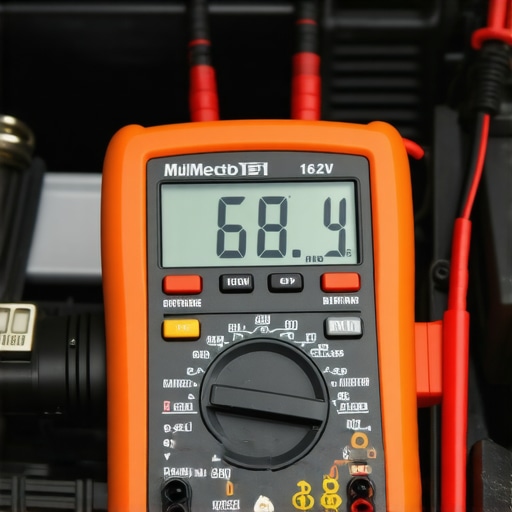
Test Under Full Electrical Load
To really confirm the diagnosis, you need to stress the system. Turn on your high beams, the heater on full blast, the rear defroster, and even the radio. In a healthy car, the voltage might dip for a split second and then stabilize around 14V. However, if you have a failing regulator, you might see the voltage actually increase as the engine RPMs go up. I remember testing that Chevy I mentioned—every time I revved the engine, the multimeter climbed higher, hitting 16, 17, and then 18.5 volts. It was terrifying. If you don’t catch this, you’ll eventually need essential car service checks to extend your vehicles life just to keep the computer from frying. Sometimes, these surges are caused by simple things like how to spot a bad ground wire causing random electrical ghosts, so check your connections before condemning the alternator.
Inspect the Battery for Physical Trauma
While you’re under there, look at the battery casing itself. An overcharged battery will often look ‘pregnant’—the sides will bow outward from the internal pressure. If you see this, the battery is toast, even if it still holds a charge. The heat has warped the lead plates inside. This is why how to clean battery corrosion without shorting your electronics is a good skill, but if the casing is deformed, cleaning won’t save you. You are looking at a chemical structural failure. If you smell that distinct ‘rotten egg’ odor, stop the engine immediately. You’re smelling sulfuric acid boiling off into hydrogen gas, which is not only corrosive to your engine bay but also highly explosive.But here is the catch: simply replacing the alternator isn’t always the silver bullet people think it is. In my years of turning wrenches, I have seen far too many people throw a three-hundred-dollar part at a problem that actually cost five cents to fix. We are often taught that the alternator is a self-contained unit that manages itself, but in the era of ‘smart’ charging systems, that is a dangerous oversimplification. Modern vehicles often use the Powertrain Control Module (PCM) to dictate exactly how much voltage the alternator should put out based on ambient temperature and electrical load. If there is even a tiny amount of resistance in the ‘sensing wire’ that tells the computer what the battery voltage is, the computer will panic. It thinks the battery is dying and commands the alternator to full blast. Have you ever fallen into this trap of replacing a part only to have the same symptoms return a week later? Let me know in the comments, because this cycle of ‘parts cannon’ repair is exactly what we want to avoid. According to the Bosch Automotive Handbook, precise voltage regulation is mandatory to prevent ‘plate shedding’ and internal shorts, yet a simple corroded connector can bypass these safety limits entirely. This is why how to spot a bad ground wire causing random electrical ghosts is a skill that separates the pros from the amateurs. A bad ground can cause the regulator to ‘see’ a lower voltage than what is actually at the battery, leading to a constant, destructive overcharge.
Why does my new battery still feel hot after a long drive?
This is the ‘Oops’ factor that kills more electronics than anything else. You might think that because the car starts and the lights are bright, the problem is solved. However, a fresh battery can temporarily absorb the excess current without showing immediate signs of distress. But while it’s ‘soaking up’ those 16 or 17 volts, it is heating up internally. If you replace the battery but ignore the charging system, you are just waiting for the new one to melt. I always tell people that the ultimate guide to auto repair involves diagnosing the system, not just the symptom. If your battery feels warm to the touch after a twenty-minute commute, your alternator is still likely in a runaway state. 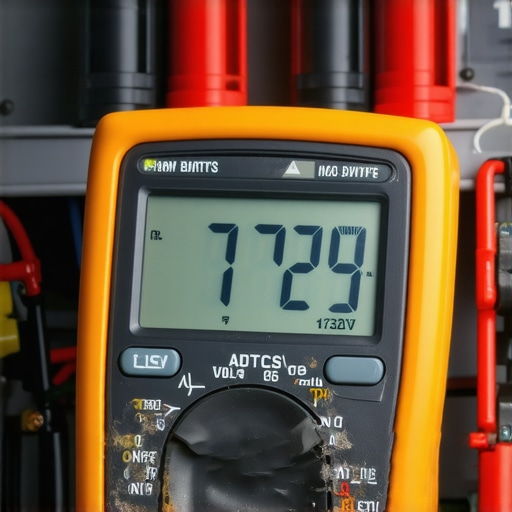 This is particularly critical if your vehicle has recently been in a minor accident. Even a small impact can pinch a wiring harness or crack a regulator housing, which is why collision renewal strategies restoring your car to perfection must include a full electrical sweep. You don’t want to fix the bumper only to have the car’s computer fry itself a month later because of a hidden short. Make sure essential car service checks to extend your vehicles life include a load test of the charging system to ensure that ‘smart’ regulator is actually acting smart and not just blind-firing electricity into your expensive electronics.
Don’t Trust a Bargain Bin Multimeter
I have a drawer full of those cheap, freebie multimeters you get at discount tool stores, and honestly, I only use them to check if a AA battery for my TV remote is dead. When it comes to my car, I reach for a True RMS meter like the Fluke 115. Why? Because cheap meters often ‘average’ the voltage they see. If your alternator is sending out high-frequency spikes—the kind that fry a modern engine control module—a cheap meter might show a perfectly flat 14.2V while your sensors are actually screaming under 18V micro-bursts. This level of precision is non-negotiable when following the ultimate guide to auto repair. If you aren’t seeing the true peaks and valleys of the current, you aren’t really diagnosing; you’re just guessing with a digital display.
Stop AC Ripple from Silently Cooking Your Sensors
Another thing most people miss is ‘AC Ripple.’ Your alternator produces Alternating Current (AC) which is converted to Direct Current (DC) by a set of diodes. If one of those diodes fails, it leaks ‘dirty’ AC power into your car’s DC system. This won’t always show up as an overcharge on a basic voltmeter, but it will cause your transmission solenoids to act possessed and your radio to whine. In fact, checking for ripple is one of the most overlooked top transmission repair tips for long-term vehicle reliability. Set your meter to AC volts while the car is running; you should see less than 0.1 volts. Anything higher, and that ‘dirty’ power is slowly eating the insulation on your wiring harnesses. As noted by the experts at Victron Energy in their technical documentation, voltage overshoot and ripple are the primary ‘silent killers’ of sensitive automotive microprocessors. 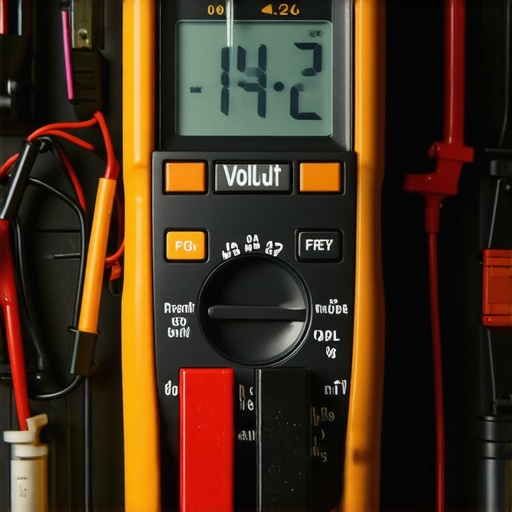
How can I keep my car’s electrical system healthy for the long haul?
Maintenance isn’t just about replacing what’s broken; it’s about preventing the resistance that causes these systems to fail. Once a year, I take a wire brush to every major ground point I can find. It sounds tedious, but a clean ground is the only way your ‘smart’ alternator can accurately read what the battery needs. This is a core part of essential car service checks to extend your vehicles life. If you’ve had body work done recently, double-check that the shop didn’t paint over a ground stud, as proper collision renewal strategies restoring your car to perfection require bare metal-to-metal contact for all electrical returns. Looking ahead, I expect the DIY landscape to shift drastically as 48-volt mild-hybrid systems become the standard. We won’t just be worried about a 16-volt spike anymore; we’ll be dealing with architectures where an overcharge could literally arc across standard connectors. For now, go out to your car and perform a voltage drop test on your main battery cables. It’s the single best way to ensure your alternator isn’t working harder than it has to.
The Expensive Truth About ‘New’ Parts
One of the hardest lessons I ever learned was that a new part does not always equal a fixed car. I spent hundreds on high-output alternators before realizing that a green, crusty ground wire was the actual thief. If you do not address the underlying resistance, you are just putting a fresh victim into a torture chamber. Always clean your terminals first. It is the most underrated step in any repair. I have also learned that ‘smart’ charging systems in newer cars are surprisingly fragile; they rely heavily on accurate data from the battery sensor. If that sensor is loose, your alternator will behave like a rogue agent, pushing voltage into dangerous territory. This is why the ultimate guide to auto repair is not just about turning bolts—it is about verifying the data your car’s computer is seeing.
Gear That Actually Saves Your Electronics
I do not leave for a road trip without my Fluke 115 multimeter. While cheap meters are fine for checking a household battery, you need ‘True RMS’ capability to catch those high-speed voltage spikes that fry sensors. For cleaning, I swear by a dedicated battery terminal brush and a can of electrical contact cleaner. These small investments prevent the resistance that leads to overcharging. If you are serious about long-term health, grab a copy of the Bosch Automotive Handbook. It is dense, but it explains the ‘why’ behind voltage regulation in a way no YouTube video can. Keeping these basics in check is part of essential car service checks to extend your vehicles life.
Take Control of Your Car’s Electrical Future
Do not let your car’s electrical system be a mystery that only reveals itself when there is smoke under the hood. By spending just ten minutes with a multimeter every few months, you can spot a failing regulator before it takes out your battery or your ECU. Whether you are dealing with a classic or a modern daily driver, understanding these patterns is the key to reliability. Even if you have had to deal with top transmission repair tips for long-term vehicle reliability, remember that consistent voltage is the foundation everything else is built on. You have got the tools and the knowledge now—go out there and verify your charging system. Have you ever had a battery swell up like a balloon, or did you catch the alternator spike before the damage was done? Let me know in the comments below!