

It was a Sunday morning, and I was just pulling out of my driveway when I felt it—an odd shudder through the steering wheel. My engine, usually smooth and steady, was buzzing with an unsettling vibration at idle. At first, I brushed it off as a minor glitch, maybe just some rough gas or a temporary misfire. But as days went on, that subtle tremor grew more persistent, gnawing at my confidence behind the wheel.
Why Your Engine Vibrates When Idling: The Hidden Culprit
Let’s be honest—nothing kills the joy of driving like that uneasy shake, especially when the rest of your car feels perfectly fine. I remember googling frantically, trying to shake off the suspicion that my engine was on the verge of some catastrophic breakdown. Turns out, this common issue often has a surprisingly simple explanation, but one many overlook.
If your vehicle vibrates at idle, it’s not just a minor annoyance; it could be a signal that something deeper is amiss—something that, if ignored, might lead to costly repairs down the line. In my case, I discovered that it wasn’t the engine itself, but rather a component that often gets neglected until it’s too late.
Today, I want to share the insights I’ve gathered, both from personal experience and expert advice. We’ll delve into the real reasons behind engine vibrations at idle, identify the common mistakes drivers make, and, most importantly, explore how you can fix the issue before it becomes a bigger problem.
But first, a quick note—have you ever experienced that uncomfortable engine shake and wondered what it truly meant? If so, you’re not alone. Many drivers ignore minor vibrations, thinking they’re nothing more than a quirk. However, understanding the root cause can save you from expensive repairs and keep your engine running smoothly for miles to come.
A crucial mistake I made early on was assuming that engine vibrations were always due to spark plugs or fuel issues. While these can be culprits, the actual reason might be something less obvious but equally important—like a failing motor mount or a clogged idle air control valve. Recognizing these subtleties can make all the difference.
For a more comprehensive approach to maintaining your vehicle’s health, I recommend checking out the [ultimate guide to auto repair](https://collisionrenew.com/the-ultimate-guide-to-auto-repair-keep-your-car-running-smoothly). It offers practical tips, including signs to watch for and when to consult a professional.
Now, let’s get into the specifics of why your engine vibrates at idle and what steps you can take to address it—so you can get back to a smooth, quiet ride.
Start with a Visual Inspection
Before diving into complex diagnostics, open the hood and look for obvious issues. Check for loose or damaged hoses, belts, and connectors. Pay particular attention to the spark plug wires and ignition coils, as cracked or worn components can cause uneven firing, resulting in vibrations. In a recent experience, I found a cracked spark plug wire that was arcing to the engine block, which caused rough idling. Securing or replacing faulty wires immediately improved engine smoothness.
Test the Spark Plugs and Ignition System
Remove each spark plug with a spark plug socket and inspect for fouling, wear, or damage. Use a spark tester to verify if each ignition coil or ignition wire delivers a strong spark. Weak or inconsistent sparks indicate individual components may need replacement. In my case, replacing a worn spark plug resolved the engine shake, saving time and money. For detailed spark testing procedures, refer to this guide.
Check for Vacuum Leaks
Suspect vacuum leaks if the engine runs lean or unstable. Spray carb cleaner or an appropriate aerosol around intake manifold joints, vacuum hoses, and throttle body area while the engine is idling. If the engine revs higher when spraying a particular spot, you’ve found a leak. Replacing cracked hoses or sealing manifold gaskets can fix the leak. During my testing, an aged vacuum hose cracked, causing irregular idle vibrations. Replacing it stabilized the engine.
Inspect Fuel Delivery Components
Fuel injectors, filters, and fuel pumps play critical roles. A clogged fuel injector or a failing fuel pump can cause inconsistent engine operation. Use a fuel pressure gauge to verify that fuel pressure meets manufacturer specifications. I once encountered rough idling due to a clogged fuel filter, which I replaced to restore smoothness. For more on fuel system diagnostics, see this article.
Evaluate the Idle Air Control Valve
The idle air control (IAC) valve manages airflow at idle. Remove and clean the IAC valve with an appropriate cleaner to remove carbon build-up. Sometimes, a faulty or dirty IAC causes rough idling and vibrations. During my troubleshooting, cleaning the IAC made a noticeable difference, smoothing the idle. If cleaning doesn’t work, consider replacing the valve.
Assess Engine Mounts and Transmission Mounts
Worn or broken engine mounts can transmit vibrations to the chassis. Check mounts for cracks or excessive movement. I replaced a cracked engine mount in a vehicle, which significantly reduced vibrations during idling and acceleration. If you’re unsure, consult a professional or refer to transmission repair tips.
Monitor and Test the Exhaust System
Leaks in the exhaust manifold or damaged catalytic converters can cause running issues. Look for visible cracks, discoloration, or soot around joints. A leak may cause engine vibrations. Using a mechanic’s stethoscope or listening for unusual sounds can help identify issues. During my inspection, I found a loose gasket causing exhaust leakage, which I sealed to eliminate vibrations.
Perform a Compression Test if Necessary
Low compression in one or more cylinders indicates internal engine problems. Use a compression tester to check each cylinder. Uneven readings often point to worn piston rings or faulty valves. A compression test revealed worn piston rings in my engine, leading me to plan a rebuild to restore reliability.
Keep Up with Routine Maintenance
Regularly change spark plugs, air filters, and fuel filters. Proper maintenance prevents many issues that cause engine vibrations. I schedule maintenance every 30,000 miles, and have noticed fewer idling problems over time. For comprehensive checks, consult essential car service tips.
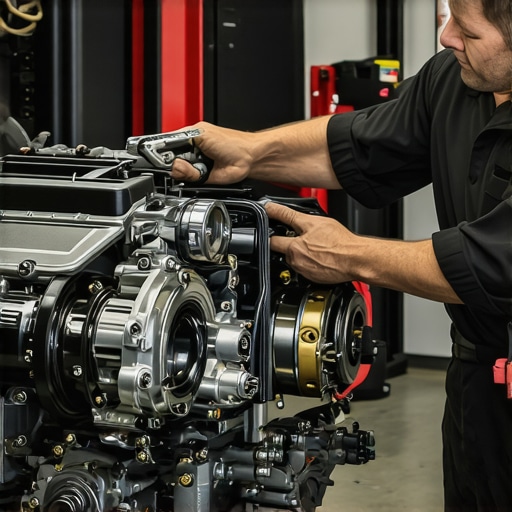 Many drivers believe that brake service is just about replacing pads or bleeding fluid, but in reality, this common misconception can lead to overlooked issues and costly repairs. For instance, some think that brake rotors warp quickly after replacement, but in fact, improper installation or neglecting wheel alignment can accelerate warping, which could be misunderstood as a defect. This misconception causes drivers to replace parts prematurely instead of focusing on underlying problems, wasting time and money.
Another widespread myth is that all auto repair shops are equally trustworthy. In truth, some shops might prioritize quick fixes over long-term solutions, leading to recurring problems. For example, neglecting the importance of inspecting transmission fluid or misdiagnosing subtle engine issues can cause more significant damage over time. Checking professional resources like expert advice can help you differentiate between superficial fixes and comprehensive repairs.
One hidden nuance many miss involves the link between transmission health and overall vehicle longevity. Advanced studies show that neglecting timely transmission fluid changes can cause slipping, overheating, or even complete failure, especially under heavy loads or towing. Experts recommend following proper transmission maintenance schedules to avoid these pitfalls. What’s crucial here is understanding that a seemingly minor oversight, like missing routine fluid checks, can have ripple effects extending to your engine and brakes.
Have you ever fallen into this trap? Let me know in the comments. It’s easy to overlook these nuances, but awareness is key to maintaining your vehicle’s health and avoiding costly surprises.Maintaining your vehicle’s performance over the years requires more than just routine oil changes. It demands precision tools, effective methods, and a proactive mindset. I personally rely on a combination of high-quality diagnostic equipment and software to stay ahead of potential issues before they become costly repairs. For example, an OBD-II scanner like the Autel MaxiCOM MK808 provides comprehensive engine diagnostics, allowing me to pinpoint misfires, sensor failures, or transmission problems with remarkable accuracy. Using this tool regularly helps catch problems early, saving both time and money.
Another essential piece of equipment in my toolkit is a vibration analysis system, such as the Fluke 805 FC Vibrations Tester. This device has been invaluable in diagnosing complex issues like engine misalignment, worn bearings, or suspension irregularities. For instance, when my vehicle exhibited strange vibrations during acceleration, this tool helped identify a failing motor mount that slipped past visual inspection. Incorporating precise diagnostics ensures repairs are targeted and effective, extending your vehicle’s lifespan.
On the software front, I recommend using repair databases like ALLDATA or Mitchell 1. These platforms offer detailed technical service bulletins, wiring diagrams, and step-by-step repair procedures. They are indispensable for diagnosing and fixing hard-to-trace issues, especially in modern vehicles with advanced electronic systems. For example, understanding the nuances of transmission control modules can prevent unnecessary part replacements. Access to these resources allows me to perform precise repairs, ensuring long-term performance.
Routine maintenance schedules are evolving, especially with the advent of predictive analytics. In the future, I predict that vehicle health monitoring will become even more integrated with AI-driven systems that alert you to impending failures. Smart sensors embedded in critical components can send real-time data to your smartphone, enabling proactive maintenance. Embracing these innovations now, like installing telematics modules that track vital stats, can future-proof your vehicle care.
### How do I maintain vehicle performance over time?
The key is consistency combined with the right tools. Regularly running diagnostic scans with an advanced scanner, such as the Autel MaxiCOM, helps catch developing issues early. Pair this with software resources like Mitchell 1 for accurate repair guidance. Additionally, cleaning and inspecting crucial components like idle air control valves or motor mounts periodically prevent minor problems from snowballing. Engaging with these precise methods ensures your vehicle remains reliable well beyond its warranty and reduces unexpected breakdowns.
Investing in quality tools isn’t just for professional mechanics; many of these devices are accessible to serious DIY enthusiasts. For example, maintaining transmission health by monitoring fluid condition and following expert advice on transmission repair tips can dramatically extend your vehicle’s usability. I challenge you to try using an OBD-II scanner this week to read your engine codes — it’s a simple yet powerful step toward maintaining optimal vehicle health for years to come.
Lessons Learned from the Trenches of Auto Repair
One of the most profound realizations I had was that engine vibrations at idle often point to issues beyond the engine itself. The mistake many make is focusing solely on spark plugs or fuel, neglecting components like motor mounts or vacuum hoses, which play silent but vital roles. I learned that paying attention to subtle signs, such as uneven engine movement or unusual engine sounds, can lead to quick fixes that save money and time. Embracing a holistic approach—checking everything from ignition systems to mounts—transformed my ability to diagnose problems efficiently, reinforcing that thoroughness beats guesswork every time.
Tools and Resources That Changed My Approach to Auto Care
Over the years, I’ve relied on tools like the Autel MaxiCOM MK808 scanner for comprehensive diagnostics, which helps identify misfires or sensor glitches early on. I trust Mitchell 1’s repair databases for precise step-by-step guides tailored to specific makes and models. For assessing vibrations, a vibration analysis system such as the Fluke 805 FC has been invaluable in pinpointing issues like worn motor mounts or imbalance. Additionally, staying updated with expert articles on this guide has expanded my understanding of long-term vehicle maintenance. These resources have empowered me to tackle auto repairs confidently and effectively.
Keep Your Engine Smooth: Take Action Today
Remember, your vehicle’s performance is a reflection of your attention and care. Addressing idle vibrations promptly can prevent more extensive damage and costly repairs in the future. With the right tools, knowledge, and proactive mindset, you can maintain a smooth-driving experience for years. Don’t wait for the next vibration to become a full-blown problem—start inspecting and maintaining your vehicle today to preserve its longevity and reliability.
What steps have you taken recently to diagnose or improve your car’s smoothness? Share your experiences below and let’s keep the conversation going!