

I was cruising down the highway last summer, feeling like the king of the road, until the speedometer hit exactly 65 miles per hour. Suddenly, my steering wheel turned into a jackhammer. My coffee started dancing in the cupholder, and my heart dropped into my stomach. I thought for sure a wheel was about to fly off and send me into a ditch. It’s a terrifying feeling, isn’t it? That specific, rhythmic shudder that only shows up when you’re trying to keep pace with traffic. I’ll be honest with you; I made a classic rookie mistake back then. I just turned up the radio and figured I’d deal with it later. I even convinced myself it was just a patch of bad asphalt on the I-77. Spoiler alert: it wasn’t the road, and ignoring it almost cost me a fortune in preventable auto repairs. [IMAGE_PLACEHOLDER]
Stop Blaming the Pavement for Your Vibrating Steering Wheel
Most of us want to believe that a shake is just a temporary glitch. But if your car feels like it’s possessed only at highway speeds, your vehicle is trying to tell you something very specific. I spent weeks chasing this phantom vibration, and I’m going to help you skip the frustration I went through. Today, we’re going to pinpoint exactly why your car vibrates specifically when you hit 65 mph so you can get back to a peaceful commute. It usually boils down to a handful of culprits—most often your tires, but sometimes it’s a sneaky suspension component that’s seen better days. According to the Car Care Council, even a tiny half-ounce imbalance can cause significant vibration at high speeds. That’s less than the weight of a couple of AA batteries causing all that chaos!
Is a simple wheel balance really worth the hype?
You might be thinking, “Come on, can a little piece of lead on my rim really fix this whole mess?” I was a skeptic too. I thought my entire front end was shot and started looking at replacing my shocks and struts before I even checked the basics. I wasted a whole Saturday morning under the car when the solution was much simpler. It’s easy to jump to the most expensive conclusion because the shaking feels so violent. But before you panic about your transmission or a bent frame, we need to look at the most common, and thankfully cheapest, fixes first. Have you ever found yourself gripped with “highway anxiety” because your car starts acting up the second you merge into the fast lane? We are going to dive into the nitty-gritty of tire wear, inner edge tire damage, and those hidden mechanical gremlins next.
Start With the Mud and Muck First
Before you pull out the wallet, grab a hose. I once spent $200 on a professional diagnostic just to have the mechanic point at a dried chunk of red Georgia clay stuck to the inside of my wheel rim. That tiny brick of mud acted like a rogue counterweight, throwing the whole wheel’s rotation out of whack. It’s a classic example of why essential car service checks should always start with a simple visual inspection. If you’ve recently driven through a construction site or down a dirt road, check your rims. Even a small buildup of grime can cause a violent shudder at high speeds.
Get Those Wheels Balanced Before You Replace Everything
If your rims are clean and the shaking starts exactly at 65 mph, you are likely dealing with an out-of-balance tire. Think of it like a washing machine with a heavy blanket on one side; once it spins fast enough, the whole unit tries to walk across the floor. Your car is doing the same thing. This is where you need a road-force balance. I’ve seen people ignore this and end up needing professional auto repair because the constant vibration hammered their tie rods into oblivion. 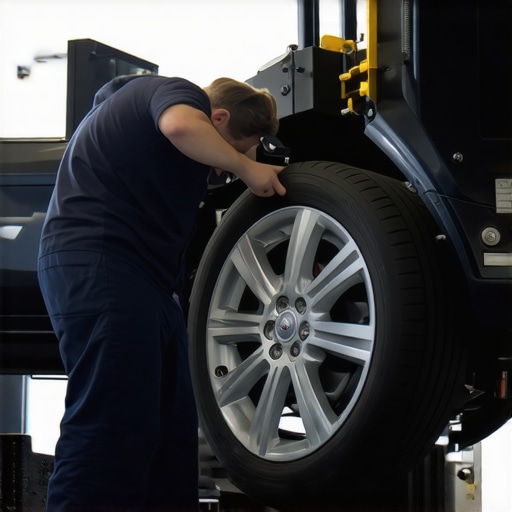
Look Closer at Your Suspension and Bearings
If the balance is perfect but your car still feels loose when driving over bumps or at cruising speeds, it’s time to inspect the hardware. I once had a CV boot tear—a tiny rubber accordion-looking thing—and all the grease flew out. Without that lubrication, the joint started to bind and send a rhythmic pulse right through the floorboards. You should also see if your wheel bearing is failing by listening for a low hum that changes pitch when you veer slightly left or right. If the shake is accompanied by a sound like a distant propeller plane, that’s your bearing crying for help.
Why Your Brakes Might Be the Secret Saboteur
You might think brakes only matter when you’re slowing down, but warped components can cause issues even at a steady cruise. If you notice the vibration gets worse when you lightly tap the pedal, you need to investigate why your brake rotors keep warping. A rotor that isn’t perfectly flat will ‘tap’ the brake pads as it spins, creating a high-speed wobble. I once ignored a slight ‘flutter’ in my pedal for months, only to find out my caliper was sticking, heating the rotor to a glow and ruining the metal. Don’t wait until you’re looking for a reliable brake service after a near-miss on the highway. Finally, take a quick look at your rubber; you can often tell if your struts are dead just by looking for ‘cupping’ or uneven scalloped wear patterns on the tire tread. If the tread looks like a series of little waves, your shocks aren’t keeping the tire firmly on the ground, leading to that terrifying 65 mph dance.
But here is the real kicker that most ‘shade-tree’ mechanics miss: sometimes that 65 mph dance isn’t coming from your tires at all. Everyone will tell you to go get a balance, and while that is usually the right first step, I have seen people spend hundreds on new rubber only to find the shudder remains. This brings us to a more sophisticated culprit: the torque converter shudder. In many modern vehicles, the transmission can actually mimic a tire balance issue when it struggles to lock up the torque converter properly at cruising speeds. If the vibration feels more like you are driving over a brief patch of rumble strips, you might be looking at a need for transmission repair tips rather than a trip to the tire shop.
Don’t Fall for the It is Just a Tire Trap
I once worked with a driver who was convinced his front end was falling apart because of a rhythmic pulse at 70 mph. He replaced his struts and even his control arms, yet the vibration persisted. The nuance he missed? A slightly bent CV axle. Even if the boot is intact, a tiny deviation in the axle’s straightness creates a centrifugal force that gets more violent as the RPMs climb. According to research by the Society of Automotive Engineers (SAE), even a deviation of a few millimeters in driveline components can translate into significant cabin NVH (Noise, Vibration, and Harshness) at specific resonant frequencies. This is why a simple visual check isn’t enough; you need a professional who knows how to perform a run-out test on the drivetrain. If you are dealing with a bent frame from a past accident, you might even need collision renewal strategies to get the geometry back to factory specs.

Could your transmission be mimicking a wheel balance issue?
When you hit that 65 mph mark, your car is usually in its highest gear. If your vehicle hunts for gears while climbing a hill or feels ‘jittery’ during the shift into overdrive, the vibration you feel in the steering wheel might actually be a transmission slip. A common mistake I see is people trying to fix this with a bottle of ‘transmission fix’ from a gas station. I can’t stress this enough: relying on transmission leak repair fluid is often a costly mistake that can clog internal valves and turn a minor sensor issue into a total rebuild. Always determine if your transmission is slipping or if it is just a sensor before pouring anything into your reservoir.
The Danger of the Quick Fix Mentality
We all want the $20 solution, but the ‘Oops’ factor in auto repair is real. Many drivers assume that if the shaking stops when they let off the gas, it is definitely a motor mount. While that is a good guess, it could also be a failing universal joint in the driveshaft. If you ignore these ‘advanced’ signals, you are moving beyond simple maintenance and into the realm of preventable auto repair disasters. For example, a vibrating brake pedal usually points to warped rotors, but if the shake happens without touching the brakes, you might have a caliper that is partially seized, dragging the pad and overheating the hub. Have you ever fallen into this trap of replacing the obvious part only to find the problem is still there? Let me know in the comments. Keeping up with essential car service checks is the only way to catch these ‘hidden’ mechanical gremlins before they leave you stranded on the shoulder of the I-77.
I’ve spent years getting my hands greasy, and if there is one thing I’ve learned, it’s that your ears and eyes can only take you so far. When that 65 mph vibration won’t quit, I stop guessing and pull out my ‘chassis ears.’ This is a set of sensitive microphones you clip onto various parts of the suspension or drivetrain while you drive. It sounds like something out of a spy movie, but hearing the roar of a bearing directly through headphones is the only way to be 100% sure before you perform a preventable auto repair. If you are serious about DIY, skip the $20 code readers from the checkout aisle. I personally use a bidirectional scanner because it allows me to command the car to perform tests—like cycling the ABS pump or checking torque converter slip—without leaving the driver’s seat.
How do I maintain my car’s stability over the long haul?
Consistency is the secret sauce. You can’t just fix a shake and forget it. I follow a strict regimen of essential car service checks every 5,000 miles. This isn’t just about oil; it’s about inspecting the rubber boots on your CV joints and checking for the hidden danger of ignoring a cracked CV boot. Once that grease is gone, the clock is ticking. I also recommend a ‘drain and fill’ for your transmission fluid rather than a high-pressure flush. Many Technical Service Bulletins (TSBs) from manufacturers like Toyota and Honda suggest that high-pressure flushes can actually dislodge debris and cause more harm than good. Following top transmission repair tips for long-term vehicle reliability means being gentle with the hydraulics. 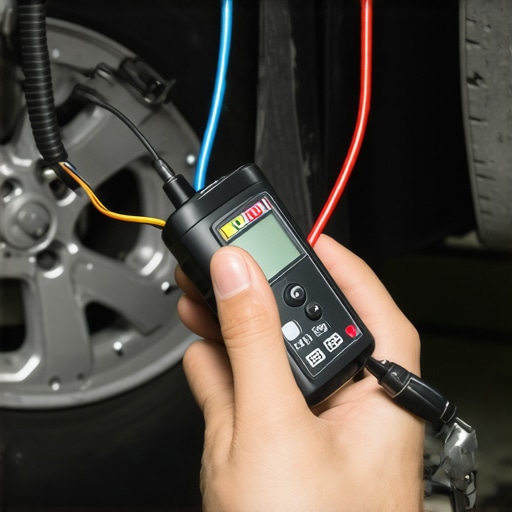 I am seeing a huge shift toward predictive maintenance through telematics. In a few years, your car won’t just vibrate at 65 mph; it will send an alert to your phone three weeks before the bearing fails because it detected a microscopic change in harmonic frequency. Until then, you need to be the one listening for why your car makes a whistling noise at high speeds or why it feels ‘off.’ If you’ve been struggling with a mystery drain, I highly recommend learning the trick to finding a parasitic battery drain that kills your car overnight using a simple multimeter. It’s an empowering skill that keeps you out of the shop for minor electrical gremlins. The next time you’re under the hood, don’t just look for leaks. Grab a wrench and check your heat shields. If you hear a buzz, you can usually fix a rattling heat shield without buying a new one just by using a stainless steel hose clamp. My advanced tip for you this week: get a cheap infrared thermometer. After a long drive, point it at your wheel hubs. If one is significantly hotter than the others, you’ve found a sticking caliper or a failing bearing before it turns into a highway emergency. Go out and check your hub temperatures today—it takes two minutes and could save your axle.
The Most Expensive Mistake I Ever Made at 65 MPH
Looking back, the biggest lesson I learned wasn’t about a specific part, but about my own hesitation. I once let a minor vibration go for three months because I was “too busy.” By the time I finally took it in, that simple tire balance issue had literally shaken my rack and pinion to pieces. If you want to avoid preventable auto repairs that cost thousands, you have to act the moment the steering wheel starts to tingle. Trust your gut; if the car feels different on the I-77 than it did last week, it is definitely different.
I also realized that not all tire shops are created equal. I used to go for the cheapest “spin balance,” but now I insist on a road-force balance. It mimics the pressure of the road on the tire, catching flaws that a regular machine misses. Lastly, never underestimate the power of cleanliness. A bit of caked-on salt or mud is often the secret culprit, and a $10 car wash is a much better first step than a $500 parts replacement.
My Trusted Arsenal for Smooth Driving
I don’t just rely on a “feeling” anymore; I use a few key tools to keep my vehicles in top shape. First, I highly recommend a bidirectional OBD2 scanner. It is the difference between guessing and actually knowing what the computer is seeing. Second, a simple infrared thermometer has saved me from brake disasters by spotting overheating hubs before they seized. Finally, I always keep a digital depth gauge in my glovebox to monitor tread wear patterns carefully.
These tools, combined with my personal checklist for essential car service checks, have turned my highway anxiety into complete peace of mind. Being prepared is the only way to stay ahead of mechanical failure and maintain long-term reliability. I also follow manufacturer advice for preventative maintenance rather than waiting for a breakdown.
Take Back Control of Your Commute
Solving the mystery of why your car vibrates specifically when you hit 65 mph is more than just a mechanical fix—it is about safety for you and your family. Don’t let a shuddering wheel steal the joy of the open road or make you fear your daily drive. Start with the tires, check your rotors, and do not be afraid to dig into more advanced transmission repair tips if the basics do not solve the problem. Whether it is a simple balance or a need for a professional brake service, you now have the roadmap to fix it. [IMAGE_PLACEHOLDER]
Have you ever had a vibration that turned out to be something totally unexpected, like a chunk of mud or a loose heat shield? Let me know your weirdest “highway shake” stories in the comments below!