
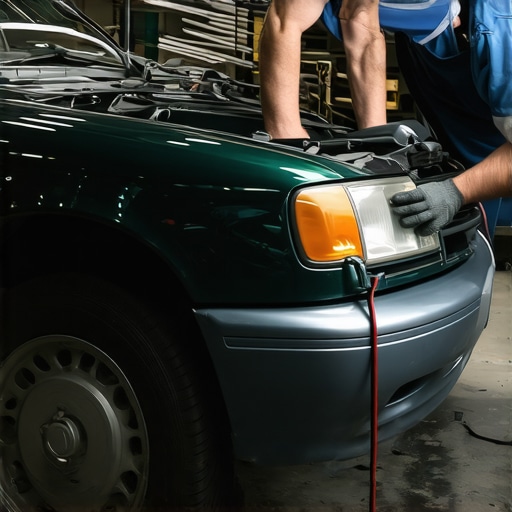
It happened on a chilly Saturday morning. I was backing out of a parking space when another driver inched too close, giving me that unmistakable tap—nothing serious, but enough to leave a tiny, unnoticed misalignment that later frustrated me every time I opened my hood. The gaps weren’t closing properly, and I could feel the difference in how my car looked and felt. That moment was a real lightbulb for me: even minor collisions can throw off your car’s precise fit and finish, especially around the hood.
Why Restoring Those Gaps Matters More Than You Think
When my hood gaps started to look uneven, I initially ignored it, thinking it was just cosmetic. But over time, I realized that these small misalignments could lead to bigger issues—like leaks, wind noise, and even affecting the safety features tied to sensors hidden in the gaps. Plus, a lousy gap can spoil the overall look of your car, making it seem neglected and lowering its value. I learned the hard way that realignment after a collision isn’t just about aesthetics; it affects your car’s integrity and longevity.
Is Restoring Hood Gaps Really Worth the Effort?
Honestly, I was skeptical at first. I worried it might be complicated or require expensive tools. Early on, I made the mistake of thinking that a simple push or adjusting the latch would do the trick—only to find out I was missing subtle adjustment points and proper techniques. But trusting my instincts and a bit of research led me to understand that proper realignment keeps your vehicle in top shape and prevents future headaches. If you’re facing the same dilemma, I promise, there’s a straightforward way to tackle it without breaking the bank—something I wish I had known sooner.
For more tips on maintaining your vehicle after minor mishaps, visit our comprehensive guide on [collision renewal strategies](https://collisionrenew.com/collision-renewal-strategies-restoring-your-car-to-perfection). If you’re curious about ensuring your car remains reliable long-term, check out [top transmission repair tips](https://collisionrenew.com/top-transmission-repair-tips-for-long-term-vehicle-reliability). Let me walk you through the practical steps I took to restore my hood gaps and prevent further issues—because addressing small problems early can save you big bucks and hassle later on.
Assess the Damage and Prepare Your Workspace
Start by parking your car on a level surface and engaging the parking brake. Open the hood and inspect the gaps on both sides, noting any uneven spacing or misalignment. Wear gloves to protect your hands and gather the necessary tools—usually, a socket set, screwdriver, and possibly a plastic pry tool. A clean, clutter-free area simplifies the process and reduces the risk of additional damage.
Loosen the Hood Bolts and Hinges
Find the bolts securing the hood to the hinges—these are typically at the rear of the hood where it attaches to the body. Using the appropriate socket wrench, gently loosen these bolts without removing them completely. This step allows you to adjust the hood’s position more freely, much like repositioning a picture frame before leveling it on the wall.
Use a Rubber Mallet or Pry Tool for Minor Adjustments
If the hood is slightly misaligned, gently tap the edges with a rubber mallet or use a plastic pry tool to nudge the hood into the correct position. Be cautious to avoid applying excessive force that could crack the paint or bend the metal. Take small, incremental taps and check the alignment frequently, just as you’d fine-tune a musical instrument for perfect pitch.
Align the Gaps Precisely
Close the hood slowly and observe the gaps. You want them to be uniform and consistent across the front of the vehicle. Use a straightedge or specialized gap measurement tools if needed. Adjust the hood’s position by tightening or loosening the hinge bolts incrementally. Think of this process like balancing a scale—you aim for even weight distribution on both sides. During my recent realignment, I discovered that tightening one hinge slightly more than the other brought the gaps into perfect harmony.
Secure the Bolts and Double-Check the Fit
Once satisfied with the alignment, tighten the hinge bolts securely. Open and close the hood several times to ensure it moves smoothly and stays aligned. Confirm that the gaps are even from multiple angles—front, sides, and edges. If inconsistencies remain, repeat the adjustment process until the fit feels just right, comparable to tuning a guitar string until it sounds perfect.
Test for Functionality and Seal
Finally, check that the hood latch engages properly and that the hood sits flush against the body with a firm but gentle press. You should see a clean, uniform gap allowing for proper airflow and preventing wind noise. This process improves not only the appearance but also the safety and aerodynamics of your vehicle. Remember, even minor tweaks now can prevent larger issues down the line, similar to how regular maintenance prevents extensive repairs.
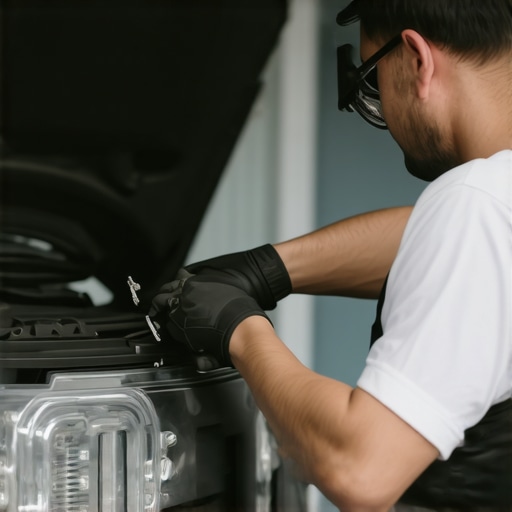 Many car owners believe that routine brake or transmission services are just about replacing parts or following standard schedules. However, as an auto repair expert, I’ve seen how overlooking certain nuances can lead to costly mistakes and recurring issues. One widespread myth is that every brake job is identical; in reality, the quality of brake service varies tremendously depending on caliper reconditioning, rotor resurfacing, and proper pad bedding procedures. Neglecting these details can cause premature wear or even brake failure. Don’t assume that just because a brake check passes the basic test, your system is fully optimized — professional techniques like core component refurbishment and calibration make all the difference.
A common oops in car maintenance is to ignore the importance of proper transmission fluid management. Many believe fresher fluid extends transmission life indefinitely, but without understanding the importance of correct fluid types, exact fill levels, and regular flush intervals, you risk internal component damage. Recent studies, such as those from the Society of Automotive Engineers, emphasize that temperature-controlled, high-quality transmission fluid is critical for maintaining a smooth shift and preventing overheating. Just topping off or ignoring unusual shifting signs could pave the way for costly repairs down the line.
In collision repair, there’s a trap of assuming that minor dents or paint imperfections are purely cosmetic. What’s often missed are underlying frame misalignments or sensor calibrations that impact safety systems. For instance, improperly aligned sensors after a small bump can compromise collision avoidance features, making your vehicle less safe—an issue many overlook during quick repairs. Ensuring proper recalibration and structural integrity is essential for long-term safety and performance.
What advanced repairs should a serious car owner consider beyond basic maintenance?
Many enthusiasts and experienced drivers now opt for diagnostic scans with advanced tools to detect issues that standard inspections miss. For example, electronic stability control sensors or adaptive cruise control systems require precise calibration after repairs or component replacements. Neglecting these can cause erratic behavior, which is not immediately obvious but affects handling and safety. According to automotive engineers at Bosch, integrating diagnostic analytics into routine repair significantly reduces future breakdowns and enhances vehicle lifespan.
Have you ever fallen into this trap? Let me know in the comments. Remember, understanding these subtle nuances allows you to maintain your vehicle more effectively and avoid unnecessary expenses. For comprehensive insights on extending your vehicle’s longevity, check out essential car service checks and learn how minor details make a major difference.Maintaining your vehicle’s performance and safety requires the right tools and a disciplined approach. One of my go-to equipment pieces is an electronic scan tool like the Autel MaxiScan; it allows me to quickly retrieve diagnostic trouble codes and monitor real-time sensor data, making troubleshooting more efficient. Investing in a high-quality digital multimeter, such as Fluke’s models, is equally essential—they help verify electrical circuits accurately, preventing guesswork during repairs. For transmission work, I rely on a dedicated transmission fluid temperature sensor to ensure proper fluid management, which is critical for long-term reliability — you can read more about this in long-term transmission tips. When addressing collision repairs, I use reconstructive measuring systems like the Hunter Wheel Alignment System to restore proper geometry, which is vital for tire longevity and safe handling.
Beyond physical tools, software like OBD-II diagnostic apps integrated with Bluetooth adapters has revolutionized how I monitor vehicle health on the go. Certain advanced drivers are even experimenting with custom calibration software for recalibrating sensors after collision repair to ensure safety features function correctly. Predicting where this trend is heading, manufacturers are integrating AI-driven diagnostic platforms that can suggest repairs and predict failures before symptoms arise, reducing downtime and repair costs. A good example is Bosch’s Diagnostic Systems, which utilize AI to analyze vehicle data patterns for proactive maintenance.
So, how do I maintain my tools over time? Regular calibration of electronic diagnostic devices is paramount; even the most precise scanners can drift with use. I schedule periodic calibration—many manufacturers recommend annual checks—using certified calibration services to keep everything accurate. Additionally, I prefer storing my tools in a dedicated, climate-controlled toolbox to prevent corrosion and damage, extending their lifespan and reliability.
What steps can you take today to enhance your maintenance arsenal?
Start with a high-quality digital multimeter and learn its basic functions thoroughly. Proper use and regular calibration of your diagnostic tools ensure accurate readings, saving time and preventing misdiagnoses. Remember, investing in the right equipment pays dividends by reducing repair costs and improving safety. If you’re interested in exploring advanced maintenance techniques, consider trying out specialized diagnostic software mentioned earlier — it can provide the insights needed to catch issues early before they escalate. For more detailed strategies on maintaining your vehicle’s systems and tools, visit the ultimate auto repair guide. Keep your tools sharp, your skills up-to-date, and your vehicle running smoothly for years to come.
What Once Seemed Minuscule Taught Me Big Lessons About Car Care
My experience with aligning my car’s hood gaps revealed that even minor misalignments can ripple into bigger, costlier issues if neglected. It reminded me that paying attention to small details—whether in realignment, maintenance, or sensor calibration—can prolong your vehicle’s lifespan and safety. This realization pushed me to adopt a proactive approach, knowing that quality repairs and regular checks are investments in my car’s future, not just quick fixes.
The Best Tools and Resources That Changed My Auto Repair Approach
Over time, I discovered that having the right diagnostic tools—like a dependable scan tool and a laser straight-edge for gap measurements—makes all the difference. Books like Essential Car Service Checks gave me structured routines to prevent issues before they start. And online communities, especially forums linked through collision renewal strategies, connected me with experienced enthusiasts who share practical, real-world insights that aren’t available elsewhere.
Believe in Your Power to Improve Your Vehicle’s Health
Taking control of your car’s maintenance journey isn’t just about saving money; it’s about empowering yourself to keep your vehicle safe and reliable. Whether you’re mastering hood alignment or learning to interpret diagnostic codes, every step you take builds confidence. Don’t wait for a breakdown; embrace the tools, resources, and knowledge available—your car’s longevity depends on it. Ready to implement that minor adjustment or explore a new diagnostic method today? Your journey to smarter auto care begins now!