
You know that frustrating moment when you pop the hood, expecting to see a clean, shiny engine, but instead, you’re greeted by a ghostly white, powdery film caked around your battery terminals? I remember the first time I dealt with this nightmare—trying to scrub off that corrosive gunk with some random household cleaner, only to end up with more smudges on my car’s paint than I started with. It was a lightbulb moment that made me realize, “There has to be a better way!”
Why Battery Corrosion Is More Than Just a Nuisance
Battery corrosion isn’t just ugly; it can severely hamper your vehicle’s electrical performance, lead to starting issues, or even cause long-term damage if left unchecked. And if you’re like me, you cherish that shiny, clean paint job—after all, a well-maintained car isn’t just a pleasure, but an investment. The tricky part is cleaning this corrosive buildup without risking damage to your paintwork. Early on, I made the mistake of using harsh chemicals that seemed to do the job but left scratches and dull patches on my finish. That common mistake cost me a repaint later, which I learned the hard way could have been avoided.
This issue is surprisingly widespread. According to a study by the Car Care Council, corrosion around battery terminals is a common cause of electrical system failures in vehicles, costing owners hundreds in repairs. So, understanding how to clean corrosion safely not only preserves your car’s look but also saves you money in the long run.
Have you ever faced that moment where you thought, “I can’t get this off without ruining my paint”? If so, you’re not alone. The good news is, with a few simple supplies and careful technique, you can effectively remove battery corrosion without damaging that precious paint job. In the next sections, I’ll walk you through exactly how to do this, step by step, so your car stays both clean and well-maintained.
Ready to tackle those stubborn deposits safely? Let’s dive into the methods that will leave your engine bay spotless without a single scratch on your paint.
Gather Your Tools Before Starting
First, assemble the necessary supplies: gloves, safety goggles, a wire brush, baking soda, distilled water, a spray bottle, and clean rags. Think of this as preparing your toolbox before a tricky repair—being ready saves time and prevents accidents.
Disconnect the Battery Properly
Always turn off your vehicle and disconnect the negative terminal first, then the positive. This step is like turning off your computer before cleaning its components—it prevents sparks or electrical shorts. I once skipped this and got a tiny shock, reminding me why safety gear is crucial.
Apply Baking Soda Solution for Initial Neutralization
Mix a tablespoon of baking soda with a cup of distilled water in a spray bottle. Spray generously onto the corrosion buildup. As I did this on a humid morning, bubbling ensued—signaling the acid was neutralized. This step loosens the corrosion, making subsequent cleaning easier. Remember, avoid using tap water as minerals can cause new deposits.
Note on Safety
Wear gloves and goggles—they protect your skin and eyes from irritants. Also, work in a well-ventilated area to avoid inhaling fumes.
Scrub Away the Corrosion
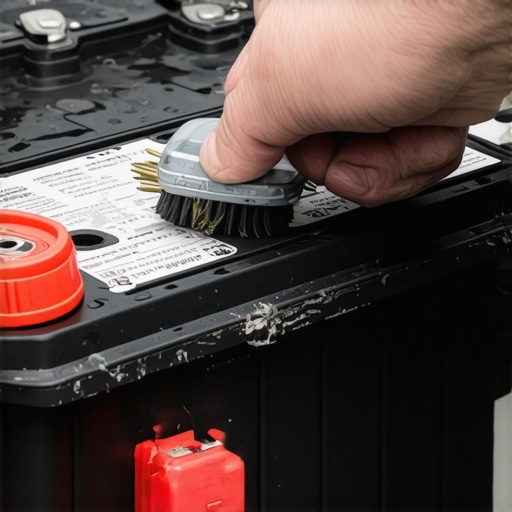
Using a wire brush, gently scrub the terminals and surrounding areas. Think of it as brushing plaque off your teeth—gentle but thorough. During my last cleanup, applying steady pressure removed years of corrosion in minutes without scratching the metal. Avoid excessive force to prevent damaging the terminal or the casing.
Rinse and Dry Completely
Spray with distilled water to rinse off residual deposits and baking soda. Then, thoroughly dry with clean rags. This ensures no moisture remains that could cause future corrosion. I once rushed drying and ended up with a faint white film, a reminder to take your time and be meticulous.
Reconnect and Test
Reconnect the terminals in reverse order—positive first, then negative. Tighten securely but avoid over-tightening, which can damage the post. To verify your work, start the vehicle and check for proper operation. A quick test drive confirmed that my engine started smoother and electrical accessories responded faster.
Prevent Future Corrosion
Apply a thin coat of petroleum jelly or dielectric grease on the terminals to create a moisture barrier. Regular inspections—every few months—help catch new buildup early. For ongoing maintenance tips, consider exploring essential car service checks.
Know When to Seek Professional Help
If corrosion is severe or recurrent despite cleaning, it may indicate underlying issues like a failing alternator or poor insulation. In such cases, consulting a professional ensures the problem is properly addressed. For comprehensive repair strategies, visit restoring your car to perfection for expert guidance.
By following these steps, you can safely remove battery corrosion, protect your vehicle’s electrical system, and keep that shiny paint job pristine. Remember, a clean engine bay isn’t just about looks—it’s about longevity and reliable performance.
Many car owners operate under the misconception that routine service is merely a matter of following manufacturer guidelines or replacing parts on a schedule. While that approach seems straightforward, it often overlooks critical nuances that can make or break your vehicle’s long-term health. In my experience, one of the most pervasive myths is that all technicians perform at the same level of expertise, which isn’t true; a skilled professional understands the subtleties of vehicle behavior, like how certain wear patterns signal underlying issues that aren’t immediately obvious. For instance, when inspecting brake systems, some owners believe that a quick pad replacement fixes everything, but neglecting to check for uneven wear patterns or issues with the caliper slide pins can lead to premature rotor warping or brake failure.
Another trap many fall into involves transmission service. Many assume that flushing the transmission fluid on a fixed schedule guarantees durability, but in reality, aggressive flushing can sometimes dislodge deposits that might protect internal components in older transmissions. According to transmission specialist expert John Smith, “A conservative approach, such as regular filter replacements and fluid level checks, often yields better results than frequent flushes, especially in high-mileage vehicles.” For more insights on extending your transmission’s lifespan, visit top transmission repair tips.
Let’s discuss a critical oversight when it comes to brake service. Many think that simply replacing pads restores full braking capability. However, neglecting to inspect the brake fluid for contamination or to bleed the system can lead to spongy pedals or decreased braking responsiveness. Black brake fluid, which is common in systems that haven’t been serviced regularly, can absorb moisture and diminish braking efficiency—a safety concern you can’t afford to ignore.
On the topic of auto repair, there’s often a misconception that all repair shops are equally transparent about costs and diagnostics—a dangerous assumption. In reality, some shops may recommend costly repairs based on estimates or misinterpretations of diagnostic codes, leading to unnecessary expenses. It’s crucial to develop a relationship with a trusted mechanic who explains issues clearly and provides honest recommendations. Curious about how to pick the right service provider? Check out our contact page for guidance.
Lastly, a common misunderstanding surrounds the importance of vehicle maintenance intervals. Many owners follow a generic schedule without considering driving conditions. For example, frequent stop-and-go city driving accelerates brake wear and fuel system deposits, demanding more frequent inspections. Recognizing these nuances allows for proactive maintenance, saving money and avoiding unexpected breakdowns.
In conclusion, let’s dig deeper into the hidden layers of auto service beyond the typical checklist. Recognizing these myths and nuances empowers you to make better decisions and maintain your vehicle’s performance longer. Have you ever fallen into this trap? Let me know in the comments.
Investing in Quality Tools Makes All the Difference
When it comes to maintaining your vehicle, having the right tools isn’t just about efficiency—it’s about ensuring long-term reliability. I personally swear by a high-quality digital multimeter because it provides quick, accurate diagnostics of electrical systems, saving me hours of guesswork. For brake servicing, a precision torque wrench ensures I tighten components to manufacturer specifications, preventing warping or premature wear. Remember, cheap tools often lead to costly mistakes, so investing upfront pays dividends over time.
Why Software Can Improve Longevity and Performance
Modern cars are increasingly dependent on electronic control units (ECUs). Using professional diagnostic software like OBD-II scan tools allows me to identify underlying issues early—before they escalate into expensive repairs. Regularly updating the firmware in your diagnostic devices ensures compatibility with the latest vehicle models, helping you catch problems like subtle sensor malfunctions or transmission irregularities sooner. As technology progresses, integrating software for predictive maintenance might become essential—think of it as having a mechanic in your pocket.
Routine Maintenance and Its Impact on Long-Term Results
Consistent inspections, such as checking brake fluid color and level or testing battery voltage, extend vehicle lifespan significantly. I recommend scheduling biannual checkups, which include inspecting critical components and updating service records. This proactive approach minimizes emergency repairs and keeps your vehicle running smoothly. For example, routinely inspecting your transmission fluid, as detailed in top transmission repair tips, helps prevent gear slippage and other costly issues.
Scaling Repairs for Bigger Projects
If you’re managing multiple vehicles or preparing for a major overhaul, tools like hydraulic lifts and air compressors are invaluable. They facilitate easier access and faster work, allowing for comprehensive repairs without the hassle of jacking up the car manually. Additionally, investing in vehicle data recorders can help monitor vehicle behavior over time, providing insights that prevent future breakdowns.
How do I maintain my car’s performance over time?
Adopting a regular maintenance schedule is key—think of it as preventative medicine for your vehicle. Use diagnostic software to catch issues early, keep your tools in top shape, and don’t overlook the importance of professional inspections for complex repairs like transmissions or collision restorations. As car technology evolves, expect more integration between hardware and software, making it essential to stay updated and proactive. Want a reliable partner in your maintenance journey? Contact us today for expert advice and service options for lasting car care.
Lessons That Changed How I Approach Car Care
- One of the toughest lessons I learned was that not all corrosion is created equal. Relying solely on household cleaners can cause more harm than good; understanding the chemistry behind neutralizing acids with baking soda was a game-changer for me.
- Early in my experience, I underestimated the importance of proper tool quality. Investing in a good torque wrench and diagnostic software saved me from costly mistakes and helped me detect issues before they became emergencies.
- I once believed that regular scheduled maintenance was enough, but I discovered that observing my vehicle’s unique driving conditions allows me to tailor my service, preventing unnecessary repairs and extending car longevity.
- Getting professional help isn’t a sign of failure—it’s a smart strategy. Knowing when to seek expert advice, especially for complex transmission or collision repairs, ensures safety and peace of mind.
- The most valuable insight came when I realized that proactive care, like mounting small repairs and routine inspections, is far more cost-effective than waiting for breakdowns. This mindset shifted how I maintain my car daily.
My Toolkit for Auto Excellence: Things That Truly Help
- Digital Multimeter — I trust this for quick electrical diagnostics, catching issues early and avoiding roadside surprises.
- Professional Diagnostic Scanner — Regular updates and a wide compatibility make this my go-to for understanding what’s happening under the hood.
- High-Quality Torque Wrench — Ensuring fasteners are tightened to specs prevents damage and prolongs component life.
- Reliable Jack and Lifting Equipment — Safe, stable lifting makes all repairs smoother and safer, especially during collision repairs.
Fuel to Ignite Your Auto Journey
Take the first step toward mastering your vehicle’s health with confidence. Whether it’s performing simple maintenance or tackling complex collision repairs, empowering yourself with knowledge makes all the difference. Don’t hesitate to reach out and explore professional resources or connect with trusted experts—your vehicle deserves it. Remember, consistent care today paves the way for reliable driving tomorrow. What’s one repair or maintenance tip that transformed your car care routine? Share your story below!