
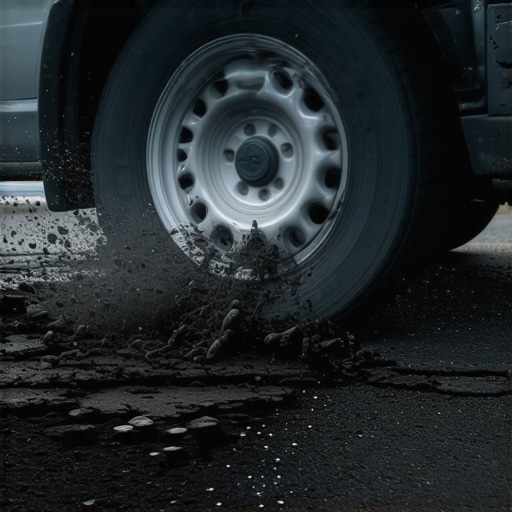
I’ll never forget the rainy Tuesday I was cruising down Independence Boulevard when I hit a standard-issue North Carolina pothole. Instead of the usual “thud,” my steering wheel did this nauseating little dance, and for a split second, the front end felt like it was floating on a bowl of Jell-O. It wasn’t just a bump; it was a warning. If you’ve ever felt that unsettling “looseness” or a shimmy that makes you wonder if your wheels are actually bolted on, you know exactly the pit-in-your-stomach feeling I’m talking about. Today, we are going to dive into why your car is acting like a bobblehead and how you can reclaim that tight, factory-fresh handling.
Stop White-Knuckling the Steering Wheel Every Time You Hit a Pothole
When a car starts feeling “loose,” it’s rarely just one thing, but it is always your car’s way of crying for help. In my early days of DIY wrenching, I made the classic rookie mistake: I spent a weekend and way too much money swapping out a perfectly good steering rack because I was convinced the “play” was internal. Turns out, it was just a set of worn-out control arm bushings that cost less than my lunch. That’s why essential car service checks are so vital; they catch the small wobbles before they turn into highway-speed terrors. One of the biggest culprits is often hidden in plain sight. If you find your vehicle oscillating long after the road smooths out, you really need to learn how to tell if your shocks are bouncing too much. According to the Car Care Council, suspension components like struts and shocks are critical not just for comfort, but for keeping your tires in contact with the pavement during emergency maneuvers.
Is this looseness actually dangerous or just annoying?
I get it—cars get old, and they develop “character.” But there is a fine line between a vintage feel and a mechanical failure waiting to happen. If you’re hearing a rhythmic grinding along with that loose feeling, you might need to identify a bad wheel bearing before your hub literally grinds to a halt. Trust me, ignoring a “floaty” front end is the fastest way to end up needing a serious auto repair session that your wallet won’t appreciate. Have you ever hit a bump and felt like the car shifted two inches to the left without you moving the wheel? Tell me about your “ghost steering” moments in the comments—I want to know if I’m the only one who’s had a heart attack over a bridge expansion joint. Sometimes, the fix is simpler than you think. You might be hunting for hidden suspension issues that a standard alignment won’t touch, or maybe you just need to know how to tell if that subframe clunk is just a loose bolt. Let’s get under the chassis and look at the real hardware causing the drama.
Get Hands-On With a Manual Suspension Shakedown
To stop the swaying, you have to get physical with your car. Jack up the front end and secure it on jack stands—never trust a hydraulic jack with your life. Once the wheels are off the ground, grab a tire at the 9 o’clock and 3 o’clock positions and give it a firm, rhythmic shake. If you feel a clicking sensation or see the wheel moving independently of the steering linkage, your tie rod ends are likely shot. This kind of mechanical ‘slop’ is the primary reason why your car feels like it is swaying on the highway. I remember doing this on my old project truck and being horrified to find that the passenger side wheel had nearly half an inch of lateral play. It wasn’t just ‘loose’; it was a disaster waiting to happen. If the movement happens when you grip the tire at 12 and 6, you’re looking at ball joints or you need to identify a bad wheel bearing. #IMAGE_PLACE_HOLDER_B#
The Dry Steering Test Is Your Best Diagnostic Tool
Sometimes a shakedown isn’t enough because the weight of the vehicle hides the problem. This is where the ‘dry steering’ test comes in. With the car on the ground and the engine running, have a friend move the steering wheel back and forth rapidly while you watch the steering components from underneath. You’re looking for ‘dead spots’ where the steering shaft turns but the wheels don’t react immediately. If you see the steering rack shifting or hear a knock, you might be dealing with hidden suspension issues that a computerized alignment won’t solve. It’s also the perfect time to check if your car makes a grinding sound when you turn the steering wheel, which usually points toward a failing strut mount or a dry power steering pump.
Look for These Telltale Signs of Hardware Failure
Visual inspection is your final line of defense. Look for ‘wet’ shocks or struts; if they are covered in oil, their internal valving is gone and they can no longer dampen movement. This is a classic sign of how to tell if your shocks are bouncing too much and causing that pogo-stick sensation. Don’t forget to put a wrench on the major mounting points. I once spent three hours chasing a ‘ghost’ in my steering rack only to realize the bolt holding the steering column to the rack was just a quarter-turn loose. Learning how to tell if that subframe clunk is just a loose bolt can save you hundreds in diagnostic fees. Check the rubber bushings in your control arms; if they are cracked, dry-rotted, or missing chunks, the metal arms will shift every time you brake or accelerate, creating a wandering sensation that makes auto repair feel like a full-time job. These small components act like the cartilage in your knees; once they wear thin, it’s bone-on-metal chaos. Always include these checks during your essential car service checks to keep the handling tight and predictable.
Stop Topping Off Your Brake Fluid and Look at Your Pads Instead
Most drivers (and even some green mechanics) see a low brake fluid reservoir and immediately think there is a leak. They grab a bottle of DOT 3 or 4, top it off, and think they have ‘fixed’ the problem. But here is the nuanced truth: if your reservoir is low and you don’t see puddles on your driveway, your car is likely telling you that your brake pads are thin. As the friction material wears away, the caliper pistons must extend further, which pulls more fluid out of the reservoir and into the lines. When you top off that fluid, you are actually masking a built-in wear indicator. Worse, when you finally do replace those pads and compress the pistons, that extra fluid will overflow, potentially damaging your paint or electrical components. If you have been wondering why your brake fluid level drops without a visible leak, you need to pull a wheel and check the pad thickness before you reach for the bottle. Experience has taught me that the best brake service in 2025 is one that treats the fluid level as a diagnostic tool, not just a refillable tank.
Why does my brake pedal sink slowly even though the fluid is full?
This is a classic advanced diagnostic question. If you are sitting at a red light and feel the pedal gradually creeping toward the floorboard, you aren’t dealing with air in the lines or worn pads—you’re likely looking at an internal master cylinder failure. The seals inside the cylinder are allowing fluid to bypass the piston under pressure. It’s a dangerous ‘ghost’ failure because the car might still stop fine in a panic, but it will fail you slowly. This is exactly why your brake pedal sinks slowly while you are sitting at a light. According to the National Institute for Automotive Service Excellence (ASE), hydraulic bypass is one of the most frequently misdiagnosed braking issues because it leaves no external wetness. #IMAGE_PLACE_HOLDER_C#
The Marketing Myth of Lifetime Transmission Fluid
If your owner’s manual says you have ‘lifetime’ transmission fluid, take that with a massive grain of salt. In the world of auto repair, ‘lifetime’ usually means the life of the factory warranty, not the life of the vehicle. Heat is the ultimate enemy of transmission health. For true long-term vehicle reliability, that fluid should be inspected every 30,000 to 50,000 miles. Once you smell why your transmission fluid smells like burnt toast, the internal clutches have already begun to degrade. I’ve seen countless gearboxes fail at 120,000 miles because the owner believed the ‘no-service’ sticker on the pan. Don’t fall into the trap of thinking a sealed system is a perfect system. Whether you are dealing with a simple maintenance check or complex collision renewal strategies, understanding the chemistry of your fluids is what separates a car that lasts 20 years from one that ends up in the scrap yard. Have you ever fallen into this ‘lifetime’ fluid trap? Let me know in the comments.
Ditch the Cheap Code Reader for a Bidirectional Scanner
To truly level up from a weekend warrior to someone who masters long-term reliability, you have to move past the $20 basic code reader. I personally swear by bidirectional scan tools like those from Autel or Launch. Unlike a cheap dongle that just reads ‘P’ codes, these allow me to command the car’s computer to purge the ABS pump, cycle cooling fans, or test individual transmission solenoids manually. This is often the real reason your check engine light is on but the car runs fine—the computer sees a logic error or a slow response in a component you can’t physically see. I’ve saved thousands by identifying a sticky shift solenoid before it burnt out a clutch pack, which is one of my top transmission repair tips for long-term vehicle reliability. It is about having the power to talk back to the vehicle, not just listen to its complaints. #IMAGE_PLACE_HOLDER_D#
How do I keep my car from falling apart over the next 100,000 miles?
Consistency is your only defense against the entropy of the road, but it has to be precise consistency. I recommend creating a ‘Living Service Log’ where you track not just the date of service, but fluid pH levels and specific bolt torques. For example, don’t just tighten your suspension bolts until they feel ‘snug.’ Use a calibrated digital torque wrench. Over-tightening stretches bolts beyond their elastic limit—known as the yield point—which leads to those phantom vibrations and eventual hardware failure. You can even learn how to check your own wheel alignment using a piece of string between major services to ensure your tires aren’t scrubbing away due to minor pothole impacts. According to technical documentation from ZF Friedrichshafen, the manufacturer of many modern 8-speed gearboxes, even a 10% deviation in fluid viscosity due to thermal shear can significantly increase wear on internal planetary gear sets. This is why I ignore the ‘lifetime’ labels and stick to a strict 40,000-mile drain-and-fill cycle.
Precision Torque is the Secret to Parts That Don’t Fail Early
I’ve seen more ‘new’ parts fail within six months because of improper installation than because of poor manufacturing. When you are performing essential car service checks, use an inspection mirror to look at the ‘dark side’ of your CV boots and brake lines where cracks first appear. Looking ahead, I predict a shift toward consumer-available vibration analysis—small sensors you can clip to a strut tower that sync with your phone to alert you when a bearing is starting to pit long before you ever hear the growl. For now, the best way to clean salt off your car’s undercarriage and applying a lanolin-based rust inhibitor remains the most underrated tool for preventing structural rot and keeping your auto repair costs manageable. I challenge you to grab a torque wrench this weekend and re-check your subframe bolts; you’d be shocked at what has vibrated just a few degrees loose since your last drive. It’s the small, precise adjustments that separate a high-mileage survivor from a junk-yard statistic.
Lessons My Most Expensive Mistakes Taught Me
After years of turning wrenches, I’ve realized that the most expensive repairs usually start with a tiny symptom we choose to ignore. One of the biggest ‘lightbulb’ moments for me was realizing that the real cause of your car smelling like hot oil is rarely just a spill; it’s often a precursor to gasket failure that can ruin an alternator if left unchecked. I also learned the hard way that ‘lifetime’ labels on transmissions are a marketing gimmick designed for the first owner, not the one who wants the car to hit 200,000 miles. For true long-term vehicle reliability, you have to be proactive with fluid changes. Finally, trust your senses—if you hear a weird noise when you’re creeping through a drive-thru, knowing why your brakes groan when you slowly creep forward can save you from a complete caliper seizure on the highway later that week.
The Diagnostic Gear That Changed Everything
I don’t recommend products lightly, but there are three things in my shop that I would never give up. First, a high-quality bidirectional scanner; it’s the only way to solve the real reason your check engine light is on when the car seems to run fine. Second, a digital torque wrench—guessing ‘tight enough’ is how you end up with snapped bolts and phantom vibrations. Third, a high-intensity LED inspection light. You can’t fix what you can’t see, and finding a water leak in your trunk or a tiny pinhole in a brake line requires more than just a smartphone flashlight. For those looking for the latest in stopping power, keep up with how to choose the best brake service in 2025 to ensure you’re using modern ceramic compounds that don’t eat your rotors for breakfast.
Take Control of Your Drive Today
Your car doesn’t have to be a source of anxiety or a bottomless pit for your savings account. When you understand the ‘why’ behind the wobble or the ‘how’ behind the heat, you transition from a passive passenger to a confident pilot. Successful auto repair is 20% tools and 80% observation and consistency. Whether you are dealing with minor maintenance or researching collision renewal strategies to bring a classic back to its former glory, your attention to detail is what makes the difference. Don’t be afraid to get your hands dirty—your wallet and your peace of mind will thank you. Have you ever caught a major mechanical issue just by noticing a tiny change in how your car felt? Drop your ‘near-miss’ stories in the comments below!