
I was backing out of my driveway last Tuesday, coffee in hand, ready for the morning commute. I moved the lever from Park to Reverse, and *BAM!* A sound like a gunshot echoed through the cabin. My neighbor, Dave, actually dropped his garden hose. It is that heart-stopping moment where you wonder if your transmission just decided to retire early and leave its gears scattered across the asphalt. I have been there, and I know that sinking feeling in your stomach well. But before you start looking up the value of your vehicle for scrap, let us take a breath. That noise is scary, but it is often a solvable puzzle rather than a death sentence for your car.
That Violent Clunk Isn’t Just Your Imagination
I have spent years under the hood, and I can tell you that a sudden pop or metallic clink isn’t just a quirk of a maturing vehicle; it is a cry for help. Usually, we think the worst—a total transmission failure. But more often than not, it is a symptom of something much simpler, like a worn-out mount or a bit of slack in the driveline. I remember early on in my DIY journey, I once replaced an entire CV axle on an old sedan thinking it was the source of a similar noise, only to find out a twenty-dollar rubber bushing was the real culprit. Talk about an expensive lesson in ego. Today, we are going to demystify why your car acts out when you shift and how you can get back to a peaceful driveway exit.
Is This Actually Going to Cost Me a Fortune?
This is the fear that keeps us from visiting the shop, right? You ignore the noise, turn up the radio, and hope it goes away. But here is the reality: ignoring a why your transmission clunks when you move from drive to reverse scenario usually leads to a much bigger bill down the road. According to research from Consumer Reports, skipping essential car service checks can lead to repairs that cost significantly more than the preventive maintenance would have. Most of the time, that pop is mechanical play that can be tightened up before it snaps something expensive.
The Mechanics of a Shift Pop
When you move that gear selector, you are not just moving a stick; you are engaging a complex hydraulic and mechanical system that has to physically shift the weight of the car’s internals. If there is too much play in your engine mounts or your top transmission repair tips have been ignored for a few seasons, that energy has to go somewhere. It manifests as that jarring pop. We are going to look at everything from loose subframe bolts to how to diagnose a transmission that hunts for gears so you can get back to smooth, quiet mornings. Have you ever felt that jolt and immediately checked your rearview mirror for debris? Drop a comment and tell me about it; you are definitely not alone in this.
Check the Rubber Holding Your Drivetrain
The first thing you need to inspect isn’t the transmission gears themselves, but the rubber mounts that cradle the engine and gearbox. Think of these mounts like the cartilage in your knees; once they wear down, you get bone-on-bone contact—or in this case, metal-on-metal slamming. When you shift from Drive to Reverse, the torque of the engine literally tries to flip the motor over. If a mount is torn, the engine lifts up and then crashes back down onto the frame, creating that signature BAM you heard in my driveway story. To test this, you can perform a ‘stall test’ with a buddy: have them safely stand to the side of the car while you hold the brake firmly and give the engine a tiny bit of gas in gear. If they see the engine jumping like a caged animal, you have found your culprit. This is one of those essential car service checks that most people overlook until something snaps. 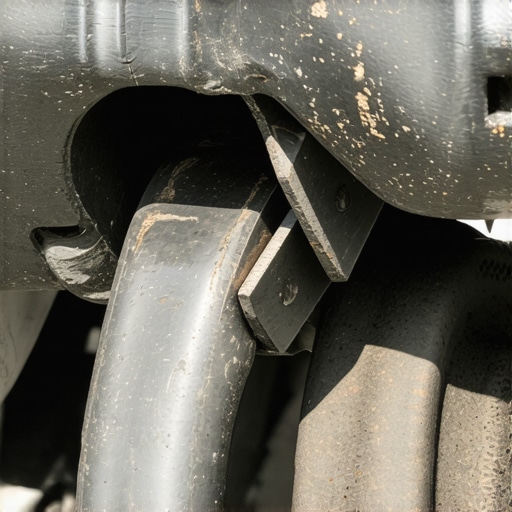
Stop the Clunk with a Simple Breaker Bar
Sometimes the noise isn’t a part failing, but rather a part that has simply shaken itself loose. Modern cars use a subframe to cradle the engine, and the bolts holding that subframe to the chassis can stretch or loosen over time. I once spent three days chasing a ‘transmission’ noise on a client’s hatchback, only to discover that two subframe bolts were just slightly under-torqued. Every time he shifted, the entire subframe shifted an eighth of an inch, sounding like a sledgehammer hitting the floorboards. You should specifically learn how to tell if that subframe clunk is just a loose bolt before you let a shop talk you into a three-thousand-dollar rebuild. It is a simple matter of getting the car on stands and checking for ‘shiny’ spots around the bolt heads—a classic sign that metal is rubbing where it should be stationary.
Watch for the Tell-Tale Grease Spray
If the mounts and bolts are tight, your next stop is the CV axles. These are the shafts that carry power from the transmission to your wheels. They have joints protected by rubber boots, and if those boots rip, the lubricating grease flies out and road grit gets in. Without grease, the internal bearings develop ‘play’ or slack. This slack is what you feel when you change directions from Drive to Reverse. It is like a swinging gate hitting the post; there is a delay, then a strike. You need to know how to tell if your cv axle boot is torn before the joint fails entirely, because catching it early means a fifty-dollar boot instead of a three-hundred-dollar axle. In my early days, I ignored a small grease stain on my inner rim for two months, only to have the axle literally bind up and stall the car in a busy intersection. It was messy, embarrassing, and totally avoidable.
When Your Fluid Smells Like Breakfast
Lastly, never ignore the fluid. Transmission fluid is both a lubricant and a hydraulic fluid; if it is old, thin, or burnt, it won’t provide the ‘cushion’ needed between gear shifts. Pull the dipstick (if your car still has one) and give it a sniff. If you find that why your transmission fluid smells like burnt toast is a question you are asking yourself, you are looking at internal friction that needs immediate attention. Fresh fluid and a new filter can sometimes soften a shift pop by restoring proper line pressure within the valve body. Following top transmission repair tips starts with maintaining the chemistry of the system. In the ultimate guide to auto repair, keeping your car running smoothly is 90% about catching these small mechanical echoes before they turn into a full-blown mechanical silence.The biggest mistake I see DIYers—and even some green mechanics—make is assuming that a ‘clunk’ during a shift is always a death knell for the transmission. Everyone tells you that if the car jolts when you move the lever, the gears are stripped. But in my experience, the transmission is often just the messenger. It is the component that applies the torque, but the noise usually comes from where that torque terminates. If you have already checked your mounts and fluid, you need to look at the ‘ghost’ in the machine: your braking system.
The Transmission Isn’t Always the Villain
Most people think the gearbox is a self-contained box of magic, but it is physically connected to every corner of your car. A common nuance people miss is the interaction between your transmission and your brakes. When you shift from Drive to Reverse, the drivetrain rotates in the opposite direction. If your brake pads are slightly loose in their carriers, they will ‘click’ or ‘pop’ as they shift position against the rotor. This can sound identical to a gear slip. This is why why your brakes groan when you slowly creep forward is often related to the same hardware issues as a shift-clunk. It is not a failure of the gears; it is a lack of tension in the hardware holding your pads.
Could My Brake Pads Be Moving Inside the Caliper?
Yes, and it is more common than you think. Advanced diagnostic technicians look for ‘pad slap.’ If the anti-rattle clips have lost their spring tension, the pad has a few millimeters of travel. When you change the direction of the wheels, those pads slam into the other side of the bracket, mimicking a transmission jolt. 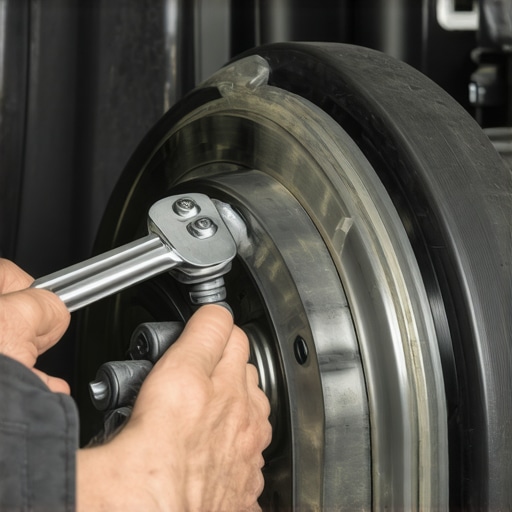
Avoid the Trap of Cheap Replacement Components
Here is the ‘oops’ factor that gets people every time: using ‘universal’ fit parts. I once saw a guy try to save fifty bucks by buying no-name engine mounts. Because the rubber density was not up to OEM spec, the clunk actually got worse because the new mount was too soft to handle the torque. According to data from the Car Care Council, using sub-par components is a leading cause of ‘comeback’ repairs where the original symptom persists. You have to understand the truth about aftermarket vs oem body panels and mechanical parts before you commit to a fix. Sometimes, the ‘new’ part is the reason the noise won’t go away.
The Subtle Warning of the Metallic Ping
If the clunk is more of a high-pitched ‘tink,’ you might be dealing with the driveshaft splines. Over time, the factory grease in the slip-yoke dries up. When you shift, the metal splines bind and then suddenly release, creating a sound like a tuning fork. This is closely related to the real cause of a metallic ping when your engine shuts off—it is all about thermal and mechanical stress seeking a path of least resistance. You should also check for the hidden suspension issues that a standard wheel alignment wont fix, like a worn ball joint that only pops when the car’s weight shifts. Have you ever replaced a part only to have the noise stay exactly the same? It is a frustrating rite of passage, but let me know in the comments which ‘guaranteed fix’ failed you so we can all learn from it.If you want to move beyond basic troubleshooting, you need to invest in a scanner that offers bi-directional control. I personally use an Autel unit because it allows me to command specific transmission solenoids to click on and off while the engine is dead. This isolation is how you prove a mechanical clunk is actually a hydraulic delay without tearing the case open. It turns a guessing game into a scientific process. While many people think they can just ‘feel’ a problem, the data never lies. Following top transmission repair tips for long-term vehicle reliability means trusting the numbers, not just your gut. If your scanner shows a high ‘slip’ percentage during the R-to-D transition, you know the clutch packs are the issue, not the mounts.
How do I maintain my transmission over time?
The secret is heat management and chemical integrity. According to technical documentation from ZF Friedrichshafen, one of the world’s leading transmission manufacturers, ‘lifetime’ fluid is a marketing myth; for optimal performance, you should perform a drain and fill every 60,000 miles. This keeps the detergents fresh and prevents the valve body from gumming up. I also recommend installing an external fluid cooler if you do any towing. This is part of the essential car service checks to extend your vehicles life that I swear by. Neglecting the cooling system is the number one cause of premature transmission death.
Precision Tools Prevent Stripped Bolts and Heartaches
When you are tightening those subframe bolts or engine mounts we talked about, do not just ‘eye-ball’ it. I use a digital torque wrench with an angle sensor. Why? Because many modern bolts are ‘torque-to-yield,’ meaning they are designed to stretch once. If you under-tighten them, they will vibrate loose and the clunk returns. If you over-tighten them, they snap. Having the right gear turns a stressful afternoon into a professional-grade collision renewal strategies restoring your car to perfection project. I have seen far too many DIYers ruin a perfectly good subframe by using an impact gun where a precise hand tool was required. 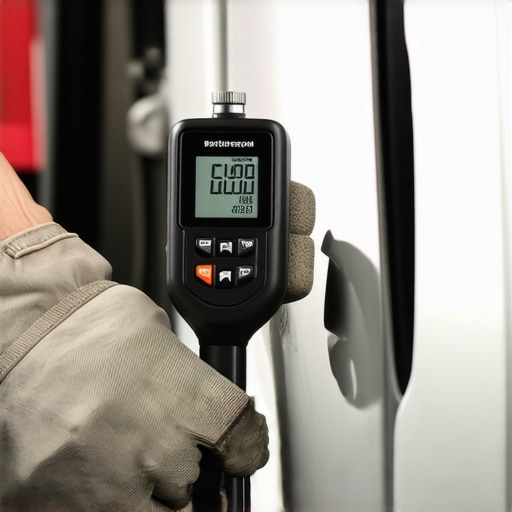
The Next Decade of Garage Tech
I predict that within five years, we will see more AI-driven vibration analysis apps for our phones. You will be able to strap your smartphone to the frame, shift gears, and the app will use the accelerometer data to tell you exactly which mount is failing based on the frequency of the ‘pop.’ This kind of diagnostic scaling will make high-end repairs accessible to everyone. We are moving toward a world where braking news how to choose the best brake service in 2025 will involve as much software as it does hardware. Until then, stick to the basics in the ultimate guide to auto repair to keep your daily driver from becoming a lawn ornament. Go out to your driveway today, grab your breaker bar, and check those subframe bolts—you might just find a two-minute fix for your biggest headache. It is the single most effective advanced tip I can give you: verify the torque on everything you can reach before you spend a dime on new parts.
The Shift Clunk Realities Most Mechanics Keep Quiet
Over the years, I have learned that the loudest noises often come from the smallest parts. One of the biggest lightbulb moments for me was realizing that a clunk is frequently just energy looking for a way out through a weak link. Don’t assume your gears are shredded just because the sound is scary; start with the most visible rubber components first. Another lesson that saved me thousands was the realization that dirt is the enemy of diagnostic accuracy. Before you condemn a part, spray it down with some brake cleaner and look for the witness marks—those shiny spots where metal is hitting metal. If you see them on a subframe bolt, you have likely found your noise without needing a single internal transmission component. Finally, remember that parts cannon repair style—throwing new parts at a problem until it goes away—is the most expensive way to fix a car. Using specific top transmission repair tips for long-term vehicle reliability like checking fluid chemistry first can save you from a needless rebuild. A simple fluid refresh can sometimes solve hydraulic delays that mimic mechanical failure.
#IMAGE_PLACE_HOLDER_E#
Tools That Save My Sanity Every Weekend
If you are serious about DIY work, you need a few items that go beyond the basic socket set. I always recommend a high-quality digital torque wrench. When you are dealing with engine mounts or subframe bolts, the difference between tight enough and snapped is razor-thin. Precision matters when you are trying to follow collision renewal strategies restoring your car to perfection. I also swear by a bi-directional OBD-II scanner. Being able to command the car to perform tasks while you watch under the hood is like having a second pair of hands. For more complex issues, referencing the ultimate guide to auto repair alongside your scan data is the best way to ensure you are fixing the root cause, not just a symptom like a metallic ping when your engine shuts off.
Reclaim the Joy of a Smooth Morning Commute
There is nothing quite like the feeling of shifting into gear and hearing nothing but silence. That quiet is the sound of a well-maintained machine that will serve you for years to come. By taking the time to perform essential car service checks to extend your vehicles life, you are not just saving money; you are gaining peace of mind every time you pull out of your driveway. Don’t be afraid to get your hands dirty—most of these fixes are simpler than they seem at first glance. Whether you need a brake service or a simple bolt tightening, your car will thank you for the attention. Have you ever spent weeks chasing a clunk only to find out it was a loose penny in the console or a five-dollar bushing? Tell me your most face-palm repair story in the comments below!