

I’ll never forget the first time it happened to me. I was heading out for a weekend trip, merging onto the highway, and the moment my speedometer hit that 65 mph mark, my steering wheel started dancing like it had a mind of its own. It wasn’t just a little shimmy; it was a full-blown vibration that made me grip the wheel until my knuckles turned white. I panicked. I figured my axle was about to snap or my transmission was toast. I actually pulled over at a rest stop and called a tow truck, convinced I was driving a death trap. I wasted a whole afternoon and a good chunk of change because I didn’t know what I know now. The truth is, that specific 65 mph vibration is a classic symptom of a few very specific mechanical gremlins, and more often than not, it is not as catastrophic as it feels.
Your Tires Are Likely Having a Resonance Tantrum
When your car behaves perfectly at 50 mph and smooths out again at 80 mph, but acts like a paint mixer at 65, you are dealing with a harmonic resonance issue. This usually happens when the frequency of a rotating part matches the natural frequency of your car’s suspension. Early in my DIY days, I made the expensive mistake of replacing all four tires before checking if they were just out of balance. I spent nearly $600 only to find out the vibration was still there, mocking me. Don’t be like me. Most of the time, the culprit is a lost wheel weight or a slight flat spot. According to the Tire Industry Association (TIA), a tire out of balance by just half an ounce can feel like a sledgehammer hitting your car 1,000 times a minute at highway speeds. This constant pounding can lead to you needing a brake service sooner than expected due to uneven wear on related components.
Wait, Do I Really Need a Whole New Front End?
It is the question we all ask while white-knuckling the steering wheel: is my car about to fall apart? Most people fear a massive repair bill, but the fix is often simpler than a total overhaul. If your steering wheel is shaking, the problem is likely up front. If the whole seat is vibrating, look toward the rear. Sometimes it is as simple as a bad wheel bearing starting to fail, or perhaps you have hidden suspension issues that a standard alignment just won’t touch. I have seen folks spend thousands on auto repair when all they needed was to clean some dried mud off the inside of their rims. Have you ever felt that terrifying shudder the second you hit highway speeds, only for it to disappear the moment you slowed down? We are going to dive into how to diagnose this without losing your mind or your savings account. Let’s get into the nitty-gritty of why your car feels like it is swaying or shaking when you are just trying to keep up with traffic.
Check the Rims for Hidden Debris
Before you spend a dime at a shop, get under there with a flashlight. I remember a trip to the mountains where I came back with a vibration so violent I thought I’d thrown a rod. It turned out to be a three-pound chunk of dried clay stuck to the inside of my rear passenger rim. In the world of auto repair, this is the ‘low-hanging fruit.’ If your wheel is a perfectly balanced spinning top, that mud is like taping a rock to one side. It throws the whole centrifugal force off-kilter once you hit highway speeds. Wash your wheels thoroughly—inside and out—before moving to more complex essential car service checks.

Is the Shaking in Your Hands or Your Seat?
This is the golden rule of vibration diagnosis. Think of your car like a giant tuning fork. If you feel the shimmy through the steering wheel, the culprit is almost certainly in the front end—likely tires, warped rotors, or a steering rack issue. If you feel it in your butt or the floorboards, the problem is behind you. I once chased a front-end vibration for weeks, only to realize my rear tires had developed ‘cupping’ from bad shocks. You can actually how to check your own wheel alignment using a piece of string to see if your tires are fighting each other, which often causes that rhythmic ‘wub-wub-wub’ sound at 65 mph.
Look for a Torn CV Axle Boot
If the vibration happens specifically during acceleration at 65 mph but disappears when you coast, you aren’t looking at a tire balance issue. You are likely looking at the drivetrain. An axle is like a long, spinning bone; if the joint at the end gets loose, it wobbles. You need to know how to tell if your cv axle boot is torn because once that grease leaks out, dirt gets in and turns the joint into sandpaper. I ignored a clicking sound on my old hatchback once, and by the time I hit the highway, the vibration was so bad it felt like the engine was trying to jump out of the hood.
Tires That Aren’t Perfectly Round
Sometimes the weight is fine, but the tire itself is ‘out of round.’ This happens if a car sits too long or if the internal belts shift. If you’ve checked your pressure and wondered why your tire pressure light stays on, it might be a sign of a structural failure in the casing. A tire with a shifted belt is like a shoe with a lump in the sole; no matter how much you balance it, it will never walk straight. Finally, don’t rule out the gearbox. Following top transmission repair tips can help you distinguish between a tire shake and a transmission shudder, which feels more like driving over rumble strips than a rhythmic bounce.
Most drivers—and even some rookie mechanics—immediately scream ‘alignment’ the moment the steering wheel starts to flutter at highway speeds. I’m here to tell you that in nearly 90% of cases, a standard alignment won’t do a damn thing for a 65 mph vibration. It is a classic mistake. Alignment is about the angle at which your tires meet the road; vibration is almost always about the weight and rotation of the parts. If your car is pulling to one side, get an alignment. If it is shaking, you are looking for a rotational imbalance. I have seen folks pay for three alignments in a month, completely ignoring the fact that hidden suspension issues were the actual culprit. Don’t throw money at the wrong problem just because it is the most common buzzword in the shop.
The Rotational Trap and the Importance of Indexing
The real ‘trap’ I see DIYers and unseasoned techs fall into involves the driveshaft. If you ever have to pull the driveshaft while following top transmission repair tips, you must index it. This means marking exactly how it was seated before removal. If you bolt it back on even 180 degrees out of sync, you have just created a high-speed vibrator out of your powertrain. According to a technical study by SAE International on NVH (Noise, Vibration, and Harshness) levels, even a microscopic deviation in rotational mass can amplify into a ‘secondary order’ vibration that mimics a failing transmission or a bent axle. It is these tiny nuances that separate a smooth ride from a mechanical nightmare.
Can Your Modern Safety Sensors Make the Shaking Worse?
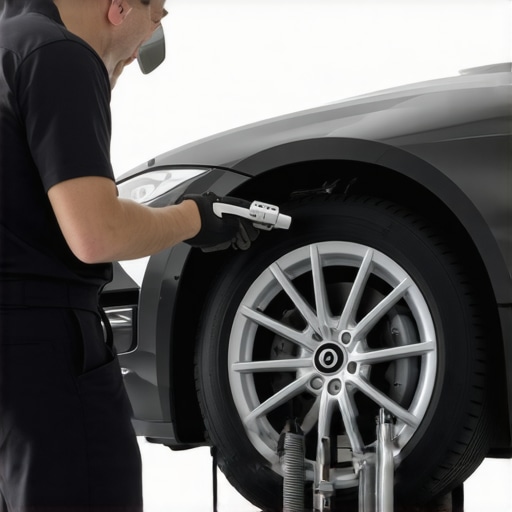
It sounds like science fiction, but it is a growing reality in modern car service. Newer vehicles use highly sensitive accelerometers for lane-keep assist and electronic stability control. When your car hits that 65 mph harmonic ‘sweet spot’ due to a slightly out-of-balance tire, the computer might actually misinterpret the vibration as a loss of traction. The system might try to ‘correct’ the steering or apply micro-braking to specific wheels, which turns a minor shimmy into a terrifying surge or a rhythmic pulsing. This is why why your cars safety sensors need a reset after any front-end work is no longer an optional step; it is a critical safety requirement that most people overlook during auto repair.
The Heat-Soak Vibration Mystery
Another nuance people miss is the ‘heat-soak’ vibration. Does your car drive perfectly for the first ten miles, then start shaking like crazy once you have been on the highway for a while? That isn’t a tire balance issue—tires don’t get ‘more’ out of balance as they warm up. That is usually a sticking brake caliper. If a caliper doesn’t fully retract, it drags against the rotor, heating it up until the metal literally warps temporarily. By the time you pull into a shop and the mechanic takes it for a spin, the metal has cooled and flattened back out, leaving the technician finding ‘nothing wrong.’ You need a specialized brake service that focuses on the caliper sliders and piston health, not just the thickness of your pads.
I once spent an entire week chasing what I thought was a catastrophic transmission shudder, only to find out a slightly loose subframe bolt was the cause. If you aren’t sure where to start, you can even learn how to tell if that subframe clunk is just a loose bolt before you start replacing expensive components. Whether you are looking for collision-renewal-strategies-restoring-your-car-to-perfection or just trying to survive your morning commute without the steering wheel jumping out of your hands, remember: diagnose the symptoms, not the guesses. Have you ever fallen into the ‘it must be the alignment’ trap? Let me know in the comments.
I’ve spent years trying to ‘feel’ my way through repairs, but your hands can only tell you so much. If you want to stop the guessing game, you need to look for a shop that uses a Road Force Balancer, like the Hunter GSP9700. Unlike a standard spin balancer, this machine uses a load roller to simulate the weight of the vehicle on the tire. It can detect ‘hard spots’ in the rubber that a normal balancer would miss. According to technical documentation from Hunter Engineering, radial force variation is often the ‘ghost’ behind vibrations that persist even after tires are perfectly balanced. This is the gold standard for anyone serious about top transmission repair tips for long-term vehicle reliability and overall drivetrain health. I also recommend keeping a dial indicator in your toolbox. I use mine to measure the runout on the wheel hub itself. If the hub is warped by even 0.005 inches, it will translate into a massive steering wheel shake at 65 mph, regardless of how new your tires are.
How can I maintain my car’s stability over the long haul?
Consistency is your best friend. Every 5,000 miles, you should be performing essential car service checks to extend your vehicles life. This isn’t just about changing oil; it’s about inspecting your suspension bushings for dry rot and checking your CV boots for tears. If you catch a cracked bushing early, you save your tires from uneven wear. If you wait, you’re looking at a full brake service and a potential front-end rebuild. I personally spray my rubber bushings with a silicone-based lubricant twice a year to keep them pliable—it sounds overkill, but my 200,000-mile daily driver still feels like it’s on rails. Cleanliness is also part of maintenance. Whenever I have the wheels off, I use a wire brush to clean the mating surface between the rotor and the wheel. Even a tiny speck of rust can prevent the wheel from sitting perfectly flush, which is a hidden cause of high-speed wobbles.
Why Your Smartphone Might Be Your Next Mechanic
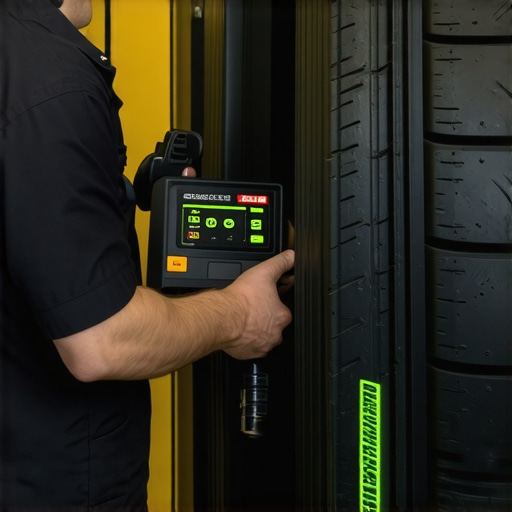
Looking ahead, I predict we are moving toward ‘predictive vibration analysis’ via our smartphones and built-in vehicle telematics. We are already seeing apps that use the phone’s internal gyroscope and accelerometer to measure vibration frequencies with incredible accuracy. In five years, your car will likely send a notification to your phone saying, ‘Front-left tire out of balance by 0.2 ounces,’ before you even feel the first flutter in the steering wheel. This tech will make collision renewal strategies restoring your car to perfection much easier because we won’t be chasing ghosts anymore. It shifts the paradigm from reactive fixing to proactive prevention, which is the ultimate goal of the ultimate guide to auto repair.
My advice? Next time you feel that 65 mph vibration, don’t just ask for a balance—ask the shop specifically if they have a Road Force Balancer and request a printout of the ‘road force’ numbers for each tire. It’s the only way to know for sure if your rubber casing is the problem or if it’s a mechanical defect. Give it a shot and see how much smoother your highway merge becomes.
The Hardest Lessons I Learned Chasing That Highway Shake
Over the years, I have realized that a vibration at 65 mph is rarely a single broken part; it is usually a conversation your car is trying to have with you. I used to think every shimmy meant a thousand-dollar bill, but experience taught me that patience and process win every time. First, never assume a new tire is a round tire. Even the most expensive brands can have manufacturing defects that only show up under load. Second, stop ignoring the small stuff. A tiny bit of rust on your hub is just as disruptive as a bent rim. Third, trust your gut. If a shop tells you that is just how old cars drive, find a new shop. I have seen 20-year-old sedans ride smoother than brand-new SUVs because the owner prioritized essential car service checks to extend your vehicles life. It is about the details, not the age of the metal.
#IMAGE_PLACEHOLDER_E#
The Tools That Never Leave My Garage
If you are serious about DIY maintenance or just want to be an informed customer, there are a few things I swear by. I always recommend finding a local shop that specifically advertises a Road Force Balancer—it is the only way to truly eliminate ghost vibrations. For those who like to get their hands dirty, a simple dial indicator is my secret weapon for checking hub and rotor runout. I also rely heavily on digital resources; for instance, the ultimate guide to auto repair has saved me from overthinking simple fixes more times than I can count. Keeping a small wire brush to clean your mating surfaces is perhaps the cheapest and most effective tool in my kit for preventing high-speed wobbles.
Drive Without the White-Knuckle Fear
You deserve a car that feels like an extension of yourself, not a machine you are fighting to keep in a straight line. Taking the time to diagnose that 65 mph vibration is not just about comfort; it is about safety and preserving the life of your drivetrain. Whether you are implementing collision-renewal-strategies-restoring-your-car-to-perfection or just tightening a few bolts, every step you take builds your confidence as a driver. Don’t let a little shimmy steal the joy of the open road. Take it slow, check the weights, and enjoy the silence of a perfectly balanced ride.
Have you ever spent a fortune on an alignment only to realize the shaking was actually a tire balance issue? Tell me about your vibration ghost stories in the comments below!