
I stood in my driveway at 6:00 AM, the frost biting through my socks, listening to that pathetic, slow wuh-wuh-click of a starter that just didn’t have enough juice. This was my second brand-new battery in six months. I felt completely defeated. I had followed all the usual essential car service checks to extend your vehicles life, yet my car was treating me like a total stranger. It is a gut-punching realization when you realize you are just throwing money down a bottomless pit of lead and acid. I used to think a dead battery meant a bad battery, but I was wrong—and that mistake cost me nearly four hundred dollars in parts I didn’t actually need. If you are tired of wondering if your car will actually start after sitting for two days, you are in the right place. Today, I am going to show you how to find the real vampire hiding in your wires so you can stop being a victim of your own alternator. Have you ever felt that sinking feeling of seeing a dark dashboard when you are already ten minutes late for work? Let me know in the comments, because I’ve been there more times than I’d like to admit.
Stop throwing parts at a problem you have not diagnosed yet
Many of us, myself included, have a tendency to run to the auto parts store the second the car won’t crank. We assume the battery is a dud. But here is the kicker: modern cars are basically rolling computers. According to a report by the Auto Care Association, electrical system failures are a leading cause of unexpected breakdowns, and often, the battery is just the victim, not the criminal. Early in my DIY journey, I kept swapping batteries because I did not understand how to tell if your alternator is overcharging your battery or, conversely, if it was barely charging it at all. I was treating the symptom while the disease—a tiny, half-amp parasitic draw—was eating my electronics alive every single night. You have to realize that even when the key is out, your car is still ‘talking’ to itself. If one of those modules fails to go to sleep, your battery is doomed. This is why the ultimate guide to auto repair always emphasizes diagnostics over mindless part-swapping. You need to know exactly what is pulling juice before you swipe that credit card again.
Is my car’s computer secretly staying awake all night?
This is the skepticism I see most often from folks I help out in my neighborhood. They can’t believe a small sensor or a ‘smart’ radio could kill a massive battery in forty-eight hours. The truth is, it does not take much. I once spent a week chasing a dead battery only to find out the reason your interior lights flicker when you use the turn signal was related to a frayed wire in the trunk that was keeping the body control module awake 24/7. It was a tiny mistake that turned into a massive headache. If you don’t learn the trick to finding a parasitic battery drain that kills your car overnight, you will just keep buying new batteries until the car finally gives up the ghost. It’s not magic, it’s just basic math and a little bit of patience with a multimeter. We are going to look at the fuse box next, because that is where the real secrets are buried.
Get your multimeter ready for some detective work
Think of electricity like water in a pipe. Your battery is a reservoir, and your wires are the pipes. When the car is off, all the ‘faucets’ should be closed. A parasitic drain is just a faucet that has been left dripping. To find it, you need a digital multimeter capable of reading DC amps. Most entry-level units work perfectly, as long as they have a 10A setting. Don’t worry if you have never used one; we are not performing rocket science, just basic techniques found in the ultimate guide to auto repair that every vehicle owner should master to save money. 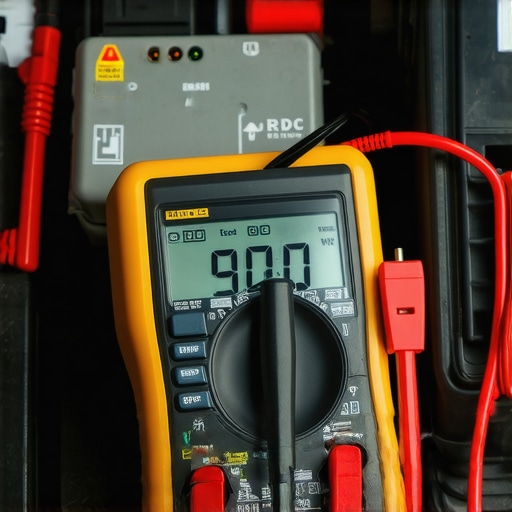
Force the computers to go to sleep
Modern cars do not just ‘turn off’ when you pull the key. They linger in a state of semi-consciousness for up to thirty minutes as modules finish their tasks. If you start testing immediately, you will get a false reading because the Body Control Module (BCM) is still active. You need to trick the car into thinking it is locked and deserted. Pop the hood, but manually trip the latch with a screwdriver so the car security system thinks the hood is closed. Lock the doors and wait. I once sat on a milk crate in my garage for forty minutes just waiting for a sedan’s computer to finally go to sleep. It is one of those essential car service checks to extend your vehicles life that requires more patience than skill. If you skip this wait, you are just chasing ghosts.
Hook up the meter to watch the current flow
Now, disconnect the negative battery terminal. Set your meter to the highest amp setting—usually 10A—to avoid blowing the internal fuse if there is a massive draw. Connect one probe to the negative battery post and the other to the disconnected cable terminal. You are now the bridge that the electricity must cross to complete the circuit. If the meter shows anything higher than 0.050 amps (50 milliamps), you have a thief in the system. This is far more precise than simply wondering how to tell if your alternator is overcharging your battery, because we are strictly measuring what is leaving the battery while the engine is dead.
Pull every fuse until the thief reveals itself
This is the moment of truth. Open the fuse box and, using plastic pullers, remove one fuse at a time. Watch the multimeter display constantly. If the reading does not change, put the fuse back and move to the next one. When you pull a fuse and that 0.60A reading suddenly drops to 0.02A, you have isolated the circuit. I spent four hours doing this on a neighbor’s truck once, eventually discovering why your brake lights stay on even when you arent touching the pedal was due to a tiny plastic bumper that had snapped off, leaving a switch engaged. It is the core of the trick to finding a parasitic battery drain that kills your car overnight. Sometimes the culprit is a stuck relay that might even cause a noise similar to why your engine makes a ticking sound like a sewing machine, but originating from the fuse block. Keep your ears open while you work.Most DIYers are taught to pull fuses one by one to find a short, but that is actually a bit of an ‘old school’ trap that can lead you in circles. In my experience, pulling a fuse on a modern vehicle is the quickest way to get a false positive. Here is the nuance: modern cars utilize a Controller Area Network (CAN bus) where modules ‘talk’ to each other. When you pull a fuse and then plug it back in, you often ‘wake up’ the entire communication network. That sudden spike in current you see on your meter might just be the computer booting up, not necessarily the drain you are looking for. A much more sophisticated approach—and what the pros use—is the voltage drop method. By measuring millivolts across the two tiny metal test points on top of a fuse while it is still in the socket, you can calculate current without ever breaking the circuit. This level of precision is what separates a backyard mechanic from a specialist, and it is a core concept I often discuss when referencing the ultimate guide to auto repair. 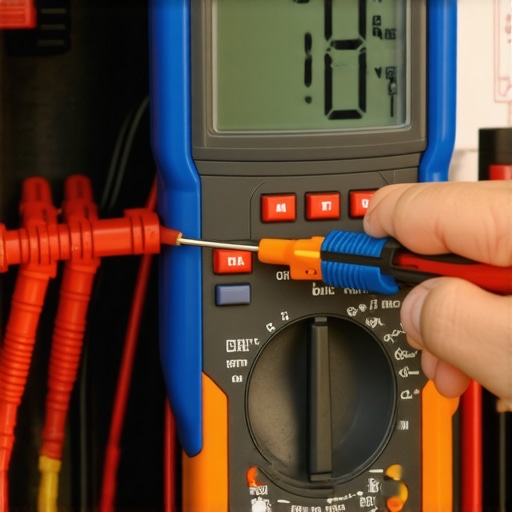
Why do some modules refuse to sleep even after an hour?
It is incredibly frustrating when you have followed every step, waited the full thirty minutes, and your meter still reads 150mA. Often, the culprit is not a broken component, but a ‘ping’ from a faulty sensor that prevents the car from entering deep sleep. For instance, I have seen cases where a malfunctioning transmission range sensor kept the car’s Body Control Module (BCM) convinced that the vehicle was still in gear, which blocks the power-down command. If you are researching top transmission repair tips for long-term vehicle reliability, remember that electrical health is just as critical as the gears themselves. According to training materials from the Equipment and Tool Institute (ETI), nearly 30% of diagnostic time in modern shops is now dedicated to these specific communication errors rather than mechanical failures.
Beware the aftermarket electrical vampire
The biggest ‘Oops’ factor for many car owners is the aftermarket trap. If you have recently installed a remote starter, a dashcam, or a high-end audio system, that should be your first suspect. These devices frequently bypass factory power-management protocols. I once spent three days chasing a mystery drain that turned out to be a cheap ‘smart’ brake controller that was constantly polling for a trailer connection. When considering how to choose the best brake service in 2025, always verify if they check the electrical integration of your ABS and towing modules during a high-end service. Have you ever fallen into the trap of replacing a three-hundred-dollar part only to find the problem was a five-dollar relay? Let me know in the comments. We often assume the most expensive component is at fault, but a costly mistake is ignoring the small, interconnected sensors. Even a mechanical symptom, such as why your brake pedal sinks slowly while you are sitting at a light, can occasionally be traced back to an electronic solenoid that is stuck ‘open’ and drawing current because of a software glitch. Stop throwing parts at your car and start measuring the data.
Invest in a tool that actually talks back to you
If you want to move beyond basic maintenance and really master the ultimate guide to auto repair, you have to stop using those twenty-dollar code readers. They are the digital equivalent of a thermometer; they tell you that you have a fever, but they don’t tell you why. I finally bit the bullet and bought a bi-directional scan tool, and it changed my life. Being able to command a fuel pump to turn on or force a transmission solenoid to cycle while I’m standing under the car is a game-changer. For example, if you are trying to figure out the reason your car struggles to climb steep driveways, you can look at the live data for “Line Pressure” in the gearbox while the engine is under load. This isn’t just “reading codes”—it’s observing the car’s soul in real-time. According to the SAE J1979-DA (Digital Annex), there are thousands of proprietary data points that most consumer-grade tools simply cannot access. Without those PIDs, you are essentially flying blind. 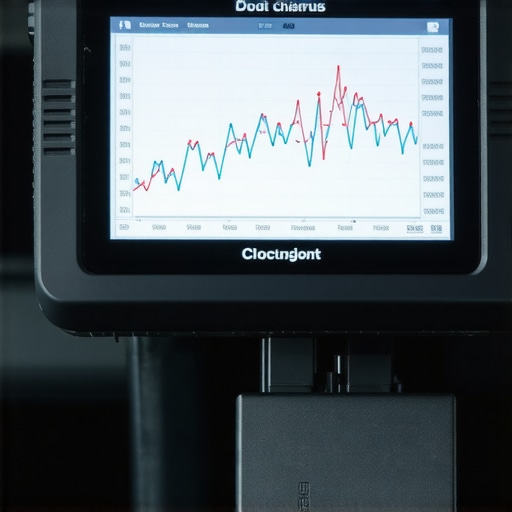
How can I keep my car’s electrical system healthy for years?
Long-term reliability is not about waiting for things to break; it’s about preventing the corrosion and heat-soak that kills components. I make it a habit to check my main ground points every single year. It’s one of those essential car service checks to extend your vehicles life that almost everyone ignores until their dashboard starts acting like a Christmas tree. I also recommend using a dedicated battery maintainer if your car sits for more than three days. Modern lead-acid and AGM batteries hate being discharged below 12.4 volts. If you keep them topped off, you avoid the chemical crystallization (sulfation) that leads to premature death. This proactive approach is the same logic you should apply to your drivetrain; following top transmission repair tips for long-term vehicle reliability means checking for software updates at the dealer just as often as you check the fluid level.
The future of fixing things in your own driveway
We are entering a strange era of “Locked-Down” cars. Many 2020 and newer models now feature Secure Gateway Modules (SGW) that prevent unauthorized tools from clearing codes or performing adaptations. In the next five years, I predict that “Right to Repair” will shift from mechanical access to digital access. We will likely see more “over-the-air” (OTA) updates that fix common issues, like why your car makes a whistling noise at high speeds by adjusting active grille shutters via software. If you aren’t comfortable with a computer, you might find yourself locked out of your own vehicle’s maintenance. My challenge to you today: don’t just read about this. Go outside, grab your multimeter, and perform a voltage drop test on your battery’s negative terminal to the engine block. You might be surprised at the “invisible” resistance you find hiding in a seemingly clean cable.
The Hardest Lessons I Learned Chasing Midnight Parasites
If there is one thing I’ve realized after years of troubleshooting, it’s that assumptions are the most expensive tools in your garage. I used to assume that if a part was new, it couldn’t be the problem. I was wrong. I’ve seen brand-new alternators with internal shorts that acted like a massive drain. Now, I never trust a component until I’ve seen the numbers on my screen. Another lightbulb moment for me was realizing how much a simple the real reason your check engine light is on but the car runs fine can actually be related to low voltage issues. When the battery is weak, the computer starts throwing ‘ghost’ codes that have nothing to do with mechanical failure. It’s also worth noting that sometimes, what looks like a drain is actually a cooling system logic issue, like why your engine fan runs for 10 minutes after the car is off. Always verify the car is actually supposed to be off before you start pulling fuses.
The Short List of Gear I Never Leave Home Without
You don’t need a five-thousand-dollar rolling toolbox to fix most electrical issues, but you do need precision. I personally swear by a Digital Multimeter with Min/Max settings; it allows you to catch those momentary spikes in current while you’re inside the car. For deep dives, I recommend picking up a copy of Automotive Electrical and Engine Performance. It’s a textbook, but it reads like a mystery novel for gearheads. I also keep a low-amp current clamp in my bag—it lets me measure drain without even disconnecting the battery terminal. Combining these tools with the wisdom found in the ultimate guide to auto repair will make you virtually unstoppable in your own driveway.
Reclaim Your Confidence Behind the Wheel
The next time you walk out to your car in the morning, I want you to feel certain that it’s going to roar to life. No more crossing your fingers or hoping for the best. By mastering these diagnostic techniques, you aren’t just fixing a car; you’re taking back control of your time and your wallet. Incorporating these tests into your essential car service checks to extend your vehicles life ensures that you are never left stranded by a ‘vampire’ lurking in your wires. Go out there, get your hands a little dirty, and stop being a victim of your own alternator. Have you ever spent hours chasing an electrical ghost only to find a loose ground wire? Let me know in the comments below!