
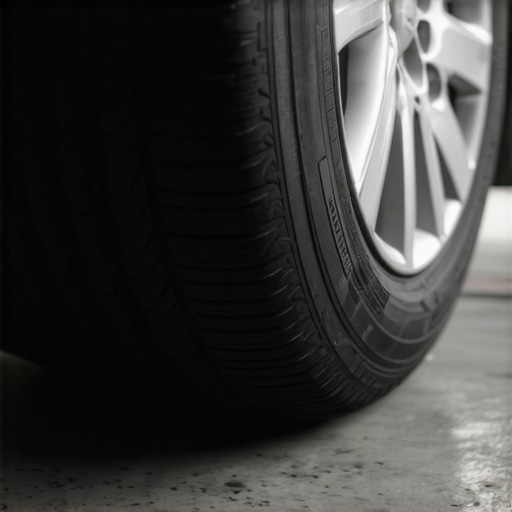
I was kneeling in my driveway, coffee in hand, ready for a three-hour drive to visit family, when I saw it. A glint of silver where there should only be black rubber. It was the steel cords of my front driver-side tire peeking through the inner edge. From the outside, that tire looked almost brand new. Plenty of tread. Nice deep grooves. But on the inside? It was a ticking time bomb. I felt that familiar pit in my stomach—the realization that I’d been driving my family around on a tire that was one pothole away from a blowout. It’s a frustrating, expensive wake-up call, but it’s one we can fix together. Today, I am going to show you exactly why this happens and how to stop your car from eating its own shoes. I’ve spent years keeping my car running smoothly, but even I get caught off guard. Have you ever walked out to your car and noticed your tires looking a little ‘lean’? Drop a comment below if you’ve ever been surprised by bald spots you didn’t see coming.
The Day My Tires Almost Left Me Stranded
Looking back, I should have known. My steering wheel had a slight tilt to the left, and I’d noticed my car would vibrate specifically at 65 mph, but I just turned up the radio. That was a rookie mistake. Ignoring those tiny signals led to a $200 tire replacement that could have been avoided with a simple adjustment. The truth is, inner edge wear is usually a symptom of a much larger conversation your car is trying to have with you. It isn’t just about the rubber; it’s about the geometry of your suspension and the health of your steering components.
Is This Just a Cheap Tire Problem?
I hear this a lot from my neighbors. They think they just bought a bad brand or a ‘soft’ compound. While some tires do wear faster than others, no tire is designed to wear out only on the inner two inches. If the rest of the tread looks great but the inside is bald, you don’t have a tire problem—you have a mechanical problem. According to the National Highway Traffic Safety Administration (NHTSA), nearly 11,000 tire-related crashes occur annually, and many of these are attributed to poor maintenance and uneven wear patterns that go unnoticed until it’s too late. It is not about the brand of the tire; it is about the stress being put on it.
What’s Actually Eating Your Rubber From the Inside Out
Most of the time, that inner edge wear comes down to one of three culprits: ‘camber,’ ‘toe,’ or worn-out parts. Think of camber as the inward or outward tilt of the tire. If the top of the tire tilts toward the engine, that’s negative camber, and it puts all the vehicle’s weight on that inner strip. Sometimes there are hidden suspension issues that a standard shop might miss if they are just rushing through a job. I once spent a whole weekend trying to check my own wheel alignment using a piece of string only to realize my lower ball joints were completely shot. When those joints get loose, your tires start to splay outward like a toddler learning to walk. It’s not just a nuisance; it’s a safety hazard that degrades your handling and increases your stopping distance.
Get Under the Car and Hunt for the Play
To stop the bleeding, you need to get the front end in the air. This isn’t just about looking; it’s about feeling for movement that shouldn’t be there. Before you start, make sure you’ve covered your essential car service checks so you aren’t fighting a losing battle against simple maintenance. Inner tire wear is a physical manifestation of parts that have too much ‘give.’ If your suspension isn’t tight, your alignment will never hold, and you’ll be buying another set of tires in six months.
The 12-and-6 Shake to Find Worn Joints
Jack up your car and secure it on stands—never trust a hydraulic jack alone when you’re applying force. Grab your tire at the top (12 o’clock) and the bottom (6 o’clock) and try to rock it back and forth. If you feel a distinct ‘click’ or a shimmy, your ball joints or wheel bearings are waving a white flag. I remember a Saturday morning when I was certain my struts were the problem, but a quick 12-and-6 shake revealed a wheel bearing so loose I could have pulled it off by hand. You really need to know how to identify a bad wheel bearing before your hub grinds into a much more expensive disaster that leaves you stranded. 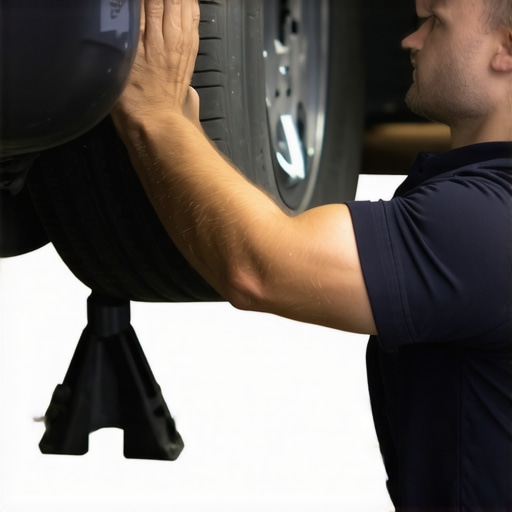
Look Closely at the Rubber Bushings
If the shake test is solid, look at the control arm bushings. These are the rubber ‘shoulders’ of your suspension system. If they are cracked, dry-rotted, or missing chunks of rubber, your tire’s alignment will shift every time you hit a bump or tap the brakes. This is one of those hidden suspension issues that a standard wheel alignment won’t fix. If the rubber is gone, a new alignment is just a temporary bandage on a deep wound; the car will just ‘settle’ back into a bad position the moment you drive off the rack.
Why Worn Shocks Kill Your Tread Fast
Your shocks do more than just provide a smooth ride; they keep the tire pressed firmly against the pavement. When they wear out, the tire starts to bounce or ‘cup,’ which can cause erratic wear patterns, including that dreaded inner edge balding. You should learn how to tell if your shocks are actually bad or just dirty before you spend $400 on a pair of struts you don’t need. A quick ‘bounce test’—pushing down hard on the corner of the car and letting go—should see the car settle immediately. If it keeps bobbing like a boat on the lake, your tires are taking the brunt of every road imperfection, wearing the edges down as they struggle to find grip.
The Secret Role of Tie Rods in Tire Wear
Tie rods control your ‘toe’—the direction your tires point. If your tie rods are worn, your tires might ‘toe out,’ essentially scrubbing the inner edge against the asphalt as you drive. It’s like walking with your feet splayed outward; the inner soles of your shoes will vanish in weeks. This is frequently the real reason your car pulls to the right when you let go of the wheel. If you notice why your car feels loose when driving over bumps, your tie rod ends are likely the culprit. You can’t just eyeball this; a fraction of an inch of play at the rod translates to massive wear at the tread over a thousand miles.
Most people believe that once a technician hands you a printout with all-green numbers, your problems are solved. I’m here to tell you that ‘green’ is a trap. In my experience, a car can be perfectly ‘within spec’ and still chew through a pair of high-end tires in under 10,000 miles. Why? Because factory specifications are often a wide range, not a laser-focused target. If your car is at the extreme edge of the ‘acceptable’ negative camber, it won’t trigger a red warning on the machine, but your inner edges will still sizzle on the highway. Let’s dig deeper into why this happens and how you can actually prevent it.

According to research by the Car Care Council, nearly 80% of vehicles on the road have at least one maintenance item that is frequently overlooked, often leading to cascading failures in the steering and suspension systems. This is why I always advocate for collision renewal strategies that look at the vehicle as a complete system rather than just a collection of parts. If you are only fixing the ‘pull,’ you might be missing the real reason your car pulls to the right, which is often a structural imbalance rather than a simple toe adjustment. A standard shop is looking for the fastest way to get you off the rack; a specialist is looking at how the tire actually contacts the asphalt under load.
Do Performance Tires Actually Need Different Alignment Angles?
For those running lower-profile or performance rubber, the standard shop alignment might actually be your worst enemy. Performance tires have stiffer sidewalls that don’t roll as much during cornering. If you stick to a factory ‘comfort’ alignment, you’re essentially forcing that stiff rubber to scrub the pavement. This is where hidden suspension issues really start to show their teeth. You need an alignment that matches your driving habits, not just what is in the manual. Simply relying on the truth about nitrogen in your tires to save your tread won’t help if your geometry is fighting the road.
The biggest ‘oops’ factor I see—and I’ve made this mistake myself—is tightening suspension bolts while the car is still up on jack stands. If you torque down your control arms while the suspension is fully extended, you are pre-loading those rubber bushings. The moment you drop the car, the bushings twist beyond their design limit. Within a month, they’ll tear, your alignment will vanish, and you’ll be right back where you started. It is a classic rookie move that costs hundreds in rework. While you’re under there, don’t ignore the smaller signs either; sometimes why your brake fluid level drops without a visible leak is actually an internal component failure that can subtly affect your vehicle’s stability. Have you ever fallen into this trap? Let me know in the comments if you’ve ever paid for an alignment only to have the wear come back two months later.
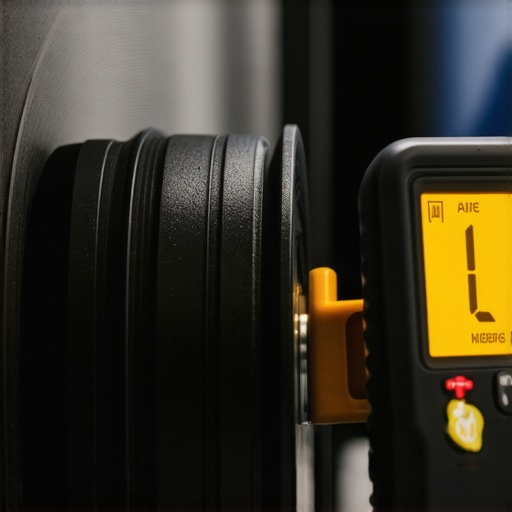
I used to think a basic socket set and a bit of intuition were enough to keep my fleet on the road. Then I spent a weekend chasing a phantom vibration that turned out to be a slightly bent control arm, and my perspective shifted. To truly master keeping your car running smoothly, you have to stop guessing and start measuring. I’ve started relying heavily on a digital inclinometer—a tiny, magnetized box that reads angles to the tenth of a degree. By sticking this to my brake rotors, I can see exactly how much camber change occurs when I load the suspension. It is far more accurate than the old ‘eyeball’ method, and it ensures that my essential car service checks actually yield results rather than just temporary peace of mind.
The Tools That Actually Earn Their Keep in My Garage
If you are tired of your car eating through rubber, you need to invest in a set of electronic ‘Chassis Ears.’ These are essentially a series of microphones you clip onto different suspension components like ball joints or tie rods. You wear a headset while a buddy drives, and you can switch between channels to hear exactly which part is clicking or grinding. It’s how I finally solved a mystery involving the hidden culprit behind a vibrating gas pedal. Without this tech, you are just throwing parts at a problem, which is the fastest way to drain your bank account. I also swear by a high-quality torque wrench that I calibrate once a year. Most people skip this, but as I mentioned earlier, over-tightening or under-tightening suspension bolts—especially on the transmission mounts or subframe—can lead to vibrations that mimic bad tires.
How do I maintain my suspension geometry over time?
The secret isn’t just one-off fixes; it’s about consistency. I keep a dedicated logbook for every vehicle. Every six months, I perform a ‘dry park’ test where someone turns the steering wheel back and forth while I am underneath (with the car on the ground) looking for any deflection in the bushings. This proactive approach is a core part of my collision renewal strategies. By catching a soft bushing before it completely tears, you prevent the ‘cascading failure’ where a loose control arm ruins your alignment, which then kills your tires, and eventually puts extra stress on your steering rack. According to the technical documentation from Hunter Engineering, even a 0.10-inch deviation in ‘toe’ can be equivalent to dragging your tire sideways for 28 miles for every 1,000 miles driven. That is a staggering amount of friction you can prevent with just a few minutes of inspection.
Looking toward the future, I see auto repair moving toward integrated ‘smart’ suspension systems. We are already seeing high-end vehicles with sensors that can detect alignment shifts in real-time and alert the driver via an app. Eventually, the ‘set it and forget it’ mentality of alignment will be replaced by active telemetry. But until then, we have to be the sensors. If you’ve been struggling with uneven wear, I challenge you to try the ‘Scribe’ method: use a silver sharpie to mark the exact position of your alignment bolts before you ever touch them. This ensures you can at least get back to your baseline if a DIY repair goes south. Also, when it comes time for professional help, make sure you know how to choose the best brake service and alignment shop that actually understands these nuances. Don’t just settle for the ‘green’ printout—ask for the actual degrees of thrust angle and caster.
What My Driveway Taught Me After Decades of Wrenching
Over the years, I’ve realized that a car is a living, breathing assembly of tolerances. One of the biggest myths is that if your car drives straight, your alignment is perfect. I’ve seen vehicles track straight as an arrow while the ‘toe’ was so far out they were effectively scrubbing their tires to death. Another lightbulb moment was discovering that why your brake rotors keep warping every few months often relates back to the same hub and bearing issues that cause uneven tire wear. If the foundation is loose, everything else suffers. Finally, don’t ignore the ‘cheap’ fixes—sometimes a $10 bushing is the difference between a safe ride and a catastrophic blowout.
Gear That Saved My Tires and My Sanity
I don’t go into any project without a few specific items that have earned their permanent spot in my toolbox. First, a high-quality digital inclinometer is non-negotiable for checking camber at home; it provides an objective reading that the naked eye just can’t match. Second, I always recommend looking into top transmission repair tips because maintaining your drivetrain’s alignment is just as vital as your wheels for overall vehicle stability. For the serious DIYer, ‘Chassis Ears’ are the gold standard; they take the guesswork out of identifying a failing joint by letting you hear the wear before you feel it. Lastly, I keep a physical maintenance log—not an app, but a book where I can see the history of every adjustment made during my ultimate guide to auto repair journey.
Take Back Control of Your Commute
You don’t need to be a certified technician to protect your investment. By simply getting on the ground once a month and looking at the inner edge of your tread, you are already ahead of 90% of drivers. Whether you are dealing with a persistent vibration or just want to ensure your family stays safe on a long trip, being proactive is the best auto repair strategy you can have. Don’t be afraid to ask the tough questions when you head in for brake service or a professional alignment. Your car will thank you with a smoother ride, better fuel economy, and a much fatter wallet. Have you ever discovered a hidden tire issue just before a big road trip? Let me know in the comments below!