
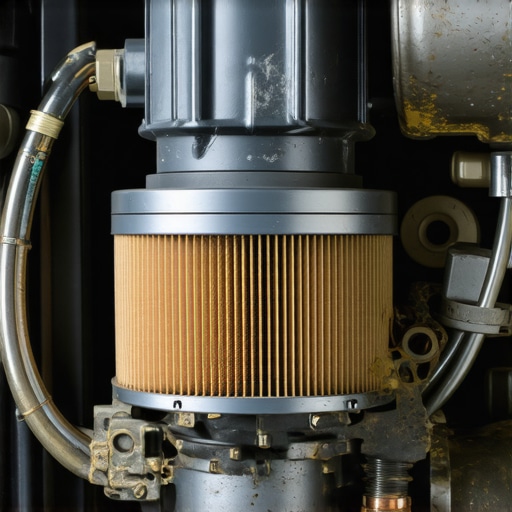
I will never forget the rainy Tuesday I spent stuck in a drive-thru lane, listening to a sound that resembled a banshee trapped in my gas tank. It was a persistent, high-pitched keening that seemed to get louder every time I touched the throttle. At the time, I figured my old sedan was just developing a bit of “character,” but I could not have been more wrong. A week later, that character left me dead in the water on the side of a busy highway during rush hour. Looking back, I realized that my fuel pump was not just making noise; it was screaming a warning at me that I chose to ignore because I did not want to deal with the hassle of a repair. Today, I want to make sure you do not make the same expensive mistakes I did. We are going to get to the bottom of that racket and figure out exactly how to save your car—and your wallet—before you are calling for a tow.
Stop Ignoring That High-Pitched Warning Signal
That whining noise is usually the sound of a mechanical component reaching its breaking point. In my early days of DIY wrenching, I made a classic blunder: I treated my gas tank like a storage locker rather than a cooling system. I would let the needle sit on “E” for days, thinking I was being efficient. In reality, the danger of running your gas tank near empty every week is that it starves the fuel pump of the very liquid it needs to stay cool. When the pump sucks in air or runs too hot, the internal bearings start to protest, resulting in that annoying whine. It is a bit like trying to run a marathon while breathing through a cocktail straw; eventually, something has to give.
Can I just turn up the radio and ignore the sound?
You might be thinking that as long as the car starts and gets you to work, the noise is just a cosmetic issue. I thought the same thing until I noticed the reason your car struggles to climb steep driveways is often tied to a pump that can no longer maintain proper pressure. According to the Car Care Council, a non-profit organization dedicated to vehicle longevity, fuel pumps are designed to operate under constant lubrication from the fuel itself. When that lubrication fails, friction takes over. If you are already hearing a whistle or a whine, you are not just dealing with a sound; you are dealing with physical wear that cannot be reversed with a bottle of fuel additive. Have you ever noticed your car making a strange sound and just hoped it would go away on its own? Tell me your story in the comments—I have been there too. Beyond the noise, a failing pump can lead to all sorts of performance headaches that look like other problems. You might think you need a complex auto repair to keep your car running smoothly, when in reality, your fuel system is simply choking. Sometimes the sound can even be mistaken for wind—if you have ever wondered why your car makes a whistling noise at high speeds, it is worth checking if that whistle is actually coming from the fuel tank area rather than the window seals. Let’s look at the specific mechanics behind why this happens so you can diagnose it like a pro.
Track the Whine Back to Its Source
To figure out if your fuel pump is truly on its last legs, you need to isolate the noise from the rest of the car’s chatter. I remember trying to diagnose a ‘squeak’ on my cousin’s truck once. I spent three hours crawling under the suspension, only to realize the noise was a dying pump echoing through the frame rails. It was a greasy, frustrating afternoon that taught me to always start with the simplest test: the prime sequence. While the car is off, have a friend turn the key to the ‘on’ position—but do not crank the engine—while you stand near the gas tank. You should hear a faint, smooth hum for two seconds. If you hear a jagged, grinding screech instead, you have found your problem. This diagnostic step is part of the essential car service checks to extend your vehicles life, as catching a failing pump early prevents the engine from leaning out and causing internal damage.
Put Your Fuel System Under Pressure
Once you have identified the sound, you need hard data. This is where a fuel pressure gauge becomes your best friend. In my early twenties, I once had a fuel pressure tester spray a fine mist of gasoline all over my shirt because I did not seat the Schrader valve adapter correctly. It was a terrifying, smelly lesson in making sure you have the right tools before you start. Connect the gauge to the fuel rail and compare the idle pressure to your car’s factory specifications. If the needle bounces erratically or stays below the recommended PSI, the internal check valve is likely shot. This is a critical part of the ultimate guide to auto repair keep your car running smoothly, because low pressure leads to misfires and poor fuel economy. 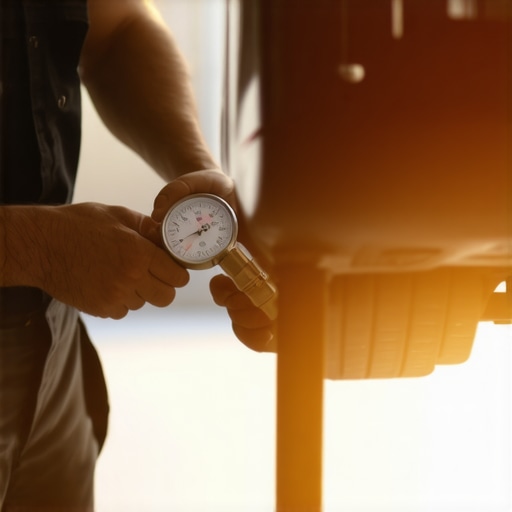
Rule Out Other Noisy Culprits
Before you drop the gas tank—which is a miserable job—ensure the noise is not actually coming from your drivetrain. Sometimes a whine that seems to vibrate through the floorboards is actually a transmission pump struggling with low fluid or a clogged internal filter. If you are unsure about the location of the sound, you should look into the easy way to check your transmission fluid without a dipstick to rule out a gearbox issue. If your transmission fluid smells like burnt toast, the noise you are hearing is likely a mechanical failure in the transmission rather than the fuel system. Additionally, if you see a warning on your dash, remember the real reason your check engine light is on but the car runs fine is often a stored code for ‘fuel system lean,’ which confirms the pump cannot keep up with the engine’s demand. Checking the fuel pump relay in the fuse box is another quick win; if the relay is scorched or clicking rapidly, it might be starving the pump of the voltage it needs to run quietly.We often assume that “more maintenance” always equals “better longevity,” but the reality of professional auto repair is far more nuanced. While we spent time diagnosing that fuel pump whine earlier, a common mistake I see among DIY enthusiasts is the “panic flush” approach. Everyone tells you that if your car is acting up, you should flush every fluid until it runs clear. However, I have learned the hard way that why relying on transmission leak repair fluid is often a costly mistake is because these “quick fixes” can actually swell seals to a point of failure or dislodge sludge that was actually helping a worn clutch pack stay engaged. It sounds counterintuitive, but sometimes, a high-mileage transmission is better left with its old, gritty fluid than subjected to a high-pressure machine flush.
Stop Treating Your Transmission Like a Trash Can
If you are looking for top transmission repair tips for long-term vehicle reliability, the secret is not a chemical in a bottle; it is consistent, low-pressure drain-and-fill services performed early in the car’s life. The “trap” here is the belief that a service can fix a mechanical failure. Once you hear grinding or feel slipping, the damage is physical. I once spent $200 on premium additives trying to “save” a dying gearbox, only to realize I was just polishing a sinking ship. Have you ever fallen into this trap? Let me know in the comments—I promise I won’t judge.
Why Your Brake Lines Still Feel Mushy After a Bleed
Another area where nuance wins over brute force is your braking system. You might follow the ultimate guide to auto repair to keep your car running smoothly and bleed your lines until you have gone through three quarts of fluid, yet the pedal still feels like a marshmallow. This is often because people skip the “bench bleed” of the master cylinder or fail to account for the ABS pump. According to technical training guides from the National Institute for Automotive Service Excellence (ASE), air trapped within the internal valves of an ABS module is the leading cause of a “soft” pedal that refuses to firm up. If you are frustrated by why your brakes feel spongy even after bleeding the lines, you likely need a scan tool to cycle those ABS valves manually while bleeding. #IMAGE_PLACE_HOLDER_C#
Why Does My Brake Pedal Sink Slowly While I Am at a Stoplight?
This is a sophisticated question that often points to an internal leak rather than a visible one. If your fluid reservoir is full and there are no external drips on your driveway, but the pedal slowly hits the floorboard under constant pressure, your master cylinder’s internal seals are bypassing. This is a critical safety issue that differs from why your brake rotors keep warping every few months, which is usually a heat dissipation or lug-nut torque-spec issue. Addressing a sinking pedal requires a full master cylinder replacement, not just a surface-level essential car service check. Professionals know that when it comes to stopping power, there is no room for “good enough.” Understanding these hidden nuances is what separates a simple parts-changer from a true master technician.To really step up your repair game, you need to stop guessing and start measuring. I spent years using a basic OBD2 dongle that only told me half the truth. If you want to tackle those weird ABS issues or perform a transmission adaptation, a bi-directional scan tool is non-negotiable. I personally use a pro-level tablet scanner because it allows me to command the ABS pump to cycle during a bleed, which is the only way to solve why your brakes feel spongy even after bleeding the lines. Without the software to open those internal valves, you are just moving air bubbles from one corner of the module to the other.
Stop Guessing with a Real Scan Tool
This level of diagnostic power is part of the essential car service checks to extend your vehicles life. When you can see the live voltage of every individual wheel speed sensor, you stop throwing parts at a problem and start fixing the root cause. As noted in the Bosch Automotive Handbook (10th Edition), the precision of modern electronic stability control relies entirely on the millisecond-accurate communication between the sensors and the hydraulic unit—a link that is easily disrupted by improper servicing or poor-quality connections. 
How do I keep my car on the road for 300,000 miles?
Longevity is a game of fluids and filters, but it is also about the details that most people ignore. For example, top transmission repair tips for long-term vehicle reliability always include checking for software updates from the manufacturer. Sometimes a hard shift isn’t a broken gear; it’s a bug in the computer code that manages the shift points. Beyond the internal mechanics, you have to consider the structure. Using collision renewal strategies restoring your car to perfection means keeping the body and frame free of salt and corrosion before they ever have a chance to take hold.
Precision Torque is Your Best Friend
Another secret I learned the hard way is that ‘tight enough’ is a myth. If you aren’t using a calibrated torque wrench on your lug nuts and caliper bolts, you are asking for trouble. This is the primary reason why your brake rotors keep warping every few months. When lug nuts are tightened unevenly, the hub heats up and cools down unevenly, causing the metal to distort. Following the ultimate guide to auto repair to keep your car running smoothly requires a level of discipline that most DIYers skip.
The Software Shift in Modern Repair
I predict that within five years, DIY repair will shift almost entirely from mechanical wrenching to software calibration. As vehicles become ‘computers on wheels,’ knowing how to reset a steering angle sensor will be as important as knowing how to change a tire. If you want to stay ahead of the curve, you must understand why your cars safety sensors need a reset after any front end work. Even a minor bumper tap can throw off the radar that controls your emergency braking. If you want to survive the 2020s and beyond, you need to look into how to choose the best brake service in 2025, because the complexity of regenerative braking is making the old ‘pump-and-hold’ method obsolete. Try this: Next time you work on your brakes, don’t just eyeball the pad thickness. Buy a set of digital calipers and measure the rotor thickness at four different points. If the variation is more than .001 of an inch, your car is going to shake. Mastering these small measurements is what makes your car feel brand new for years.
The Hardest Truth About Modern Mechanics I Had to Swallow
Over the years, I have realized that the most expensive tool in my garage isn’t my scanner—it’s my ego. I used to think I could fix anything with a socket set and intuition, but learning how to clean a sticky throttle body without removing it taught me that precision often beats brute force. I’ve learned to stop ‘firing the parts cannon’—that habit of replacing sensors blindly hoping for a fix. Instead, I’ve embraced the cleanliness-first rule: many fuel and air issues are just carbon buildup, not mechanical failure. Also, never underestimate a simple visual check; I’ve seen people spend thousands on transmission swaps when they really just needed to know the easy way to check your transmission fluid without a dipstick to find a low fluid level.
What I Pack in My Toolbox for Every Job
If you want to move beyond basic maintenance, you need a few non-negotiables. First, a bi-directional scan tool is your eyes inside the computer; it’s how you solve why your brakes feel spongy even after bleeding the lines by cycling those tricky ABS valves. Second, I always keep a calibrated torque wrench handy—it’s the only way to ensure you don’t end up wondering why your brake rotors keep warping every few months. Finally, I highly recommend finding the Factory Service Manual (FSM) for your specific VIN. While the ultimate guide to auto repair keep your car running smoothly provides the strategy, the FSM provides the exact specs that keep your engine within its tightest tolerances.
You Are the Best Advocate for Your Car
Taking control of your vehicle’s health is incredibly empowering. Whether you are performing essential car service checks to extend your vehicles life or diving into complex collision renewal strategies restoring your car to perfection, the goal is the same: safety and reliability. Automotive technology is changing fast, and staying informed on how to choose the best brake service in 2025 will save you from becoming obsolete. Don’t be afraid to get your hands dirty—every master technician started with a single turn of a wrench. Have you ever had a noise that completely stumped you, only to find out it was a five-minute fix? Let me know in the comments below!