
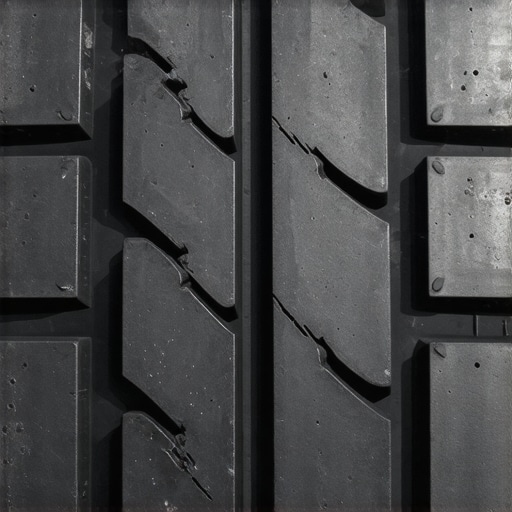
I remember the first time I felt my car “ghost-walk” across a damp bridge. It was a subtle, swaying sensation that made my stomach drop. I had just spent a small fortune on a set of essential car service checks and assumed my suspension was bulletproof. I was dead wrong. When I finally got home and took a flashlight to my rear wheels, I saw it—the tread looked like someone had taken a giant ice cream scoop to the rubber. That was my “aha!” moment, and it was an expensive one. [image_placeholder_1]
Your Tires Are Spilling the Secrets of Your Suspension
If you’ve noticed your car acting a bit temperamental lately, your tires are likely trying to tell you a story. Most people assume that if the car isn’t bottoming out, the struts are fine. I used to think the same thing until I ruined a perfectly good pair of Michelins. The truth is, your struts are responsible for keeping that tire glued to the pavement. When they die, the tire starts to bounce like a basketball at high speeds. This creates a very specific wear pattern called “cupping” or “scalloping.” You might also find that your tires are wearing out on the inner edge faster than the rest of the tread. I once spent weeks thinking my tire pressure was just low, only to realize my worn-out struts were letting the wheels tilt inward during every turn. It’s a common trap. We often blame the alignment or the tire brand, but the real culprit is usually the metal-and-oil tube hiding behind your wheel.
Is it really the struts or just a bad alignment?
This is the question that kept me up at night after my third trip to the mechanic. You might be skeptical, thinking a simple adjustment can fix the vibration. I’ve been there. But here is the kicker: there are hidden suspension issues that a standard wheel alignment won’t fix, and dead struts are at the top of that list. An alignment sets the angle, but the struts control the motion. According to tire experts at Bridgestone, tire cupping is a clear indicator that suspension parts are worn or damaged, as the wheel is literally jumping off the road. It’s a terrifying thought when you’re doing 70 mph on the highway. Have you noticed any weird, wavy patterns on your tires lately, or does the car feel like it’s swaying on the highway? If so, you aren’t alone. Catching it now will save you a massive headache. Before you go out and spend money on a new set of rubber, you need to know how to tell if your shocks are actually bad or just dirty so you can fix the root cause, not just the symptom.I once spent a Saturday afternoon in my driveway wrestling with a rusted-on strut bolt. I had the car jacked up, thinking I could just “feel” if the shock was blown. I ended up with a bruised knuckle and a lot of frustration. The lesson? You don’t need to take the whole thing apart to know it’s dead. You just need to know what signs to look for and how to test the components while they are still on the car.
Stop the Pogo Stick Effect
The easiest way to check your struts is the “bounce test.” Think of your car’s suspension like a screen door closer. It should let the door open easily but close it with a controlled, smooth motion. If that closer is broken, the door slams. On your car, if the strut is shot, the spring just keeps oscillating. Go to one corner of your car and push down hard on the bumper. When you let go, the car should come up, go down slightly, and stop. If it continues to bob like a cork in a bathtub, your struts are toast. This lack of control is often why your car feels loose when driving over bumps.
Check for the Tell-Tale Oil Leak
Struts are hydraulic, meaning they are filled with oil. When the internal seals fail, that oil starts to creep out. It’s not just a “dirty” shock you’re looking for—it’s a wet one. I remember looking at my front passenger strut and seeing a thick layer of road grime stuck to the housing. It looked like a Chia Pet made of grease. That happens because the oil leaks out and acts as a magnet for dust. If you see liquid running down the side of the strut body, you aren’t just dealing with road grime; you’re looking at a component that can no longer dampen movement. Understanding how to tell if your shocks are actually bad or just dirty is the difference between an expensive repair and a simple cleaning. 
Does Your Car Take a Bow When You Brake?
Another dead giveaway happens during deceleration. If you hit the brakes and the front of the car dives toward the pavement like a ship’s bow in a storm, your struts aren’t holding the weight distribution properly. This isn’t just annoying; it’s dangerous because it unloads the weight from your rear tires, making them more likely to lock up. This is often confused with brake issues, but if you’ve already checked your brake service options and everything looks good, the suspension is the prime suspect. You might even notice that your car dives forward every time you let off the gas.
The Highway Jitters
At high speeds, a bad strut shows its face through vibration. Many people think they have a wheel balance issue when they feel a rhythmic shaking at 60 or 70 mph. However, if the vibration is accompanied by a “floating” sensation, it’s rarely the balance. It’s the tire losing contact with the road. I’ve seen cases where your car vibrates specifically when you hit 65 mph because that’s the frequency where the worn-out strut allows the wheel to resonate. If you’ve ignored essential car service checks for a few years, this is your wake-up call.
Listen for the Metal-on-Metal Groan
Finally, use your ears. If you hear a clunking or knocking sound when you go over a speed bump or a pothole, the internal valving or the bushings of the strut have likely given up. It sounds like someone hitting the floorboard with a rubber mallet. This physical “bottoming out” means the strut has no more travel left. Don’t mistake this for a simple alignment issue; there are hidden suspension issues that a standard wheel alignment won’t fix, and a mechanical failure inside the strut housing is definitely one of them.
Let’s dig deeper into the mechanics of why we often get this wrong. Most drivers—and even some experienced enthusiasts—operate under the “if it ain’t leaking, it ain’t broken” philosophy. But here is the contrarian truth: internal fatigue is a silent killer. The hydraulic fluid inside your struts undergoes extreme thermal stress and mechanical shearing over millions of cycles. Eventually, the oil loses its ability to control the spring’s energy, even if the external seals remain bone dry. This is exactly why relying on transmission leak repair fluid is often a costly mistake; you’re attempting to solve a physical wear problem with a temporary chemical patch. According to the Motorist Assurance Program (MAP), a vehicle’s suspension should be professionally evaluated every 12,000 miles because the decline in handling is so gradual that our brains actually “tune it out” until a crisis occurs.
Avoid the Economy Grade Suspension Nightmare
One of the biggest traps I see involves the allure of the “budget” strut assembly. When you are looking into collision renewal strategies, the temptation to save a few hundred dollars on a pair of generic quick-struts is massive. Don’t do it. Cheap aftermarket units often use “one-size-fits-all” valving that isn’t tuned to your specific vehicle’s weight or center of gravity. I once installed a set of no-name struts on a heavy sedan, and the car felt like it was walking on stilts. It was dangerous and unstable. If you want essential car service checks to actually mean something, you have to use components that match the original equipment’s damping curve and quality.
Can a shaky suspension actually trick you into thinking the transmission is slipping?
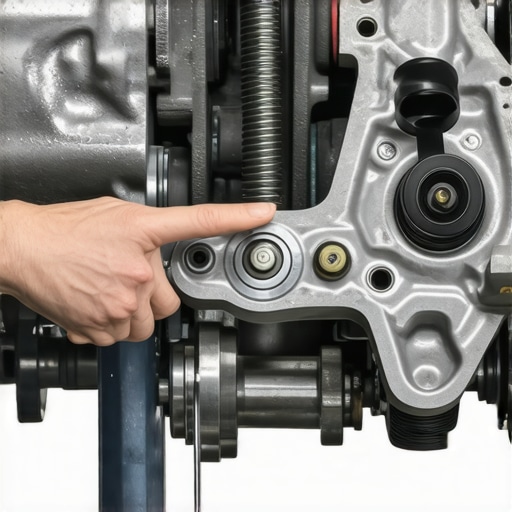
This is a nuance that catches even seasoned gearheads off guard. When your struts are completely shot, the tire can experience “micro-bounces” during heavy acceleration. This loss of consistent traction can cause the vehicle’s computer to get confused, leading to erratic shifting or traction control intervention that feels like a mechanical shudder. You might find yourself searching for top transmission repair tips when the culprit is actually just a wheel that won’t stay glued to the ground. Knowing how to tell if your transmission is slipping or if it’s just a sensor starts with ensuring your chassis is stable. If the foundation is wobbly, everything else—from your brake service effectiveness to your gear changes—is compromised.
The Post-Repair Reality Check
Another common mistake is assuming the job is done once the last bolt is torqued. Your car’s geometry changes the moment you swap a strut. I’ve seen people destroy a brand-new set of tires in less than 3,000 miles because they skipped the alignment. It’s the ultimate “oops” factor that turns a smart repair into an expensive disaster. Have you ever fallen into this trap where one repair led to an even bigger bill because a small step was missed? Let me know in the comments. We’re all here to learn from each other’s bruised knuckles and empty wallets.
I’ve learned the hard way that a $20 socket set from a big-box store will eventually cost you more in rounded-off bolts than it saves in cash. When I shifted from being a “weekend warrior” to someone who actually cares about the ultimate guide to auto repair, I realized my toolbox needed a serious upgrade. I stopped buying generic and started investing in tools that provide actual feedback. For instance, I never touch a suspension bolt anymore without a high-quality split-beam torque wrench. Why? Because over-tightening a strut mount is just as dangerous as leaving it loose; it stresses the metal until it develops micro-fractures that you can’t see with the naked eye.
How do I maintain my car’s suspension and drivetrain over time?
The secret isn’t a magic chemical or a quick fix; it’s a rigorous, proactive inspection schedule. Every time you rotate your tires—which should be every 5,000 to 7,500 miles—you need to play “detective” while the car is in the air. I use a pry bar to check for subtle play in the control arm bushings and a bright LED shop light to look for those oily grime magnets on the strut bodies we discussed earlier. If you’re also following top transmission repair tips, you’ll know that checking the cleanliness of your fluids is paramount. A dark, burnt smell is often the real cause of your car smelling like hot oil, and catching it during a routine suspension check can save your entire gearbox from a premature death.

Stop Trusting Your Gut and Start Trusting Data
I used to think I could feel every minor vibration, but modern cars are simply too insulated for that kind of intuition. Now, I rely on a professional-grade OBD2 scanner—not just the cheap kind that reads basic codes, but one capable of “active tests.” I can literally command the car to cycle the ABS pump or monitor the wheel speed sensors in real-time while driving. This is vital because how to tell if your transmission is slipping or if it’s just a sensor often comes down to looking at data logs rather than a seat-of-the-pants feeling. If you are serious about collision renewal strategies, you need tools that can communicate with the car’s internal brain.
As we move toward more complex, sensor-heavy vehicles, I predict that “telematics-based maintenance” will become the standard for every driver. Your car won’t just wait for you to notice a crunching noise when you go over speed bumps; it will analyze vibration frequencies in real-time and send an alert to your phone that a specific component is operating at 60% efficiency. According to the Society of Automotive Engineers (SAE) in their technical paper J4002, the precision of damping feedback is critical for modern electronic stability control systems, which rely entirely on the physical integrity of your struts to function safely.
If you want to take your vehicle care to the next level, I highly recommend performing a manual “string alignment” check after any suspension work. It sounds old-school, but it’s an incredible way to verify your geometry is in the ballpark before you head to a professional shop. Review your brake service records, grab a calibrated torque wrench, and go check those strut tower bolts today. You might be surprised at how much a simple quarter-turn of tightening can do for your peace of mind and highway stability.
Hard-Earned Truths from My Years Under the Chassis
Over the years, I’ve realized that the biggest mistake isn’t using the wrong tool; it’s ignoring the slow decay. We adapt to our car’s bad behavior until it becomes our new normal. Here is what I’ve learned from the grease-stained front lines:
- The ‘Mental Compensation’ Trap: Your brain is incredibly good at filtering out the gradual bounciness of worn struts. By the time you notice the sway, your handling efficiency has likely dropped by 30% or more.
- Mounts Matter More Than You Think: Often, that annoying clunk isn’t the strut itself but the upper mount or bearing plate. Replacing the strut without the mount is like putting new shoes on with old, holey socks.
- Watch the CV Boots: While you are elbow-deep in the wheel well, check for grease splatter. The hidden danger of ignoring a cracked CV boot can lead to an axle failure that leaves you stranded.
- Rust is a Lesson in Patience: Never fight a rusted bolt with raw strength alone. Heat, penetrating oil, and time are your best friends in avoiding a snapped stud.
Gear That Actually Earned a Permanent Spot in My Toolbox
I don’t believe in buying every gadget on the shelf, but these few items transformed my DIY experience from a headache to a hobby. First, a split-beam torque wrench is non-negotiable for suspension work; it provides tactile feedback that prevents you from stripping critical bolts. Second, I always keep a bottle of high-grade penetrating catalyst—the kind that actually breaks the molecular bond of rust. Third, if you’ve ever dealt with mystery softness in the pedal, you know why your brakes feel spongy even after bleeding the lines, so a vacuum bleeder kit is a life-saver. Lastly, I swear by a dedicated shop stool. It sounds simple, but saving your knees and back allows you to take the time needed for the ultimate guide to auto repair excellence.
[image_placeholder_E]
Take Back Control of Your Commute
Repairing your suspension is about more than just comfort; it’s about reclaiming the safety and precision your car was designed to provide. When your wheels stay glued to the asphalt, every turn becomes more predictable and every stop more secure. If you’ve recently bumped a curb or been in a scrape, it’s also worth checking how to tell if your frame is bent after a minor fender bender, as suspension components can’t do their job on a twisted foundation. Don’t be afraid to get your hands dirty—there is a unique satisfaction in feeling that ‘new car’ tightness return to your steering wheel. What was the most frustrating ‘hidden’ suspension issue you’ve ever dealt with—was it a mystery clunk or a ghost-sway? Let me know in the comments below!