
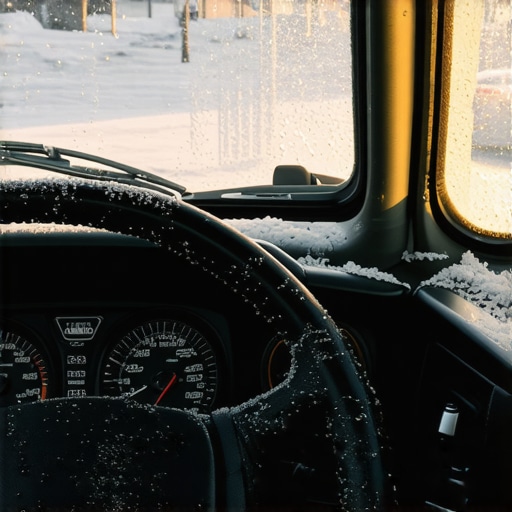
It is 6:15 AM on a freezing Tuesday, and there I am, sitting in my driveway, shivering and hugging my steering wheel like a long-lost friend. My breath is freezing on the inside of the windshield. I turn the climate control knob all the way to the red zone, crank the fan speed, and… nothing. Just a steady, mocking blast of icy air right to my face. I remember thinking, surely my engine has been running long enough to give me a little bit of comfort. That morning, I made the classic mistake of driving away with zero visibility, wiping a tiny circle on the frost with my sleeve. It was dangerous, stupid, and completely avoidable.
The Shivering Truth About Your Cold Morning Commute
For years, I believed that if my engine was running, heat should magically appear. It wasn’t until I dive-headfirst into doing my own diy auto repair projects that I realized how your car actually generates warmth. Your heater is not like a household hair dryer; there is no electric heating coil warming up instantly. Instead, it relies on your engine’s cooling system. When your engine burns fuel, it gets incredibly hot. The coolant absorbs this heat and pumps it through a mini-radiator behind your dashboard called a heater core. If your cabin is blowing cold air, it means that hot coolant is not reaching that core, or the air is not being blown across it properly. Today, we are going to get to the bottom of exactly why this happens so you can stop freezing every single morning.
Is my heater actually broken or is this just how modern cars behave?
You might be wondering if your car is just cheap or if there is an actual mechanical failure under the hood. The short answer is: a slow heater is almost always a sign of a cooling system that needs attention. Early in my DIY journey, I wasted weeks suspecting my blower motor was dying, only to realize I had a low coolant level from a tiny leak. According to the automotive experts at the Car Care Council, cooling system neglect is actually one of the leading causes of roadside breakdowns. If you ignore a slow-warming heater, you might actually be ignoring a slow coolant leak that could eventually overheat your engine.
Understanding this system is a crucial part of routine car service checks that keep your vehicle alive. Sometimes, the fix is as simple as topping off your fluid or replacing a cheap valve. Other times, you might be dealing with a stuck-open thermostat which prevents your engine from ever reaching its proper operating temperature. Have you ever sat in your car for ten minutes waiting for the defroster to work, wondering if your vehicle is secretly giving up on you? Let me know in the comments below, because we have all been there. Let us look at the common culprits behind this morning freeze and how we can get your cabin feeling cozy again.
Locating the Root of Your Ice-Cold Cabin Vents
To diagnose why your heater is behaving like a freezer, you have to play detective under the hood. I remember a freezing Saturday morning when I decided to tackle my own shivering hatchback. My face was numb, and my knuckles were scraped, but I learned that the cooling system is actually quite simple once you trace the flow. If your engine is warm but the cabin air is freezing, your coolant cannot complete its journey to the heater core. Start by checking your fluid level in the coolant reservoir. If the fluid level is healthy, your next stop is the thermostat. This small metal valve acts as a gatekeeper. If it stays stuck open, your engine never reaches the temperature required to generate hot air, meaning you need to perform the simple test to see if your thermostat is stuck open before buying expensive replacement parts.
Feel the Heater Core Hoses with Your Hands
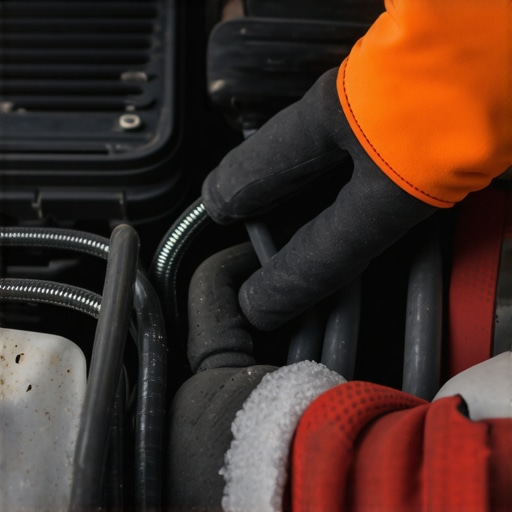
Once your engine has reached its normal operating temperature, carefully open the hood and locate the two rubber hoses running through the firewall into your cabin. These hoses feed your heater core. Carefully touch both hoses. If one is boiling hot and the other is cold, you have a physical blockage inside the heater core itself. On my old sedan, I found this out the hard way after neglecting my coolant changes. The tiny passages inside the core had clogged with rust and debris. To fix this, you can perform a DIY heater core flush using a garden hose to push the debris out backward. However, if both hoses are freezing cold, hot coolant is not even entering the system, which points back to a failing water pump, a massive air pocket, or an extremely low fluid level.
Identify if the Problem is Electrical or Mechanical
If both heater core hoses feel hot to the touch but you still get nothing but freezing air from your dashboard vents, your cooling system is actually doing its job. The breakdown is happening behind your dashboard. Modern cars use small electric motors called blend door actuators to redirect airflow. When you turn your temperature dial from blue to red, this tiny motor rotates a plastic flap to let air blow across the hot heater core. When these gears strip, you will often hear a faint clicking or tapping noise behind your glovebox. I once spent three hours squeezing under my dashboard with a flashlight only to find a plastic blend door gear snapped in half. This is also a good time to ensure you do not have a clogged cabin air filter, which can choke off airflow entirely, a simple issue often caught during routine car service checks.
Bleed the Air Pockets Out of Your Cooling System
Sometimes, the culprit behind the hidden reason your car heater only blows cold air is simply a trapped pocket of air. Air likes to travel to the highest point in your cooling system, which is often the heater core. When an air bubble gets trapped there, it acts like a physical wall, blocking the hot coolant from entering. To bleed the system, park your car on an incline with the front nose pointing upward, remove the radiator cap when the engine is completely cold, and let the engine run with your heater on high. Watch for bubbles escaping the radiator neck and top off the coolant as the air escapes. It is a messy, bubbling process, but it is one of the most satisfying quick fixes in DIY auto repair.
When diagnosing a cold cabin, most backyard mechanics immediately assume the thermostat is the only mechanical gatekeeper in play. However, in my years of handling diy auto repair projects, I have learned that focusing solely on the thermostat is a massive trap. Everyone says to swap the thermostat first because it is cheap, but in my experience, diagnosing the system holistically saves far more time and money. The real nuance often lies within the chemical state of your coolant and the subtle pressure differentials inside your heater core. When coolant degrades, its pH balance shifts, leading to microscopic scaling that insulates the heater core walls. The core might not be fully clogged, but it becomes thermally inefficient, leaving you shivering even when your temperature gauge reads perfectly normal.
Why does my heater blow hot only when I press the gas pedal?
If you experience warm air while driving but freezing air while idling at a red light, you are likely dealing with a classic low-flow scenario. Many car owners mistake this for a failing dashboard control switch. However, the Society of Automotive Engineers (SAE) has documented that low coolant velocity at idle is almost always caused by an eroded water pump impeller or a persistent pocket of air trapped in the heater core. When you raise the engine RPMs, the water pump spins faster, forcing just enough hot coolant past the air pocket or eroded blades to warm the cabin temporarily. Ignoring this symptom is a major risk; a water pump with worn impellers cannot efficiently circulate coolant under heavy loads, which can quickly lead to severe engine overheating during your next long trip.
This subtle flow restriction is one of those critical issues that a standard, rushed inspection will miss. It is why comprehensive car service checks are so vital; they ensure your cooling system pressure holds steady under load. If you suspect mechanical damage from a previous front-end collision has restricted your cooling lines, you may need to look into specialized collision renewal strategies to verify that the core and its plumbing are structurally sound. Have you ever fallen into this trap of replacing a good thermostat only to find you still had freezing cold air at idle? Let me know in the comments below, and let us swap diagnostic stories.
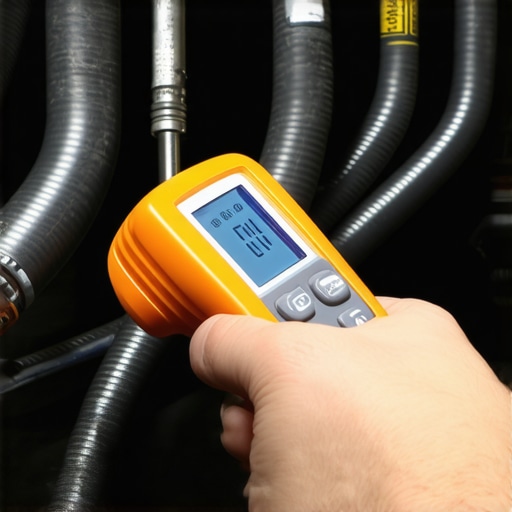
When you are deep into diy auto repair projects, having the right diagnostic equipment makes all the difference between a successful repair and a frustrating weekend. Over the years, I have stopped guessing when it comes to temperature problems. I no longer rely on touching hoses with my bare hands and hoping I can feel a five-degree difference. Instead, I always reach for my trusted dual-laser infrared thermometer. By pointing this tool directly at the heater core inlet and outlet tubes, I can get an instantaneous, digital readout of the thermal drop across the core. This tells me exactly how much heat is being transferred into the cabin without having to take anything apart.
How do I maintain my car heating system over time?
To keep your cabin warm winter after winter, you must treat your cooling system as a living, chemical environment. Coolant does not just keep your engine from melting; it contains crucial rust inhibitors that coat the delicate aluminum passages of your heater core. I recommend checking your coolant pH balance with simple chemical test strips at least once a year during your routine car service checks. According to the technical service manuals published by Gates Corporation, maintaining a clean system with the correct coolant-to-distilled-water ratio is the single most effective way to prevent premature heater core blockage. If you ignore this chemical balance, scale and corrosion will slowly insulate the inner walls of the core, rendering your heater useless even if your thermostat works perfectly.
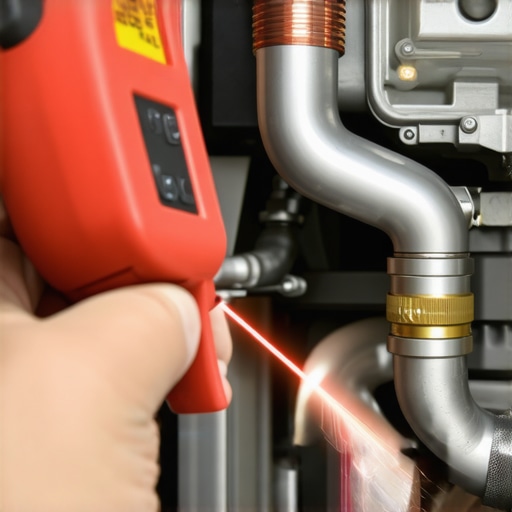
Looking ahead, the shift toward electric and hybrid vehicles is completely changing how automotive climate control systems operate. Because modern EVs do not produce massive amounts of waste engine heat, they rely on advanced high-voltage PTC cabin heaters and complex heat pump loops. However, whether you are driving a classic gas-powered sedan or a modern hybrid, proper fluid management and electrical health remain absolutely vital. If you are experiencing weak airflow or lukewarm temperatures right now, do not wait for the next freezing morning. Grab a simple infrared thermometer, measure the temperature difference across your heater core hoses, and see if a simple DIY flush can restore your heat today.
When you are freezing in your own driver\’s seat, the temptation to blindly throw parts at your car is incredibly high. However, taking a step back to systematically diagnose the issue is what separates a frustrated garage hobbyist from a successful backyard mechanic. Understanding how these thermal and mechanical systems interact is the secret key to regaining control over your cabin comfort.
The Critical Heating Mistakes That Cost Me Thousands
In my early years of diving into diy auto repair projects, I made some incredibly costly assumptions. Here are the core realizations that completely changed how I approach climate control diagnostics:
- The thermostat is not a cure-all: Swapping a cheap thermostat feels satisfying, but it does absolutely nothing if your core is scaled internally or your system has a persistent air pocket.
- Coolant chemistry directly affects air temperature: Dirty, acidic fluid actively degrades the internal walls of your heater core. I learned the hard way that neglecting fresh fluid leads to microscopic scaling that blocks heat transfer entirely.
- Do not ignore a low coolant level: If your fluid is low enough to stop hot water from reaching your dashboard, you likely have an active leak. Driving this way risks severe engine overheating, which can quickly ruin your head gasket.
My Ultimate Diagnostic Arsenal for Cold Weather Troubles
If you want to stop guessing and start fixing, you need to rely on the right equipment. You do not need thousands of dollars in professional shop gear, but these three items are absolutely non-negotiable for my winter diagnostics:
- A Dual-Laser Infrared Thermometer: This is my absolute favorite diagnostic shortcut. By measuring the temperature differential between the inlet and outlet hoses of your heater core, you can verify a physical blockage in seconds without spilling a single drop of coolant.
- A Spill-Proof Radiator Funnel Kit: When you need to bleed air pockets from your cooling system, this tool is a lifesaver. It attaches securely to your radiator neck, allowing the coolant to expand and bubbles to escape safely without making a massive mess on your driveway.
- Simple Chemical pH Test Strips: Testing the acidity of your coolant during routine car service checks helps you catch degraded rust inhibitors before they can clog your delicate heater core passages.
Take Control of Your Winter Drive Today
There is absolutely no reason to spend another freezing morning shivering behind the wheel. Armed with a basic understanding of your cooling loop, a simple thermometer, and a bit of patience, you can isolate the root cause of your cold cabin and tackle the repair with absolute confidence. If you suspect your heating issues might stem from physical front-end damage rather than simple wear and tear, you can also explore specialized collision renewal strategies to make sure your vehicle\’s cooling lines are structurally sound. Grab your tools, pop the hood, and bring the warmth back to your daily commute.
Have you ever spent hours chasing down a cold cabin issue only to find it was a simple air bubble or a cheap broken blend door gear? Let me know in the comments below, and let\’s swap diagnostic stories!