
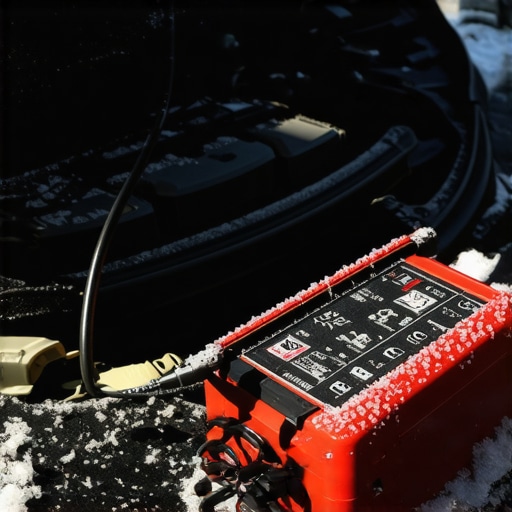
Imagine this: It is 6:00 AM on a Tuesday in mid-January. The wind is howling, and the thermometer on your porch reads a brutal five degrees. You bundle up, rush to your car, slide into the cold seat, and turn the key. Nothing. Just a weak, pathetic click that makes your stomach sink. We have all been there, and let me tell you, it is a miserable way to start any day. I remember a few winters back when I ignored the early warning signs of a failing electrical system. I ended up stranded in a grocery store parking lot, waiting two hours for a jump-start in a blizzard because I thought winter battery death was just an unavoidable tax we pay to the cold-weather gods. It is not. After years of working on my own vehicles and learning the hard way, I realized that keeping your battery from dying during the winter is actually pretty simple if you know what to look for and how to prepare. Today, we are going to dive into the exact steps you can take to make sure your car fires up instantly, no matter how low the temperature drops.
How the Cold Slowly Murders Your Car Battery
When the temperature plunges, the chemical reaction inside your lead-acid battery slows down drastically. In fact, at freezing temperatures, your battery loses about 35% of its strength, and once it hits zero degrees, it loses up to 60% of its cranking power. At the exact same moment, your engine oil thickens up, meaning your starter motor has to work twice as hard to turn the engine over. It is a perfect storm of high demand and low supply. If your electrical system is already struggling with a hidden issue, the winter cold will find that weakness and expose it instantly. This is why staying on top of your essential car service checks is so critical before the first frost arrives. If you do not test the charging system early, you are essentially playing Russian roulette with your morning commute.
Is Keeping a Battery Alive Really That Hard?
Many folks believe that once the cold weather hits, your battery’s fate is completely out of your hands. They assume that if a battery is two or three years old, it is destined to die when the snow starts falling. But that simply is not true. With a few proactive habits, like keeping the terminals clean and understanding how to spot a parasitic battery drain, you can easily extend the life of your battery through multiple harsh winters. It does not require expensive tools or professional mechanical skills; it just takes a little bit of consistent attention before the freezing temperatures lock in for the season. Have you ever found yourself stranded in the freezing cold because your car refused to start? Let me know in the comments below, because I would love to hear your winter survival stories! According to the Car Care Council, failing batteries are one of the leading causes of roadside assistance calls during the winter months, proving that most of us are completely unprepared for what the cold does to our electrical systems. Now, let’s look at how we can get ahead of the freeze.
Step-by-Step Battery Shielding Before the Deep Freeze Hits
You do not need a mechanics degree to prep your vehicle for a sub-zero morning. The real battle is won by eliminating resistance in your electrical connections. Think of corrosion on your battery terminals like a kinked garden hose; it stops the alternator’s electrical current from flowing freely, leaving your battery partially starved. A few years ago, I had a stubborn old truck that barely grunted when the temperature hit single digits. I assumed the battery was shot, but upon closer inspection, a thick crust of white, powdery lead sulfate was choking the positive terminal. After twenty minutes of proper cleaning, that old engine cranked over instantly. It was a messy, knuckle-scraping lesson that taught me to never underestimate the power of clean metal-on-metal contact.
To clean your terminals properly, disconnect the negative cable first, then the positive. Mix a simple solution of baking soda and warm water, apply it to the terminals, and scrub vigorously with a wire brush. Once the bubbling stops, wipe everything dry with a clean rag. Before you reinstall the cables, apply a thin layer of dielectric grease or petroleum jelly to the terminals. This simple barrier blocks moisture and road salt from accelerating oxidation when the winter slush starts flying.

How to Hunt Down Hidden Power Drains
Sometimes your battery dies overnight because something is actively stealing power while your ignition is turned off. If you suspect your charging system is losing power, you can locate the culprit by learning the trick to finding a parasitic battery drain before your commute gets ruined. A tiny glove box light that stays on, or a malfunctioning aftermarket stereo, can easily pull enough current to flatten a cold battery in twelve hours. By using a digital multimeter connected in series with your negative battery terminal, you can pull fuses one by one until the amp draw drops below 50 milliamps, instantly revealing the circuit causing the trouble.
Why You Must Test Your Alternator Output Under Load
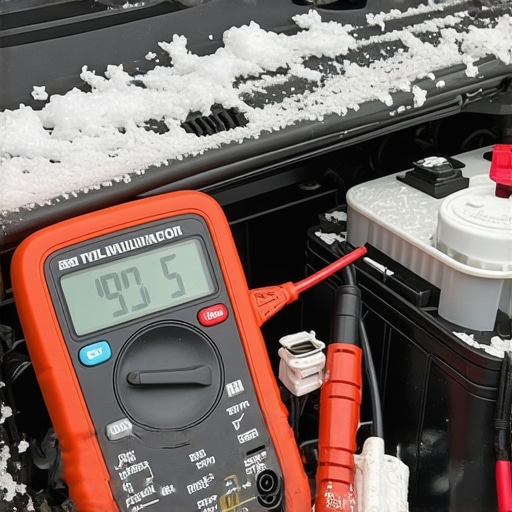
A battery is only as good as the alternator charging it. If your alternator is weak, your battery will never reach full capacity, leaving it highly vulnerable to freezing. To test this yourself, start your engine and set your multimeter to DC voltage. Touch the probes to your battery terminals. You should see a reading between 13.8 and 14.4 volts. Next, turn on every high-draw accessory: the headlights, the windshield wipers, the rear defroster, and the heater fan on high speed. If your voltage drops below 13.5 volts under this load, your alternator is struggling to keep up. Just like keeping up with regular auto repair, catching a failing alternator early prevents you from getting stranded with a dead electrical system in a freezing parking lot.
The Role of Other Underhood Fluids in Starter Stress
Your battery does not work in a vacuum. If your engine oil is too thick, the starter motor requires massive amounts of amperage to spin the cold crank. This is why using the correct winter-weight oil specified in your owner’s manual is just as important as keeping your battery charged. Furthermore, if you notice other electrical anomalies, like your headlights dimming when you use power windows, it might be time to look at your broader vehicle maintenance. While addressing your electrical health, do not ignore other warning signs of wear; make sure to learn how to check your brake pads and maintain your stopping power, because cold weather places extra stress on every mechanical system simultaneously.
We have all heard the standard advice: when the winter chill sets in, just buy a new battery or keep a set of jumper cables in the trunk and hope for the best. But after years of diagnosing stubborn electrical issues, I have realized that much of the conventional wisdom surrounding cold-weather vehicle maintenance is flat-out wrong. People often assume that if a car struggles to start, the battery is the sole culprit, completely ignoring the complex ecosystem of the modern charging system. If you want to avoid getting stranded this winter, we need to look beyond the basic auto parts store advice and explore the real mechanics of cold-weather failures.
Why Do Brand New Batteries Fail in the Dead of Winter?
It is incredibly frustrating to install a brand-new battery in November only to have your car refuse to turn over in January. Most drivers immediately blame a defective unit, but the reality is usually far more complex. A common, hidden culprit is an overactive alternator that slowly cooks your battery from the inside out before the cold weather even arrives. When you do not know how to tell if your alternator is overcharging your battery, the constant excess voltage boils away the internal liquid electrolyte during the hot summer months. By the time the temperature drops to zero, the damaged internal plates simply cannot handle the physical strain of a cold start. This is why testing your charging system’s voltage regulation is just as critical as testing the battery itself.
Another massive misconception is that idling your car for five minutes in the driveway charges the battery. In truth, modern idling vehicles with the heater blasting, heated seats activated, and headlights on actually run at an electrical deficit. The alternator cannot produce enough amperage at idle to offset that massive draw, meaning you are actually draining the battery further. A study by the Battery Council International confirms that short winter trips under fifteen minutes are one of the leading causes of premature battery sulfation, as the alternator never has enough time to bring the battery back to a full state of charge.
The Common Anti-Freeze Trick That Can Ruin Your Vehicle
In their desperation to keep vehicles moving, some DIYers resort to dangerous shortcuts. One of the worst traps is spraying heavy-duty starting fluids or unapproved de-icing chemicals near sensitive electrical connections. While it might seem like a quick fix to get a sluggish engine fired up, these highly flammable solvents can degrade the plastic wiring harnesses and rubber seals over time. This leads to moisture intrusion, causing a nightmare of intermittent short circuits that are incredibly difficult to diagnose. Instead of relying on chemical band-aids, focusing on comprehensive auto repair and proper physical shielding is the only reliable way to guarantee winter starting power.
Have you ever fallen into this trap or spent money on a new battery only to find out the real issue was something else entirely? Let me know in the comments below, because sharing these hard-learned lessons is how we all become more resilient drivers!
My Personal Toolkit for Foolproof Winter Electrical Maintenance
Over the years, I have wasted too much money on cheap plastic battery testers that provide vague, inaccurate readings. If you want to take control of your vehicle’s winter readiness, you need professional-grade diagnostic equipment. Personally, I rely on a digital battery analyzer that measures Cold Cranking Amps (CCA) and internal resistance. This tool does not just tell you if a battery is currently charged; it tells you how much physical life is left in the plates. Additionally, I highly recommend keeping a smart, multi-stage battery maintainer in your garage. Unlike old-school trickle chargers that can overcharge and cook your electrical system, a smart charger monitors the battery’s state of charge and applies a desulfation cycle when needed, which can easily double the lifespan of your unit.
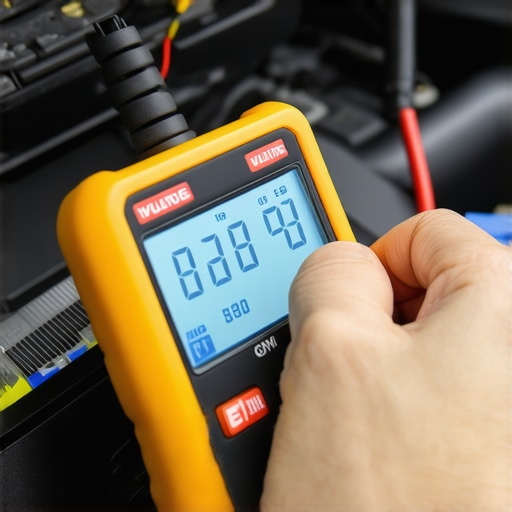
Investing in quality diagnostics is just as important as knowing when to seek professional help. When you establish a relationship with a trusted shop for your regular auto repair, they can perform a comprehensive carbon-pile load test that simulates actual starting conditions far better than any handheld DIY tool. I also keep a premium digital multimeter on hand, specifically looking for models that feature a ‘Min/Max’ recording function. This allows me to capture the exact voltage drop during a cold engine crank without needing a second person to watch the screen.
How Do I Maintain My Electrical System Over Time?
Consistency is the secret to avoiding unexpected morning breakdowns. Every autumn, before the first freeze, I perform a systematic inspection of my entire vehicle. I start by cleaning the battery casing with an anti-static spray to prevent microscopic current paths from draining power. Then, I inspect the serpentine belt that drives the alternator; a slipping or cracked belt will drastically reduce charging efficiency. According to the electrical engineering experts at Delphi Technologies, even a 5% drop in belt tension can reduce your alternator’s output by up to 20%, which is more than enough to leave your battery undercharged in sub-zero temperatures.
As vehicles become more reliant on advanced computers, the way we manage electrical maintenance is changing. In the near future, I predict we will see smart batteries equipped with built-in Bluetooth transmitters that send real-time health data directly to your smartphone, warning you of a pending failure weeks before your starter motor struggles. Until then, staying on top of your scheduled essential car service checks remains your best line of defense. Remember, your electrical health also impacts other critical vehicle operations. For instance, low system voltage can cause electronic control units to misbehave, affecting everything from your safety sensors to your transmission performance. If you ever notice sluggish shifting alongside dimming lights, you might need to seek specialized top transmission repair tips for long-term vehicle reliability to ensure a minor electrical drop hasn’t triggered a larger mechanical issue.
My challenge to you this weekend is to go out to your garage, grab a simple digital multimeter, and test your alternator’s voltage under a full accessory load using the steps we discussed. It takes less than five minutes and could save you from being stranded in a freezing blizzard.
What Experts Won’t Tell You About Cold Weather Electrical Failures
After years of dealing with winter breakdowns, I have realized that the standard advice to simply buy a new battery or hook up a trickle charger misses the real mechanical reality. One major pitfall that caught me off guard early on is that cold weather exposes structural vulnerabilities you cannot see from the outside. For instance, if you do not understand the real reason your car battery keeps dying every few days, you might spend hundreds of dollars replacing a perfectly healthy unit when a tiny wiring issue or glovebox light is actually dragging it down. Furthermore, drivers often ignore how the freezing air affects physical plastics and glass; the stress of a rough winter idle can send vibrations through your vehicle, making it critical to know the danger of driving with a cracked windshield during the winter as the sudden temperature fluctuations from your heater put immense stress on weakened safety glass.
My Essential Toolkit for Winterizing Your Charging System
To avoid getting stuck in a freezing driveway, you need reliable diagnostics rather than guesswork. Here are the exact tools I trust to keep my fleet running smoothly through the coldest months:
- Digital Battery Analyzer (with Internal Resistance Testing): Unlike cheap load testers, a true resistance tester measures the physical state of the lead plates.
- Premium Digital Multimeter: Ideal for tracking down a parasitic drain and measuring alternator output voltage under load.
- Smart Multi-Stage Battery Maintainer: This monitors your system voltage and prevents sulfation without overcharging.
- Silicone-Based Dielectric Grease: Applying this to clean terminals is your best line of defense to keep road salt and moisture from corroding your electrical connections.
If you perform these checks and find that your charging system is strong but you still hear strange noises upon starting, you may want to learn why your engine makes a grinding noise only when you start it, as cold weather can also cause issues with your starter motor gear engagement.
Take Control of Your Winter Prep Today
Do not wait for the first sub-zero morning to find out if your vehicle is going to start. By taking thirty minutes this weekend to clean your terminals, check your alternator output, and inspect your serpentine belt, you can confidently face any winter storm. Proactive auto repair and maintenance are what separate the drivers who get stranded from those who drive away safely. Have you ever been stranded by a dead battery in a winter storm, or did a hidden power drain catch you by surprise? Let me know in the comments below!