
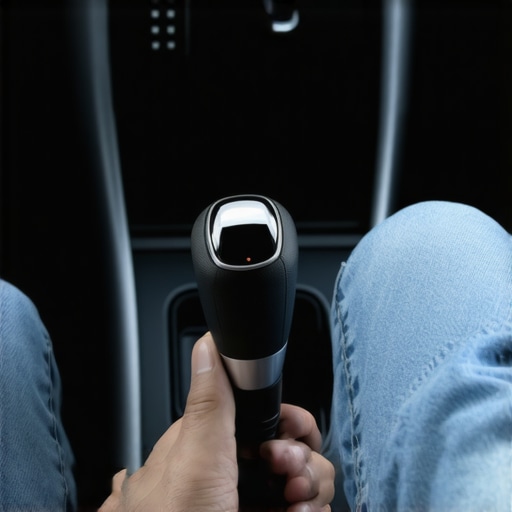
You are dressed, caffeinated, and ready to conquer the morning commute. You climb into the driver’s seat, twist the key, and press your foot firmly down on the brake pedal. But when you reach for the gear shifter to slip it into Drive, it refuses to budge. It feels completely locked, like it is welded solid in place. You press the pedal harder, wiggle the shifter, and pull with all your might. Nothing. It is a deeply frustrating moment that turns a smooth morning into an immediate headache. Years ago, I made the boneheaded mistake of trying to force my stubborn gear selector with brute force. I ended up snapping a plastic trim piece that cost me a couple of hundred bucks to replace, all because I did not understand how the shift interlock system worked. If your vehicle is currently holding you hostage, do not panic and do not yank on that shifter. Today, we are going to walk through exactly why this happens and how to quickly get back on the road without breaking your interior trim pieces.
The Invisible Lifesaver Keeping You Locked in Place
To solve this puzzle, we have to look at a small but vital safety feature called the shift interlock solenoid. Since the early 1990s, auto manufacturers have installed this mechanism to prevent vehicles from accidentally rolling away or shifting out of Park unless the driver has their foot pressed firmly down on the brake. According to the National Highway Traffic Safety Administration (NHTSA), safety shift interlocks have drastically reduced unintended vehicle movement incidents since becoming standard industry practice. When you press the brake, an electrical signal travels from your pedal switch to release a physical pin in your steering column or center console. If that signal chain breaks, you are stuck in park. The culprit is rarely a broken transmission; instead, it is usually a simple breakdown in the electrical conversation between your feet and your console. Look closely at your dashboard and your surroundings. If you notice your brake lights stay on even when you aren’t touching the pedal, or if they do not light up at all when you press it, your brake light switch is likely dead. This tiny switch, located right above your pedal arm, is the gatekeeper that tells your car’s computer that you are trying to stop—and that it is safe to release the shifter.
Is this going to require an expensive transmission rebuild?
Many drivers immediately fear the worst when their shifter refuses to move. They start visualizing thousands of dollars in mechanical bills and complex gear tear-downs. Fortunately, this issue is almost always electrical or structural to the shifter assembly itself, not a catastrophic internal failure. You do not need to worry about transmission repair tips for long-term reliability just because a tiny plastic switch or a blown fuse went bad under your dashboard. By learning how to locate and use your car’s physical shift lock override, you can manually bypass the system in seconds and safely drive your vehicle to a local shop. Have you ever been stranded in your driveway by a shifter that refused to move? Tell me about your experience in the comments below!
How to Locate and Activate the Manual Shift Lock Override
First-time drivers often panic when they cannot move the gear shifter, but car designers built a secret escape hatch specifically for this situation. Think of the shift lock override as the physical key that bypasses the electronic lock holding your transmission hostage. I remember a freezing Tuesday morning when my old sedan refused to shift. I was late for an appointment, blocking my roommate’s car, and scrambling. Instead of calling an expensive tow truck, I grabbed a flathead screwdriver, popped open a tiny plastic cover next to the shifter, and pressed the bypass lever. Within ten seconds, I was driving. To do this yourself, look closely at your console. You are searching for a small, plastic cap—often about the size of a fingernail—positioned right next to the gear selector. If your car has a steering column shifter, this access slot might be underneath the column. Carefully pry the plastic cap off using a small flathead screwdriver or even a key wrapped in a thin cloth to avoid scratching your interior trim. Once open, gently insert your tool or key straight down into the slot. You will feel a spring-like resistance as you press the mechanical lever inside. Hold that lever down with one hand, press your foot firmly on the brake, and pull the gear selector into Neutral. Start the engine in Neutral, and you can safely drive to get an essential car service check to extend your vehicle’s life.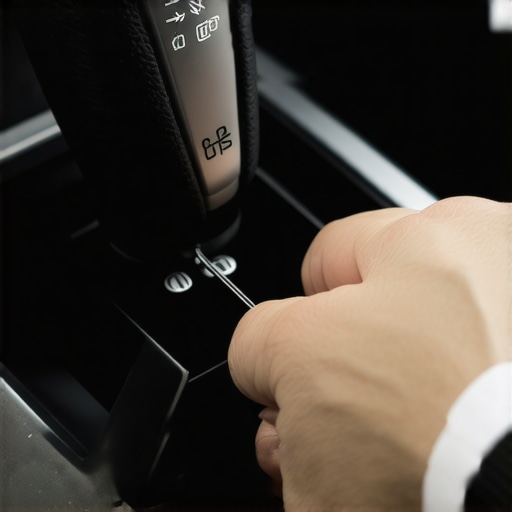
Why Your Shifter is Stubborn and How to Trace the Fault
If the manual bypass got you moving, you still need to address the root cause of the failure so you do not have to poke your dashboard every time you run an errand. The system is actually quite simple, relying on a constant cycle of electrical signals. Think of it as a three-way conversation between your brake pedal, your ignition cylinder, and your shifter console. When you turn the key, power flows through a dedicated fuse to the brake switch. When you press the pedal, that switch closes and sends power to the shift lock solenoid, which pulls back the locking pin. The most common point of failure is a blown fuse. Check your owner’s manual for the interior fuse panel diagram and look for labels like ‘STP LAMP’, ‘ECU-B’, or ‘SHIFT’. Replacing a burnt fuse costs pennies and immediately restores full function. If the fuses are intact, your next stop is the brake light switch under the dashboard. When this switch wears out, it fails to send the necessary signal down the line. If you are experiencing other weird electrical issues alongside your stiff shifter, such as warning lights on the dash, it is smart to run a diagnostic to see the real reason your check engine light is on but the car runs fine, as these systems are often linked to the same primary electrical modules.
The Deeper Nuances of a Locked Shifter Most DIYers Overlook
Many car owners and novice mechanics immediately assume that a locked shifter requires an expensive transmission overhaul. In my years of working on vehicles, I have seen drivers waste hundreds of dollars on towed vehicles or unnecessary system flushes when the actual culprit was a simple electronic signal breakdown. The biggest myth in the ultimate guide to auto repair is that mechanical problems require mechanical solutions. When it comes to the shift interlock, it is almost entirely an electrical handshake. However, there is a dangerous trap here. Many well-meaning drivers attempt to resolve a sticky shifter by pouring generic stop-leak additives into their transmission fluid. This is a massive mistake. As experts from the Car Care Council point out, introducing seal-swelling chemicals to solve an electronic solenoid blockage can actually degrade your internal clutch plates and destroy modern sensor housings. Bypassing the system with a manual override is a great temporary fix, but relying on it indefinitely is a recipe for disaster.
Can a dying car battery lock your transmission in place?
Yes, and this is where most people get tripped up. Because the shift lock solenoid relies on a solid 12-volt signal to pull the physical locking pin back, a weak or dying battery might have enough juice to turn on your dashboard lights but not enough amperage to actuate the solenoid. This creates a confusing scenario where your car seems to have electrical power, yet the shifter remains completely frozen. It is also why we recommend skipping shortcuts like cheap fixes. For instance, rather than trying to force the shifter, you should investigate if your battery is holding a proper charge. If you find yourself needing more than just a quick jump, make sure you are investing in essential car service checks to extend your vehicle’s life rather than ignoring the underlying electrical strain. Have you ever fallen into this trap of thinking your transmission was failing when it was just a weak battery? Let me know in the comments below!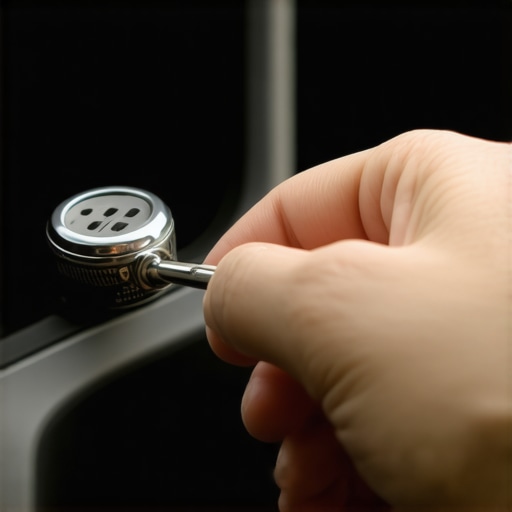
The Ripple Effect of ignoring Shift Lock Warnings
Ignoring a failing shift interlock system is more than just an inconvenience; it can be a serious safety hazard. If your brake light switch is failing intermittently, you might eventually get the car into gear, but your brake lights might not illuminate while you are driving down the highway. This increases your risk of a rear-end collision, which would then require complex collision renewal strategies to restore your car to perfection. Furthermore, trying to force a stubborn shifter without using the override button can bend the internal shift linkage. Once that linkage is bent, your transmission may no longer align correctly with the park, reverse, or drive gates, leading to erratic shifting behavior and expensive mechanical repairs. Treat the shift lock system with respect, diagnose the electrical fault early, and use the built-in mechanical override to keep yourself moving safely.
My Personal Toolkit for Electrical Diagnostic Success
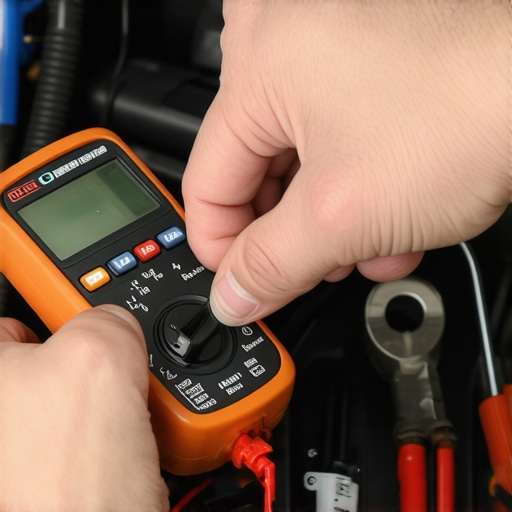
When I am staring down a stubborn gear selector that will not budge, I do not just start guessing and swapping out expensive parts. Over the years, I have built a small, highly specialized diagnostic kit that saves me hours of frustration. The absolute centerpiece of my troubleshooting routine is the Fluke 87V Digital Multimeter. I prefer this specific industrial-grade meter because of its unmatched accuracy when reading minute voltage drops across tiny switches, like the brake light plunger. Cheap hardware-store meters often fluctuate too much, but the Fluke lets me confidently verify if 12 volts are actually reaching the shift lock solenoid. Along with the multimeter, I always keep a dedicated Power Probe IV in my toolbox. This tool allows me to safely apply dynamic 12-volt power directly to the solenoid connector, instantly telling me if the actuator itself is physically dead or if the problem lies further up the wiring harness.
For those times when the electrical signals are perfectly healthy but the mechanical linkages are binding, I rely on a high-quality scan tool. I use the Autel MaxiSYS MS906 Pro to access the body control module (BCM) and live-stream the exact state of the brake switch PID. This prevents me from having to crawl under the steering column just to see if the computer registers my foot on the pedal. If you are serious about maintaining your vehicle’s complex electrical networks, investing in these professional-grade diagnostic tools will save you from unnecessary trips to the shop. Understanding how these systems talk to each other is the foundation of the ultimate guide to auto repair.
How do I maintain my car’s shift interlock and brake safety systems over time?
To keep this system operating flawlessly for years to come, you need to incorporate a few basic preventative habits into your regular garage routine. First, never ignore sticky or spilled liquids near your center console. Cup holders are unfortunately located right next to shifter gates, and a single spilled soda can seep down into the shift selector assembly, gluing the mechanical lock pin in place. Every six months, I use a quick-drying electronic contact cleaner, like CRC QD Electronic Cleaner, to gently spray around the shifter housing and the brake pedal switch. This dissolves any grease, dust, or sticky residue without damaging sensitive plastics or leaving behind a conductive film that could short out the system.
Additionally, during your routine maintenance, make sure you are checking the health of your primary battery. A weak battery causes subtle voltage sags that confuse modern body control modules, leading to erratic solenoid behavior. Proactively testing your battery health is just as critical as performing essential car service checks to extend your vehicle’s life. If you notice your brake lights staying on or flickering, replace the brake switch immediately before it leaves you stranded. According to technical bulletins from the Automotive Service Association (ASA), over sixty percent of shift-lock failures are directly traced back to worn switch contacts or corroded grounds rather than failed transmissions. Looking ahead, as vehicles shift toward fully electronic drive-by-wire push-button shifters, these physical manual overrides are disappearing entirely. In the future, diagnosing these issues will rely 100% on software handshakes, making a high-quality OBD2 scanner your most important tool. I highly recommend testing your brake switch resistance with a multimeter this weekend to ensure your system is in peak condition.
When you are stranded in your driveway with a shifter that refuses to move, it is easy to assume the worst. However, understanding that this is almost always an electrical communication issue—rather than a mechanical catastrophe—can save you peace of mind and money. By using the built-in manual override and diagnosing the root cause, you can get back on the road safely without damaging your interior trim.
3 Myths About Shift Interlock Failures That Held Me Back
When I first encountered a locked gear selector, I fell victim to several common misconceptions that cost me time and money. Here is the insider wisdom I wish I had known from the start:
- Myth 1: A locked shifter means your transmission is blown. As we have established, the problem is almost always a simple electrical breakdown. You do not need to panic about major mechanical failures when a cheap fuse or brake light switch replacement is all that is required.
- Myth 2: Brute force will eventually make it click. Modern shift interlocks use a hardened metal pin. Yanking on the shifter will only snap your expensive plastic console trim or bend your shift linkage, turning a simple electrical fix into a costly physical repair.
- Myth 3: Stop-leak additives can lubricate a sticky shifter. Never pour aftermarket chemical additives into your transmission fluid to fix an electronic lock. This is a massive mistake, and you should always avoid relying on transmission leak repair fluid as a shortcut.
My Personal Toolkit for Electrical Diagnostic Success
To avoid guessing and throwing parts at the problem, I rely on a few trusted tools that make diagnosing electrical lockouts straightforward. First, I always keep a high-quality digital multimeter handy to test voltage drops across the brake switch plunger. This immediately tells me if the switch is sending the required signal down the line. I also use a specialized scan tool to access live data from the body control module, allowing me to see if the computer registers my foot on the pedal without having to crawl under the steering column.
For cleaning up sticky mechanical linkages under the console, a quick-drying electronic contact cleaner is essential. It safely dissolves spilled sodas or dust without leaving conductive residue behind. Keeping these tools ready is a fundamental habit outlined in the ultimate guide to auto repair, saving you from expensive diagnostic fees at the dealership.
Take Control of Your Shift Interlock Troubleshooting Today
A stubborn gear selector can feel like a major roadblock, but armed with the right knowledge, you can bypass the lock in seconds and diagnose the root cause with confidence. Do not let a tiny plastic switch or a weak battery hold your morning routine hostage. By mastering these diagnostic steps and performing regular essential car service checks to extend your vehicle’s life, you keep your vehicle reliable, safe, and ready to roll whenever you are.
Have you ever struggled with a gear shifter that refused to budge on a busy morning? Let me know in the comments below!