
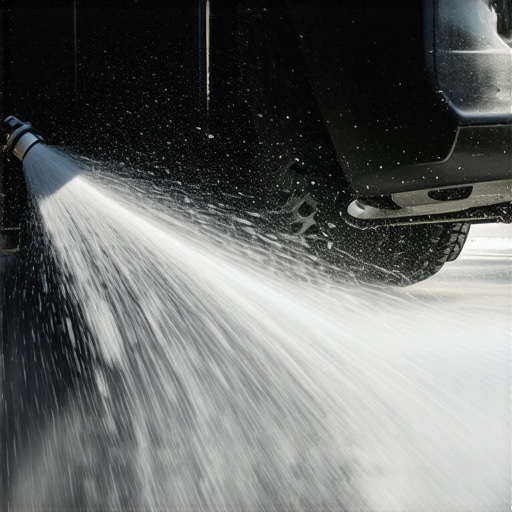
I stood there in my driveway, staring at a piece of my frame that had literally just crumbled onto the asphalt like a burnt cracker. It was a Saturday morning, the sun was out, and I had intended to do a simple oil change. Instead, I found out that my loyal winter habits were actually a death sentence for my truck. Road salt is chemical warfare on your vehicle. It doesn’t just sit on your paint; it migrates. It finds every nook, cranny, and brake line. According to the American Automobile Association (AAA), road salt costs U.S. drivers roughly $3 billion annually in rust-related repairs. That’s a staggering amount of money spent on something that is almost entirely preventable if you know the right technique. Today, I’m going to show you how to get that gunk out for good. We’re going to dive into the exact method I use now to keep my vehicles from turning into piles of iron oxide.
Stop Letting the Winter Brine Rot Your Frame
My biggest mistake early on? I trusted those automatic car wash undercarriage sprays. You know the ones—the little jets that spray for about four seconds as you drive over them. They’re basically just misting the salt, which can actually activate the corrosive process without fully washing the salt away. When you look at essential car service checks to extend your vehicles life, cleaning the belly of the beast is usually at the top of the list for a reason. You need to be thorough, or you’re just wasting your time. [image_placeholder]
Is an expensive pressure washer actually worth the hype?
People ask me this all the time. You don’t need a $500 setup, but you do need more than a garden hose with a thumb over the end. Dealing with the best way to clean salt off your cars undercarriage requires sustained, targeted pressure. If you’ve ever dealt with why your car makes a crunching noise when you go over speed bumps, you know that suspension components are the first to feel the grit. Salt gets into the bushings and eats the rubber from the inside out. It’s nasty stuff.
If you’re worried about your car’s longevity, ignoring the undercarriage is like brushing your teeth but never flossing. Eventually, the rot catches up. Have you ever looked under your car after a snowstorm and seen that thick, white crust? Drop a comment and let me know if you’ve actually tried cleaning it yourself or if you just wait for the rain to do the work!
Proper maintenance is part of a larger the ultimate guide to auto repair strategy. It’s about being proactive rather than reactive. Before we get into the step-by-step scrubbing process, let’s talk about why the timing of your cleaning matters more than the tools you use.
Wait for a day when the temperature rises above freezing. If you wash your car when it is 20 degrees out, that water is going to freeze inside your door locks and—more importantly—inside your frame rails. I once washed my truck on a ‘warm’ 25-degree day and spent the next morning using a hair dryer on my door latch because I could not get in. If you run into that, you will be looking up how to fix a window that wont roll up in the middle of winter just to vent the moisture out. You want the salt to flow out, not turn into an ice sculpture.
Get Your Nozzle Angles Right
You cannot just spray from the side and call it a day. Road salt is like a fine dust that finds its way into the smallest gaps. I once spent three hours under my old Jeep with a pressure wand, thinking I was being a hero, only to find three pounds of sand and salt stuck inside the rear crossmember a week later. It felt like I was washing a beach out of my chassis. To avoid this, you need to use a 40-degree nozzle on your pressure washer. Anything narrower is like a laser that can strip paint or damage soft lines; anything wider is just a gentle rain. Focus on the wheel wells first. This is where how to tell if your shocks are actually bad or just dirty becomes a relevant question, as salt buildup often hides leaking seals and worn bushings.
Neutralize the Brine Before it Bites
Water alone is not always enough to break the bond of modern liquid brines. These chemicals are designed to stick to the road, which means they stick even better to your vehicle. I highly recommend using a salt-neutralizing solution. Think of it like using soap on a greasy pan; the water just slides off the oil unless you have a surfactant. Spray the neutralizer on, let it dwell for five minutes, and then blast it off. This step is crucial for your braking system. While you are down there, it is the perfect time to learn how to check your brake pads without taking the wheels off, because salt-corroded calipers are a leading cause of uneven wear. If the pedal feels weird later, you might need a professional brake service to ensure everything is moving freely.
Flush the Hollow Parts You Cannot See
Manufacturers build frames with drain holes, but these holes are usually the first things to get plugged with road grime. Once they are plugged, the inside of your frame becomes a salt-water bathtub. Use a flexible hose attachment to reach into the frame rails. This is where the real rot happens. If you have ever dealt with the hidden suspension issues that a standard wheel alignment wont fix, you know that structural integrity starts from within. While you are focusing on the frame, do not ignore the transmission lines. Following top transmission repair tips for long-term vehicle reliability means keeping those cooling lines free of rust. A single pinhole leak caused by salt corrosion can leave you stranded with a failed gearbox faster than you can say tow truck.
Why High Pressure Can Be Your Worst Enemy
It sounds counterintuitive, but you can actually have too much of a good thing. I have seen drivers blast their undercarriages with industrial-grade 4000 PSI washers, only to force salt and water into the electrical connectors. Modern cars are packed with sensors. If you are not careful, you might end up needing to know the real reason your car battery keeps dying every few days because a shorted sensor is keeping the computer awake all night. Keep the wand at least 12 inches away from anything with a wire. If you find your steering feels weird after a heavy wash, it could be that you blasted the grease right out of a ball joint, leading to why your car makes a grinding sound when you turn the steering wheel. Gentle, thorough passes are better than high-pressure strikes.
But here is where the ‘experts’ at the dealership usually steer you wrong. They love to talk about ‘lifetime’ fluids, especially when it comes to your gearbox. In my experience, there is no such thing as a fluid that lasts forever. If you want to follow top transmission repair tips for long-term vehicle reliability, you need to ignore that ‘sealed for life’ sticker. Research from organizations like the Society of Automotive Engineers (SAE) indicates that heat and friction inevitably break down the chemical additives in transmission fluid, leading to sludge that no filter can fully catch. If you notice your car acting up, you might be wondering how to tell if your transmission is slipping or if its just a sensor. Often, it’s just filthy fluid that should have been swapped 30,000 miles ago.
Why does your brake pedal still feel soft after a professional bleed?
This drives people crazy. You’ve replaced the pads, you’ve bled the lines until the fluid is clear, and the pedal still sinks. Most people assume there is still air in the system, but the hidden nuance is often ‘brake hose expansion.’ Over time, the rubber lines that carry fluid to your calipers get weak. When you step on the pedal, instead of the pressure pushing the pistons, it just makes the hoses swell up like a balloon. This is a classic example of why why your brakes feel spongy even after bleeding the lines. If you are dealing with performance issues, checking the integrity of those soft lines is part of any serious collision renewal strategies.
The Stop-Leak Trap That Ruins Engines
We’ve all been there—a small drip on the driveway and a bottle of ‘miracle fix’ at the auto parts store for ten bucks. Here is the truth: those products are a death sentence for your cooling system and transmission. I once watched a guy dump a bottle of thick stop-leak into his radiator to fix a minor pinhole. It fixed the hole, alright, but it also clogged every single passage in his heater core. This is why relying on transmission leak repair fluid is often a costly mistake. These chemicals don’t know the difference between a leak and a narrow cooling passage. They just harden when they hit air or heat, which is exactly what you don’t want inside your engine. It’s much better to follow the ultimate guide to auto repair and replace the actual failing component. Have you ever fallen into this ‘quick fix’ trap? Let me know in the comments. It’s a painful lesson, but one we’ve almost all learned the hard way at least once.
If you want to move past basic oil changes and actually start scaling your DIY capability, you need to stop guessing. I used to be the guy who cleared a fault code with a twenty-dollar scanner and prayed it didn’t come back. But today’s cars are essentially rolling server rooms. If you notice why your transmission hunts for gears while climbing a hill, it’s usually not a mechanical failure yet; it’s a sensor mismatch that a cheap tool won’t catch. You need a bi-directional scanner. This allows you to command the car’s computer to, for instance, pulse the ABS pump or shift a specific solenoid. This is exactly the real reason your check engine light is on but the car runs fine—the computer sees a tiny deviation in data that you cannot feel yet, but a professional-grade tool will reveal.
How do I maintain my car’s complex systems over time?
The secret is documenting everything and using the right chemicals. I keep a digital log of every bolt I touch. For long-term health, focus on top transmission repair tips for long-term vehicle reliability, which always includes using the exact fluid spec—not just a ‘multi-vehicle’ substitute. According to technical documentation from ZF Friedrichshafen, even ‘lifetime’ transmission fluids undergo significant thermal degradation, and they specifically recommend changes every 50,000 to 75,000 miles for optimal gearbox health. This isn’t just about the engine; collision renewal strategies also apply to the mechanical bits, ensuring the structural and functional integrity of your car remains factory-fresh.
Stop Crushing Your Gaskets with Guesswork
If you don’t own a calibrated torque wrench, you aren’t doing the ultimate guide to auto repair justice; you’re just tightning things until they break. Over-tightening a transmission pan bolt is a fast way to warp the flange and create a permanent leak. Precision is what separates a backyard hack from a master tech. When you’re looking for the best brake service in 2025, look for shops that emphasize ‘torque-to-spec’ for every single lug nut and caliper bolt. This prevents the uneven clamping force that causes vibration. Looking ahead, I predict that within five years, even basic essential car service checks to extend your vehicles life will require a cloud-based subscription to access your car’s service mode. The era of the simple wrench is fading, making these diagnostic skills more valuable than ever. I challenge you to try one advanced move: this weekend, don’t just check your oil; use a multimeter to check your battery’s resting voltage and grounding points. It’s the first step in mastering the electrical ghost in the machine.
What Professionals Won’t Share About Long-Term Frame Protection
The most expensive realization I ever had was that ‘routine’ service doesn’t cover the hidden cancer of rust. I used to think that as long as I changed the oil, the truck would last forever. But the truth is, salt works in the shadows. One lightbulb moment for me was discovering that even the best undercoating can trap salt if applied over a dirty frame. You have to be the one to ensure that metal is pristine before any sealant goes on. Another hard-earned lesson? If you ignore why your brake rotors keep warping every few months, you might be missing a seized slider pin caused by—you guessed it—salt corrosion. It is all connected, from the frame rails to the braking performance. Don’t trust a visual inspection from five feet away; get in there with a flashlight and a pick.
My Essential Kit for Stopping the Rot
I don’t leave my vehicle’s health to chance anymore. My toolkit always includes a high-quality Lanolin-based undercoating spray because it never truly dries, meaning it creeps into the tightest spots where brine loves to hide. For mechanical issues, I rely on a solid set of flare nut wrenches to avoid the simple trick to remove a stripped oil drain plug or a rounded brake line. [image_placeholder] Finally, I always keep a copy of the factory service manual handy. While digital guides are great, having the physical torque specs right there on the workbench prevents the kind of guesswork that leads to snapped bolts and unnecessary stress. I also recommend a dedicated undercarriage water broom; it connects to your pressure washer and rolls under the car, making the cleaning process ten times more effective than a handheld wand.
Your Vehicle Is an Investment Worth Protecting
Taking care of your car isn’t just about avoiding a breakdown; it’s about the pride of ownership and keeping your hard-earned money in your pocket. Whether you’re refining your collision renewal strategies or just doing a Saturday afternoon wash, every minute you spend under that chassis adds years to its life. Don’t let the complexity of modern machines intimidate you—start with the basics and build your confidence one bolt at a time. The era of the disposable car is only real if you let the environment win. If you ever feel stuck or need professional help with a major restoration or frame assessment, you can always contact us for guidance. Have you ever discovered a hidden rust spot that took you by surprise? Let me know in the comments below!