
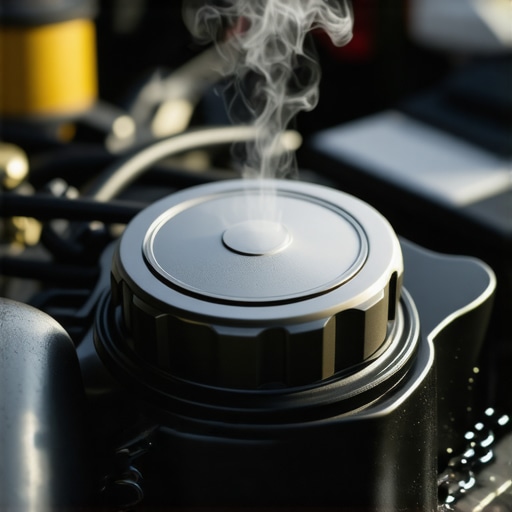
I stood there, groceries in hand, while my sedan let out a high-pitched whine that could’ve summoned every dog in the tri-state area. It wasn’t just a tiny hiss; it was a full-blown whistle that lingered for a good thirty seconds after the key was out of the ignition. I felt like a total amateur. My first instinct? I panicked and assumed the worst—cracked block, blown head gasket, the whole expensive nine yards. Years later, after getting my hands dirty with the ultimate guide to auto repair, I realized that these sounds are usually just your car trying to tell you a very specific story about pressure. We are going to figure out exactly where that noise is coming from so you can stop guessing.
That High-Pitched Scream After You Park
The first time this happened to me, I made a classic rookie mistake: I started throwing parts at the problem without diagnosing the source. I actually replaced a perfectly good water pump because I thought the bearing was ‘singing.’ Total waste of a Saturday. If you’re hearing that whistle now, do not follow in my footsteps. We’re going to narrow down whether it’s a vacuum leak, a cooling system pressure release, or even just a thirsty turbocharger. Keeping up with essential car service checks can prevent these surprises, but when they happen, you need a realistic plan. If you’ve also noticed why your car makes a whistling noise at high speeds, the culprit is almost certainly a vacuum line that has finally given up the ghost.
Is this whistle actually a sign of total engine failure?
It is easy to get paranoid when your car starts acting like a teakettle. You think the whistling is the sound of money leaving your bank account. However, most of the time, it is just air or fluid moving where it should not—or exactly where it is supposed to—under pressure. According to automotive engineering experts at Car and Driver, many post-shutdown noises are simply the result of pressure equalization in the vacuum system or the cooling loops as the engine temperatures shift. It is rarely a ‘death rattle,’ but it is an annoyance that can lead to poor fuel economy or even a check engine light if you let it slide. Have you ever been too embarrassed to park in a quiet neighborhood because of your car’s new ‘singing’ habit? It is more common than you think. Let’s look at why your engine fan runs or whistles, and find the real culprit.
Pinpoint the Leak Before the Pressure Drops
To find the source of that annoying whistle, you have to move fast. Once you shut that engine down, the internal pressure starts bleeding off immediately. I’ve found that the best tool isn’t some expensive electronic sensor, but what I call the ‘Stethoscope of the Poor.’ Grab a three-foot length of old garden hose or even a cardboard wrapping paper tube. Hold one end tightly against your ear and sweep the other end around the engine bay. It acts like a directional microphone, allowing you to isolate exactly where the air is escaping. If you’ve been keeping up with essential car service checks to extend your vehicles life, your engine bay should be clean enough that you won’t get a face full of grease while you’re investigating.
Test the Radiator Cap for Weak Seals
Think of your radiator cap as a high-stakes pressure cooker valve. Its job is to maintain specific pressure to keep your coolant from boiling over. If the rubber seal is cracked or the spring has lost its tension, it will vent air and steam as the engine cools, creating a distinct teakettle whistle. I once spent a whole Saturday tearing apart a dashboard looking for a vacuum leak, only to realize my radiator cap was loose by half a turn. It felt ridiculous. If you’ve noticed what that sweet smell coming from your vents really means, you are likely dealing with this exact cooling system failure. You can also use the simple test to see if your thermostat is stuck open to see if your car is running too hot in the first place, which puts extra stress on that cap.
Chase the Ghostly Vacuum Hiss
If the sound is a sharp ‘suck’ rather than a ‘blow,’ you’re looking at a vacuum leak. This was the bane of my existence back when I drove an old 90s hatchback. The rubber vacuum lines get brittle over time and develop tiny hairline fractures. When the engine is running, the computer compensates for the extra air, but the moment you turn the key off, the vacuum remaining in the intake manifold tries to pull in outside air through those cracks. This doesn’t just make a noise; it’s often the reason why your car dies every time you come to a complete stop. Never try to fix these with ‘leak-stop’ sprays; that’s just as dangerous as why relying on transmission leak repair fluid is often a costly mistake. You need to physically replace the hose.
Listen for the Turbo Cool-Down Routine
On modern turbocharged cars, a whistle after parking might actually be normal—within reason. Turbos operate at insane temperatures. Many vehicles now use an auxiliary electric pump to circulate coolant even after the engine stops to prevent the oil from burning and clogging the lines. If you are wondering why your engine fan runs for 10 minutes after the car is off, it is usually part of this thermal management. However, if the whistle sounds more like metal-on-metal grinding, your turbo’s bearings are likely shot. I remember a friend who ignored a faint whine in his diesel, thinking it was ‘character,’ until he realized the real cause of your car smelling like hot oil was his turbo seals disintegrating and dumping oil into the exhaust.I’ve seen so many DIYers get caught up in the obvious fixes while ignoring the underlying fluid dynamics that actually keep a vehicle alive. For instance, there’s a massive misconception that if your transmission isn’t slipping, you shouldn’t touch the fluid. This if it ain’t broke, don’t fix it mentality is exactly how you end up needing top transmission repair tips when you could have spent a few dollars on a filter. Many manufacturers claim their transmissions are sealed for life, but ask any master tech and they will tell you that life usually ends the moment the factory warranty does. The oops factor here is huge: I’ve watched people try to save a buck by using generic transmission stop-leak products. It’s a total trap. These chemicals often swell seals temporarily but eventually degrade the internal friction materials. In fact, why Autolab Libertyville recommends skipping the cheap transmission leak fluids is a lesson every car owner should learn before they’ve ruined a five-thousand-dollar gearbox.
Does lifetime fluid actually protect your gears for 200,000 miles?
According to independent oil analysis studies by Blackstone Laboratories, transmission fluid undergoes significant thermal breakdown and shearing long before the average lifetime of a modern vehicle is reached. If you’re driving in stop-and-go traffic or towing, that sealed fluid is likely toast by 60,000 miles. Learning the easy way to check your transmission fluid without a dipstick can save you from a catastrophic failure that most people assume is just bad luck.  The same logic applies to your stopping power. Most people think a vibration means they need new rotors, but often, the issue is much subtler. If your brake pedal goes all the way to the floor or you feel a rhythmic thumping, it might not be the pads at all. It could be seized slide pins or air trapped in the ABS module—things a standard pad slap won’t fix. This is why braking news: how to choose the best brake service in 2025 emphasizes a full system inspection over a quick parts swap. Even in the collision world, people assume a minor bump is just cosmetic. But if you don’t know how to tell if your frame is bent after a minor fender-bender, you might be driving a car that will never track straight again, no matter how many alignments you get. Have you ever fallen into this trap—fixing the symptom but missing the disease? Let me know in the comments.
Stop Guessing and Start Commanding Your Car
To really get ahead of these noises, you need to upgrade your toolkit. For years, I relied on a cheap code reader that only told me half the story. Now, I do not go anywhere without a bidirectional OBD2 scanner. Unlike basic readers that just spit out a code, a bidirectional tool lets you talk to the car’s computer. You can tell it to turn on the cooling fan manually to test a relay or cycle the ABS pump to purge air. This level of control is essential if you are following the ultimate guide to auto repair. It turns a guessing game into a surgical strike. If you have ever felt helpless while a dashboard light blinked at you, this is the tool that hands you back the power. I specifically use an Autel unit because it maps out the communication between every module, showing you exactly where the digital ‘conversation’ is breaking down.
How do I maintain my transmission for the next 200,000 miles?
Maintenance is not just about changing oil every few months; it is about understanding the chemistry inside your gearbox. SAE International, the global authority on automotive engineering, specifies in their technical documentation (such as SAE J300) that fluid oxidation and thermal breakdown are the primary killers of modern multi-speed automatics. Once that fluid hits a certain temperature, its ability to protect the internal friction plates drops off a cliff. To keep things running smoothly, you should prioritize top transmission repair tips that focus on keeping the system cool and clean. Do not just settle for essential car service checks; look deeper. I have found that installing an auxiliary transmission cooler is one of the best investments you can make, especially if you drive in heavy traffic. Even small things, like knowing how to stop a squeaky tailgate with the right lubricant, build a habit of detail that ensures you do not miss the bigger issues.
The High-Tech Future of DIY Repairs
The landscape of car repair is shifting toward digital diagnostics and integrated sensors. In the next few years, expect your car to not just whistle when there is a leak, but to send a push notification to your phone identifying the exact part number that is failing. We are entering an era of predictive maintenance where AI will analyze your driving habits to tell you when your brake pads are thinning before you even hear a squeak. However, no matter how smart the car gets, the basics remain. Whether you are investigating hidden suspension issues or following collision renewal strategies, your hands-on intuition is your best asset. If you find yourself over your head with a mystery noise, do not hesitate to contact us for expert advice. My best advice for right now? Buy a high-quality analog vacuum pressure gauge; it is the only way to truly verify if your engine is breathing right without a computer getting in the way.
Three Lies About Engine Pressure That Will Cost You Money
The biggest mistake I ever made wasn’t misdiagnosing a part; it was ignoring a small warning until it became a crisis. If you have been putting off reading the ultimate guide to auto repair, you are essentially gambling with your daily commute. One thing ‘experts’ often fail to mention is that ‘lifetime’ fluids are a marketing myth designed to get you past the warranty period, not to 300,000 miles. To keep your gearbox alive, you must prioritize top transmission repair tips like regular fluid refreshes. I have also seen people mistake a whistle for a vacuum leak when the real culprit was electronic; knowing how to tell if your alternator is overcharging your battery can reveal the source of high-frequency hums that sound surprisingly like air escaping a valve.
My Go-To Toolbox for Silent Engines
I personally swear by a few specific items that turn a Saturday of guessing into a surgical success. First, a bidirectional OBD2 scanner like the Autel MK808—it lets you command the car’s fans and pumps to see if they are the source of your noise. Second, a high-quality analog vacuum gauge; computers lie, but physics doesn’t. If you are hearing strange vibrations along with your whistle, learning how to fix a rattling heat shield without buying a new one can save you sixty bucks and a lot of embarrassment. I also keep a temperature gun handy to check why your brake rotors keep warping every few months, as excessive heat can sometimes cause cooling system pressure to vent through the cap with a whistle.
#IMAGE_PLACEHOLDER_E#
Reclaiming the Driver’s Seat
Don’t let a mystery sound intimidate you. Every whistle, groan, and hiss is just a piece of data waiting for you to interpret it. When you master your vehicle’s baseline behavior, you stop being a victim of the repair shop and start being the captain of your own commute. Whether you are catching up on braking news: how to choose the best brake service in 2025 or hunting down a tiny vacuum leak, the key is consistent observation. Have you ever had a noise that vanished the moment you pulled into the mechanic’s lot? Let me know in the comments below!