
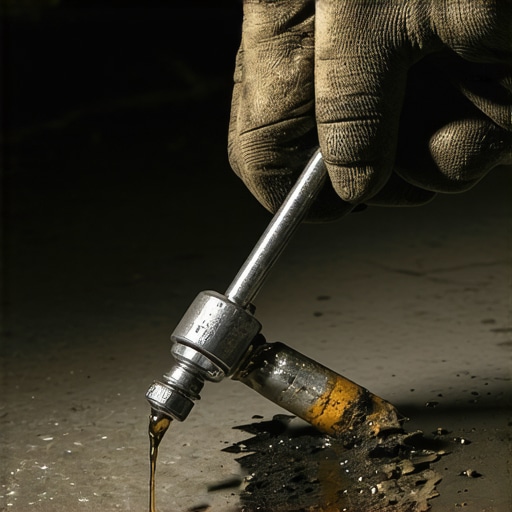
I was lying on a cold concrete floor, a bead of sweat stinging my left eye, and the only thing I could hear was the frantic ‘thump-thump’ of my own heart. I had a wrench in one hand and a rounded-off, stubborn piece of steel staring back at me. This wasn’t supposed to be hard. I was just trying to handle my own essential car service checks to keep the old sedan running. But there I was, facing a stripped oil drain plug that felt more like a smooth pebble than a bolt. It is a moment of pure, unadulterated frustration that makes you want to sell the whole car for scrap.
Why a Seized Plug is the Ultimate Test of Your Patience
Most folks do not realize that a simple oil change is the gateway to long-term reliability. We do it to avoid that terrifying smell of hot oil or a seized engine. But when the previous shop—or maybe you, in a hurry last summer—over-tightens that plug, the metal eventually gives up. My mistake? I used a cheap, 12-point wrench instead of a heavy-duty 6-point socket. I thought I could ‘feel’ it. I was wrong. I ended up rounding the edges so badly that no standard tool would even bite. It is the kind of auto repair hurdle that turns a twenty-minute job into a four-hour ordeal.
Is this trick actually going to save your Saturday?
I know what you are thinking. You have seen the YouTube videos where guys use air hammers or weld nuts onto the pan, and you are worried about cracking the casing or starting a fire. Believe me, I was there too. But the method I am about to share is about finesse and friction, not brute force. It is about using the physics of the metal against itself. If you have ever felt your car shake while idling because you are worried about a mounting bill, this is for you. According to the Car Care Council, neglected small repairs are the leading cause of premature vehicle retirement, and a stripped plug is the king of ‘small’ problems that snowball. Have you ever rounded off a bolt and felt that immediate ‘clench’ in your stomach? Let me know if you have faced this nightmare before. Let’s get into the one tool you actually need to fix this mess. [IMAGE_PLACEHOLDER]
Scrub the Sludge Away First
Before you even think about putting another tool on that rounded bolt, you have to eliminate the very thing you are trying to change: the oil itself. Most people fail here because they try to grip a greasy, slippery surface. Think of it like trying to climb a greased pole; you can have the strongest arms in the world, but you are still going to slide to the bottom. Use a heavy-duty degreaser or even a quick blast of brake cleaner to dry the area completely. This is a fundamental part of essential car service checks that often gets skipped in the heat of a struggle. I learned this lesson the hard way while working on a friend’s old sedan that had been neglected for years. Every time I got a grip, the wrench would slide, taking another millimeter of metal with it. Once the surface was bone-dry, the metal-on-metal friction finally gave me a fighting chance.
Why Friction is Your Only Friend
When you are performing your own essential car service checks to extend your vehicles life, you learn that cleanliness isn’t just about aesthetics—it is about mechanical advantage. A clean bolt allows your tools to seat properly. If you have ever wondered the truth about high mileage oil and leaking seals, you know that oil has a way of migrating everywhere it shouldn’t be. On a stripped plug, that film of oil acts as a barrier between your tool and the success you’re chasing.
Reach for the Spiral Bolt Extractor
Forget the standard sockets and definitely put away the adjustable wrench. You need a specific tool for this: the spiral-cut bolt extractor. These sockets are designed with internal flutes that spiral in a counter-clockwise direction. The harder you turn the wrench to loosen the bolt, the deeper those teeth bite into the rounded metal. It is the same logic used in high-end auto repair shops to save hours of labor. I remember my first time using one; I was skeptical that a piece of steel could ‘bite’ into another, but after a few turns, the tool was so deeply embedded that they were effectively one piece of metal. [IMAGE_PLACEHOLDER_B#]
Tap It Home with Authority
Don’t just slide the extractor on. You need to seat it with a hammer. Three or four sharp, deliberate raps on the back of the socket will force those internal teeth to create their own grooves. This vibration also serves a second purpose: it shocks the threads. Much like how to tell if that subframe clunk is just a loose bolt by checking for movement under load, you are using physical force to break the ‘cold weld’ that has formed between the plug and the pan. This technique is also used when you find top transmission repair tips for long-term vehicle reliability, where seized pan bolts are a common nightmare. If you’ve noticed why your car shakes while idling at a stoplight, you already understand how destructive vibration can be—here, we are just turning that destruction into a productive force to free the plug.
Apply Slow and Steady Pressure
Once the tool is seated, use a long-handled breaker bar. Avoid the temptation to use an impact wrench yet. You want to feel the moment the ‘stiction’ breaks. It usually happens with a sickening ‘crack’ that sounds like something broke, but in reality, that is the sound of victory. It is the sound of the threads finally letting go. If you rush it, you risk shearing the head off entirely, which turns a bad Saturday into a week-long engine-out nightmare. Steady, linear pressure ensures the extractor stays perpendicular to the pan, preventing a slip that could damage the oil pan’s soft aluminum threads.
The Heat Cycle Myth That Ruins Your Oil Pan
Everyone tells you that a seized bolt is just about rust or over-tightening. In my years under the chassis, I have found that the real culprit is often the ‘cold weld’ created by dissimilar metals. Your oil pan is likely aluminum, while the plug is steel. These metals expand and contract at different rates every time you drive. If you do not perform essential car service checks with a torque wrench, you are basically setting a mechanical trap for yourself. Most people think they can just ‘feel’ the right tightness, but that is how you end up with a repair that requires a drill and a prayer.
Here is the contrarian truth: many mechanics will tell you to use a torch to heat the bolt. I disagree. When dealing with an oil pan, you risk thin-wall warping or, worse, igniting residual vapors. Instead, I use a localized freeze spray on the plug itself while the pan is still warm from a short drive. Shrinking the bolt while the pan is expanded is a surgical move that beats a blowtorch every time. It is the same logic we use when figuring out the real cause of a metallic ping when your engine shuts off—it is all about how metal reacts to thermal stress.
#IMAGE_PLACE_HOLDER_C#
Why Does My New Plug Still Leak Even After This Fix?
So, you got the old one out. Victory, right? Not yet. The most common ‘oops’ factor I see is the ‘Double Gasket’ or the ‘Crushed-Flat’ syndrome. If you do not replace the crush washer, or if the old one is stuck to the pan and you put a new one on top, you are going to see a puddle. This leads to that sinking feeling when you think you have the smell of hot oil because of a leak hitting the exhaust. According to a study by SAE International on fastener integrity, a reused crush washer can lose up to 40% of its sealing capability because it has already reached its yield point. It is a five-cent part that can cause a thousand-dollar headache.
This level of detail is what separates a quick fix from a professional-grade transmission or engine service. Whether you are wondering how to choose the best brake service in 2025 or just trying to finish an oil change, the nuances matter. Have you ever fallen into the ‘reused washer’ trap or used too much force and heard that dreaded ‘snap’? Let me know in the comments. We have all been there, and sharing those horror stories is how we all get better at this.
If you are dealing with more than just a bolt—perhaps a fender bender—do not forget that the truth about aftermarket vs oem body panels can be just as complex as choosing the right oil plug. Sometimes the cheap version fits, but often it leaves you with gaps that no amount of ‘finesse’ can fix.
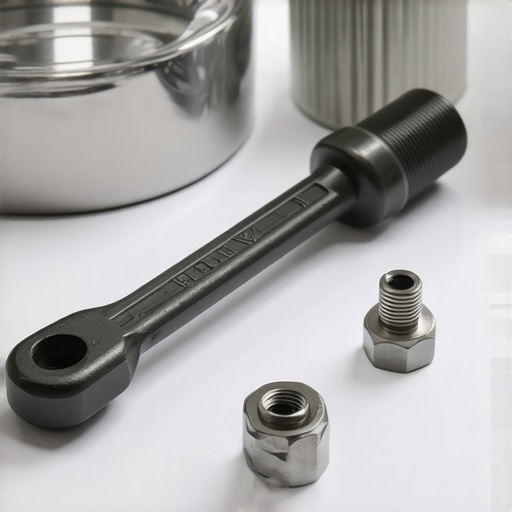
Once you have conquered that stripped plug, the temptation is to just jam the new one in as hard as you can to ‘make sure’ it stays. Resist that urge. This is where the transition from a panicked DIYer to a disciplined garage mechanic happens. If you want to scale your car’s lifespan into the 200,000-mile club, you need to stop relying on ‘calibrated elbows’ and start using a real torque wrench. I personally swear by a split-beam torque wrench because, unlike the click-style ones, you do not have to wind it back down to zero after every use to maintain its accuracy. I’ve seen cheap clickers go out of spec by 15% after just a season of sitting in a cold garage, leading to the exact over-tightening nightmare we just escaped.
The One Tool That Ends the Guesswork Forever
In the world of high-end auto repair, precision is not a luxury; it is a requirement. According to the ISO 6789:2017 technical standard, professional-grade torque tools must maintain a high level of traceability and accuracy. When you apply this standard to your own essential car service checks, you are essentially bulletproofing your vehicle against human error. Most oil pan bolts require a surprisingly low 25 to 30 foot-pounds. Without a tool telling you exactly when to stop, you are just guessing against the yield strength of aluminum. This same level of care is why top transmission repair tips for long-term vehicle reliability always emphasize fastener integrity. A single over-tightened bolt on a transmission pan can lead to a warped flange and a permanent leak that no gasket can fix.
Why Precision Beats My Good Enough Gut Feeling
It is about the long-term results. When you treat every bolt with the respect of a master technician, your car responds with reliability. I have seen folks skip the torque wrench on their brake service, only to end up with uneven rotor wear because the caliper bracket bolts were slightly off. It is all connected. If you have been wondering how to tell if your shocks are actually bad or just dirty, or why your subframe clunk keeps coming back, the answer is often found in the torque specs. We are moving toward a future where internal combustion engines are more tightly packed and use more lightweight alloys than ever before. In the next five to ten years, I predict we will see the total elimination of the traditional threaded oil plug in favor of vacuum-based extraction systems or composite quarter-turn plugs, similar to what we see in modern European performance cars. This shift is happening specifically to prevent the ‘human element’ from ruining expensive oil pans.
How do I maintain my car’s integrity over thousands of miles?
The secret is a digital maintenance log. I do not just mean a pile of receipts in the glovebox. I mean a spreadsheet that tracks the specific torque values you used and the condition of the parts you replaced. This allows you to spot trends—like if a specific bolt keeps loosening—before it becomes a safety issue. This proactive approach is the core of collision renewal strategies for restoring your car to perfection. It transforms ‘fixing things’ into ‘managing a system.’ If you really want to level up, go find the factory service manual for your specific VIN. It contains the ‘holy grail’ of data that third-party manuals often gloss over. Try this: for your next three small repairs, look up the exact torque spec and use a calibrated wrench. You will be surprised at how ‘loose’ a properly torqued bolt actually feels compared to what you thought was right.
The Hardest Lesson I Learned About Stripped Threads
After years of wrestling with old sedans and stubborn trucks, I realized that metal has a memory. Once you stretch a bolt past its yield point, you have fundamentally changed its structural integrity. My lightbulb moment came when I stopped viewing a stripped plug as a ‘mistake’ and started seeing it as a symptom of rushing. Precision is actually faster than brute force in the long run. I also learned that the cheapest part in the system—the crush washer—is often the most critical. Skipping its replacement is a gamble that eventually leads to the very smell of hot oil you were trying to prevent by doing the change in the first place.
- Stop trusting your ‘feel’: Your arm is not a calibrated instrument. Use a tool designed for the job.
- Hardware is a consumable: If a bolt looks tired or the edges are softening, throw it away. A $5 plug is much cheaper than a $500 oil pan replacement.
- Thread cleanliness matters: Grit or old oil in the threads can give a false torque reading, leading to a loose plug that eventually vibrates out.
My Gear List for Stress-Free Oil Changes
If you want to move beyond basic auto repair and into the realm of true mechanical mastery, you need a specialized kit. I personally trust these resources to keep me out of trouble: 1. A Split-Beam Torque Wrench: Unlike cheaper click-types, these stay accurate for years and don’t require resetting after every use. 2. RocketSocket Bolt Extractors: These have saved more Saturdays than I can count by gripping where standard sockets fail. 3. Your Vehicle’s Factory Service Manual: This is the ‘Holy Grail’ of data. It ensures your engine and transmission services are performed to the exact specs the engineers intended.
[IMAGE_PLACEHOLDER]
The Road to Professional-Grade Reliability
Mastering your vehicle isn’t about knowing every technical detail from day one; it’s about having the discipline to do the small things right every single time. Whether you are performing essential car service checks to extend your vehicles life or diving into complex collision renewal strategies, the mindset remains the same: respect the machine, and it will respect your wallet. You now have the tools, the technique, and the knowledge—now it is time to get under the hood and make it happen. Have you ever had a 15-minute oil change turn into a three-day battle with a rounded bolt? Let me know your horror stories in the comments below!