
I remember the first time I smelled it. I’d just finished a four-hour haul back from the mountains, feeling great about my truck’s performance, until I stepped out onto the driveway and that sharp, stinging scent of melting plastic hit me like a physical wall. My heart immediately started racing. I popped the hood, convinced I’d see a bonfire, but I saw nothing. It’s a terrifying moment because your mind jumps straight to a total loss or a massive auto repair bill. If you are currently standing over your steaming hood wondering if your bank account is about to take a hit, take a deep breath. I’ve been there, and more often than not, the culprit is something we can track down together without calling a tow truck just yet. Today, I’m going to help you identify exactly where that acrid stench is coming from and how to stop it before it turns into a real hazard. Have you ever had to pull over on a dark highway because a weird smell made you think the car was literally melting?
Finding the Source Before It Finds Your Wallet
When I was first starting out, I made the classic mistake of ignoring a faint chemical smell, thinking it was just ‘road grime’ burning off. Two weeks later, I found myself dealing with a melted wiring harness that cost me three times what a simple inspection would have. If you’re already worried about the real cause of your car smelling like hot oil, adding the scent of plastic into the mix is a different beast entirely. Usually, it’s one of three things: a rogue plastic bag stuck to your exhaust, a failing electrical component, or your brakes working way too hard. According to the National Fire Protection Association (NFPA), mechanical or electrical failures are the leading causes of vehicle fires, which is why we don’t just ignore these signs. We’re going to look at your brake service history and check those wheel wells first.
Is This Just a Normal Old Car Thing?
A lot of folks ask me if they should just expect these smells once a car hits 100,000 miles. The short answer is no. While older engines might run a bit hotter or seep a little fluid, a burning plastic smell is always an invitation to investigate. It could be as simple as a loose plastic clip touching the manifold or as complex as a transmission component overheating and cooking its nearby sensors. If your car has been through a recent fender bender, you might even need to look at collision renewal strategies to ensure no plastic liners were pushed against hot engine parts during the impact. Let’s get under the car and see what’s actually cooking.
Slide Underneath and Look for Melted Debris
Before you start buying expensive sensors or worrying about a total engine failure, grab a flashlight and crawl under the chassis. The exhaust system is essentially a giant heating element; if a plastic shopping bag or a piece of road debris drifts under there while you’re at highway speeds, it will fuse to the metal instantly. I once spent three hours hunting a chemical scent on an old sedan thinking a wire was frying, only to realize I’d driven over a discarded bag that had shrink-wrapped itself to my catalytic converter. It looked like a black, charred skin that stunk every time the car hit operating temperature. Performing essential car service checks means looking for these external invaders first. If you see a blackened mess on your pipes, let the car cool completely, then use a plastic scraper to remove the residue. 
Sniff Out Electrical Short Circuits
If the undercarriage is clean, the next suspect is your wiring. Electrical insulation is made of plastic and rubber compounds, and when a circuit gets too hot due to a short, it emits a very specific, ozone-heavy acrid scent. This is more dangerous than a rogue bag because it indicates an active fire risk. You should be looking for “toasted” connectors or wires that look brittle and discolored near the battery or alternator. Sometimes, this is linked to a deeper electrical issue like the trick to getting a parasitic battery drain where a component stays powered on, eventually overheating the surrounding harness. Check the fuse box for any signs of warped plastic around the pins. If a fuse is blown, never replace it with a higher-amp version; that is a fast track to a dashboard fire.
Check if Your Brakes Are Cooking Themselves
Brakes generate heat by design, but a stuck caliper can turn your wheel well into a furnace that melts plastic speed sensors and rubber brake lines. If the smell is strongest near one specific tire after a drive, you’re likely dealing with a mechanical hang-up. You might also notice why your car pulls to the right during heavy braking if one side is staying engaged and overheating. You can usually check your brake pads without taking the wheels off to see if one pad is significantly thinner or discolored from extreme heat. Finally, if the scent is blowing directly through your cabin vents, look at your HVAC system. It is vital to distinguish between a fire and the specific smell of a failing heater core, as hot coolant hitting plastic internal components can sometimes mimic that sharp chemical sting.
The biggest mistake I see DIYers and even some entry-level techs make is the ‘parts cannon’ approach. They smell plastic, see a generic code, and start replacing every sensor in sight, hoping to hit the target. In reality, modern vehicles are designed with specific heat zones, and a smell that seems like a simple electrical short might actually be a complex fluid-to-plastic reaction. For instance, most people think that if they smell something acrid, it must be under the hood. However, in my experience, I’ve seen high-performance transmission components overheat so intensely that they begin to cook the internal plastic spacers or the speed sensor housing. If you notice your gear shifts are becoming erratic, you should learn the easy way to check your transmission fluid without a dipstick, because if that fluid is dark or gritty, it might be the heat source melting your internal electronics.
The Myth of the Universal Stench
Everyone says a burning plastic smell is always a wire, but that is a dangerous oversimplification. I’ve found that many ‘plastic’ smells are actually a specific type of synthetic lubricant failing. When specialized fluids reach their flashpoint, they release gasses that mimic the scent of a melting wiring harness. This is why why your transmission fluid smells like burnt toast or plastic—it is the breakdown of chemical polymers. According to SAE International (Society of Automotive Engineers), the heat-resistant polymers used in modern engine bays are rated for specific thermal thresholds. If you exceed those through neglect or a failing cooling system, even non-moving parts can start to off-gas. Have you ever fallen into this trap of replacing a fuse when the real problem was a fluid leak? Let me know in the comments.
Why a Standard Scan Tool Might Miss Your Meltdown
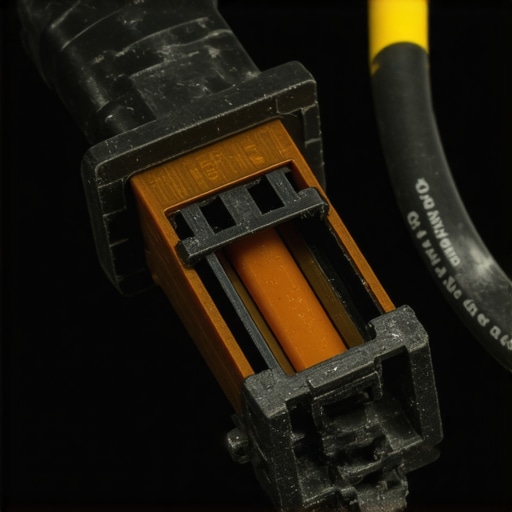
One of the hidden nuances of modern auto repair is that an electrical component can be ‘cooking’ without actually failing yet. A standard OBD-II scanner is looking for a break in continuity or a voltage spike. If a wire is slowly melting its insulation against a hot manifold, the circuit may still be complete, meaning no dashboard light will save you. This is the real reason your check engine light is on but the car runs fine sometimes, or worse, why it doesn’t come on at all while your harness is smoldering. You have to use your nose and your eyes, not just your tablet. Look for ‘blooming’ on the wire jackets—that’s where the plastic has expanded and re-hardened.
The Danger of the Cheap Part Shortcut
Here is the ‘oops’ factor that kills more cars than road salt: the allure of cheap, unbranded replacement parts. I’ve seen countless owners try to save fifty bucks on a knock-off cooling fan or an alternator. These parts often use sub-standard plastics that have a much lower melting point than OEM (Original Equipment Manufacturer) components. When the engine reaches peak operating temperature on a July afternoon, those cheap housings begin to warp and stink. It’s the same principle we discuss in collisionrenew: the truth about aftermarket vs. OEM body panels; materials matter for safety, not just for looks. A melting fan shroud can drop right into your serpentine belt, turning a minor smell into a total engine failure in seconds. Always prioritize high-quality materials during your essential car service checks to ensure you aren’t literally installing a fire hazard under your own hood.
Stop Chasing Ghosts with a Thermal Camera
If you are tired of playing detective with your nose and a flashlight, it is time to upgrade your diagnostic arsenal. I personally never dive into a dashboard or a complex wiring harness without my compact thermal imaging camera. This tool is a game-changer for any serious auto repair enthusiast because it allows you to see heat signatures that are invisible to the naked eye. When a circuit is struggling, it generates heat long before it actually smokes. By scanning the fuse block and the main harness while the car is running, you can spot a ‘hot’ wire that stands out like a neon sign against the cooler engine components. This proactive approach is much better than waiting for the smell to return on a rainy Tuesday night. I recommend a FLIR-integrated smartphone attachment; it is relatively affordable and provides enough resolution to distinguish between a hot exhaust manifold and a smoldering ground wire.
#IMAGE_PLACE_HOLDER_D#
How Can I Keep the Plastic from Melting Next Time?
Consistency is your best friend when it comes to long-term vehicle health. To keep those chemical odors at bay, you need to make thermal inspections a regular part of your essential car service checks. Start by ensuring all your plastic wire looms and clips are actually doing their job. Over time, plastic clips become brittle and snap, allowing wires to sag onto the hot engine block or exhaust heat shields. I always keep a bag of high-temp nylon zip ties in my glovebox to secure loose lines the moment I see them. Furthermore, if you have recently undergone any major bodywork, double-check that your collision renewal strategies included the reinstallation of all factory heat shields. These thin metal plates are often discarded by lazy techs, but they are the only thing standing between your fuel lines and a 500-degree exhaust pipe. Neglecting these small details is often why your brake fluid level drops without a visible leak—excessive heat can eventually warp the plastic reservoirs or boil the fluid itself.
The Coming Shift Toward Intelligent Materials
Looking toward the future, the way we deal with these issues is going to change drastically. We are already seeing a shift toward ‘smart insulation’ in high-end electric vehicles. According to the SAE J1128 standard, which governs low-voltage primary cables, we are pushing the limits of traditional PVC and cross-linked polyethylene. I predict that within the next decade, most passenger cars will feature insulation that incorporates thermochromic pigments—materials that change color when they exceed a safe temperature. This will make visual inspections almost foolproof. Until then, you have to be the ‘smart sensor’ for your own machine. For those who want to get serious about their car’s longevity, I suggest looking into top transmission repair tips for long-term vehicle reliability, as heat management is the number one factor in keeping those gears turning smoothly. My best advice? Next time you change your oil, take five extra minutes to trace your wiring with a bright light and look for any sign of ‘blooming’ or discoloration on the plastic. It is the easiest way to prevent a catastrophic fire before it even has a chance to spark.
What Decades of Greasy Knuckles Taught Me About These Stenches
I have spent enough time in garage bays to know that a smell is rarely just a smell; it is a mechanical SOS signal. One of the biggest lessons I have learned is that the location of the scent can be deceptive. Airflow under a moving car can push the odor of a melting rear brake caliper all the way up through the firewall, making you think the dashboard is about to ignite. Always verify the source while the car is stationary but still at operating temperature. Another hard-won truth is that plastic components have a ‘thermal memory.’ Once a connector has overheated and released that acrid smell, the structural integrity of that plastic is compromised. Even if you fix the short circuit, that brittle connector is now a vibration failure waiting to happen. Finally, never underestimate the power of a clean engine bay. Road grime and oil buildup act like an insulating blanket, trapping heat and forcing plastics to operate right at the edge of their melting point. Following the ultimate guide to auto repair means keeping things clean enough to see—and smell—a problem before it becomes a hazard.
Gear That Actually Saves Your Harness
To move beyond guesswork, you need a few specific tools in your kit. I personally trust a non-contact infrared thermometer for quick checks on brake rotors and exhaust shields. If one wheel is 100 degrees hotter than the others, you know where to focus your brake service efforts. For deeper electrical dives, I always recommend the SAE International handbooks on wiring standards; they help you understand exactly why certain gauge wires melt under specific loads. I also suggest keeping a dedicated ‘burn kit’—not for you, but for the car. This should include high-temperature Kapton tape, which can withstand temperatures that would melt standard electrical tape into a sticky, smelly mess. Using these professional-grade materials is a core part of effective collision renewal strategies because it prevents secondary failures after a repair is complete.
#IMAGE_PLACEHOLDER_A#
Taking Charge of Your Machines Health
Don’t let a strange chemical scent intimidate you into thinking your car is a lost cause. Most of these issues are solvable with patience and a methodical approach to your essential car service checks. By learning the difference between the scent of a melting grocery bag and a frying alternator, you are taking back control of your vehicle’s safety and your wallet’s health. Remember, your car talks to you through sounds, vibrations, and yes, even smells. If you listen closely—and sniff carefully—you can catch a minor meltdown before it turns into a roadside emergency. Whether you are dealing with a simple fix or a complex transmission heat issue, staying proactive is the only way to ensure your ride stays on the road for the long haul. Have you ever found a weird object melted to your exhaust system? Let me know the strangest thing you have had to scrape off in the comments below!