
I remember staring at my old truck, my knuckles bruised and my shirt soaked in sweat, wondering if I had somehow broken the laws of physics. I had spent the last three hours following every guide I could find, bleeding those lines until the fluid ran as clear as a mountain stream. Yet, the moment I fired up the engine and pressed the pedal, it sank. It didn’t just feel soft; it felt like stepping into a bucket of wet sand. If you have ever felt that sickening drop after you were sure you’d fixed the problem, I want you to know you are not alone.
That Sinking Feeling When the Pedal Hits the Floor
When we talk about a spongy pedal, we are usually talking about air. Air compresses, while brake fluid doesn’t. Simple, right? But what happens when you’ve pushed a gallon of fluid through the system and that brake pedal goes all the way to the floor anyway? It’s enough to make you want to walk away from the project entirely. I’ve learned the hard way that a standard brake service doesn’t always account for the tiny pockets of air that hide in the nooks and crannies of modern systems. In my early days, I once spent an entire Saturday bleeding the wheels in the wrong order—starting with the one closest to the master cylinder instead of the furthest—and I couldn’t figure out why I wasn’t making progress. It was a humbling lesson in following the specific geometry of your car’s hydraulic map. Today, we are going to look past the basics of the pump and hold method. We are going to solve this mystery so you can get back on the road with total confidence.
Is it possible I just have a bad part?
This is the question that kept me up at night during that first failed repair. You start to wonder if you’ve actually got a mechanical failure disguised as a maintenance issue. While it is possible, most of the time the culprit is much more subtle. According to the National Institute for Automotive Service Excellence (ASE), air is the most common contaminant in a hydraulic system, but even the smallest internal leak in a master cylinder can mimic the feeling of air bubbles without ever dripping a drop on your driveway. This is where auto repair becomes more of a detective game than a manual labor task. Have you ever felt like you were just chasing your tail with a brake job that wouldn’t cooperate? I want to hear about your most frustrating garage moment. Before you go out and buy an expensive new master cylinder, we need to check a few essential car service checks that most DIYers overlook. We are going to talk about ABS modules, rubber hose flex, and the bench bleeding mistake that ruins many new installs.
Why Bench Bleeding is Your Non-Negotiable First Step
Most DIYers fail before they even touch the wheels because they skip the bench bleed. Think of your master cylinder like a syringe; if there is a massive air pocket trapped behind the piston, you can pump the pedal until your leg cramps, but you are just moving that air back and forth instead of pushing it out. I once worked on an old Ford where the owner had replaced everything twice. He was convinced the car was cursed. We sat there for twenty minutes just watching the master cylinder, and it turned out he had skipped the bench bleed because the box said “ready to install.” We pulled it off, did a proper bench bleed on the vise, and within two minutes of reinstalling, the pedal felt like it was made of granite. That “ready to install” label is a trap that leads to more auto repair headaches than almost anything else.
Stop Air from Hiding in the Master Cylinder
To do this right, you need to loop short pieces of plastic tubing from the outlet ports back into the reservoir. Submerge the ends in fluid and slowly stroke the piston with a screwdriver. Watch the bubbles. If you see even a tiny pearl of air, you aren’t done. This ensures that when you finally bolt it to the booster, you are starting with a solid column of fluid. If you ignore this, you might find why your brake pedal sinks slowly while you are sitting at a light even with brand new parts. This is a fundamental part of any high-quality brake service.

Dealing with the ABS Brain That Traps Air
Modern cars have an Anti-lock Braking System (ABS) module that acts like a maze for brake fluid. These modules are filled with tiny valves and solenoids that can trap air pockets that traditional bleeding just won’t touch. If you have ever performed a perfect bleed and still had a soft pedal, the air is likely sitting inside that module. In many cases, you need a bidirectional scan tool to trigger the “Auto Bleed” function, which cycles those solenoids to purge the trapped air. It is similar to how top transmission repair tips often involve electronic resets; modern hydraulics are rarely just mechanical anymore. Don’t be afraid to take it to a shop just for this electronic purge if you don’t have the tools.
Look for Ballooning Rubber Hoses
If your fluid is clear and the air is gone, but the pedal still feels like a marshmallow, check your rubber flex hoses. Over time, the internal braiding of these hoses breaks down. When you step on the pedal, instead of the pressure going to the caliper pistons, the hose itself expands like a long, thin balloon. You can actually see this happen if you have a friend pump the brakes while you watch the lines. This is one of those essential car service checks that can save you from replacing parts that are actually fine. If you see any swelling, swap them for stainless steel braided lines or new OEM rubber to restore that firm response.
The Gravity Bleed Shortcut
Sometimes the most aggressive “pump and hold” method actually makes things worse by churning the air into millions of tiny micro-bubbles. When I’m dealing with a stubborn system, I go back to basics with a gravity bleed. Open the bleeder valve and just let it drip. It takes patience, but physics is on your side. If you notice why your brake fluid level drops without a visible leak, you might have air being drawn back in through a loose bleeder screw or a bad seal. Keep the reservoir topped off and let nature do the work of pulling the air down and out.
I’ve seen it a thousand times: a frustrated driver pulls into the shop complaining they need new rotors because their current ones are ‘warped.’ They’ve usually already spent a small fortune on a brake service that only solved the vibration for a few hundred miles. Here is the contrarian truth that most big-box shops won’t tell you: rotors almost never actually ‘warp’ from heat in normal street driving. What you are actually feeling is likely Disc Thickness Variation (DTV). According to technical white papers by performance experts at StopTech, what we perceive as a bent rotor is actually an uneven layer of brake pad material that has fused to the disc surface. This happens when you get your brakes smoking hot and then sit at a stoplight with your foot firmly on the pedal, essentially ‘stamping’ the rotor with a patch of friction material. Once that patch exists, it picks up more material with every rotation, creating a high spot. If you keep replacing rotors without changing your stopping habits or choosing the right pad compound, you are just throwing money away. Have you ever fallen into this trap? Let me know in the comments.
The Hub Surface Trap You Are Probably Ignoring
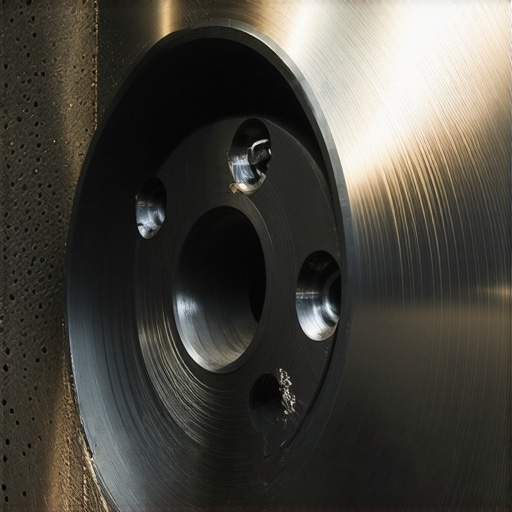
Another common ‘oops’ factor that kills a DIY job is the state of the wheel hub. Most people pop the old rotor off and slap the new one on, but if you don’t use a wire brush or a hub-cleaning tool to remove every flake of rust from the mounting surface, you are setting yourself up for failure. Even a tiny piece of debris—barely a thousandth of an inch thick—will cause the rotor to sit at a slight angle. By the time that angle reaches the outer edge of a 12-inch rotor, it creates enough ‘runout’ to cause a massive wobble. This is one of those essential car service checks that separates a professional restoration from a driveway hack job. Similarly, if you have recently been involved in a minor scrape, you should look into collision renewal strategies to ensure your suspension geometry isn’t the real reason your pads are wearing unevenly.
Stop Using an Impact Wrench on Your Lug Nuts
Precision is the enemy of the ‘fast and loud’ approach. Many DIYers think that zipping lug nuts on with an impact wrench is fine as long as they are tight. However, uneven torque is a primary cause of rotor distortion. If one nut is hammered to 120 ft-lbs and the next is only at 80, the rotor cannot expand and contract evenly as it heats up. This leads directly to the question of why your brake rotors keep warping every few months despite being brand new. In the ultimate guide to auto repair, the torque wrench is the most important tool for any wheel-end work. Furthermore, if you opted for the cheapest ‘economy’ pads available, you might find why your brakes groan when you slowly creep forward; cheap friction material often lacks the structural integrity to dampen vibrations, leading to that low-frequency noise.
Could a transmission glitch be masking your brake issue?
Sometimes the problem isn’t the calipers or the pads at all. If you feel a strange surge or a ‘push’ while coming to a stop, the culprit might be why your transmission shifts early and makes the engine bog down or fails to disengage properly during a downshift. If the transmission is fighting the engine’s idle speed while you are trying to slow down, it can make the brakes feel weak or inconsistent. It is why top transmission repair tips often overlap with brake diagnostics. Always look at the vehicle as a complete system rather than just a collection of isolated parts. Mastering these nuances is the difference between a car that simply stops and a car that inspires total confidence.
Why I Finally Trashed My Vacuum Pump for a Pressure Bleeder
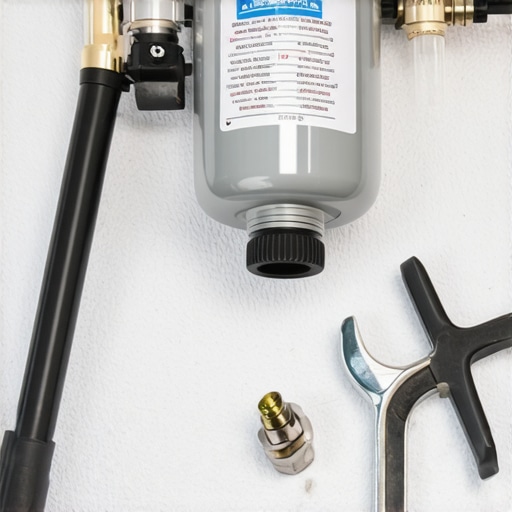
For years, I swore by the hand-held vacuum pump. It seemed like the pinnacle of DIY convenience, but I eventually realized it was causing more headaches than it solved. The problem with vacuum bleeding is that it often pulls air past the threads of the bleeder screw, making you think you have a never-ending stream of bubbles in the line. I switched to a Motive Products-style pressure bleeder, and it changed everything. By pressurizing the reservoir itself, you are mimicking the natural flow of the hydraulic system without the risk of introducing false air. If you ever find why your car pulls toward the side of the road when braking even after a fresh bleed, it’s likely because one side still has a microscopic air pocket that a vacuum pump just couldn’t move. Investing in a set of flare nut wrenches is the other ‘pro’ move I can’t recommend enough; using a standard open-end wrench on a soft brass fitting is the fastest way to turn a ten-minute job into a weekend-long nightmare involving vice grips and a torch.
How do I keep my braking system sharp for the long haul?
Maintenance isn’t a one-time event; it’s a rhythm. According to the technical standards set by SAE International in their J1703 documentation, brake fluid is hygroscopic, meaning it actively absorbs moisture from the atmosphere. Over time, this water content lowers the boiling point of the fluid and corrodes the internals of your calipers and ABS module. To keep things working perfectly, I recommend a full flush every two years, regardless of mileage. This is one of those essential car service checks to extend your vehicles life that most people ignore until their pedal feels like a sponge. While you are under there, don’t forget to check the health of your gear sync; following top transmission repair tips for long-term vehicle reliability ensures that your engine braking is assisting your pads rather than fighting them.
Don’t Ignore the Electronic Side of Modern Stopping Power
As we move toward 2025, the line between mechanical hardware and software is blurring. Most new vehicles utilize advanced driver-assistance systems (ADAS) that rely on the brakes to perform emergency maneuvers. If you’ve done any suspension work or body repairs, you need to be aware that why your cars safety sensors need a reset after any front-end work is a critical safety step. A camera that is off by even a fraction of a degree can cause the car to apply the brakes unexpectedly. This is why the ultimate guide to auto repair now includes a heavy emphasis on digital calibration. Even if you prefer the old-school ways, like learning how to check your own wheel alignment using a piece of string, you have to respect the computer’s role in keeping the car straight during a panic stop. If your car has been in a scrape, your collision renewal strategies must include a scan of the braking control module to ensure there are no latent faults hidden in the code. My advanced tip for the week? Buy a cheap fluid refractometer. Instead of guessing if your fluid is ‘dark enough’ to change, a refractometer will tell you the exact percentage of water contamination, allowing you to scale your maintenance based on data rather than a hunch.
The Hardest Lessons I Learned While Chasing a Solid Pedal
Over the years, I have realized that the “perfect” fix is rarely about force; it is about patience. I used to think a soft pedal always meant I needed more muscle on the wrench, but more often, it was about stepping back and looking at the system as a whole. One major lightbulb moment was realizing that a sinking pedal at a stoplight isn’t always air; it is often an internal bypass in the master cylinder that looks perfect on the outside but fails to hold pressure. Another lesson? Don’t ignore transmission health when diagnosing stopping issues. If your car is fighting to stay in gear while you are slowing down, your brakes are working double time, which can overheat the fluid and introduce those dreaded bubbles. Finally, never trust a part just because it is new. Testing “out of the box” components is a core part of any ultimate guide to auto repair.
Gear That Saved My Sanity in the Garage
If you are tired of the “pump and pray” method, there are three things I never go without. First is a Pressure Bleeder. It turns a two-person struggle into a solo, ten-minute success story. Second, Flare Nut Wrenches are non-negotiable; they grip the entire fitting so you do not round off those soft metal lines, which is a common disaster for beginners. Third, I always keep a bottle of high-quality fluid testers nearby to perform essential car service checks that prevent moisture buildup. These tools aren’t just luxuries—they are the difference between a frustration-free Saturday and a vehicle that ends up on a trailer.
Reclaim Your Confidence Behind the Wheel
There is a specific kind of peace that comes from knowing your car will stop exactly when and where you want it to. Whether you are performing a DIY brake service or simply learning the signs of wear, you are taking control of your safety. Don’t be afraid of the complexity; every pro was once a beginner staring at a floorboard with a sinking heart. Take it one step at a time, trust your tools, and keep your system clean. Have you ever spent a whole weekend bleeding brakes only to find one tiny bubble was the culprit? Let me know your story below!