
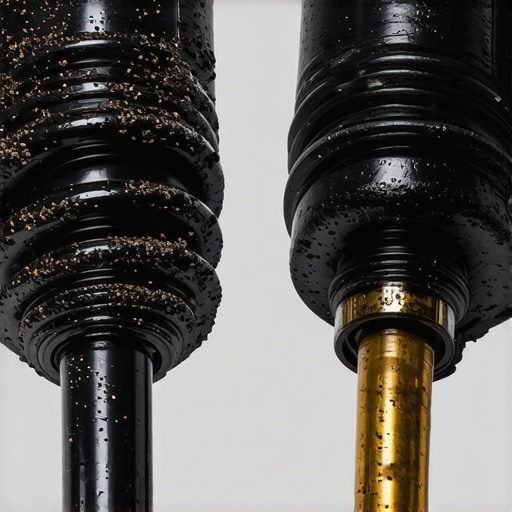
I will never forget the time I almost threw eight hundred dollars away because I saw what I thought was oil leaking from my rear struts. I was convinced the dampers were toast. My car felt slightly floaty on the turns, and when I peeked behind the wheel, there was this thick, oily-looking sludge caked all over the metal housing. I panicked, thinking I was one pothole away from a total suspension collapse. As it turns out, I had just driven through some fresh road tar and picked up a thick layer of North Carolina red clay. A quick spray with a pressure washer and a real diagnostic check proved my shocks were perfectly healthy. I learned the hard way that a dirty car can mimic a broken one if you do not know the physical signs of failure. [image]
Stop guessing if your suspension is shot
Your shocks and struts are the unsung heroes of your daily commute, keeping your tires glued to the pavement and your coffee in its cup. But when things start feeling off, it is easy to jump to the most expensive conclusion. Maybe you have noticed why your car feels like it is swaying on the highway, or perhaps every speed bump feels like a personal insult to your spine. Before you pull out the credit card, you need to differentiate between superficial grime and true hydraulic failure. Today, I am going to help you figure out if you are looking at a simple cleaning job or a mandatory trip for essential car service. It is not just about the ride quality; it is about keeping your vehicle controllable during emergency maneuvers.
Is it actually dangerous to keep driving on worn shocks?
One of the biggest fears I hear from neighbors is whether a soft or bouncy ride is just a comfort issue or a genuine safety hazard. According to the Car Care Council, worn shocks can actually increase your stopping distance by up to 10 feet at 60 mph because your tires are not maintaining consistent contact with the road. That extra distance is often the difference between a close call and a rear-end collision. If you have noticed why your car feels loose when driving over bumps, you are not just imagining things—your car’s ability to grip the road is actively degrading. I once ignored a subtle clunk for three months, assuming it was just a loose plastic trim piece. Eventually, I realized how to tell if your shocks are bouncing too much by performing a simple bounce test in my driveway. It turned out the upper mounting plate was failing, which is one of those hidden suspension issues that a standard wheel alignment wont fix. It was a wake-up call that dirty and dangerous can sometimes look identical to the untrained eye. Have you ever felt your car float after hitting a highway dip and wondered if your suspension was finally giving up the ghost?
Scrub away the mystery with a flashlight
To figure out if you are dealing with a real failure or just North Carolina mud, you have to get your eyes on the damper body. Wipe down the metal tube of the shock or strut with a clean rag. If the ‘leak’ you see is just a light film of oil mixed with dust—what mechanics call ‘misting’—it is actually normal operation. However, if the fluid is actively dripping or the entire unit is wet from top to bottom, the internal seal has failed. This is when you need to start looking into essential car service checks to extend your vehicles life. While you are under there with a flashlight, it is the perfect time to learn how to check your brake pads without taking the wheels off, as suspension and braking systems are the two main pillars of your car’s safety.
Bounce your way to a real diagnosis
The bounce test is the oldest trick in the book for a reason: it works. Walk to any corner of your car and push down with all your weight on the fender or bumper. The car should compress, rise once, and then settle immediately. If it keeps oscillating like a bowl of Jell-O on a vibrating table, the damper is toast. I remember performing this on my old 2005 sedan; I pushed the rear bumper once, and the car bobbed up and down four times before stopping. It felt like I was driving a boat on the highway. This lack of control is exactly why your car feels like it is swaying on the highway. Think of your shock like the hydraulic arm on a heavy screen door. Without that resistance, the door—or in this case, your two-ton vehicle—just slams and bounces uncontrollably.
Read your tires like a map to failure
Your tires are surprisingly honest about the state of your suspension. Run your hand along the tread of your front tires. If you feel ‘cupping’—which looks like little scalloped dips or waves in the rubber—your shocks are likely dead. These dips happen because the tire is literally jumping off the road as you drive, and every time it lands, it bites a chunk of rubber out of the tread. This is a much more serious issue than hidden suspension issues that a standard wheel alignment wont fix because it ruins your tires prematurely. If you do not catch this early, you will be paying for both new shocks and a new set of rubber.
The nose-dive and the squat
When you hit the brakes, does the front of your car dip so low you feel like you are looking at the pavement? Or when you accelerate, does the rear end squat toward the ground? This excessive weight transfer means the dampers can no longer manage the vehicle’s mass. This often coincides with other issues like why your car pulls toward the side of the road when braking. If you are experiencing this, the internal valves of your struts have likely lost their ability to resist the movement of the coil springs. I once had a truck that dived so hard during braking it actually triggered the ABS on dry pavement because the front tires were being overloaded while the rear tires were nearly lifting off the ground.
Stop Ignoring the ‘Dry’ Failure
Most people think that if a shock absorber is not leaking oil, it is working perfectly. I used to believe that too, until I tore down a set of ‘dry’ struts from an old project car. Everyone says you should only replace suspension parts if you see fluid, but in my experience, internal fatigue is the silent killer. The hydraulic fluid inside a shock cycles through tiny valves thousands of times per mile. Over time, that fluid shears down and loses its viscosity, or the internal piston seals simply wear out. This means your car can bounce like a pogo stick while the outside of the shock looks brand new. This is exactly how to tell if your shocks are bouncing too much without relying on visual cues alone. If you only look for leaks, you are missing the most common failure point in modern gas-charged units.
The One-Side-Only Replacement Trap
Here is the ‘oops’ factor that costs people thousands in the long run: replacing only one shock because only one is visibly leaking. If you replace the left side and leave a tired, 80,000-mile shock on the right, you create a massive handling imbalance. Your car will lean unevenly during cornering, which can confuse your traction control system and lead to hidden suspension issues that a standard wheel alignment wont fix. Always replace them in pairs. It is the same logic used when choosing the best brake service; you would never just change the pads on one wheel. Neglecting this balance is a common mistake even in broader essential auto repair routines.
Why does my car still feel clunky after installing brand new struts?
This is a sophisticated frustration many DIYers face. You have spent the weekend swapping the struts, but that annoying rattle is still there. More often than not, the culprit is not the strut itself, but the supporting cast. Check the sway bar end links and the strut mount bearings. Also, do not forget how to tell if that subframe clunk is just a loose bolt. A study by the suspension experts at Tenneco suggests that ride control components are often blamed for noises that actually originate from worn rubber bushings that have hardened with age. If your car still makes noise, you might be dealing with the reason your car squeaks every time you get in and out, which is usually a dry ball joint or a control arm bushing, not the shock itself.
Don’t let bad shocks kill your drivetrain
Most drivers do not realize that suspension health directly impacts your transmission and drivetrain. Excessive vibration from ‘cupped’ tires or a vibrating front end puts unnecessary stress on your CV axles and transmission seals. Keeping up with essential car service checks to extend your vehicles life includes looking at how these systems interact. If you ignore the shakes, you might soon be searching for top transmission repair tips for long-term vehicle reliability because a five-dollar bushing eventually destroyed a five-hundred-dollar axle. Have you ever fallen into this trap of replacing the ‘obvious’ part only to find the problem was something deeper? Let me know in the comments.If you are planning to tackle your own struts or shocks, the first thing you need to accept is that your standard tool kit probably isn’t enough. I used to think a basic socket set and a lot of elbow grease would get me through any job, but suspension work is different. It is heavy, it is under tension, and the bolts are exposed to every bit of road salt and moisture your car encounters. To avoid a disaster, I swear by a dedicated long-handle breaker bar and a high-quality penetrating oil like Kroil. I have found that spraying the mounting bolts 24 hours in advance—and then again an hour before I start—makes the difference between a thirty-minute job and a broken bolt that ruins my weekend. This kind of preparation is a core part of the ultimate guide to auto repair because it prevents small tasks from becoming expensive nightmares.
How do I maintain my suspension health over time?
The best way to keep your ride smooth is to stay ahead of the wear cycle. Every time you are under the car for an oil change, take five minutes to inspect the rubber boots on your ball joints and tie rod ends. If you see a tear, replace the boot or the joint immediately before grit gets inside and grinds the metal to dust. This is the same logic you should apply to other systems, like following top transmission repair tips for long-term vehicle reliability. In fact, a small investment in a grease gun can save you thousands. Many aftermarket suspension parts come with Zerk fittings that allow you to pump in fresh grease, which is a great way to stop the reason your car squeaks every time you get in and out.
Precision matters more than muscle when tightening struts
One mistake I see all the time is people eyeballing the tightness of suspension bolts. This is dangerous. According to the Bilstein Technical Guide, over-tightening a top mount nut can actually crush the internal seals or snap the piston rod. You must use a calibrated torque wrench. I personally prefer a digital one because it vibrates when you hit the target, which is incredibly helpful when you are contorted inside a wheel well where you cannot see the dial. Ensuring everything is torqued to factory spec is one of those essential car service checks to extend your vehicles life. Looking forward, we are seeing a massive shift toward electronic and magnetic ride control. Within the next decade, DIY suspension work will involve as much software as it does wrenches, as we will need to calibrate sensors every time a strut is replaced. This is already happening with why your cars safety sensors need a reset after any front end work. If you want to really level up your diagnostic game, try the ‘loaded’ check next time you suspect a bad bushing. Instead of checking for play with the car in the air, use a drive-on ramp so the suspension is under the weight of the vehicle. Sometimes a part that feels tight while hanging will reveal its flaws once the car weight is actually pushing against it. It is a pro move that catches what most shops miss. Have you ever tried a torque wrench on your lug nuts and been surprised by how far off you were?
Hard Lessons from a Backyard Mechanic
I spent years thinking that a leaking shock was the only reason to pull out the wrenches. It took a particularly bouncy ride through the mountains to realize that metal fatigue and fluid breakdown happen long before the seal gives up. Another big epiphany was that a lot of those annoying rattles are not the strut at all; they are often dry bushings. That is the reason your car squeaks every time you get in and out. Finally, never underestimate the power of a clean undercarriage. It is impossible to spot a hairline crack in a control arm when it is covered in three years of road grime. I now make it a habit to use the best way to clean salt off your cars undercarriage before I even start my diagnostic inspection.
#IMAGE_PLACEHOLDER_E#
My Favorite Gear for a Smooth Ride
If you are ready to get your hands dirty, do not start without a few essentials. First, a high-quality digital torque wrench is non-negotiable for suspension work to avoid snapping bolts or leaving them dangerously loose. Second, a bottle of Kroil penetrating oil will save you from a world of hurt when dealing with rusted suspension components that have seen too many winters. Third, I always keep a printout of the factory torque specs handy—relying on ‘tight enough’ is how you end up with how to tell if that subframe clunk is just a loose bolt issues later. Lastly, if you have been in even a minor fender bender, review collision renewal strategies for restoring your car to perfection to ensure your frame hasn’t shifted, as a bent frame will destroy new shocks in weeks.
Master Your Road Confidence
Taking control of your car’s suspension is one of the most rewarding parts of following the ultimate guide to auto repair. It is about more than just a smooth ride; it is about the peace of mind that comes from knowing your car will react exactly how you expect in an emergency maneuver. Do not be intimidated by the heavy metal and rust. With the right tools and a little patience, you can transform your vehicle’s handling from a boat-like wobble to a factory-fresh grip. Have you ever replaced your shocks only to find out the noise was actually something else entirely? Let me know your story in the comments below!