
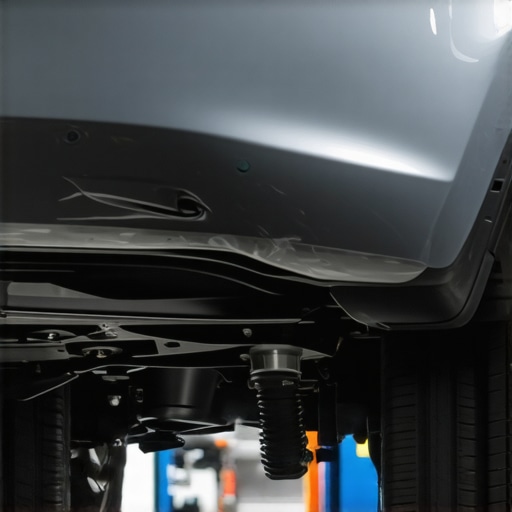
I remember the sickening sound of that crunch in the Kroger parking lot like it happened five minutes ago. It was a low-speed ‘love tap’ against a concrete bollard I simply didn’t see. My bumper had a tiny scuff, but the car drove home just fine. I told myself it was nothing and that I’d saved a fortune by not calling a pro. I was wrong. Dead wrong. Months later, I was looking at a set of front tires worn down to the cords on the inner edges and a car that felt like it was fighting me on every curve. I had made the classic mistake of assuming a pretty exterior meant a straight skeleton. Today, I want to share exactly how you can avoid my expensive blunder and spot the hidden signs of structural damage before your repair bill triples. We are going to look past the shiny paint and dive into the grit of keeping your car running smoothly by ensuring its foundation is actually square.
Stop Ignoring the Signs of a Twisted Frame
The problem with modern cars is that they are designed to be sacrificial. The outer plastic and thin sheet metal are meant to crush, which is great for your safety but terrible for your wallet if you don’t know what to look for. When I had my little mishap, I noticed my panel gaps werent quite square around the hood, but I just shrugged it off as ‘character.’ In reality, that tiny gap was a giant red flag that my front subframe had shifted just enough to throw the entire geometry of the vehicle out of whack. If your car suddenly pulls toward the center line even on a flat road, or if you feel like the steering has lost its crispness, you aren’t imagining things. You are likely feeling the physical manifestation of a bent frame. According to the Insurance Institute for Highway Safety (IIHS), even a minor structural shift can change how crumple zones perform in a future accident, potentially turning a safe car into a safety hazard. Have you ever noticed your car acting ‘strange’ or ‘floaty’ after a minor bump? I’d love to hear your story in the comments.
Does a slightly crooked frame really make the car unsafe?
This is the question I asked myself while staring at my uneven tire wear. The truth is that your frame is the anchor point for every other major system. If the frame is off, your suspension won’t align, your car feels like it is swaying at highway speeds, and your braking efficiency can actually drop because the weight isn’t distributing correctly. My early mistake was thinking I could just get a wheel alignment and call it a day. But you can’t align a car that is physically twisted. Using the right collision renewal strategies is the only way to ensure the car is actually restored to its factory specs. It took me a long time to realize that ignoring these signs doesn’t just cost money in tires; it compromises the very ‘survival cell’ that protects you and your family. We need to be realistic: a car with a compromised frame is a ticking clock for other mechanical failures.
Stop Guessing and Start Measuring Your Cars Foundation
Finding out your car’s frame is bent is like discovering the foundation of your house is cracked; everything else you do to ‘fix’ the building is just a temporary Band-Aid. To truly understand the state of your vehicle, you have to move beyond the surface. The first step is to perform essential car service checks to extend your vehicles life by looking for ‘witness marks’ on the metal. These are areas where paint has flaked off or where bolts have shifted in their slots. If you see a bolt head that has a clean ring around it where it used to sit, that part of the frame has moved. Think of it like a rug that’s been shifted—you can always see the mark on the floor where it used to be.
Inspect Every Panel Gap Like a Forensic Investigator
I learned this the hard way after my Kroger incident. If you take your index finger and run it along the gap between the hood and the fender, it should feel uniform from front to back. On my car, the gap started wide enough to fit my pinky and narrowed down to nothing by the time it reached the headlight. This isn’t just a cosmetic flaw; it’s proof that the underlying structure is no longer square. When fixing panel gaps that arent quite square, professionals are actually pulling the frame back into place, not just adjusting the hinges. If one side of your car looks ‘tight’ and the other looks ‘gapped,’ your frame has likely taken a diamond or sway hit. 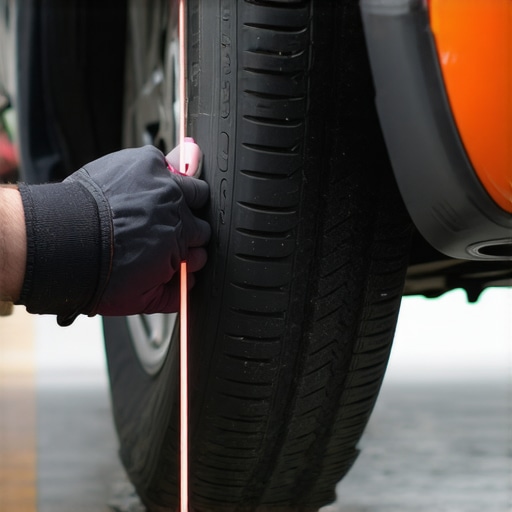
The String Test is Your Secret Weapon for Frame Checks
If you don’t have a laser-guided measuring system in your garage, you can use a trick I picked up from an old-school racer: the string method. I remember grabbing a ball of butcher’s twine and four jack stands. By stretching the string perfectly parallel to the center line of the car, you can measure the distance from the string to the front and rear of each wheel. When I did this on my ‘repaired’ car, I found out the rear axle was ‘crab-walking’ half an inch to the left. You can check your own wheel alignment using a piece of string to see if your car is actually driving straight or if the frame is forcing the wheels into a constant struggle. This is one of those hidden suspension issues that a standard wheel alignment wont fix because the technician usually just adjusts the toe and ignores the fact that the wheels are on two different planes.
Watch Out for the Drivetrain Ripple Effect
Structural damage rarely stays in the frame; it travels through the motor mounts and into the drivetrain. If the frame is twisted even slightly, it puts immense pressure on the transmission and engine. I once saw a car where a minor front-end tweak caused the transmission to leak because the output shaft was being pulled at a weird angle. Following top transmission repair tips for long term vehicle reliability starts with ensuring the gearbox isn’t being used as a structural brace. Also, don’t ignore strange noises under the floorboards. You should learn how to tell if that subframe clunk is just a loose bolt or a cracked weld, as the subframe is the literal cradle for your engine. Finally, remember that your cars safety sensors need a reset after any front end work because even a tiny frame shift can point your cruise control radar or lane-assist cameras at the wrong lane, making your safety tech a liability.Most drivers assume that if their steering wheel is centered, the frame must be perfect. But here is the contrarian truth: a technician can often force a vehicle’s alignment into factory specifications even if the chassis is technically ‘diamonded’ or swayed. This is a massive trap. You might leave the shop with a ‘clean’ printout, but because the pivot points are physically in the wrong place, you are still dealing with hidden suspension issues that a standard wheel alignment wont fix. This ‘fudged’ alignment leads to accelerated tire wear and a car that feels twitchy when you hit a pothole. According to the structural repair experts at I-CAR, failing to restore a unibody to its exact 3D coordinates can compromise the timing of airbag deployment in a future collision.
Don’t Trust the Green Printout Without a Physical Measurement
If your car still feels ‘off’—perhaps why your car vibrates specifically when you hit 65 mph becomes your new daily mystery—it is time to stop looking at the tires and start looking at the mounting points. One of the biggest ‘oops’ factors I see is people trying to solve mechanical vibrations with chemical Band-Aids. For instance, if a shifted frame is putting lateral pressure on your gearbox, why relying on transmission leak repair fluid is often a costly mistake becomes obvious when the seals blow out again due to the physical misalignment of the drivetrain. 
How do you prove the shop actually pulled the frame back to factory specs?
The only way to be sure is to ask for a ‘three-dimensional measurement report.’ Modern shops use laser systems that compare your car’s current state to the manufacturer’s original blueprints. If they cannot provide a report showing the height, width, and length of at least eight specific points on the chassis, they are just guessing. This level of detail is also why choosing the best brake service in 2025 involves checking if the shop understands how structural health affects brake caliper positioning. Even following the top transmission repair tips for long term vehicle reliability won’t save your car if the engine is sitting half an inch too low because of a buckled rail. Have you ever fallen into this trap of fixing the symptom but missing the structural cause? Let me know in the comments.
I eventually realized that being a ‘weekend warrior’ isn’t just about having a set of sockets; it is about having the diagnostic mindset of a structural engineer. After that Kroger parking lot nightmare, I stopped trusting my eyes and started trusting precision instruments. If you are serious about keeping your car in factory-spec condition, you need to move beyond basic maintenance and embrace specialized measurement tools. I personally invested in a Mo-Clamp tram gauge, which allows me to check the symmetry of my car’s underside by measuring the distance between identical holes in the frame rails. It’s a game-changer because it takes the ‘maybe’ out of the equation. By performing these essential car service checks to extend your vehicles life, you can spot a shifting subframe long before it ruins your next set of Michelins.
Take Control with a Digital Tram Gauge
The beauty of a tram gauge is that it provides a physical truth that a computerized alignment rack sometimes misses. While the rack tells you if the wheels are straight, the tram gauge tells you if the foundation is square. I’ve used mine to find that a previous owner’s ‘minor’ curb hit had pushed a strut tower back by 4mm. That might sound like nothing, but according to the Society of Automotive Engineers (SAE) document J2314, even a 3mm deviation in a suspension pivot point can alter steering geometry enough to cause unpredictable handling during emergency maneuvers. Using these collision renewal strategies to verify structural points is the only way to sleep soundly at night knowing your car is actually safe.
#IMAGE_PLACE_HOLDER_D#
Don’t Skip the SAS Reset After a Frame Fix
We are entering an era where mechanical repairs must be followed by digital handshakes. Even if you pull a frame back to perfection, your car’s brain might still think it is crooked. This is why your cars safety sensors need a reset after any front end work. I use a mid-range bidirectional scanner to recalibrate the Steering Angle Sensor (SAS). If the SAS isn’t zeroed out, the stability control might try to ‘correct’ a skid that isn’t happening, leading to premature brake wear or even a sudden loss of power. This is a vital part of keeping your car running smoothly in the age of ADAS (Advanced Driver Assistance Systems). In the next five years, I predict we will see augmented reality apps that let you point your phone at your car’s frame to see real-time alignment overlays, making this level of precision accessible to everyone.
How can I keep my cars structural integrity from fading over time?
Long-term structural health is a battle against vibration and oxidation. Every time you hit a pothole, the energy travels through your frame. Over time, this can lead to ‘frame fatigue’ or micro-cracks in the welds. I recommend a yearly ‘bolt check’ on your subframe and suspension mounting points. Following top transmission repair tips for long term vehicle reliability should always include inspecting the mounts that hold the heavy drivetrain in place. If a mount is cracked, the engine will act like a giant hammer every time you shift, slowly fatiguing the structural rails it sits on. Similarly, ensuring you’ve found the best brake service in 2025 means finding a shop that cleans the mounting surfaces of the hub; any corrosion there can cause a ‘false’ torque reading, leading to vibrations that stress the steering rack over time. I challenge you to try the string test this weekend. Grab a ball of twine and see if your rear wheels are truly following your fronts—you might be surprised by what your ‘straight’ car is actually doing.
Lessons From the Shop Floor That Saved My Suspension
One of the hardest truths I had to swallow is that visual inspections are nearly worthless when it comes to the skeleton of your car. I used to think that if the door closed without a creak, the car was fine. But after years of diving into collision renewal strategies, I realized that modern steel has a memory—it can look straight while being under immense internal tension. Another lightbulb moment was discovering that alignment numbers can be faked. A technician can pull your wheels into the green zone, but if the frame is diamonded, those tires will still scrub sideways down the highway. Finally, I learned that ignoring a shifted subframe is the fastest way to kill a gearbox; your transmission needs a perfectly flat mounting surface to operate without internal friction.
My Go-To Gear for Diagnosing Hidden Frame Damage
If you want to stop guessing and start knowing, you need more than just a flashlight. I swear by my digital tram gauge for checking point-to-point symmetry—it is the only way to catch a 3mm shift that a human eye would miss. I also recommend keeping a bidirectional OBD-II scanner in your toolbox to perform those critical sensor resets that modern cars demand. For those looking to go deeper, I always point people toward the Official Factory Service Manuals for their specific VIN; these contain the exact 3D coordinates your chassis should have. This level of detail is just as important as finding the best brake service in 2025, because even the best pads won’t stop a car that is crab-walking due to structural neglect.
Building a Safer Road One Frame at a Time
Your vehicle is more than just a way to get to work; it is a complex safety cell designed to protect the people inside. By taking these essential car service checks to extend your vehicles life seriously, you aren’t just saving money on tires—you are ensuring that the engineering works exactly as intended if the unthinkable happens. True auto repair isn’t about hiding the damage; it is about restoring the truth of the machine. Don’t be afraid to demand precision from your shop or yourself. Has a minor parking lot tap ever turned into a mysterious mechanical nightmare weeks later? I would love to hear how you handled it in the comments below.