
It was exactly 6:14 AM when I realized my heater was out to get me. I was halfway to work, breath fogging up the windshield, and the air coming out of the vents felt like a polar vortex. My first thought? My wallet was about to get a lot lighter. I started mentally calculating the cost of a new heater core or some complicated auto repair that would involve pulling the whole dashboard apart. I even wondered if what that sweet smell coming from your vents really means applied to me, but there was no smell—just cold, hard reality and the sound of a fan blowing uselessly. I remember one specific morning in my old ’98 sedan where I was convinced the car was just ‘getting old.’ I figured that since I was already keeping an eye on transmission repair tips and making sure my brake service was up to date, a lack of heat was just par for the course. I drove that way for three long months! I wore heavy gloves while driving and probably wasted a hundred bucks in extra fuel because the car was constantly over-fueling to compensate for the cold block. When I finally spent twenty minutes to swap the thermostat, the heat was so hot it practically melted my shoes. I felt like a total genius and a bit of an idiot at the same time. It is a classic neighborly lesson: always check the simple, cheap stuff before you let a mechanic talk you into a collision renewal strategy for a mechanical problem. Have you ever sat in your car for twenty minutes waiting for the defroster to work, only to give up and scrape the ice manually?
Stop Freezing and Start Testing Your Engine Temp
Look, I have been there. Early in my DIY journey, I actually replaced a perfectly good water pump because I assumed ‘no heat’ meant ‘no flow.’ It was a greasy, eight-hour mistake that cost me a Saturday and eighty dollars I did not need to spend. The truth is often much simpler. If your car takes forever to warm up, or if the needle drops when you hit the highway, you likely have a thermostat that is stuck wide open. It is like leaving your front door open while the furnace is running; you are just wasting energy and wearing out your engine. A stuck thermostat is not just about your comfort. When an engine runs below its optimal operating temperature, it stays in what we call ‘open-loop’ mode. This means the computer dumps extra fuel into the cylinders to try and warm things up, which can lead to carbon buildup and terrible gas mileage. Think of it as one of those essential car service checks you can not afford to skip. [IMAGE_PLACEHOLDER]
Is a tiny thermostat really worth the headache?
You might be thinking that a little cold is no big deal and you can just handle a thicker jacket. But it is not just about the shivering. A surprising fact from the National Institute for Automotive Service Excellence (ASE) notes that engines running too cold can suffer from ‘fuel dilution’ in the oil, where unburnt gas leaks past the piston rings, effectively thinning your oil and shortening engine life by thousands of miles. If your car never gets hot, your oil stays thick, and your engine components grind against each other more than they should. Have you ever noticed your car feeling ‘sluggish’ on a cold morning even after ten minutes of driving? That is your engine begging for some heat. Today, I am going to show you a ‘touch test’ that takes five minutes and requires exactly zero tools. We are going to solve the hidden reason your car heater only blows cold air before you spend a dime at a shop. Let us get under the hood and see what is actually happening when you turn that key.
I remember one freezing Tuesday when I was sure my heater core was shot. I had my tools out, ready to tear into the dash, until I realized I hadn’t even checked the radiator hoses. It is the most basic auto repair step, yet everyone skips it. I felt the upper hose, and it was lukewarm while the engine was supposedly at operating temp. That is when I knew the thermostat was the culprit, not the expensive core. Checking your heater is as fundamental as essential car service checks like changing your oil or checking your tires.
Get Your Hands Dirty with the Upper Hose Test
This is my favorite “zero-tool” trick. Start your car and let it run for about ten minutes. Pop the hood and find the two large hoses going into your radiator. Carefully—and I mean carefully—touch them. If one is boiling hot and the other is cold, your thermostat is stuck closed. If they both stay lukewarm forever, the thermostat is stuck open. It is a simple flow issue. Think of it like a clogged artery; if the blood (or coolant) is not moving, the system fails. This simple diagnostic is a pillar of the ultimate guide to auto repair because it saves you from buying parts you do not need.
#IMAGE_PLACE_HOLDER_B#
Don’t Trust the Overflow Tank Alone
A lot of folks look at the plastic reservoir, see fluid, and think they are fine. I made this mistake on a cross-country trip. The tank looked full, but the radiator was half empty because of a bad cap. If the coolant level is too low to reach the heater core, you get no heat. It is just like how you need to know the easy way to check your transmission fluid without a dipstick to get the full picture of your car’s health. While you are at it, check the condition of the fluid. If it looks like a strawberry milkshake, you might need top transmission repair tips because your radiator might be leaking coolant into your transmission lines.
Hear the Click that Saves Your Saturday
If your engine is hot and your coolant is full, but the air is still icy, the problem is likely a “blend door.” This is a little plastic flap that redirects air over the heater core. When you turn the knob from blue to red, a small motor moves this door. Turn your key to the “on” position without starting the engine, and move the temp dial back and forth. Do you hear a faint whirring or clicking? If you hear nothing, or a rhythmic tapping, that actuator is dead. It is a common hidden reason your car heater only blows cold air. I once spent three hours flushing a cooling system only to realize a $20 plastic motor was the real enemy. This kind of troubleshooting is what separates a DIYer from someone who just throws money at a mechanic.
I have spent years under hoods, and if there is one thing I have learned, it is that sometimes ‘too much’ maintenance is just as bad as ‘too little.’ We have been conditioned to believe that more chemicals, higher pressure, and more frequent flushes are the keys to longevity. I used to be that guy who would buy every ‘miracle’ bottle on the shelf, thinking I was giving my car a spa day. But here is the contrarian truth: most of those ‘stop-leak’ additives and aggressive chemical flushes are actually ticking time bombs. Have you ever fallen into this trap? Let me know in the comments, because I definitely have, and it cost me a radiator.
The Dangerous Myth of the High-Pressure Flush
People often think that if their heater is weak, they should just blast the system with a high-pressure hose. I have seen enthusiasts destroy the delicate fins of a heater core by doing exactly that. While it feels satisfying to see brown gunk fly out, you are often dislodging debris that was perfectly happy sitting in a corner and forcing it into the narrowest passages of your engine block. This is especially true for cooling systems and top transmission repair tips you might find online. A gentle flow is always better than a violent blast. This is a nuance often missed in the ultimate guide to auto repair because we love the idea of a ‘quick fix’ that clears everything out in seconds.
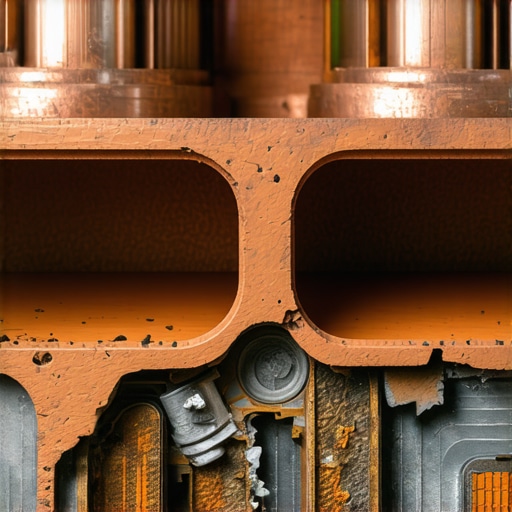
The real ‘oops’ factor comes when you start mixing products. I once met a guy who mixed two different types of ‘long-life’ coolant—one orange and one green. Within a month, his entire cooling system was filled with something that looked and felt like strawberry jelly. This chemical reaction, known as gelation, happens when the silicates in older formulas react with the organic acids in newer ones. It does not just stop your heater from working; it can seize your water pump and lead to a total engine meltdown. This is why I always suggest checking the truth about high-mileage oil and leaking seals before you start pouring ‘corrective’ fluids into your car. Chemicals are not a substitute for a mechanical fix.
Why does my car still feel off after a professional service?
It is a sophisticated question that often points toward the quality of the parts or the ‘completeness’ of the job. For example, in the world of brakes, many shops will swap your pads but leave the old, moisture-heavy fluid in the lines. This is why why your brake pedal goes all the way to the floor even after you have spent hundreds on new hardware. According to a study by the Car Care Council, nearly 80% of vehicles fail at least one component of a basic safety inspection, often because owners focus on the ‘shiny’ new parts rather than the underlying hydraulic health. If you are looking for how to choose the best brake service in 2025, look for a technician who talks about fluid boiling points, not just pad thickness.
The same logic applies to your gearbox. Many high-mileage drivers are terrified of a transmission flush, and for good reason. If you have neglected your fluid for 150,000 miles, a high-pressure flush can dislodge clutch material that is actually helping your worn gears maintain friction. This is exactly why Autolab Libertyville recommends skipping the cheap transmission leak fluids and sticking to a simple drain-and-fill method. It is about being surgical rather than aggressive. When you understand these nuances, you stop being a victim of ‘marketing maintenance’ and start being a true steward of your machine. Always remember that essential car service checks should be about precision, not just checking a box on a service menu.
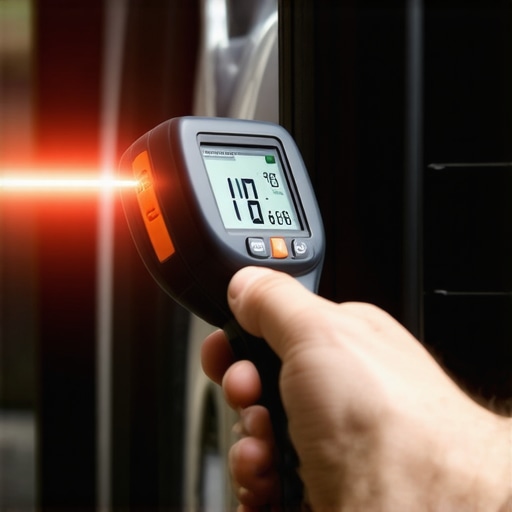
If you want to move past being a ‘parts changer’ and become a ‘diagnostic master,’ you need to stop relying on your eyes alone. I have spent years perfecting a system that does not just fix what is broken, but predicts what is about to fail. It starts with data. I have carried a $20 infrared thermometer in my center console for years, and it has saved me more money than my entire socket set. Why? Because heat tells a story. I use it to scan my radiator for ‘cold spots’ that indicate a partial clog—something that causes a subtle loss of heater performance long before it leads to a full-on overheat. This is the level of detail you need for essential car service checks if you want your vehicle to last 300,000 miles.
The Infrared Trick for Spotting Failures Early
I do not just use that thermometer on the radiator. After a long drive, I will walk around the car and ‘shoot’ my brake rotors. If three are sitting at 150 degrees and one is at 350, I know exactly which caliper is sticking before I ever hear a squeal or feel a vibration. This prevents the need for an emergency brake service that always seems to happen on the most expensive weekend of the month. According to technical specifications from SAE International (specifically the J1979 standard regarding diagnostic data communication), your car’s computer is often aware of these thermal imbalances through wheel speed sensors and friction monitoring before a dash light ever flickers. By the time you feel why your car shakes while idling at a stoplight, the damage is already mechanical, not just digital.
How do I maintain my car’s peak health over the long haul?
The secret is consistency and a ‘logbook’ mentality. I personally keep a small notebook in the glovebox where I track fluid colors and temperatures once a quarter. This is how I spotted a failing alternator—I noticed my voltage was creeping up to 15.2V instead of its usual 14.2V. Knowing how to tell if your alternator is overcharging your battery saved me from frying my car’s expensive ECU. It is also the only way to stay on top of top transmission repair tips, as you can see a trend in fluid darkening before the gearbox starts to slip. If you are serious about the ultimate guide to auto repair, you have to treat your car like an athlete: monitor the vitals, not just the injuries.
Predictive Software Is the Real Future of DIY
Looking ahead, I see a shift where we will all be using Bluetooth dongles that feed live telemetry into AI-driven apps. Instead of guessing why your fuel economy dropped, the app will tell you that your O2 sensor is responding 10% slower than it was last month. We are moving away from reactive repairs and into an era of ‘predictive maintenance.’ This will be especially vital for those implementing collision renewal strategies where keeping a restored frame aligned is a constant battle against road wear. If you want to get ahead of the curve, I highly recommend buying a mid-range OBD2 scanner—like a BlueDriver or an Autel—and actually reading the ‘Live Data’ stream while you drive. Do not just wait for the code; watch the numbers. Grab an infrared thermometer this week and scan your wheels after your commute; you might just find a dragging brake that is costing you three miles per gallon right now.
The Costly Mistakes That Taught Me Everything
The hardest lesson I learned wasn’t how to turn a wrench, but how to trust my senses over my assumptions. I once spent $400 on a new heater core because I assumed the lack of heat was a total system failure. In reality, a $15 radiator cap wasn’t holding pressure. This is why auto repair is 80% logic and 20% labor. I have also seen people ignore the truth about high-mileage oil and leaking seals and try to ‘fix’ a cooling issue with thick additives that just clogged the heater core further. Always check the easiest points of failure first.
Gear That Belongs in Your Glovebox
You do not need a massive garage to keep your car running, but these three items have saved me from calling a tow truck more times than I can count. A basic OBD2 scanner is essential because it tells you what the car ‘feels’ before you see smoke. A non-contact infrared thermometer is my secret weapon for finding cold spots in radiators or overheating wheel bearings. Lastly, a quality shop manual—not just a generic guide—provides the specific wiring diagrams you need to find the hidden reason your car heater only blows cold air. [IMAGE_PLACE_HOLDER_TOOLS]
Your Road to Automotive Independence
Whether you are tackling a frozen heater or performing essential car service checks, remember that you are the most important part of your car’s maintenance. Consistency beats intensity every time. Keeping a simple logbook of your car’s vitals—like transmission fluid color or brake pedal feel—helps you notice small changes before they become disasters. When you master your machine, you gain a level of confidence that no mechanic can sell you. Have you ever spent hours replacing a major component only to find out a tiny $5 fuse or a loose wire was the real culprit? Let me know your most frustrating ‘simple fix’ story in the comments below!